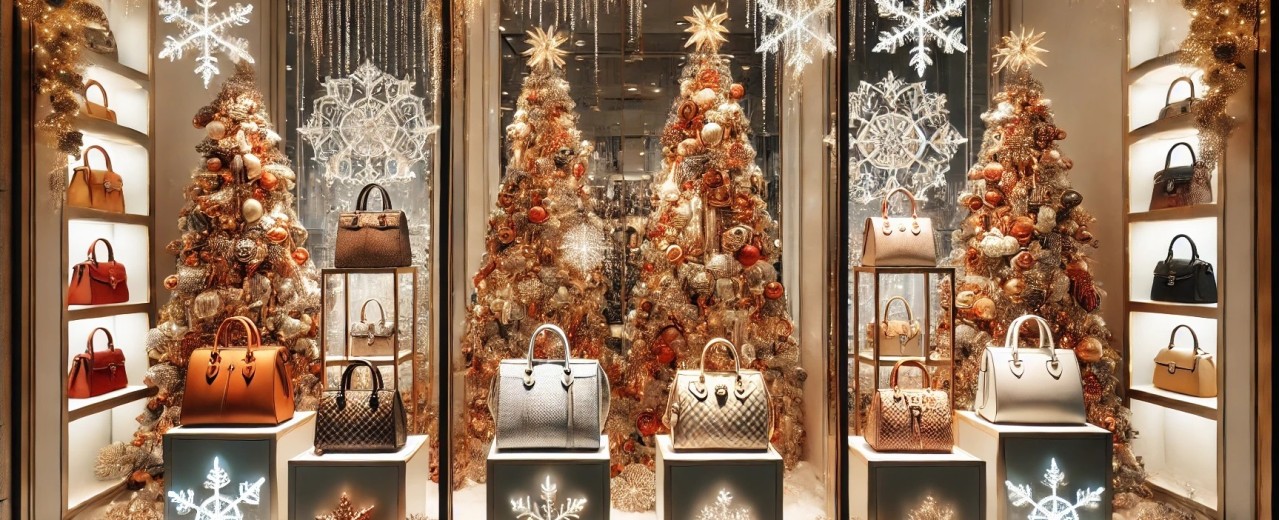
Introduction to satin and double satin ribbon
When we talk about satin ribbon, we are referring to a very popular decorative material, appreciated for its elegance, brightness and versatility. Whether it is used for packaging, in decorations or in the creation of elegant sartorial details, satin ribbon is a refined and always trendy choice.
What is Satin Ribbon?
Satin ribbon is a type of ribbon produced through a particular weaving technique, the so-called "satin weave", which gives the fabric an extremely shiny and shiny side, and a more opaque and rough one on the back. Originally made from natural fibers such as silk, today it is also often produced in synthetic materials such as polyester or nylon, thus being more accessible and economical, but still retaining much of its natural elegance.
Thanks to its smooth surface and ability to reflect light, satin ribbon is ideal for emphasizing the precious and well-kept character of gift boxes, formal dresses or decorations for special events.
Difference Between Single Satin Ribbon and Double Satin
We often talk about satin ribbons indistinctly, but there is a substantial difference between two very common variants: the single satin ribbon and the double satin ribbon (also called double satin).
- The single satin ribbon has one main side shiny and shiny, while the other is visibly matte, less aesthetically pleasing. This type is perfect when only one side of the ribbon is visible, as in the case of simple packaging, favors or basic decorative applications.
- The double satin ribbon, on the other hand, stands out because it has both sides polished and finished, thus allowing maximum freedom of use. It is particularly suitable for bows and elaborate decorations, where both sides are visible. The double satin is therefore more valuable and versatile, suitable for a more sophisticated and elegant use.
In summary, choosing between single or double satin ribbon depends on the type of project, the visibility of the details and the aesthetic level you want to achieve.
To compare satin with organza, grosgrain and other materials, check out the complete guide to decorative ribbons.
How a satin ribbon is produced
The production of satin ribbon is a careful process, combining traditional craft techniques with modern textile technologies. The final quality, which is perceived in the shine, softness and resistance of the tape, depends essentially on the choice of raw materials and the care in processing.
Materials Used in the Production of Satin Ribbon
Traditionally, satin ribbons were produced exclusively with natural fibers, first of all the precious silk. Today, alongside silk ribbons, there are variants made of synthetic materials, mainly polyester and nylon, which offer advantages in terms of cost, ease of maintenance and durability.
- Silk satin is the most luxurious and valuable. Thanks to the natural fibers, it has an extreme softness to the touch and a high ability to reflect light, but requires more attention in care and maintenance.
- Polyester satin is the most popular choice on the market due to its excellent value for money. It is durable, easily washable and retains its shiny and shiny appearance for a long time.
- Nylon satin offers particular strength, elasticity and durability. It is often chosen for specific applications, such as decorations that require greater strength and resistance to mechanical stress.
Production process and quality characteristics
The production of satin ribbon takes place through a specific weaving technique called "satin weave". This process consists of arranging the warp threads (vertical) and the weft threads (horizontal) so that the vertical ones prevail on the upper surface. The result is the characteristic shiny effect of satin.
The production process generally follows these main phases:
Choice and preparation of yarns
Careful yarn selection is crucial for the quality of the final product. Thin, uniform and imperfection-free yarns guarantee an aesthetically impeccable result and better performance over time.
Warping
During this phase, the warp threads are arranged in parallel, forming a solid base for the subsequent weaving phase. It is a fundamental phase to ensure uniformity and regularity to the final fabric.
Weaving with satin weave
The central phase consists of the actual weaving, through the use of specialized looms that precisely alternate warp and weft threads. The satin weave technique allows you to obtain the shiny, shiny and refined look typical of satin.
Finishing and refinishing
Once the weaving is finished, the satin ribbon moves on to the finishing phase. This is where the edges are cut and trimmed, which can be heat-sealed or sewn to prevent the fabric from fraying. Depending on the quality required, there may also be additional treatments, such as calendering (a pressing that accentuates the shine) or the application of stain-resistant treatments.
Final quality control
The last phase involves a rigorous quality control to verify that the belt does not have aesthetic or structural defects. This ensures that only excellent products reach the market, thus offering a reliable and consistent product to buyers.
Distinctive Features of Single and Double Satin Ribbon
Understanding the differences between single satin ribbon and double satin ribbon is essential to choose the product that best suits your decorative or sartorial needs. Both variants share the characteristic beauty of satin, but clearly stand out for their aesthetic qualities, versatility of use and resistance.
Below we analyze in detail each of these distinctive characteristics, which are essential for making an informed purchase.
Aesthetic appearance and gloss
The main quality of satin ribbon lies in its luster. Thanks to the use of satin weave, this ribbon reflects light evenly and intensely, creating an elegant and sophisticated effect. However, the intensity of the gloss varies greatly between single satin ribbon and double satin:
- The single satin ribbon is shiny only on one side, while the back is more matte and rough to the touch. This feature makes it ideal when only one face of the tape remains visible.
- Double satin ribbon, on the other hand, offers the same shiny finish on both sides, making it preferable for refined applications where the ribbon is visible from both sides, such as decorative bows, decorations for ceremonies or sartorial details.
Tactile feel and softness
To the touch, satin ribbon is typically smooth, soft and pleasant. However, there are significant differences in tactile perception between the two types:
- The single satin ribbon has a side that is soft and delicate to the touch, contrasted with a slightly rougher and stiffer back. This structure makes it less suitable for situations where both sides need to be pleasant to the touch.
- The double satin ribbon , on the other hand, guarantees uniform softness on both sides. This property makes it particularly suitable for use in direct contact with the skin or in fine packaging, such as wedding favors, floral decorations and clothing.
Strength and durability
Resistance is an important characteristic for determining the durability of decorative tape, especially in uses involving repeated manipulation or mechanical stress:
- Single satin ribbon is generally thinner and, therefore, slightly less durable than double satin. It is perfect for temporary use or decorations that do not require particular strength.
- Double satin ribbon is often more consistent and robust. This makes it preferable for permanent decorations, quality tailoring or tailoring designed to last over time, ensuring stability in the shape and tightness of the fabric.
Versatility of use
The choice between single satin ribbon and double satin ribbon is greatly influenced by the versatility required by the creative or commercial project:
- The single satin ribbon is ideal for simple decorations, such as gift wrapping, cheap favors, or short-term decorations for temporary events.
- The double satin ribbon, thanks to its impeccable aesthetics and finish on both sides, offers greater freedom of use, adapting perfectly to complex projects such as decorations for elegant events, shop and boutique window displays, high-quality tailoring, or details for ceremonies and weddings.
In conclusion, choosing the most suitable satin ribbon involves an accurate evaluation of the type of intended use, the desired aesthetic quality and the durability required by the project.
Advantages of Double Satin Over Single Satin
When it comes to choosing the best decorative ribbon for your creative needs, knowing the specific advantages of double satin ribbon over single satin is essential. This knowledge allows you to select the most suitable product and obtain visually superior and longer-lasting results.
Below we analyze the main benefits offered by double satin tape, highlighting the differences compared to the single version.
Uniform appearance and aesthetic quality
One of the most obvious advantages of double satin ribbon is the uniform appearance on both sides. Unlike single satin ribbon, which has only one glossy face and one matte back, double satin looks equally shiny, soft and refined from every angle.
This feature makes the double satin perfect for creating high-end decorations, such as bows for important gifts, prestigious packaging and details for elegant events, such as weddings, ceremonies and special occasions, where aesthetic care is essential.
Ease of making bows and decorations
The presence of two equally finished faces in the double satin ribbon greatly simplifies the creation of decorative bows and sartorial details. When creating a bow with single satin, in fact, it is necessary to pay attention to always keep the shiny side visible, with a greater effort in processing.
The double satin completely eliminates this problem: whichever side is shown, the result will always be aesthetically perfect. This makes the double satin the ideal solution for those who frequently create floral arrangements, fine gift packaging, event decorations or sophisticated window displays.
Increased strength and durability
Another significant advantage of double satin tape is its superior strength and durability over single tape. Being made with a double finish, this type of belt is generally thicker and more robust, better withstanding mechanical stress, repeated manipulation and tension during processing.
This makes it suitable for projects that are meant to last, such as permanent decorations, transport packaging or sartorial details applied to fashion garments and accessories. The increased durability also justifies a slightly alto investment compared to single satin, ensuring a long-lasting, high-quality result.
Superior application versatility
The most outstanding feature of the double satin ribbon is undoubtedly its superior versatility. Unlike single satin ribbon, double satin can be used in virtually any creative or commercial setting, from tailoring and luxury packaging to floral decoration and special event arrangements.
In the commercial field, for example, choosing double satin can represent an added value in the perception of consumers: the superior visual and tactile quality is in fact immediately associated with the value of the contents of the package.
When to choose double satin vs. single satin?
In summary, here are some specific situations in which to prefer double satin tape over single:
- Making decorative bows visible from all sides.
- High quality gift packaging and luxury packaging.
- Details for elegant weddings and ceremonies.
- Professional floral decorations and decorative arrangements.
- Sophisticated window displays and alto-level visual merchandising.
In conclusion, the choice of double satin ribbon perfectly meets the needs of those looking for elegance, ease of processing and superior durability, transforming simple decorations into authentic elements of aesthetic value.
Applications of satin ribbon and double satin
The possibilities of using satin ribbon and double satin ribbon are extremely varied, thanks to their aesthetic and functional versatility. Whether in the field of home decoration or in commercial and tailoring, decorative ribbons are an elegant and always effective solution.
Below we explore in detail the main applications of satin ribbon and double satin, highlighting the characteristics that make them so popular and popular.
Packaging and gift wrapping
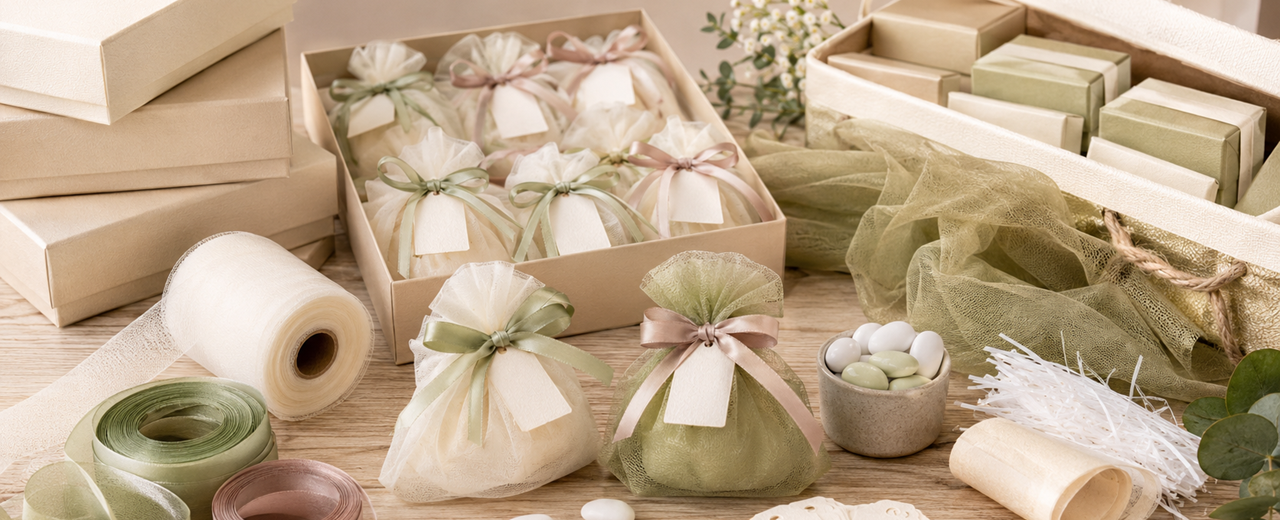
One of the most common and popular uses of satin ribbon is gift packaging. The ribbon is perfect for enhancing gift boxes, special packages and wedding favors, thanks to its elegance and ability to add perceived value to the packaging.
- Double satin ribbon is particularly suitable for luxury packaging, thanks to its shiny double face that allows for a flawless presentation from any angle.
- Single satin, on the other hand, can be used in simpler packages, where the visibility of only one side is sufficient to achieve a pleasant result.
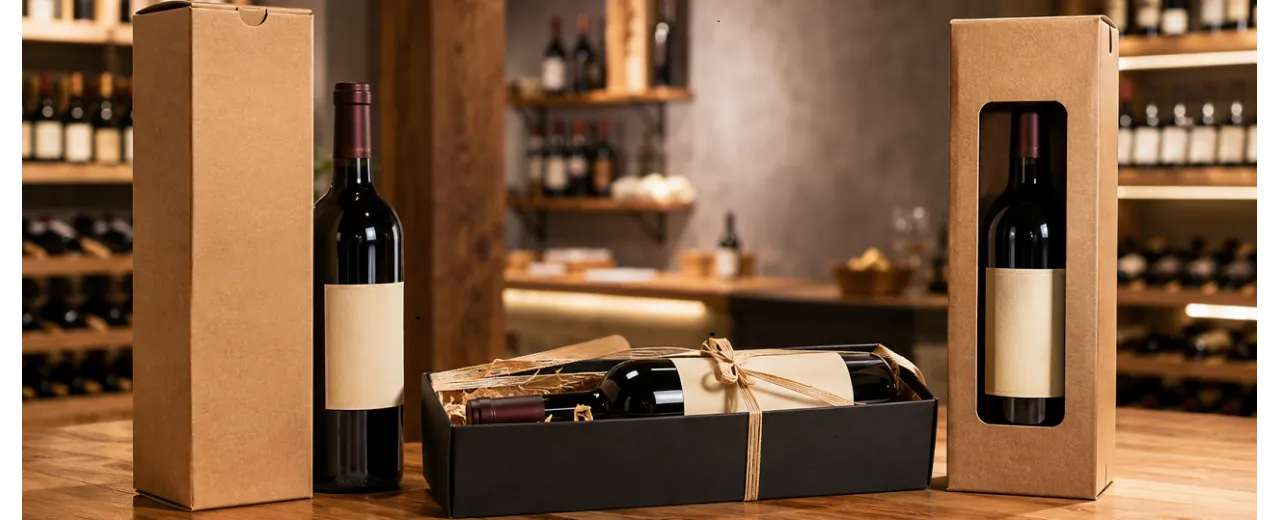
Industries that make the most of this type of packaging include perfumeries, jewelry stores, fashion stores, food boutiques, wine shops, and gift shops.
Fashion & Accessories
In the fashion world, satin ribbon plays a vital role in creating refined and personalizzati details. Stylists, tailors and designers frequently use both single and double satin to embellish formal dresses, hair accessories, bags and bijoux.
- Double satin is preferred for haute couture and tailoring creations, where softness and impeccable aesthetics on both sides make ribbon a distinctive element of quality.
- Single satin is mainly used in simple tailoring applications, such as decorative internal seams or details that do not require visibility from both sides.
Particularly widespread is the use of satin in wedding dresses, bridesmaids' dresses and ceremonial accessories, where elegance and delicacy are essential.
Decorations for weddings and special events
The ability of satin ribbon to impart elegance and brightness makes it a natural choice for decorations of weddings, anniversaries, baptisms and special parties. Among the most common decorative elements we find:
- Decorative bows for floral decorations and centerpiece compositions
- Decorations for ceremony chairs and tables
- Decorative ribbons for flower bouquets and invitations
- Embellishments for favors and place cards
For these applications, the double satin ribbon is ideal, precisely because it guarantees an impeccable result even when the ribbon is visible from both sides, ensuring superior aesthetic quality.
Floral decorations and artistic arrangements
In the floristic sector, satin ribbon is very popular for decorating floral arrangements, bouquets and ornamental decorations. The shine and softness of satin give floral creations a sophisticated and professional look:
- Double satin is often used by professional florists for bridal bouquets, arrangements for prestigious events, and floral decorations for fine arrangements.
- Single satin can be used in simple floral arrangements, floral gift wrapping or secondary details in decorations.
Window dressing and visual merchandising
Stores of alto level make extensive use of double satin tape to create impactful visual displays in their windows. The ribbon is in fact a versatile and highly aesthetic visual merchandising tool:
- The windows of fashion boutiques, perfumeries and jewellers are enriched thanks to elaborate compositions with bows, pendants and satin decorations, attracting the attention of passers-by and enhancing the products on display.
- Seasonal events such as Christmas, Valentine's Day, or Mother's Day, see the satin ribbon as the protagonist of the visual installations, capable of conveying a feeling of prestige and aesthetic care.
Also in this area, the double satin guarantees the best result thanks to its superior visual and tactile quality.
Summary of the main applications of satin and double satin ribbon:
- Gift packaging and favors
- Fashion, tailoring and accessories
- Weddings and ceremonies
- Floral decorations
- Window displays and visual merchandising
Choosing the right type of decorative tape, depending on the desired application, allows you to obtain professional and alto aesthetic results, making the most of any type of creative or commercial project.
How to Choose the Right Satin Ribbon for Your Project
To make the most of a creative project, a gift or a special event, choosing the right satin ribbon is essential. The market offers many options and variations, and finding your way around can be complicated. To make the best choice, it is important to take into account some key factors, including: width, length, color, color combinations and style.
Let's see each of these aspects in detail, to guide you in selecting the decorative tape that best suits your needs.
Tape width: when and why it matters
The width of the ribbon is one of the first elements to consider, as it greatly affects the final aesthetic effect. Satin ribbons are available in numerous widths, generally ranging from a few millimeters up to several centimeters.
- Thin ribbons (from 3 mm to 10 mm): perfect for small sartorial details, wedding favors, closing gift bags, thank you cards and very discreet and refined decorations.
- Medium ribbons (15 mm to 25 mm): Ideal for decorative bows, gift box decorations, floral bouquets, hair accessories and medium-sized elegant gift boxes.
- Wide ribbons (over 30 mm): recommended for important decorations, such as eye-catching window bows, luxury gift wrapping, important event arrangements and elaborate floral decorations.
Tape length: how to choose the right quantity
The choice of satin ribbon length depends mainly on the type of use and the quantity needed to complete the project. Standard packs of tapes range from a few meters up to industrial reels of several tens of meters.
- For home projects or small creative chores, a length of 5-10 meters may be sufficient.
- For commercial or craft activities, such as decorating gift boxes, wedding favors or floral creations, longer rolls (20 to 50 meters) are recommended, to optimize costs and warehouse management.
- For large events, weddings, exhibition stands and visual merchandising activities, it is advisable to buy longer reels (from 50 meters upwards) to avoid waste and ensure aesthetic uniformity.
Colour and colour combinations
The color of the satin ribbon is an essential element in defining the final result of the project. The choice of color must be consistent with the desired image, the context of use and the psychological effect you want to convey:
- Classic colors (white, ivory, black): suitable for elegant and formal packaging, official events, traditional favors and sophisticated decorations.
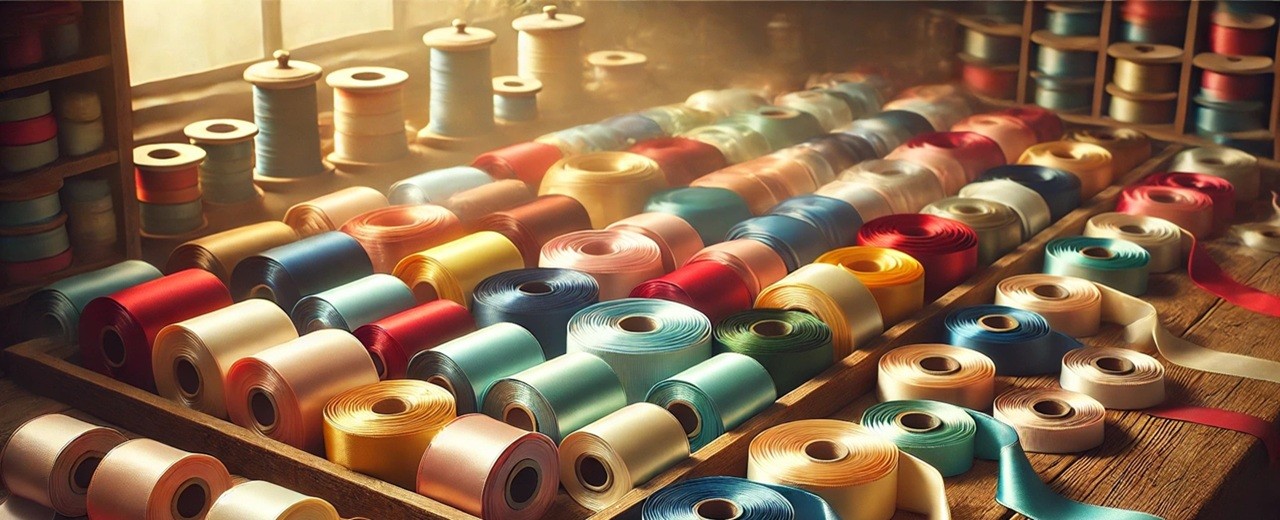
- Pastel colors (powder pink, light blue, sage green): perfect for weddings, baptisms, baby showers and romantic, delicate and spring occasions.
- Intense and bright colors (red, royal blue, emerald green, gold): ideal for festive events such as Christmas, Valentine's Day or gift boxes intended to immediately capture attention.
To create harmonious packaging and decorations, it is also important to consider the color combinations, following the principle of complementarity or tonal harmony, combining the ribbon with the color of the packaging, fabric or flowers used.
Styles and trends of the moment
Following the trends of the moment helps to create modern and attractive projects. Currently, among the main style trends in the world of decorative ribbons emerge:
- Minimal style: Thin, monochromatic ribbons, often in neutral or natural shades such as beige, light grey or taupe, perfect for a sober and refined style.
- Luxury style: Double polished satin in precious shades such as gold, silver or bronze, ideal for luxury packaging and exclusive decorations.
- Vintage or rustic style: Satin in natural colors, combined with rustic materials such as jute, kraft paper and botanical decorations, ideal for country-chic weddings and eco-friendly decorations.
- Contemporary glamorous style: Ribbons in bright or metallic colors, perfect for innovative gift packaging, decorations for fashion events or dynamic and modern window displays.
Quick checklist to choose the ideal tape:
- Clearly define the end use of the tape.
- Find the width that fits the size of your project.
- Choose a suitable length to reduce waste.
- Opt for colors that clearly communicate the desired message.
- Follow current trends to bring modernity and appeal to your project.
The careful choice of satin ribbon allows you to add aesthetic and qualitative value to any creation, always ensuring an impressive result.
Creative techniques of using satin ribbon
The satin ribbon is not just a simple decorative accessory, but a creative tool capable of transforming any package, object or environment into something unique and refined. Knowing the right techniques for using satin ribbon allows you to make the most of its aesthetic potential, giving life to original and memorable creations.
In this chapter, we'll look at some practical ideas and tips for using decorative tape creatively, both for personal and professional projects.
Making elegant bows
One of the most popular techniques for using satin ribbon is the creation of decorative bows. The bows add volume, elegance and a personal touch to any packaging or decoration.
How to make a perfect bow:
- Choose a double satin ribbon to achieve a flawless result on both sides.
- Create two identical buttonholes with ribbon.
- Cross the buttonholes and pass one inside the other.
- Tighten the center knot and adjust the ends to create a proportionate bow.
This technique is ideal for gift wrapping, wedding favors, floral decorations and event arrangements. For bulkier or more structured flakes, several overlapping rounds of tape can be used.
Decorations for events and ceremonies
The satin ribbon is an undisputed protagonist in decorations for weddings, baptisms, communions and anniversaries. Thanks to its shine and softness, it can be used for:
- Wrap the handles of bridal bouquets.
- Decorate chairs, tables and altars with decorative bows.
- Finish tablecloths, curtains and draperies with ribbons coordinated with the colors of the event.
- Personalize invitations, ceremony booklets and gifts for guests.
Choosing decorative ribbons in colors coordinated with the theme of the event helps to create a harmonious atmosphere with attention to the smallest details.
Creative ideas for gift packaging
Using satin ribbon in gift packaging is an art that enhances any gift, making it even more special and personal. Some creative ideas include:
- Create crisscross wraps around the box, secured with a center bow.
- Overlap multiple ribbons of different widths or colors for a layered and dynamic effect.
- Making knots and artistic folds that resemble flowers or geometric shapes.
- Combine the decorative ribbon with natural elements such as twigs, dried flowers or berries for natural and sophisticated packaging.
Double satin is particularly suitable for luxury packaging, thanks to its uniform appearance and increased texture that enhances the package.
Customization of accessories and objects
The satin ribbon can also be used to customize accessories and everyday objects, giving a touch of originality:
- Create bracelets by weaving colorful satin ribbons.
- Decorate headbands, headbands or barrettes.
- Finishing notebook cases, photo albums or storage boxes.
- Make handcrafted bookmarks, combining satin ribbons with beads or pendants.
These applications are perfect for handmade gifts, personalized favors or small craft projects to be offered even in commercial contexts.
Practical tips and quick tutorials
To make the best use of decorative tape, here are some practical tips:
- Always cut the tape with sharp scissors to prevent fraying.
- Lightly burn the edges of the synthetic tape with a flame (carefully) to seal them.
- When creating flakes or complex decorations, use a little hot glue to set discreetly and durably.
- To create richer decorations, overlap ribbons of different textures or materials, combining satin ribbon, organza ribbon or grosgrain ribbon.
By following these simple tricks, even the most complex projects will become accessible, allowing you to express your creativity without limits.
Maintenance and care of satin ribbon
The satin ribbon, to keep its beauty, softness and shine intact over time, needs some simple but important attention. Whether it is single ribbon or double satin ribbon, proper maintenance is essential to preserve its flawless appearance and avoid deterioration due to use, moisture or improper storage.
In this chapter we see how to take care of decorative satin ribbons , preserving them in the best possible way and recovering them even in case of minor damage.
How to store satin ribbons correctly
Proper storage of satin ribbons is the first step in ensuring a long service life. Here are some practical tips:
- Roll the tape on itself or on rigid reels to avoid creases and crushing that can ruin the smooth and shiny surface.
- Avoid direct exposure to sunlight, which can discolor bright colors and make the fabric brittle.
- Store the tapes in dry environments, away from sources of moisture, to prevent mold growth or weakening of the fibers.
- Protect the tapes from dust by storing them in closed containers or lightweight fabric bags.
By following these simple storage rules, your satin ribbons will remain beautiful and usable for a long time.
How to iron satin ribbon without damaging it
It can happen that the satin ribbon creases or has unwanted creases, especially after a long storage. To iron satin tape safely:
- Use an iron on a low heat ("silk" or "delicate" setting).
- Cover the tape with a light cotton cloth to protect it from direct contact with the iron.
- Do not use direct steam, which may stain or deform the shiny surface of the belt.
- Iron it quickly and without pressing too much, maintaining light and even movements.
This technique helps to recover the shape of the ribbon without damaging its brilliance or altering its texture.
Recover and reuse used tapes
To reduce waste and adopt more sustainable practices, it is possible to recover and reuse satin ribbons already used in gift packaging or decorations. Some useful tips:
- Eliminate any knots by untying them gently, avoiding tears or forcing.
- Iron the tape in the correct way to remove any remaining creases and creases.
- Cut off the damaged or frayed ends, finishing with a light lighter wipe on the synthetic edges to avoid new fraying.
- Shorten the ribbon if necessary to create bows, small decorations, bag closures or embellishments for gift cards.
With a little care and attention, even used decorative ribbons can come back to life, keeping their aesthetic value intact.
How to treat any stains on satin ribbons
In the case of accidental stains, treating satin ribbon requires particular delicacy:
- Immediately dab the stain with a dry cloth or paper towel, without rubbing.
- For light stains, use a damp sponge with cold water and mild soap, patting gently.
- Do not immerse the tape in boiling water or harsh chemicals, which may dull the surface.
- Let the belt air dry flat, without exposing the belt to direct heat.
If the stain is stubborn or the ribbon is very delicate (as in the case of silk satin), it is preferable to contact a laundry that specializes in delicate fabrics.
Benefits of proper satin tape maintenance
Carefully maintaining satin ribbons allows not only to preserve their aesthetics and functionality for longer, but also to:
- Saving money, recovering and reusing precious materials.
- Reduce environmental impact, avoiding unnecessary waste.
- Ensure high-quality presentations, especially for gift wrapping, favors, and special events.
Good maintenance is therefore essential for those who work in the tailoring sector, floral decoration, visual merchandising or tailoring.
Conclusion
The satin ribbon and the double satin ribbon represent two of the most refined and versatile choices in the world of decoration, packaging and tailoring. Through this article we have analyzed the main characteristics, the production materials, the aesthetic and functional differences, the numerous creative applications and the correct maintenance methods.
Choosing the right decorative ribbon allows you to transform every project, from simple gift wrapping to an elaborate wedding set-up, into a visual experience of great impact.
Summary of key points
- The satin ribbon stands out for its smooth and shiny surface, ideal for elegant and sophisticated decorations.
- The double satin ribbon offers a glossy finish on both sides, making it perfect for decorative bows, floral arrangements and high-quality gift wrapping.
- The choice between single and double satin depends on the end use: the former for simpler applications, the latter for more visible and valuable projects.
- The main uses of satin ribbon range from gift packaging to fashion and accessories, from wedding decorations to visual merchandising.
- Proper maintenance — preservation, ironing, recovery — allows the aesthetic quality of the tape to be kept intact over time, reducing waste and costs.
Final tips for buying satin ribbon
When choosing a satin ribbon, it is important to carefully consider:
- The material (silk, polyester or nylon) according to the use and the available budget.
- The width and length needed for the specific project.
- The color and color combinations consistent with the theme of the event or packaging.
- The style: from minimal and elegant solutions to the most elaborate and scenographic decorations.
Investing in a superior quality double satin ribbon can guarantee an impeccable and long-lasting final result, especially in contexts where every aesthetic detail makes a difference.
The importance of satin ribbon in the enhancement of projects
Whether it is a simple bow or a complex decoration, satin ribbon has the extraordinary ability to:
- Add perceived value to packaged products.
- Transform events and ceremonies into memorable visual experiences.
- Communicating care, attention to detail and refinement.
In a market that is increasingly attentive to image and visual quality, knowing how to choose and use the right decorative ribbon can be a distinctive and competitive element both in the personal and professional spheres.