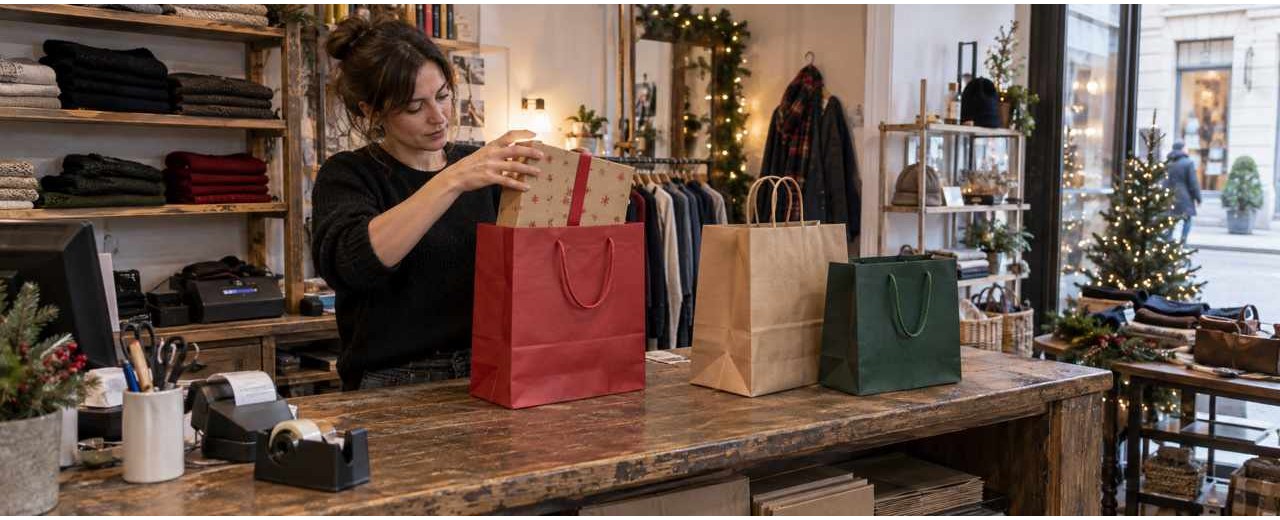
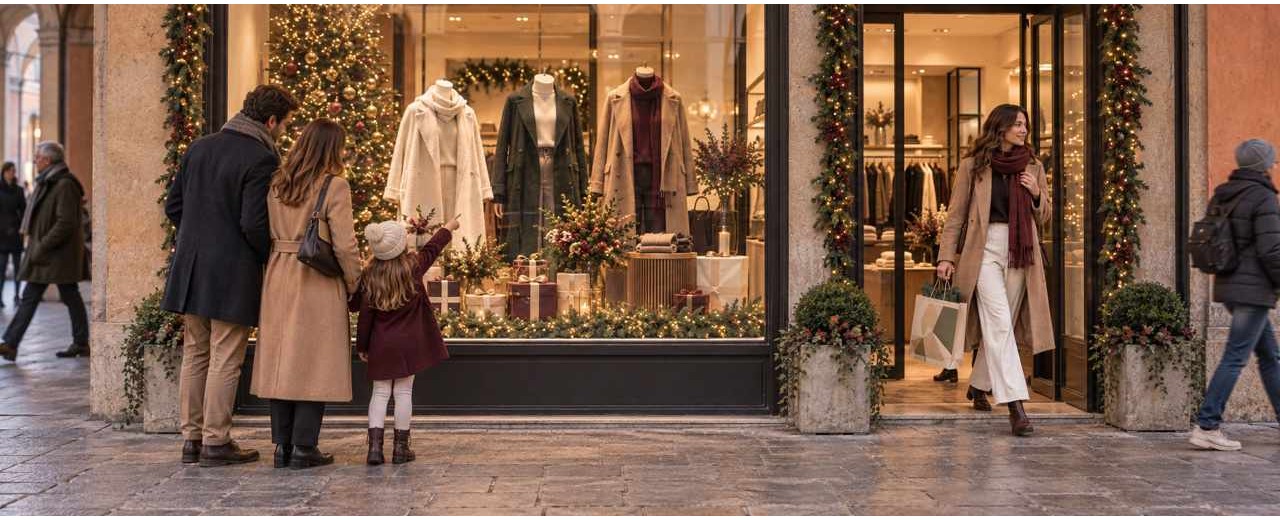
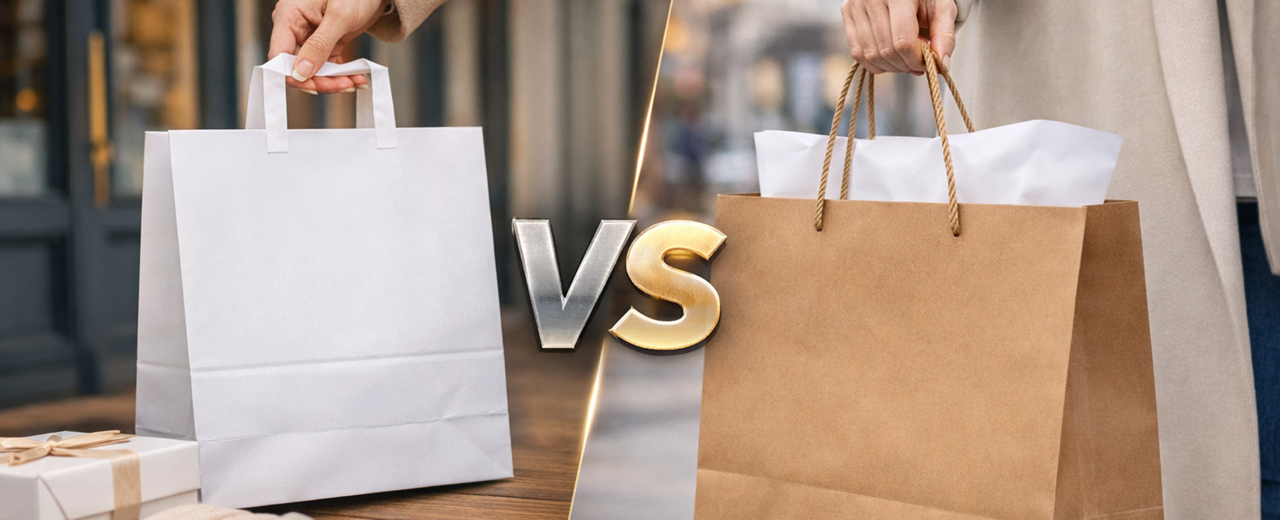
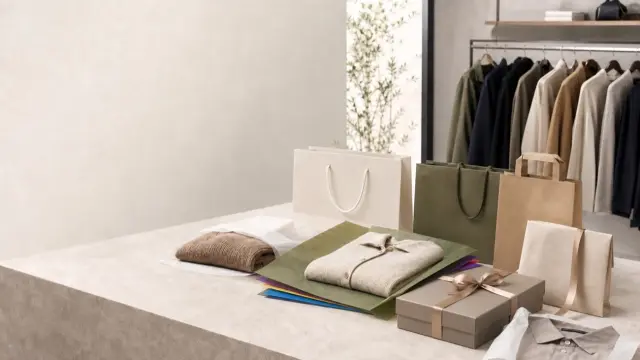
When the sales arrive, the store changes pace. Admissions increase, purchases multiply, but often the receipt medio lightens. Outlet garments, end-of-series, small accessories, impulse items: everything contributes to making the warehouse turn, but it does not always justify the use of your institutional shopper, perhaps made with an important paper, reinforced handles, fine finishes and a unit cost that only makes sense on full prices. It is at this time that many stores find themselves at a crossroads: continue to "waste" the premium shopper even for basso -value sales, or fall back on anonymous bags that impoverish the brand image.
The truth is that neither choice is really strategic. On the one hand, using the institutional shopper for each transaction during sales erodes margins and frustrates part of the commercial effort. On the other hand, giving the customer any bag, perhaps without a logo or with a generic print, loses a precious opportunity to communicate the value of your store, to make the brand travel on the street, on public transport, on social media. In a context in which packaging is increasingly an extension of the shopping experience, the shopper cannot be considered a simple accessory cost, but a marketing tool to be intelligently calibrated according to the period and type of sale.
This is where digital printing in low quantities comes into play, an often underestimated but extremely powerful lever for flexibly managing sales seasons. The possibility of producing small batches of personalizzati shopping bags, without having to deal with the minimum runs typical of traditional printing, opens up new scenarios for retail: you can dedicate a specific bag to promotions, clearly differentiate sales from full price, create seasonal graphics without the anxiety of having to dispose of leftovers in the following years. In practice, you can have a "smart" shopper, designed specifically to accompany lighter receipts, with a unit cost consistent with the value of the purchase, but still able to speak the language of your brand.
It is not a question of giving up elegance or visual coherence, far from it. Digital printing allows you to work with great creative freedom: you can change colors, messages, calls to action, insert references to sales, discount percentages, promotion dates, or transform the shopper into a real communication support to guide the customer to other channels, such as e-commerce or newsletters. All while maintaining a clear recognisability: clearly visible logo, palette in line with the institutional one, graphic style consistent with the identity of your store.
In a historical moment in which attention to cost is fundamental, but so is the care of the image, the personalized shopping bag in digital printing represents a concrete solution to combine efficiency and branding. It allows you to reserve the institutional shopper for alto value sales, where packaging becomes an integral part of the perception of quality, and at the same time to oversee sales with dedicated support, designed for that specific context, leaving nothing to chance. The result is a "double track" shopping bag system that protects margins, enhances the brand and transforms even the lightest receipt into an opportunity to communicate who you are and why it is worth returning to your store, even when the sales are over.
To protect margins without depleting the experience, dig deeper into where to save on packaging and where it doesn't.
Sales and light receipts: why the institutional shopper is not enough (and sometimes it's too much)
During sales periods, the store enters a different dimension than the rest of the year. The influx increases, the pace at the checkout accelerates, the warehouse finally "breathes" and many items find a new life thanks to more affordable prices. At the same time, however, the receipt medio tends to go down: we are no longer talking only about important coats, designer bags or iconic pieces of the collection, but about end-of-series garments, accessories, small occasions, impulse purchases. These are all valuable sales, essential for freeing up space, making cash and keeping the relationship with customers alive, but they have a very different margin structure than full price.
In this context, the institutional shopper – the "beautiful" one, made of fine paper, with laminations, embossing, reinforced handles and all those details that build a perception of value – can become a double-edged sword. It is perfect when it accompanies an important purchase: the customer leaves the store with a bag that communicates quality, care, attention to detail, and every euro spent on that shopper also makes sense in terms of customer experience. But when in front of the checkout you find a customer who has chosen only a t-shirt on sale, a pair of socks, an accessory discounted at 50%, that same shopper risks turning into a disproportionate cost compared to the receipt.
If we multiply this imbalance by tens or hundreds of transactions over the course of the sales season, the impact on margins becomes apparent. Each institutional shopper given to a very light receipt "eats" a part of the earnings already reduced by the discount. This is a silent effect, which is rarely perceived immediately, but which weighs on the accounts at the end of the season. On the one hand, it is not sustainable to offer an expensive shopper for every discounted sale. On the other hand, it is not even conceivable to completely give up packaging and deliver products in anonymous or makeshift bags, because this would weaken the image of the store and the perception of the brand.
The institutional shopper, in short, is a powerful but not "universal" tool. It was created to best represent the identity of the store, to make the shopping experience memorable and to travel with the customer outside the store, transforming it into a small traveling showcase. But it was designed in the first instance to accompany the sale at full price, the most reasoned purchase, the important gift. When it is used without distinction even for all micro-sales on sale, a dissonance is created between the perceived value of the goods and the real cost of the packaging that accompanies them.
Then there is another aspect, less immediate but equally relevant: the message that the shopper communicates. A high-quality institutional bag brings with it an expectation of premium price, exclusivity, selection. In sales, on the other hand, the customer lives a different experience, more oriented towards convenience, discovering the opportunity, the "stroke of luck" found on the discount grid. Always using the same shopper can flatten these two moments and make you lose the opportunity to tell, right from the packaging, that the store knows how to be elegant when needed, but also accessible, dynamic and "smart" during promotions.
The reality is that sales need their own language, even at the level of shoppers. Continuing to force the institutional shopper in every situation means not only incurring an often excessive cost, but also giving up on more targeted communication, capable of enhancing the promotional period without trivializing the brand. In other words, the representative shopper, during sales, is no longer enough and sometimes it is even too much. You need a different tool, designed specifically for light receipts and for the logic of rotation of the period, which allows you to protect margins without sacrificing brand visibility and image consistency.
It is precisely from this need that the idea of combining the institutional shopper with a solution dedicated to the sales seasons, more flexible in costs and more strategic in communication, was born. Digital printing in low quantities comes into play here: it allows you to build a "smart" shopper, calibrated on the medio value of the receipts on sale, without sacrificing the visual identity of the store and transforming every sale, even the smallest, into an opportunity for conscious branding.
When the "representative" shopper becomes a cost and not an investment
In theory, the institutional shopper is one of the smartest investments a store can make. It's not just a bag: it's a walking business card, an extension of the shop window, a key element of the shopping experience. When it accompanies an important garment, a total look, a valuable bag, a well-packaged gift, every detail – from the weight of the paper to the finish, from the color of the handles to the precision of the printing – contributes to reinforcing the brand's perception of quality. In these cases, the shopper is not a cost, but an investment that returns in the form of image, loyalty and word of mouth.
The problem arises when this same "representative" shopper is used without any distinction, even for the lowest receipts. If we analyze the economic dynamics of the sales with lucidity, an uncomfortable truth immediately emerges: the discount erodes the margin and the premium shopper, if given indiscriminately, ends up eroding what remains. An institutional bag has a unit cost that makes perfect sense in the face of a 150 euro receipt, but it becomes almost paradoxical if only one product on sale for 15 or 20 euros leaves the store. In these cases, the proportion between the value of the goods and the cost of the packaging is broken and what should be a marketing lever is transformed, in fact, into an excessive cost.
Let's imagine a typical sales day. Dozens of customers come in, look for the opportunity, choose one or two discounted garments, often from end-of-series or previous collections. These are very useful sales for the warehouse and for liquidity, but hardly at alto margin. If we hand in the institutional shopper for each of these light receipts, we are making an apparently generous but economically unpolished gesture. At the end of the season, the sum of all these shoppers given away at minimum receipts can represent a non-negligible share of "silent" costs, difficult to see at a glance but very concrete in the overall balance.
Then there is the issue of strategic coherence. The institutional shopper, with its elegant design and stage presence, is designed to tell a certain type of experience: that of the important purchase, the special moment, the curated gift. If you use it even when the experience is almost exclusively oriented towards convenience, the message becomes confused. On the one hand, the customer perceives packaging far above expectations compared to the economic entry into the store; on the other, the brand disperses the "wow" effect of the shopper, who stops being associated with something exclusive and simply becomes "the store bag", regardless of the value of what it contains.
In other words, the risk is twofold: you spend too much and communicate less. Too much, because the cost of the material and processing of the institutional shopper is not calibrated on the reduced margins of the sales. Less, because the excess of use trivializes its symbolic power. The result is that the initial investment made to create a shopping bag with a strong visual identity is progressively watered down by an unselective use. It's a bit like using the same luxury box for both a high-end product and a promotional item: in the long run, the customer stops perceiving the difference.
From a strictly managerial point of view, this scenario should set off alarm bells. Every component of the fixed and variable cost linked to the sale deserves to be reviewed in the light of the logic of sales, and the shopper is no exception. Continuing to consider it as an untouchable voice, the same in every season, means not grasping an important margin for optimization. The goal is not to "cut the beauty" or give up on image care, but to redesign the use of the institutional shopper so that it returns to being what it should: a targeted investment, used where it really makes sense and where it generates added value.
When the representative shopper enters the sales routine without a dedicated strategy, it stops working as a marketing lever and becomes a simple expense. On the contrary, if it is intelligently reserved for the right moments – full-price purchases, top customers, important gifts – and is combined with a more flexible and sustainable solution for light receipts, it recovers its original role as a positioning tool. It is precisely in this room for manoeuvre that digital printing in low quantities offers the store a concrete answer: an alternative shopper, designed for the sales period, capable of respecting the budget, protecting margins and keeping the level of brand communication alto .
Digital printing in low quantities: how it works and why it is convenient for shops
When we talk about shopping bags dedicated to sales, the real turning point is not only the idea of having an "ad hoc" bag, but the way this bag is produced. Digital printing was created precisely to respond to a specific need: to create small customized runs, quickly and without the typical commitments of traditional printing, such as plants, complex start-ups and high minimum quantities. It is the technology that allows stores to really think "by season", "by promotion" or even "by collection", without the weight of warehouses full of shopping bags to be disposed of in the following years.
With traditional printing, every graphic variation requires the creation of specific systems and only makes sense if we spread these fixed costs over large numbers. This makes the idea of creating a second shopper dedicated to sales inconvenient, if not impossible, especially for those who do not have large chain volumes. Digital printing overturns this logic: the graphic file becomes the heart of everything and the transition from the project to the product is much more direct. We can also work on small numbers, focusing on what really matters for the store: the message, the image, the consistency with the promotional period.
From a practical point of view, for the shopkeeper it means having access to personalizzati shoppers in low quantities, calibrated to the real sales needs. We can decide to produce a batch designed only for the winter sales season, with graphic references to the promotions of that period, or provide a smaller print run to be used for the first weekend of discounts, check the response and, if necessary, plan a targeted restock. We are no longer forced to think in terms of "stocks to be consumed at all costs", but we can manage production dynamically, following the real trend of the store.
The advantage is not only economic, but also strategic. Digital printing allows for much greater creative freedom, because it does not bind us to graphics "to be kept for years" to justify the cost of the system. We can dare more specific messages, play with sales claims, insert calls to action to digital channels, recall the "limited" edition of the promotion or highlight the start and end date of the sales. In other words, the shopper stops being a neutral support and becomes an integral part of seasonal communication, just like the window or the internal signs.
There is also an issue of cost control that should not be underestimated. Having the ability to order shoppers in small runs allows us to relate the cost of packaging to the actual value of sales on sale. We can choose more essential but still well-kept formats and weights, define a specific budget for the promotional period and respect it, avoiding waste. We must not give up the institutional shopper, which remains essential for the full price and for higher value sales, but we can combine it with a lighter tool that is more consistent with the logic of "light receipts".
Digital printing also offers an additional benefit: speed. Sales campaigns often settle relatively quickly, with dates fast approaching and tight business calendars. Being able to count on a production system that significantly reduces the time between confirmation of the graphics and final delivery of the shoppers means having more room for maneuver. We can make decisions closer to the reality of the moment, adapt messages based on actual discount policies and not get stuck months in advance with "standard" graphics that perhaps, at the time of the start of the sales, are already outdated.
From an image point of view, the quality of the new generation digital printing allows for very clean results, with sharp logos, well-defined colors and an overall rendering that conveys professionalism. We are not talking about a "poor" solution, but a different tool, designed to dialogue with a precise context: that of promotions, discounts, fast sales. We can maintain consistency with our institutional identity – taking up fonts, colors and style – and at the same time introduce graphic elements that speak the language of the sale: dynamic, immediate, convenience-oriented, without falling into the bazaar effect.
In short, digital printing in low quantities is the technological piece that makes it possible to intelligently manage shopping bags in the store. It allows us to stop using a single bag for everything and instead build a more articulated system, where each shopper has a precise function: the institutional one for full price and value sales, the digital "sale" one for light receipts and promotions. In this way, we protect margins, maintain high perceived quality and also transform the sales period into an opportunity to communicate our brand with consistency and awareness.
Double winning track: institutional shopper for full price, digital shopper for sales
To manage the packaging of a store in a truly effective way, it is not enough to choose "a beautiful bag" and use it in all circumstances. The real strategy consists in building a system, a double track in which each shopper has a precise function, consistent with the type of sale he accompanies. On the one hand, there is the institutional shopper, designed to best represent the brand's identity and enhance full-price purchases. On the other hand, there is the digitally printed shopping bag, designed specifically for the sales seasons and lighter receipts. Two different, complementary tools, which do not replace but reinforce each other.
The institutional shopper remains the protagonist of the scene in moments of alto value. It comes into play when the customer chooses an important garment, composes a total look, buys a meaningful gift or lives a shopping experience that goes beyond simple convenience. In these situations, the shopping bag becomes an integral part of the story: the quality of the paper, the feeling to the touch, the attention to detail, the solidity of the handles, the elegance of the print communicate consistency with the positioning of the store. The customer comes out with something that is not just a container, but a tangible sign of attention and style. In this scenario, the higher cost of the institutional shopper is fully justified, because it helps to build value and fix a positive experience in the memory.
However, when the context changes and we move on to sales, promotional sales, quick purchases at reduced margins, insisting on the same shopper brings the entire system out of balance. The "double track" serves precisely to avoid this short circuit: the institutional shopper remains reserved for the full price and sales that really deserve it, while for the typical transactions of the sales season, the digital shopper enters the scene. It is here that the store demonstrates that it knows how to govern its packaging with lucidity, without being guided by habit but by a precise economic and communicative logic.
The digital shopper dedicated to sales is not an impoverished or "second-rate" version of packaging, but a tool optimized for a different goal. Its task is not to impress with luxurious finishes, but to ensure brand visibility and image consistency, while containing the unit cost and speaking the language of promotion. Thanks to digital printing, the graphics can explicitly recall the sales season, the discount percentages, the dynamic and temporary nature of the offer. In this way, each bag immediately tells what commercial phase it is, without confusing the customer and without trivializing the institutional shopper.
This dual-track model has clear economic benefits. Instead of "spreading" the institutional shopper across all sales, with a significant impact on margins during sales, the store can reserve it for alto -value bargains and use the digital shopper whenever the transaction does not justify such a alto investment in packaging. In practice, each type of shopper is assigned the role in which it obtains the highest performance: the institutional one as a positioning lever, the digital one as a tool for efficiency and visibility during promotions. The result is a much more precise control of the cost of packaging per receipt, without sacrificing brand recognition.
Then there is an element of perception that should not be underestimated. When the customer instinctively associates the institutional shopper with the most important shopping experiences, that type of bag acquires a particular symbolic force. It is not "the usual envelope", but something that you receive in special moments: a gift for a loved one, an important purchase for yourself, an iconic garment from a new collection. By limiting its use to situations where the value of the goods is consistent, the store preserves this aura and reinforces, over time, the idea that that packaging is linked to something exclusive.
At the same time, the digital shopper, if well designed, creates a real identity dedicated to sales. More vibrant colors, targeted claims, references to the occasion and convenience help to make the promotional phase recognizable, without falling into visual disorder. The customer, seeing that bag on the street, immediately perceives that the store is "in sales season", that there are opportunities and discounts in progress, and this can also stimulate spontaneous traffic. The shopper, in this case, becomes a medium that tells the commercial time in which the store is located, almost like a dynamic extension of the signs in the window.
The double track also has a positive organizational impact. The store can plan in advance the quantities of institutional shoppers to be allocated at full price, knowing that they will not be "burned" on the small receipts on sale, and at the same time plan a targeted production of digital shoppers for the promotional season. Thanks to the flexibility of digital printing, it is possible to calibrate print runs, avoid unnecessary stocks and update graphics from one season to the next, keeping communication fresh and up-to-date.
Finally, this approach communicates something very important to the customer: the idea of a store that knows how to intelligently manage every detail, from the product to the packaging. Not an indiscriminate use of a single solution, but a conscious choice of different tools based on the context. Those who live in the store perceive this consistency and translate it into a feeling of professionalism and care. Whether it's a coat from a new collection or a t-shirt on sale, the message is clear: behind that bag there is a project, not a coincidence.
Ultimately, adopting a double-track shopper system means making a qualitative leap in the management of your brand. The institutional shopper continues to play the role of high-end ambassador, linked to the full value of the product. The digital shopping bag for sales becomes the ideal partner for promotional sales, with costs under control and a visual language perfectly in line with the season. Together they build a coherent story, in which each commercial phase has its own voice, its own style and its own dedicated packaging.
Messages, colors, call to action: what to print on shopping bags dedicated to the sales season
Once the strategic role of the digital shopping bag for sales is understood, the key question becomes: what do we put on top of it? It is not enough to write "Sale" big and hope that the price will do the rest. The shopper dedicated to the promotional season is a communication medium in all respects and must be designed as such, working carefully on three levels: the message, the color, the call to action. Every centimeter of paper can help tell the story of the positioning of the store, the tone of the promotion, the value of the brand, transforming a simple bag into a small advertising campaign that travels around the city.
The starting point is always the brand. Even when it comes to sales, the logo must be clear, legible, well placed. It doesn't have to be huge or dominant, but it needs to be unambiguously present, because the goal is to get those who see the shopper on the street to immediately link that bag to a specific store. Around the brand, in the case of the sales shopper, a more dynamic narrative is built: short claims, easy to remember, which directly express the character of the promotion. You can work on the idea of opportunity, intelligent convenience, "pieces not to be missed", careful selection even on sale. The important thing is to avoid generic messages that could belong to anyone and instead choose formulas that are consistent with the language and positioning of the store.
Colors play a decisive role. Tradition associates sales with strong colors, often red, yellow, very impactful. You don't have to replicate this pattern literally, but it's helpful to think about the visual effect you want to achieve. A more elegant store might decide to use a neutral base, recalling the institutional palette, and introduce just a few brighter color accents to signal the idea of promotion. A younger and more informal sign can afford more marked contrasts, graphic patterns, bold writings that communicate energy and movement. In any case, the color of the sale shopper must dialogue with that of the institutional shopper, creating a visual kinship: those who know the brand must also recognize it in a "promotional" version, without having the feeling of being in front of something completely foreign.
On the content front, the sales shopper offers an opportunity to go beyond the simple discount announcement. In addition to the main claim, you can insert phrases that enhance the in-store experience even in the promotional period: the idea of finding selected garments, attention to service, the possibility of discovering the new assortment while taking advantage of the reduced prices. The shopper can remember that sales are not a disorderly sale, but a time when the store continues to take care of selection and quality, simply at more favorable conditions for the customer. This message, if well constructed, helps to protect the perception of the brand, preventing the word "balance" from being associated with something devalued.
Calls to action are another key element. The sales shopper must not limit himself to closing the purchase cycle, but can open a door to the "after". It is the ideal place to invite the customer to follow the store on social media, subscribe to the newsletter, visit the e-commerce, and preview the new collections. A clearly legible URL, a clear invitation to follow an Instagram profile, a QR code that refers to a page dedicated to sales or a loyalty program transform the bag into a bridge between the physical and digital experience. In this way, even a light receipt can generate a more lasting relationship, because the shopper continues to work for the store even when the customer has already left.
Finally, the value dimension should not be forgotten. If the store works with attention to sustainability, the shopper dedicated to sales is the perfect place to remember it. A short sentence about the choice of materials, the responsible use of paper, the possibility of reusing the bag conveys consistency and responsibility. The "green" message does not have to be the protagonist, but can coexist with the promotional one, strengthening the brand identity in the eyes of a customer who is increasingly attentive to these issues. Also in this case, digital printing helps, because it allows you to update the contents over time and adapt them to the evolution of the environmental policies of the store.
In summary, what you print on the sales shopper makes the difference between a simple bag "that takes home the goods" and a real branding and marketing tool. Targeted messages, carefully chosen colors, well-thought-out calls to action and a reference to the store's values transform each shopper into a small media, consistent with the promotional season but aligned with the brand's personality. It is this mix that makes the digital sales shopper truly "intelligent": a support with costs under control, but capable of telling much more than a crossed out price.
Format, papers and sustainability: the technical aspects to be evaluated before ordering
If the shopper dedicated to sales must be an intelligent tool, technique is not a secondary detail, but the heart of the correct choices. Each choice of format, paper and finish has a direct impact on cost, brand perception and in-store practicality. The goal is clear: to find the balance point where the bag is solid and well-finished enough to represent the store well, but optimized enough not to weigh excessively on the margins already reduced by the promotional season.
The first issue concerns the format. In sales, the type of product sold changes: more light garments, more accessories, more individual items that do not necessarily require the same large and structured shopper designed for important purchases. In many cases, a more compact format is sufficient, perhaps with a shallower gusset or a low height, which still allows the garment to be stored comfortably without wasting paper. Working on the format means adapting the bag to the typical sales receipts, avoiding "wasting volume" and, consequently, budget. Careful planning allows the cashier staff to have the right size at hand for most situations, possibly reserving larger formats for specific cases or for the institutional shopper.
The choice of paper is the second big chapter. The sale shopper does not need excessive weights or luxury finishes to do its job well, but it cannot be fragile or poor either. The sensation to the touch, the resistance to weight, the tightness of the handles affect the perception of the store as much as the graphics. A good quality paper, with an optimized weight, allows you to support clothing, small boxes or accessories without problems, maintaining a decent yield even after use. This is where the supplier's experience comes into play: identifying the ideal combination of thickness, fiber type and surface finish allows you to contain costs without giving the impression of having "cut" on quality.
Next to the paper, the structure of the bag completes the picture. Twisted or flat paper handles, reinforcements on the bottom and on the upper flap, gluing method: every detail contributes to defining the overall solidity. For the sale shopper, a more basic solution is often preferable than the institutional one, but still reliable. A bag that breaks under the weight of two sweaters or that deforms at the first use risks canceling in an instant the positive message built with graphics and communication. This is why it is worth thinking in terms of "necessary and sufficient": removing the superfluous, maintaining what guarantees a good user experience.
The theme of sustainability deserves a chapter of its own, because today it is no longer an optional, not even in sales. Customers are increasingly sensitive to the environmental impact of materials, and the shopping bag is one of the most visible objects in this sense. Choosing certified papers, preferring recyclable materials, avoiding unnecessary when not essential lamination, discreetly communicating one's environmental commitment on the bag itself are all choices that contribute to building a solid reputation. The sale shopper, precisely because it is often produced in significant quantities, can become an important vehicle to reiterate this attention: a small line of text on the origin of the paper or the recyclability of the product can be enough to give the customer the feeling of being in an attentive and responsible store.
Digital printing, for its part, integrates well with this vision. Working on low quantities means producing only what is needed, reducing the risk of leftovers ending up in the warehouse or, worse, in landfills. The ability to update graphics and messages season after season also makes it possible to avoid the use of "dated" shopping bags in order to dispose of stocks, a practice that often leads to an inconsistent use of communication. Conscious design makes it possible to reconcile commercial needs and attention to the environment, making the shopper a concrete example of balance between aesthetics and responsibility.
Finally, there is an aspect that unites all these elements: consistency with the institutional shopper. Even if the format is more basic, the paper less important and the message oriented towards promotion, the sale shopper must still "speak the same language" as the main packaging of the store. This means using a well-proportioned and well-positioned logo, chromatic references to the brand's palette, a typographic treatment in line with the overall visual identity. Anyone who sees the bag must be able to immediately recognize the store, without having the impression of being in front of a makeshift support.
Ultimately, format, paper and sustainability are not simple technical items of a product sheet, but the pillars on which an effective shopping bag is built. A format designed on real sales volumes, an essential but robust structure, materials chosen with intelligence and attention to the environment, all included in a visual project consistent with the brand: it is this combination that transforms a promotional bag into a true ally of the store, capable of supporting sales without weighing down costs and, at the same time, to strengthen the image of the store in the eyes of customers.
From idea to finished shopping bag: how to design and buy digital print shopping bags with ease
Getting to the "right" shopper for the sales is not a matter of luck, but of method. The transition from the idea to the finished bag is built through some clear decisions, taken in dialogue with a supplier who knows the needs of stores and the potential of digital printing well. The goal is not to complicate the work of the store, but to simplify it: to transform a commercial strategy into a concrete object in a few steps, ready to enter the checkout routine throughout the sales season.
It all starts with a simple question: what role should the sales shopper play in your store? If you consider it a pure container, you will inevitably tend to reduce every choice to the price alone. If, on the other hand, you see it as a piece of seasonal communication, the approach changes. It is worth defining the perimeter from the outset: for which types of purchases it will be used, in which range of receipt value, for what time of year, with what indicative volumes. Complex calculations are not needed, but a realistic estimate, based on the experience of previous seasons. This first framing allows you to better set up all subsequent decisions, from the format to the graphics.
Once the commercial role has been clarified, the next step is to translate the positioning of the store into a visual idea consistent with the language of sales. This is where the work on the graphic concept comes into play. It's time to decide how your sales "speak": in a sober and elegant way, focusing on selection and quality even on promotion, or in a more energetic way, with strong visual references and direct claims. The important thing is that the graphic proposal is not disconnected from the institutional image. Logo, palette and typographic style must dialogue with the main shopping bag, while leaving room for elements that tell the specificity of the promotional season.
With a clear concept, the discussion with the supplier becomes concrete. It is in this phase that creativity and technical feasibility intersect. We move from sketches to simulations, we think about which format is most suitable for the items that on average end up in the sales bags, we check which type of paper guarantees the best balance between aesthetic performance and resistance, we evaluate the position of the logo, the legibility of the texts, the visibility of any calls to action. Digital printing allows you to quickly see a print proof faithful to the final result, minimizing surprises and allowing you to refine the details before confirming the order.
At the same time, it is essential to address the issue of quantities with lucidity. One of the great opportunities of digital printing is the possibility of working on short runs and, if necessary, planning any restocking. This means that you don't have to order thousands of shoppers right away to use for years, but you can align yourself more closely with the real trend of sales. An initial print run designed for the start of the season, followed by any additions, allows you to keep your budget under control, avoid stocks and, if you decide to update the message the following year, do so without the weight of stock to be disposed of.
The confirmation phase is where all the elements must be perfectly aligned. Approved graphics, defined technical specifications, shared quantities, clear production and delivery times. It is useful to see this phase not as a formality, but as a moment of strategic verification: does the shopper you are about to send to print really reflect the image you want to give of your sales? Does it communicate the right combination of convenience and care? Is it recognizable as "yours", even by those who only see the bag on the street? Only when the answer to these questions is positive does it make sense to proceed.
Once the shopper arrives at the store, they begin their fieldwork. This is where an often overlooked aspect comes into play: the training, even minimal, of cash staff. Clearly distinguishing when to use the institutional shopper and when to use the sale one, avoiding waste, choosing the most suitable format based on the content, are actions that may seem trivial, but which concretely determine the success of the strategy. A shopper designed for light receipts loses effectiveness if it is given indiscriminately to those who buy important garments or, on the contrary, if the institutional shopper continues to be used for any sale. A brief internal sharing on objectives and rules of use is an integral part of the project.
As the weeks go by, the store has the opportunity to observe how the sales shopper behaves in reality: how customers react, how comfortable it is for the staff, what perception it returns in terms of image. The following seasons thus become an opportunity to improve further. Thanks to the flexibility of digital printing, it is possible to intervene on the message, strengthen certain graphic elements, change a detail of format or structure, perfect the mix between institutional and promotional shopper. The project, in this sense, is never static: it evolves together with the store and its commercial strategy.
Ultimately, moving from the idea of "we would need a bag for the sales" to a finished, coherent and functional digital shopper is a linear path if you proceed methodically and with the support of specialized partners. Defining objectives and context, designing graphics that speak the language of the brand and sales, carefully choosing technical aspects, exploiting the flexibility of digital printing and monitoring in-store effectiveness are the steps of a single process. The result is a shopper that not only contains the product, but supports the profitability of the store, protects the brand image and makes the sales season a well-integrated, and not "separate" chapter in the history of your brand.
Rethinking shopping bags for the sales season actually means rethinking the way the store tells its story at the busiest times of the year. Sales are not a messy parenthesis to be "endured", but a strategic phase in which resources are freed up, the warehouse is moved, new customers are met and the relationship with the usual ones is strengthened. In this scenario, the shopper is not a marginal detail: it is the final point of contact between customer and brand, the object that physically leaves the store and continues to talk about the store when the window lights are already behind us. Treating it as an indistinct cost item means giving up an important part of this conversation.
The key lies in abandoning the logic of the single "all-season" shopper and embracing a more conscious system, in which the institutional shopper continues to have its role of representation for the full price and for alto -value purchases, while the digitally printed shopper becomes the discreet but efficient protagonist of sales. This double track does not weaken the image of the store, on the contrary it strengthens it: it clearly delimits the different commercial phases, protects margins in light receipt sales and keeps intact the symbolic power of the most prestigious shopping bag, reserving it for the moments when it really makes a difference.
Digital printing in low quantities is the tool that makes this evolution possible. It allows you to produce shopping bags dedicated to sales without being tied to large print runs, to update messages from season to season, to test different solutions and calibrate them to the real needs of the store. It allows you to transform the bag from a simple transport support to a vehicle of content: targeted claims, studied colors, calls to action that connect the physical store to digital channels, sustainability messages that tell a concrete and not just declared sensitivity. Each shopper thus becomes a small media, able to support the brand's narrative even when the customer's attention is focused above all on the price.
On a technical level, format, papers, structure and materials stop being variables left to chance and become design levers. A well-thought-out shopping bag is more compact, calibrated to the garments and accessories that actually end up in it, resistant enough but without excess, made with papers of optimized quality and, when possible, with clear and communicable sustainability criteria. It is not a question of making "downward" savings, but of investing intelligently: eliminating the superfluous, preserving what really affects the perception of care and reliability.
In perspective, the choice to differentiate shoppers for full price and sales brings with it an additional benefit: it gives the store a feeling of direction. It is no longer the packaging that "suffers" the season, but it is the season that is supported by a tool designed specifically for it. The checkout team knows when to use one bag and when to use the other, customers unconsciously learn to associate the institutional shopper with special moments and the promotional one with the search for the occasion, while the brand remains recognizable, consistent, readable in both situations.
On the eve of a new sales season, it's worth asking yourself if it still makes sense to keep using the same shopping bag for everything or if it's not time to take it up a notch. Redesigning packaging in a "double track" key, exploiting the potential of digital printing in low quantities, means putting order where habit often reigns, recovering margins that are now eroded in silence and transforming sales from a simple discount race to an integrated and coherent chapter of one's brand strategy. Those who know how to do so will not just "hold" the season, but will use it to talk better about themselves, even when the crossed out price seems to steal the show from everything else.