Tissue paper and wrapping paper for shipping have different functions and should not be confused. The tissue protects...

White kraft paper shopping bag with flat handle, 9 sizes€87.11
 ChartaRè, RossiCarta's Online Packaging Store



Tissue paper and wrapping paper for shipping have different functions and should not be confused. The tissue protects...
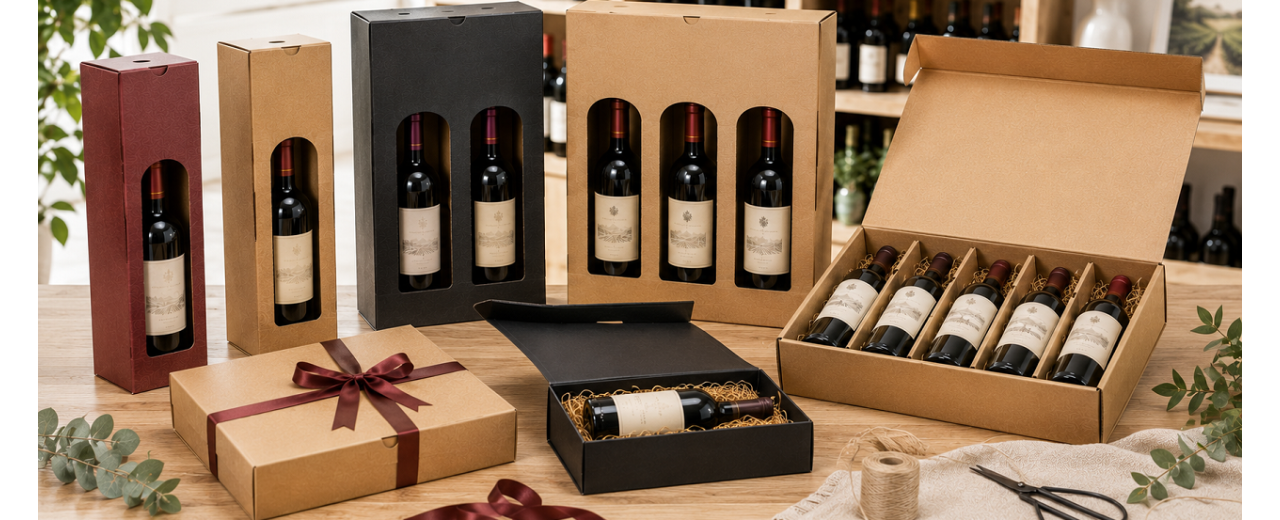
Wine boxes of 1, 2, 3 or 6 bottles help wine shops and wineries manage sales, gifts and delivery. Each format...

Personalised wine boxes enhance bottles, gift selections and corporate gifts. Logo, format and quantity must be...

Tissue paper helps e-commerce businesses to superficially protect products and better present them inside the...
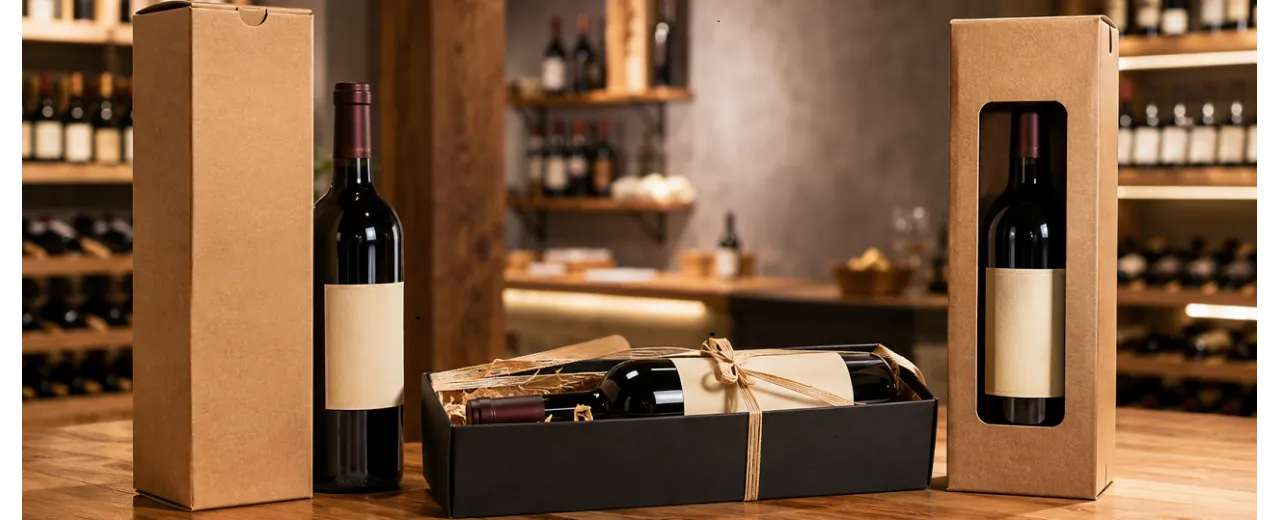
Wine boxes help wine shops and wineries to enhance bottles, gift selections and company packaging.Choosing between...

Fragile products require packaging designed according to weight, shape, material and mode of transport.Glass,...

Preparing a package well means protecting the product and delivering an orderly and professional order to the...

Food packaging must protect the product, speed up service and enhance every sale.Pastry shops, delicatessens and wine...

Packaging for wedding favors requires proportionate containers, coordinated materials and procedures that are easy to...

Grass paper, tulle, shavings and tissue paper perform different functions in professional packaging.The correct...

Summary for those who don't have time. Reading time 1 minute.
When you reset the store in the period after winter sales, everything revolves around the post-sales and retail strategies that allow you to build a real sales restart without falling back into the logic of discounting. In this phase, your goal is to work on the full price, on margins and on rebuilding margins in a structured way, because retail profitability is not recovered with a stroke of luck but with consistent work on perceived value and price perception. For this reason, you must govern pricing, pricing architecture and pricing policy, so as to obtain real margin protection and a concrete reduction in discounts after the end of sales, making the return to the full price credible and stable.
If you want the customer to really choose and not bargain, you need to get the store to talk with a value proposition and a guided proposal, because in the absence of clarity, the sale slides back towards the price. This is where your indicators come in, from conversion rate to conversion rate, to medio receipt, medio receipt increase, and pieces per receipt, which become the practical measure of your ability to sell well. When you work on cross-selling, upselling, and bundling, you do it to build a solution that makes sense, not to force, and the difference is made by consulting selling, sales language, sales scripting, and staff training, which make every interaction safer and more effective.
All this, however, only really works if you integrate it into the customer experience, because the in-store experience and the customer journey are the framework in which the customer decides if the full price is justified. You need to take care of customer welcoming, the customer journey, and reducing friction, because ease of choice increases trust and reduces the tendency to negotiate. Visual merchandising, and in particular anti-chaos visual merchandising, is used precisely to give order to the product display, build a visual hierarchy and transform in-store order and store readability into a commercial advantage. When you work on store layout, zoning and department map, you are designing a system that guides the customer, and the post-sales window becomes the first piece of your visual communication: with window display and in-store storytelling you communicate product selection, new season and new season clearly, so the customer immediately understands that it is no longer sales time.
To keep the store alive without going back to the price lever, you also need a logic of micro-occasions and a commercial calendar, because February retail, March retail and April retail are months in which seasonality and seasonal transitions can become a traffic engine if you govern them continuously. In parallel, you need to turn sales into relationships, because customer retention and customer sales management are the bridge between opportunistic buying and retention. When you work on customer loyalty, lead collection, customer contacts, and post-purchase follow-up, you're building customer relationships and return reasons that don't depend on discounts, but on in-store services and a consistent experience.
In this journey, the checkout is a strategic moment, because the checkout experience, the checkout area and the closing of the sale determine the memory of the purchase. Product delivery must express quality, service and brand consistency, because the store identity is also played out in the details, from visual consistency to operational standards. Here the after-sales wrapping, the gift box and more generally the retail packaging become part of your proposal, because a well-structured packaging service increases the perceived quality, makes attention to detail a distinctive element and can even activate an unboxing capable of fueling word of mouth and return to the store.
In the meantime, you have to govern the most delicate part of the post-sale, i.e. the management of inventories. If you work with smart inventories, stock management, end-of-series and separation of new and inventories, you protect your retail positioning and reduce the risk of the customer confusing everything and still asking for discounts. Stock rotation and sell-through thus become tools to maintain assortment control, category control and assortment optimization, giving the right visibility to core products and premium products. In this way, you strengthen store reputation and customer trust, because clarity reduces negotiation reduction and allows you to manage more solid and consistent discount requests, supported by non-promotional communication that creates true retail differentiation. When you close the loop between perceived quality, attention to detail and brand consistency, rebuilding margins becomes a natural consequence of your system, and not a goal to be pursued urgently.
The Store Reset After the Sales: 12 Practical Strategies to Rebuild Margins, Windows and Receipt medio
Reading time 1 hour.
After the winter sales, your store enters a particular phase, often underestimated but decisive for the performance of the whole year. You've just gone through weeks where price has been the main driver of traffic and conversion, and now you're in front of an audience that has just learned, in a very concrete way, that waiting pays off. It is an inevitable psychological step: when the customer buys on promotion, he internalizes the discount as a reference and tends to reconsider the real value of the products and services you offer. In the meantime you have worked at an intense pace, you have managed volumes, urgencies and inventories, and the store bears the signs of that period: densified displays, repeated commercial messages, departments pushed out of balance, a visual communication that often remains "in sales mode" longer than necessary. If you don't approach this moment methodically, the risk is to drag along a dangerous inertia, made up of margins that cannot be rebuilt, customers who negotiate, staff who sell by "defending" themselves and an overall perception that struggles to return to premium.
The reset in February and the first post-sales days is not a simple window change and it is not even a cosmetic reorder operation. It is a reconstruction, and like all reconstructions it requires a project. You need to regain control of three variables that tend to be sacrificed out of necessity in sales: positioning, experience, and profitability. Positioning because during the discount the message flattens out and your store risks looking too much like anyone else who is doing the same thing; experience because, between flows and urgencies, attention to detail becomes more difficult and the customer perceives fewer differences between one purchase and another; profitability because, even when volumes grow, the margin structure changes and shifts in favor of quantity. If you really want to start again, you have to bring these three dimensions back to work together, because healthy retail does not live on a single lever: it lives on balance.
There is a typical error, and you see it clearly every year, in any sector. The sales end and many shops just "go back to normal", as if it were enough to remove the signs and hang something new. But normality, after a period of aggressive pricing, is no longer the same. Normality has been shifted, in fact, towards an expectation of convenience and towards a habit of choosing in the midst of noise. In addition, the customer has just had a different shopping experience: faster, more opportunistic, often less guided. If you return to normality without redesigning it, you let the inertia of the promotional period define the following weeks. And this is how that very common feeling arises that February becomes a "slow" month and March an "uncertain" month, not so much because there is a lack of opportunities, but because there is a lack of a strategy that reactivates desire and puts the full price back in its correct position.
That's why you need a reset that is operational, not ideological. It's not a question of deciding that you will "no longer discount" or that you will "focus on quality" as if they were statements of intent. It is a matter of lining up concrete actions, with a logic, with a sequence and with measurable objectives. You have to create a context in which the customer immediately understands that a different phase has begun, in which you don't buy because you save money, but because you choose. You have to make people feel that the store has returned to being a place of selection and criteria, not a warehouse to be sifted. You need to reconstruct perceived value through consistent signals, from the storefront to the checkout, from the way you display to the way you speak, to the way you deliver the product. And you have to do it in a disciplined way, because discipline, in retail, is what turns an idea into an outcome.
In this guide you will find a path structured in twelve chapters, designed to accompany you from the "after" of the sales to the "before" of the new season, that is, towards that moment when the store must return to working well, with fairer margins and with an audience more willing to recognize value. It's not a theoretical text: it's a system of interventions that you can adapt to your reality, regardless of the size of the store or the specific sector. The goal is to give you a method that helps you clean up the noise left by promotion, rebuild a coherent commercial language and reactivate the levers that really make turnover grow in the medio period: conversion, the medio receipt and the share of sales at full price.
The central point is that the post-sales is not a season of waiting, but a season of realignment. It's the moment when you can turn sales traffic into returning customers, and when you can recover margins without forcing. It is the moment in which you can reorder, but above all re-signify: give a clearer sense to what you sell, how you present it, how you tell it. It's the moment when you can build a sharper, simpler, and more memorable shopping experience, because the customer doesn't just buy one product; It buys the feeling that you have made the right choice. When you manage to deliver that feeling to it, the price stops being the main topic and goes back to being part of a whole.
If you approach the reset with a professional approach, you realize that there is no need to "invent" extraordinary solutions. Rather, it is necessary to remove what does not work, strengthen what works and make replicable what works. Modern retail rewards those who are consistent and consistent, not those who are spectacular once in a while. This is why the system you are about to read is discursive but concrete: it accompanies you to think like a store manager who works on processes and results, not like someone who hopes for a spontaneous restart. Because the post-sales restart is not an event: it is a choice, and above all it is a method.
Restarting without discounting: how to get sales back on track by bringing the customer back to value
After the winter sales, you are often faced with a typical retail paradox: you have just worked so hard in terms of volumes and traffic, but the perception of the price has "shifted" towards the basso. The customer who has bought with the discount tends, more or less consciously, to consider that price as a reference, and in the days immediately following the sales, demand is more fragile, more selective, more negotiable. At this stage, the temptation to extend the discount, insert transversal promotions or "soften" the price so as not to lose rhythm is very strong. The problem is that every extra day spent selling by price delays the restart on margin, makes it more difficult to communicate value and, above all, educates the public to postpone the purchase while waiting for the next reduction.
Restarting without discounting does not mean becoming rigid or ignoring the customer's economic sensitivity. On the contrary, it means taking back the correct levers of full-price sales: clarity of positioning, visual order, quality of the story, commercial proposal built to guide the choice and a shopping experience that justifies, in a natural way, what you ask for in terms of price. If you want to get back to selling well after the sales, your goal is not simply to "put out the new season". It is reconstructing a context in which the customer perceives again that he is buying something worthwhile, and that your proposal has a logic, a taste and a criterion. When that context is solid, the price returns to being information and stops being the only argument.
The first step is to understand that the restart is not achieved by adding stimuli, but by removing noise. Sales leave behind a trail of visual and mental signals: signs, aggressive colors, dense displays, mixed stocks, "urgent" communication. If even a fraction of that language remains in the store, you're asking the customer to believe the full price while you're still talking to them from the promotional period. It is a contradiction that the public immediately grasps, even without verbalizing it. To restart without discounting, you have to clean up communication and align every detail with a simple message: here you go back to choosing, not hunting for the deal.
This change of message requires a second, more subtle but decisive step: shifting the focus from the generic offer to the guided proposal. In sales you often display a lot because you have to rotate quantities and sizes, and because the "discount" customer tends to rummage, compare, discover. In the post-sale, on the other hand, the customer you want to retain and grow is not looking for a sea of options: he is looking for reassurance. He wants to understand in a few seconds if what he sees is coherent, new, desirable and suitable for him. This is where your ability to build a proposal comes into play: not to show everything, but to show well; not to say "we have everything", but to make people perceive "we have chosen".
When you build proposal, you take control of the decision-making process. You select what really represents your commercial identity, highlight the garments or products that can become the "protagonists" of the restart, organize the exhibition around the logic of use and combination. It is a crucial step because it reduces the cognitive load of the customer and increases the likelihood of conversion. Conversion does not grow because you push, but because it simplifies. And simplifying, in the store, means showing how to buy. An effective proposal, in this phase, is the one that transforms the visit into an intuitive sequence: a showcase that introduces the theme, an internal area that develops it, a cash desk that concludes it with a gesture of care.
At this point comes an element that is often underestimated: the restart at full price is not only played on the product, but on the context of trust. After the sales, the customer wonders if it is worth buying now or if it is worth waiting. You have to give him a reason not to postpone, without using the discount as a crutch. The strongest, and at the same time the most sustainable, reason is experience. If your store returns to being an orderly, readable, coherent and well-kept environment, if the staff speaks confidently and proposes solutions, if the customer perceives that the purchase is "closed well" and not thrown in just any bag, then the purchase at full price becomes more natural. In other words, you need to increase perceived value through concrete and repeated signals, not through abstract promises.
Perceived value is built consistently. And consistency is seen when all the elements tell the same story: the selection, the display, the quality of the details, the way you deliver the product. At this stage, the most expensive mistake is to do a partial reset: put two new products in the window but leave a store still "tired"; talk about a new season but still have a confused corner; ask for full price but close the sale quickly. The client interprets these inconsistencies as a signal of low value, at which point the negotiation immediately returns to the price. Not because the customer is "difficult", but because you have not yet reconstructed the perimeter of the full price.
Starting again without discounting also means choosing a different mental metric. In sales, you often focus on the number of pieces sold. In the post-sales you have to focus on the quality of the sales. You care how much of the sales go back to full price, how much the medio receipt grows, how many items you can get out for the receipt without forcing, how many times the customer accepts a natural completion or an accessory service. If you only look at the daily takings, you risk reacting impulsively, chasing volume with promotions. If you look at the quality indicators, on the other hand, you understand if you are reconstructing the purchasing behavior you need to work well in the following months.
So the point in this chapter is not to tell you "don't give discounts" as if it were a moral rule. The point is to give you a strategy: you have to change language, clean up the context, build guided proposals, rebuild value signals and measure the restart with consistent indicators. When you do this job in a disciplined way, one important thing happens: you stop depending on promotional levers to move turnover. And when you stop depending on discounts, you regain control over your business identity.
Then there is a final aspect that makes the difference between a successful reset and a "cosmetic" reset only: continuity. The post-sales restart is not a day, it is a rhythm. If you want to sell without discounting, you have to create a flow of micro-novelties and micro-reasons to return, without necessarily having big launches or big investments. The customer must not only perceive "change", he must perceive "movement". Movement means that every week you find a reason to make the store come alive: a theme, a combination, a selection, a focus. You don't have to constantly reinvent yourself; rather, you must show constant care. Care is a value that the customer reads as quality, and quality justifies the price.
If you want to take away an operational summary from this chapter, it is this: in the post-sales you don't have to convince the customer that the full price is right; You have to build a context in which the full price seems inevitable, because everything around it communicates choice, order, consistency and attention. When the customer feels that he is in a place that "knows what he is doing", he stops asking you for the discount and returns to ask you for advice. And that's when you start selling well again.
Smart inventories: how to turn end-of-series into healthy sales without underselling your positioning
After the winter sales, the question of inventories does not disappear: it changes shape. You no longer have the alibi of generalized promotion, but you are left with a part of the stock that, if it is not managed wisely, risks becoming a daily burden. This is where many retailers make the most expensive post-sale mistake: treating the end of series as a problem to be "made to disappear" and not as a lever to be governed. When the remainder is experienced as an urgency, the instinctive response is to further reduce the price, expand promotional communication and contaminate the overall proposal of the store. The result is predictable: you collect something immediately, but you pay in perception and margin, and above all you continue to educate the customer to buy only when there is an obvious economic advantage. If, on the other hand, you treat the remainder as a commercial category in itself, with its own logic and narrative, you can close the remaining stock without weakening the full price and without turning your store into a place for permanent "deals".
The first truth to accept is that not all leftovers are the same. In everyday language you call them "end of series", but inside that word there are very different products: pieces with broken sizes or colors, items that have had less visibility, variants that have not found their audience, leftovers of past campaigns that have not been told well, and sometimes even perfectly valid products that just need a different context. When you put everything in the same cauldron, management becomes brutal and the only lever left seems to be price. When, on the other hand, you mentally distinguish the inventories by potential and by role, you begin to think as a manager and not as a "disposer". Remnant, in other words, should not be eliminated: it must be designed within an exit path, because each product can come out in a coherent way or in a way that is destructive to your positioning.
That's why the fundamental rule of the chapter is simple: you don't have to let the remainder define the identity of your store. It's your store that needs to define how the inventory is perceived. If the customer comes in and sees that the remainder is everywhere, they think your proposition is "old" and therefore negotiable. If the remainder is mixed with novelties, he thinks there is no clear line and negotiates out of prudence. If the remainder is communicated aggressively, think that your value is for sale and that it is worth waiting for a further downturn. In all three cases you lose control. The solution is not to hide inventories, because the stationary stock costs and occupies mental space; The solution is to manage them as a separate chapter in your business story, with clear visual and narrative boundaries.
Separation, however, should not be interpreted as an "ugly corner" where you pile up what remains. That would only be an elegant version of the warehouse in the dining room, and would still be perceived as devaluation. Separating means giving a precise and contained identity to what must come out, with a clear promise to the customer: here you will find a final, limited selection, which exists because we are closing a cycle, not because the store is losing value. It is a huge difference, because it shifts the cause from "discount to sell" to "discount to close". The first cause devalues the brand and normalizes the decline; the second creates a rational and circumscribed context, which the customer accepts without mentally extending it to the rest of the assortment.
This logic allows you to get out of a typical trap: that of reducing the price indiscriminately to recover liquidity. Recovering liquidity is important, but if you do it by lowering the perceived quality of the store, the liquidity you get today risks costing you months of margins tomorrow. In the post-sale period, your priority is not just to cash out: it is to rebuild the ability to sell at full price. Any choice on inventories must be evaluated with this lens. If a stock makes you sell residues but prevents you from returning to full price, it is a false solution. If, on the other hand, a stock allows you to let the residual stock out while protecting the perception of the rest, then you are doing intelligent management.
Intelligent inventory management is based on a key concept: turning stock output into a proposal, not drainage. When you talk about proposal, you talk about context. A product that looks "old" on its own can become desirable if you place it in a context of use or combination. Many residues are not unsellable: they are only invisible, or without a history. After the sales you have the opportunity to give them a second chance, but you don't have to do it by putting them back in the middle of the store without logic. You have to do it with a direction: create thematic micro-selections, build combinations that simplify the purchase, propose the residual item as part of a solution, not as a leftover piece. When the customer perceives a solution, he stops thinking about "how much is obvious" and starts thinking about "I need it" or "I like it". And when you can shift the reasoning, even an end of series can come out with dignity.
This is where another powerful lever comes into play: value management through completion. In the post-sales period, the goal is not only to sell the residue, but to get it out in a mix that protects the margin. If you list the remainder as a "single product to be liquidated," your only variable is the discount percentage. If, on the other hand, you include it in a larger purchase, you can recover margins through combinations and accessories. This doesn't mean forcing your hand or pushing artificial sales—it means designing the path of choice so that the customer naturally sees how to complete. In many industries, completion is the most elegant form of inventory management, because it turns a turnover problem into an opportunity to increase the receipt medio. And above all, completion reduces the feeling of "selling", because the purchase is no longer perceived as opportunistic, but as reasoned.
To do all this, you also need discipline in space. The remnant must be present, but not dominant. It must be visible, but not intrusive. It must be easy to find for those looking for it, but it must not be the first to intercept those who have entered for novelty and value. This is a fundamental rule of direction. If you put the end of series in the hottest and most prominent area, you're saying that's your main message. If you hide it, you end up with stock that doesn't come out. The solution is smart positioning: a dedicated area with clear boundaries and sober communication, which does not resemble sales. It's exactly like managing two conversations in the same place: one is the conversation of restarting, the other is the conversation of closure. They must live together, but they must not get confused.
In parallel, you have to manage time. The end of series is a category that must have an internal deadline, even if you do not declare it to the customer. If you leave the leftovers "forever", the store gets used to living with them and customers learn that there is always a corner of bargains. This weakens the full price, because it introduces a permanent alternative. Intelligent management, on the other hand, provides time windows and rotation cycles for the residue as well: you expose it with logic, make it work for a defined period, then move it by channel or mode. You don't have to tell the audience, but you have to know it. The customer perceives when a store is in control and when a store is in drag. And in the post-sale period, the difference between control and drag can be seen precisely in the way you treat what remains.
Then there is a more subtle, but strategic aspect: remainder is not only a sales issue, it is also a reputation issue. The customer who enters after the sales observes how you "restart" and decides whether to continue to consider you a point of reference. If he sees that you are still selling off everywhere, he concludes that your value is unstable. If he sees that you have taken a line, he concludes that you are reliable. Reliability is the basis of full-price sales. And reliability is built by showing that you know how to close a cycle without losing identity. In this sense, the end of series is a test: not because the customer judges the residue itself, but because it judges your commercial behavior.
In all this, the final part of the experience plays a crucial role: how you deliver the product even when it is the end of the series. It is a detail that many overlook, but which directly affects perception. If the customer buys an outbound item and you treat it as a second-class purchase, you've just educated them to think that the value lies only in the price. If, on the other hand, you treat him with the same care as you treat the rest, you are telling him that your standard is constant. This does not mean increasing costs randomly, it means maintaining consistency and attention. The closing gesture, cleanliness, order, adequate packaging, are signs that strengthen positioning even when you sell residues. In the post-sales period, where perception is fragile, these signals matter more than expected.
The point of arrival of the chapter is therefore a change of mentality: you stop thinking of leftovers as a "discount problem" and start treating them as an "exit project". In the release project you decide the space, time, narrative and relationship with the rest of the assortment. Decide how the customer should interpret what they see. Decide which products deserve a second guided display and which ones need to change channels. Decide how to protect the full price while rotating the remainder. When you make these decisions consciously, the remnant stops stealing your energy and stops contaminating the restart.
Managing the end of the series intelligently means, ultimately, preserving the future while closing the past. And in the post-sales period, the future is not a promise: it is a necessity. If you want the new season to start with fair margins and with a customer who comes back to choose, you need to prove, first of all to yourself, that you can get the remaining stock out without sacrificing your identity. When you succeed, you have already done half the work of restarting.
Post-sale showcase: how to switch from discount language to new season narrative
After the sales, the window becomes your most powerful lever, because it is the first place where you can change the perception of the store immediately and sharply. It is also, often, the point where the difference between a "surface" reset and a strategic reset is most clearly seen. If you continue to communicate urgency, quantity or convenience in the window, the customer enters with a precise expectation: to find a basso price and a wide choice to sift through. If, on the other hand, you communicate selection, direction and desirability in the window, the customer enters with another predisposition: choose, be guided, discover. It is not a nuance; It's the mental frame with which the shopping experience begins, and that frame determines how easy it will be to sell at full price.
The difficulty of the post-sale lies in the fact that the store, for weeks, spoke a very "strong" language, based on repeated and often aggressive signals. Signs, percentages, alto contrast colors, messages of urgency. That language creates a habit. If you want to stop it, you have to change register unequivocally. The showcase is the quickest tool to do this, because it is a public, direct and instant message. It does not require explanations and does not allow ambiguity. Either he communicates "we are still on sale", or he communicates "we have restarted". In between, there is no real position, and ambiguity in retail is always penalizing: when the customer is uncertain, he postpones or negotiates.
To be effective, the post-sale showcase must not do the thing that many do by instinct, that is, increase the quantity displayed to "give the idea" of assortment. After the sales, your problem is not to show that you have a lot; Your problem is to show that you have chosen. The customer who returns to buy at full price does not want to feel like he is in a place of accumulation; he wants to feel in a place of criteria. The showcase, therefore, must take on an editorial function: it must be a cover. A cover doesn't tell everything, it tells what matters. You need a showcase that says in a simple and authoritative way: this is the direction, this is the mood, this is what is worth looking at now.
When the showcase works, it generates a very concrete effect: it reduces the customer's effort of interpretation. If the customer immediately understands what you are proposing and why it is current, they enter the decision-making process more predisposed and faster. If, on the other hand, the window is "a mix", the customer enters into exploratory and opportunistic mode, i.e. in the same way he had during the sales. This is exactly what you want to avoid. The post-sale is the time when you have to drive, don't let it rummage. Guidance is not imposition: it is clarity. And clarity in the window is achieved above all with simplification.
Simplifying means first of all choosing a purchase idea and building a credible scene around it. You don't need to tell "all departments": you need to tell a reason why the customer should come in today, even without a discount. This reason, in most sectors, is not an isolated product; it is a context of use. The post-sale showcase renders well when it suggests an action, an occasion, a moment. If you sell fashion and accessories, the context can be "daily restart", "back to the office", "weekend", "first colors of the season". If you sell your house and gift, it can be "refresh", "order and well-being", "new small rituals". If you sell beauty, it can be "reset", "routine", "care". The principle does not change: the customer must see a theme, not a mass of products. A theme helps to desire; A heap only helps to compare prices.
At this stage you also have to remember that the showcase does not work alone. The window is an invitation, but the interior must keep its promise. If the customer enters and finds a store that is still in disarray, or a confused path, or visual residues of the sales, the effect of the window is canceled and often reversed: the customer perceives inconsistency and becomes more suspicious. The post-sale window, therefore, must be designed as part of a sequence. It is the first frame of a film. The second frame is what he sees just beyond the door. The third frame is how you find the wards. The last frame is the checkout and how you close the purchase. If you want the storefront to really work, you need to align this sequence. Otherwise, the window becomes an unfulfilled promise, and in retail an unfulfilled promise is more harmful than a neutral message.
Then there is a crucial point that concerns the transition from the "sale" to the "new season": the color code. During sales, it's common to use strong, alto contrasting colors, because they need to catch the eye quickly. In the post-sale, if you keep that code, even partially, you're keeping the promotional vibe. Color is an immediate language. The customer does not need to read: he perceives. For this reason, the restart showcase must be part of a palette that is more consistent with your positioning and the season you want to announce. It is a work of perceptual quality. It does not necessarily mean "putting light colors" or "doing minimal"; It means choosing a visual identity that communicates care and intention. Here too, the goal is not to please everyone: it is to be recognizable and credible.
Credibility, in the shop window, also passes through hierarchy. An effective storefront always has a focal point. The focal point is what the customer sees first and remembers. Without a focal point, the window becomes a set of equivalent elements and therefore a confusing image. After the sales, confusion is the main enemy. To create hierarchy you have to decide who is the protagonist and who are the supporting actors. The protagonist can be a product, a combination, a color, a composition. The supporting actors serve to support the protagonist, not to compete with him. When this hierarchy is clear, the window "reads" in a few seconds and the customer's attention turns into desire or curiosity. When it is not clear, the focus turns into scanning and comparison, and scanning easily leads to an implicit question: "how much does it cost?". This is the question you want to defuse during the restart phase.
The same logic applies to quantity. In the shop window, quantity is not an advantage, it is a risk. The more elements you put in, the more likely you are to lose control of the image. In sales, quantity can be used to communicate "choice and opportunity". In the post-sale, quantity often communicates "inventories and confusion". Instead, you must communicate "selection and direction". Selection requires breath. Breath is perceived as a quality. A single well-presented product, or a coherent composition, can be worth much more than a full showcase. This is not an aesthetic concept: it is a commercial dynamic. The customer associates space and order with value, while associating density and mixture with discount or stock to be emptied.
Another element that makes the post-sale showcase really effective is the controlled repetition. Repetition is a powerful technique because it creates order and visual strength, and order is reassuring. When you repeat an element, color, or shape wisely, you communicate consistency and intent. After the sales, in which the store was necessarily more chaotic, controlled repetition is a sign of a return to "high" normality, the one that allows you to defend margin. You don't have to think of the showcase as a unique piece of art every time; You have to think of it as a replicable system, which you can update with small interventions without losing identity. Replicability is essential because the restart is not a day: it is a period. If your storefront requires a lot of effort to change, you'll tend to leave it sit for too long. And a window that is stationary in the post-sales period produces a negative effect: it communicates fatigue, and fatigue reduces the drive to buy.
Finally, the post-sales window must make peace with a principle that is often ignored: it must not speak "to everyone", it must speak well to your customer. After the sales, traffic can decrease and this creates anxiety; Anxiety drives you to want to capture anyone who passes by. But when you try to talk to everyone, the message becomes generic and therefore weak. It is better to have a shop window that intercepts fewer people but intercepts them better, because the quality of the entrance matters more than the quantity of the entrance when you want to sell at full price. Your goal is not to fill the store: it is to increase the conversion and the receipt medio of those who enter. The showcase must therefore select, not just attract. He must say "this is our world", and invite those who recognize themselves.
If you look at the storefront with this mindset, you understand that it is a value management tool. It's your first full price statement, made without saying a word. It is your first test of care, made before the client even sets foot inside. It is your first opportunity to make people feel that the store has resumed a line and that the promotional phase is really closed. When the showcase succeeds in this, everything else becomes easier: the staff has to defend less, the customer asks for less discount, the novelties are perceived as novelties and not as "goods put there", and the leftovers can be managed without contaminating the image.
The concrete result of a well-designed post-sales showcase is the reactivation of desire. In sales, desire is often replaced by convenience. In the post-sale you have to bring desire back to the center. It is not an abstract concept: desire is what allows the customer to buy even when there is no immediate economic incentive. And the desire arises when the proposal is clear, coherent, accurate and told with a credible scene. The window is where this scene begins. If you set it up as a valuable cover, you've already accomplished one of the most important acts of the reset: you've changed the way the customer looks at you, before they even start choosing.
medio receipt: how to make it grow after the sales without forcing and without losing credibility
After the winter sales, the receipt medio becomes one of your most important indicators, because it tells you precisely whether you are rebuilding value or if you are simply surviving on "minimal" sales. In this phase, traffic tends to normalize, the promotional urgency disappears and the customer returns to being more selective. If you rely only on the number of admissions or daily turnover, you risk misreading the situation and reacting with the only lever that seems immediate, i.e. the discount. If, on the other hand, you work on the medio receipt, you focus on the quality of each individual sale and on the store's ability to guide the purchase towards a complete, consistent and satisfactory solution. It is a decisive difference in approach: increasing the receipt medio does not mean "squeezing" the customer, it means making it easier for him to buy better, with fewer doubts and more satisfaction.
The starting point is to understand that the receipt medio grows when two elements grow: the number of items per receipt and the medio value of the items chosen. In the post-sales period, both of these elements are under stress, because the customer has just come out of a period in which he bought a lot with the idea of "convenience" and tends to reduce the purchase to what is strictly necessary or what he perceives as "not postponable". If you don't intervene methodically, the customer will make more prudent, smaller and often more fragmented choices. That's where your expertise as a retailer comes in: you have to go back to offering context, and context triggers completion. Completion is the most elegant and sustainable form of growth of the medio receipt, because it is not based on commercial pressure but on logic of use. The customer doesn't add why you insist; he adds because he understood.
To achieve this, you need to overturn a widespread belief: cross-selling at the checkout is not an "aggressive selling technique", it is a part of the service experience. When the customer buys a product, especially after sales, he needs to feel reassured about the goodness of the choice. If you offer them a relevant addition, you're saying that you know your assortment and that you're helping them achieve a better result. It is a consultative posture, not an opportunistic one. The problem arises when the proposal is random or standardized, that is, when the customer perceives that there is no relationship between what he has chosen and what you are offering him. In that case, the proposal becomes noise and reduces trust. In the post-sale, trust is fragile, so relevance is everything.
Relevance, however, cannot be improvised. You build it with a precise direction, which starts from the exposition and arrives at the language of the staff. If you want the receipt to medio grow, you must make the combinations visible before even proposing them verbally. The customer must "see" the solution, not just hear it described. When the combination is in front of his eyes, the proposal at the checkout does not appear as an extra sale, but as the natural conclusion of what he has already intuited. It is here that you understand how much the receipt is medio a matter of visual merchandising as much as sales. If the display doesn't suggest completions, you're asking staff to do double work, and in the post-sale period staff is often still realigning after promotional intensity. You have to make life easier for sellers: build a shop that "sells itself" and a staff that finishes, not a staff that has to compensate for a silent exposure.
In practice, what makes the receipt grow medio is the constant presence of "bridges" between categories. The bridge is an obvious link between a main product and a useful complement. It is a complete invitation to purchase. It doesn't have to be complicated and it doesn't have to be too creative: it has to be immediately understandable. In the post-sale period, the customer has less patience for complex interpretations and more need for clarity. If you sell fashion, the bridge is the accessory that completes, the garment that solves the outfit, the element that makes the choice more "finished". If you sell your home and gift, the bridge is what makes the item ready to use or ready to donate. If you sell beauty, the bridge is the product that completes the routine and makes the result more effective. In any case, the logic is the same: you are not adding products, you are adding meaning.
This brings you to a second fundamental point: in the post-sale period, the receipt medio grows more easily when you offer a criterion of choice, not when you offer more options. Many stores try to push the receipt medio increasing the assortment on view or offering many items together. The result is often the opposite: the customer gets confused, remains cautious and buys less. A selection criterion, on the other hand, makes the decision simpler and therefore faster. The criterion can be functional, aesthetic, use, occasional. But it must be clear. When the customer perceives a criterion, they trust your selection more and accept an addition more easily. In the post-sales period, where the customer fears "spending too much" without the shield of the discount, the criterion reduces anxiety and transforms spending into investment.
At this point the moment of the cash comes into play, which in the post-sales has an even more decisive role. The cash register is not just closing: it is a point of consolidation. The customer is there with a purchase already decided, so he is at the best time to receive a complementary proposal. But, again, the risk is banality. If the checkout always offers the same things automatically, the customer experiences it as an attempt to "sell something more" and raises a barrier. If, on the other hand, the cashier proposes a consistent completion, or a service that improves the experience, the proposal becomes natural. In this phase, moreover, the customer is very sensitive to the perceived value: if you manage to turn the last minute into a minute of care, the expense is better remembered and the willingness to spend grows. This applies both to the proposal of a complementary item and to the proposal of a packaging service that makes the purchase more "complete", especially if the customer could give it away or if he wants to take it away with a feeling of quality.
Here an often overlooked aspect opens up: the receipt is medio not only a product, it is also a service. In the post-sales period, many retailers focus only on what to sell more and forget that they can also value how they sell. A well-structured service, offered in the right way, can increase the receipt without weighing down the experience, because it does not add complex decisions to the customer: it adds a clear benefit. The key is that the service must be simple, understandable and consistent with the positioning. If you're selling at full price, consistency is everything: a poorly defined or hesitantly presented service seems like an extra request; A well-presented service feels like a natural upgrade. And in the post-sales period, natural upgrades work because the customer wants to feel "treated well" after weeks of convenience-driven purchases.
To make this work, you also need to work on the language of the staff. Increasing the receipt medio does not require long speeches or complex techniques; it requires short, confident, relevant sentences. In the post-sale period, people are less willing to listen to arguments, but very willing to receive quick advice that simplifies them. If your team asks generic questions or proposes additions without hooking, the customer refuses and becomes rigid. If, on the other hand, the team gets used to linking the proposal to the purchased product and the benefit, the customer perceives competence and accepts more often. Competence, in this context, is the real lever of conversion on completion: not pressure, not insistence. It is the reason why the same assortment can produce very different average receipts in two similar stores. The difference is almost always in the quality of the ride.
Finally, there is a strategic point that you must keep in mind in the post-sale: the receipt medio is not raised by chasing the "big" sale at all costs, but by building a stable base of complete sales. In other words, you need a replicable model. If you raise the receipt once with a particularly predisposed customer, you have not solved it. If, on the other hand, you can get many customers, every day, to add a relevant completion or choose a higher-quality variant because the proposition is clear, then you have created a new normal. This normality is what rebuilds margins without the need for promotions. And it's also what makes your next season more robust, because it frees you from dependence on peaks and sales.
When you work well on the receipt medio in the post-sales a very important side effect happens: conversations also change. The customer stops talking only about price and starts talking about use, matching, result. They are "higher" conversations, more consistent with the full price and more compatible with quality positioning. You, as a result, stop selling for defense and start selling for construction. It is a change in posture that is reflected in the climate of the store, the effectiveness of the staff and customer satisfaction. And customer satisfaction, even when you don't measure it formally, translates into return and word of mouth, i.e. sustainable growth.
In conclusion, in the post-sales period, the receipt is medio the terrain where you can see if you are rebuilding healthy retail. You don't increase it with "tricks" and you don't increase it by adding complexity. You increase it by making the purchase more complete, easier and more consistent with what the customer is looking for at that moment: safety, clarity and quality. If you can create bridges between categories, make combinations visible, offer relevant additions at the checkout and also enhance the service, the receipt medio grows naturally. And when it grows naturally, it doesn't jeopardize trust. Trust is your most valuable resource in the return to full price, and the receipt medio, if managed intelligently, becomes a tool to strengthen it, not to consume it.
From sales customers to full-price customers: how to build loyalty in thirty days without depending on promotions
After the winter sales, you are left with an asset that many retailers do not value enough: a large number of people who entered, bought, paid and had real contact with your store. It is an asset because, in terms of marketing, acquiring a customer always costs more than bringing back an already acquired customer. It is also a fragile asset, because the customer of the sales is not necessarily "yours": it is a customer who has chosen to buy in a particular condition, guided by an economic incentive and a perception of opportunity. If you don't turn that purchase into a relationship, that customer will only come back when the incentive returns. On the other hand, if you can build a sensible and respectful contact sequence, you can convert a significant share of sales customers into customers who also return at full price. This step is one of the most important points of the reset, because it is the one that stabilizes the season and reduces the dependence on promotional peaks.
To set up loyalty correctly, you have to start from a simple truth: a customer does not come back because you have "convinced" him, he comes back because he has a clear reason to do so and because remembering you is easy. The post-sale is full of deals, messages, and commercial noise. If you limit yourself to sending a generic communication, or immediately offering a new discount, you are playing on the same ground as everyone else and you are reinforcing the only lever you want to reduce, that is the price. In this phase, effective loyalty is not "rewarding with discounts", but creating value in a concrete way: experience value, service value, selection value, relationship value. You need to make the customer feel that coming back to you is convenient in a broader sense, because you save them time, reduce their doubts, offer them smarter choices, and ensure a consistent level of care. The full-price customer buys when he trusts; Loyalty is about building trust and habit.
When you talk about trust, you don't have to think of something abstract. In retail, confidence is made up of repeated signals. It's the consistency between what you show and what you deliver. It's how you solve a problem. It is the quality of the guide when the customer is uncertain. It is the feeling of being recognized and not treated as a number. In the post-sale, where most customers have been treated with mass logic, even a small sign of attention can have a huge impact. Loyalty in thirty days works because it takes advantage of this window: the customer still has fresh memories of the purchase, and you can turn that memory into a journey.
The first element of the path is the collection of contact, because without contact there is no relationship. But here you have to be rigorous: collecting contacts does not mean "asking for random emails" or getting someone to sign something meaningless. It means giving the customer a reason to leave you an address. The reason must be immediate, understandable and consistent with your positioning. If the reason is just "we send you promotions," you'll attract people who are interested in promotions and end up with a negotiating audience. If, on the other hand, the reason is "we notify you when the news you are interested in arrives", or "we give you priority access to selections and services", or "we invite you to dedicated moments", you are setting up a relationship based on value and not on price. In other words, already in the way you ask for the contact you are deciding what kind of customer you want to build.
Once the contact is made, the second element is the sequence. Loyalty in thirty days is not a single message, it is a progression that accompanies the customer from the memory of the purchase to the idea that returning is natural. Progression works when you alternate between utility and desire. If you only communicate utility, you risk being perceived as "cold service". If you only communicate desire, you risk being perceived as "advertising". The balance is to give small contents that help the customer to enhance what he has bought and, at the same time, ignite curiosity about what will arrive. In the post-sales period, in particular, your communication must do one thing: shift the focus from convenience to choice. You have to remind the customer that buying from you is a gesture of taste, practicality, care. When the customer sees themselves in this narrative, the full price stops looking like a barrier and becomes a coherent element.
This is where a fundamental lever comes into play: anticipation. The sales customer often buys because he thinks it is "the opportunity". You have to transform this logic into a new form of opportunity, not economic but relational. The opportunity can be to preview a selection, receive personalized advice, have priority on a requested product, access a more refined service. Anticipation creates a sense of belonging that doesn't require discounts. And best of all, anticipation allows you to stay in the customer's mind without chasing the price. If you can make people feel that there are "moments" and "selections" that are worth following, you are building a habit. Habit is true loyalty.
Another decisive point in the post-sale is the management of the return to the store. Many loyalty programs fail because they don't plan the second visit. They just ask to come back, but they don't give a specific reason. The second visit must have a clear content, even a small one. It can be the discovery of new things, a quick consultation, a combination, a service. The important thing is that the customer perceives that he is not going back to "watching", he is going back to getting something. In contemporary retail, time is the customer's most precious currency. If you save him time, you are already competitive without discounting. This is a point that you have to internalize: loyalty is not a reward, it is a simplification. The customer returns to where he feels most efficient and safest.
In this phase, the product packaging and delivery experience also takes on strategic value. The sales customer is often used to leaving with a "functional" purchase, little told. If you elevate the final experience consistently, you do one important thing: you turn a purchase made out of opportunity into a purchase perceived as "curated." And when a purchase is taken care of, the customer remembers it with a different quality. The memory, in the post-sales, is what decides the return. The packaging does not need to be expensive; it needs to be consistent and communicate attention. Care is an implicit message: "here purchases are treated well". A customer who has this feeling is more willing to return even when the price is full, because they perceive that they are paying for an overall experience and not just an object.
A separate chapter deserves the management of the expectations of the customer who enters the store immediately after the sales. It is common for some people to still ask "if there are any discounts", or try to negotiate. The response you give in these situations is an integral part of loyalty. If you respond with uncertainty or immediate concessions, you confirm the discount mindset and make it harder to build full price. If, on the other hand, you respond with clarity, a serene tone and an alternative value proposition, you are educating the customer about your positioning. Loyalty is not just communication; it is also the formation of the public. And audience training takes place above all in micro-interactions, those in which the customer understands if you have a line or if you are permeable to negotiation. The line, in retail, does not have to be rigid; It must be consistent. Consistent means that you know what you offer and you know how you deliver it.
At this point, another concept becomes essential: segmenting without complicating. Not all sales customers are the same. Some bought because they already know you and simply took advantage of the period. Others bought because they were in the area. Still others entered by chance, attracted by the communication. If you talk to everyone in the same way, you lose effectiveness. But segmenting doesn't mean building a complex system that you can't manage—it means having two or three key messages that fit easily. A customer who has bought a core product may be interested in how to enhance it and what to combine with it. A customer who has bought a gift may be interested in a service and an experience. A customer who has only bought one entry item may be interested in discovering a more complete selection. You must learn to read these differences and to build communications that are not generic. Generic communication, in the post-sales period, is ignored; the relevant communication is read.
The thirty-day window serves precisely this: to transform relevance into habit. You don't have to think about a big schedule, you have to think about a routine. The routine is a set of cadenced contacts, in which each message has a precise purpose: to thank and consolidate, to offer utility, to present a selection, to invite a return with content, to close with a gesture of attention. If this routine is stable, you realize that loyalty does not require continuous creativity, it requires consistency. And consistency is what customers associate with professionalism. In the post-sales period, professionalism is a huge differential, because many competitors are tired, messy or in "getting by" mode.
When you set up loyalty correctly in thirty days, you get a result that goes beyond the immediate return: you build a bridge to the new season. The customer who comes back a second time in this period is a customer who gets into the rhythm of your store. If the second experience is consistent and enjoyable, the third visit becomes much more likely. At that point, the full price stops being a psychological barrier because the customer is no longer deciding "whether to buy", he is deciding "what to buy". And that's exactly the step you want to achieve: shifting demand from price to product, from savings to choice.
In conclusion, turning sale customers into full-price customers is a design job, not a hopeful one. You need to capture leads with a promise of value, build a sequence of communications that alternates between utility and desire, create a concrete reason for the second visit, maintain consistency in how you respond to discount requests, and consolidate the experience with signs of care, especially at the final moment of purchase. If you do this for thirty days with discipline, you not only increase the chances of returning, but you change the quality of your audience. And changing the quality of your audience is the most powerful form of growth in retail, because it allows you to sell better, with less effort and with healthier margins, season after season.
February-April calendar: how to create micro-sales opportunities after the sales and transform seasonality into a method
After the winter sales, one of the most common risks is to enter a "waiting" phase. Many retailers, once the promotional chapter is closed, simply put things in order and wait for the new season to pick up pace on its own. The problem is that the rhythm does not come by inertia. The customer, after weeks in which he has been taught to buy for convenience and urgency, does not change his behavior spontaneously. If you don't offer him clear reasons to return, he postpones, puts the purchase back at the bottom of the list, or moves the shopping to channels where the choice seems faster and more immediate. The period between February and April, on the other hand, is a perfect window to reconstruct full-price sales, because it coincides with a real change of season in people's minds: the routine changes, the light changes, social occasions change and the way the customer interprets what is "necessary" and what is "desirable" changes. The point is that this change must be guided. And it is guided by building a calendar of micro-occasions.
By micro-occasions you must understand a management principle, not a list of holidays. Traditional holidays are few and not enough to sustain an entire period. If you rely on only those, you end up with empty weeks and congested weeks. Micro-occasions, on the other hand, are small purchase pretexts that you create and make visible through selection, communication and in-store experience. They don't have to be invented artificially: they have to be consistent with your customer's real needs, habits and life moments. Their strength lies in the fact that they are not dependent on discounts. They depend on interpretation. In other words, you don't have to convince the customer to buy because it costs less; You need to help him recognize why it's the right time to buy.
February and March are months in which the customer often experiences a double push. On the one hand, he feels the fatigue of winter and tends to reduce impulsive spending, on the other hand, he begins to desire renewal. This desire manifests itself in different ways depending on the sector, but the dynamic is transversal: there is a desire to "start again", to put things in order, to change something, to feel more ready for spring. If you know how to intercept this dynamic, you can turn it into a sale. If you ignore it, February becomes a month of waiting and March a month of chasing. The calendar serves precisely to avoid the run-up: it allows you to distribute stimuli and content in an orderly way, so that the store remains alive without the need for aggressive promotions.
The first step is to change the way you think about seasonality. Many retailers suffer it: "spring is coming, so let's change the showcase". But seasonality is not an event, it is a process. The customer does not go from winter to spring in one day; he passes there in weeks, with micro-steps. And each micro-step can become a store theme. When you start thinking like this, you realize that you can build a calendar not based on dates, but on transitions: transition of routine, transition of wardrobe, transition of the home, transition of social occasions, transition of the way of gifting. This approach allows you to speak to a wider audience, because it doesn't depend on whether or not the customer celebrates a specific anniversary. It depends on the fact that the customer experiences a change, and everyone experiences changes.
An effective calendar, in the post-sales, has a very precise function: to create continuity without creating chaos. You have to give the customer the feeling that, every time they come back, they find a curated selection and a different idea, but consistent with your identity. If you change everything every week, you lose recognition. If you don't change anything for months, you lose interest. The calendar is used to find balance: small changes, well communicated, which keep your "tone" constant and change your "topic". It is a magazine job rather than a flyer. And for a retail brand, thinking like a magazine is a huge advantage: it moves you from the language of promotion to the language of selection.
In this phase, you also have to manage a delicate aspect: the anxiety of having to "do something" that pushes many stores to use any anniversary, even when it is not consistent. Consistency is more important than the occasion. If you exploit a date in a forced way, the customer perceives it as opportunism and not as a service. If, on the other hand, you exploit a coherent theme, even without a date, the customer perceives it as a cure. Care creates trust, and trust sustains the full price. This is the criterion with which you must evaluate each micro-occasion: is it consistent with my store? Is it useful for the customer? Can it be told in a simple way? If the answer is yes, you have a theme. If the answer is no, you don't have to "fill" in the lead.
A well-set post-sales calendar works on three broad types of micro-occasions, which you can modulate depending on your industry without turning them into rigid schemes. The first type is related to routine. After the sales, many people return to a normality of work, school, commitments, and look for solutions that make the routine easier or more pleasant. In this logic you can build selections that speak of practicality, organization, essentiality, daily quality. The second type is related to renewal. Here the customer is looking for a sign of "new" even a small one: a different color, an accessory, an object that changes the atmosphere, a product that gives the idea of a restart. The third type is related to social occasions that gradually resume: invitations, weekends, ceremonies, first outings, small gifts. In this case, the micro-occasion is often a gesture: bring something, present yourself better, be ready. In each of these cases you can offer a selection and a service, and the sale takes place because the customer recognizes himself in the moment, not because he finds a reduced price.
The most important part, though, isn't just choosing the themes. You turn them into a consistent execution in store. A calendar works when each micro-occasion has three elements: a message, a selection, and a closure of the experience. The message must be clear and short, because the customer does not read much, but perceives immediately. The selection must be real and visible, otherwise the message is just words. The closure of the experience is what makes the customer remember, because it can be the packaging, the advice, the attention to detail, the ease with which it takes away. If you limit yourself to the message, you communicate. If you add the selection, you do merchandising. If you add closure, you gain experience. In the post-sale period, what you need is experience, because experience sustains the full price and creates returns.
In this context, packaging material management and visual consistency take on a more strategic role than you think. When you're working for micro-occasions, you need to be fast and repeatable. You can't reinvent everything every time. You need to have a stable base and a variable. The basis is the identity of your store: colors, style, level of finish. The variable is the seasonal or thematic detail: an element that changes, that signals "new", without forcing you to start from scratch. This structure allows you to make a calendar without going crazy and without increasing costs unnecessarily. And above all, it allows you to maintain consistency: the customer must recognize that it is always you, even when you change the subject. If, on the other hand, each theme seems like a different store, you lose identity and the calendar becomes confusing.
Another central point is the management of communication with the customer who bought during the sales. This customer, as you saw in the previous chapter, must be brought towards the full price. The calendar is a perfect tool because it allows you to contact them not to offer them a discount, but to offer them a reason. When you invite the customer to come back because you have a new selection, a useful theme, a proposal consistent with the season, you are training his attention on something other than price. It's a gradual workout, and for this February-April it's a strategic window: you have time to create habits, without the pressure of the big end-of-year anniversaries.
You also have to consider that micro-opportunities are not just for selling; They are used to organize the work of the shop. A calendar allows you to give your team direction, avoid improvisation, reduce operational discussions, and increase the quality of execution. When the team knows that there is a theme, knows what to propose, knows how to present, knows how to close. Selling becomes smoother because everyone speaks the same language. And in the post-sale, when energy is often lower and motivation can be affected by the end of the "hot period", having concrete direction is a huge advantage. The calendar is also leadership: it's how you turn a potentially slow period into a controlled one.
Finally, you have to keep in mind an often overlooked aspect: February-April is a period in which the customer starts giving in a "light" way again. There are not always big anniversaries, but there are many small gestures: thanks, invitations, visits, birthdays, attention. These gestures are a golden opportunity for physical retail, because the store can offer something that online has a harder time giving: promptness, careful packaging, immediate advice. If you also enter this dimension in the calendar, you can intercept a flow of sales that does not require discounts, but requires service. And the service, if it is consistent and well presented, also increases the receipt medio.
In conclusion, the February–April calendar is not a creative exercise and is not a list of dates. It is a method of keeping the store alive and desirable in the most delicate period of the return to full price. You need it to create repeatable, consistent, and useful buying reasons that transform seasonality from an immediate event to a governed process. When you build micro-opportunities wisely, you are not only selling more: you are educating the customer to come back to choose, not to wait for the discount. And this education is the basis of a stable retail, capable of rebuilding margins, protecting identity and growing without continuously depending on promotional leverage.
Rebuilding margins after sales: how to regain control of pricing and perceived value
After the winter sales, the word "margin" returns to be central, but it is often approached in the wrong way. It's understandable: you've just gone through a period where turnover may have been alto but profitability more compressed, you've managed volume, logistics, time and operational stress, and now you want to get back into a sustainable normality. The point is that the margin cannot be rebuilt simply by raising prices again or returning to the price list, as if it were enough to flip a switch. The margin is rebuilt when you reconstruct the perceived value, because in retail the full price is not a technical datum: it is a psychological pact between you and the customer. After the sales, that pact was put to the test, because the customer has just experienced that the same product or the same category can cost less. If you don't work on perception, the customer will continue to look at the full price as something "negotiable", and you will be forced to defend, justify or concede. If, on the other hand, you work methodically on the perceived value, the full price becomes natural again and the margin is rebuilt without conflict.
To really address the issue you need to separate two levels. On the one hand, there is pricing as a structure, i.e. the pricing architecture in your assortment: bands, differences, product roles, positioning logic. On the other hand, there is pricing as communication, i.e. how the customer sees, understands and accepts prices within your store. In the post-sale, these two levels often become misaligned. You can have a consistent architecture and correct pricing, but if the communication is confusing or the context is still "on balance", the customer will not accept them. Or you can have clean communication, but inconsistent architecture that makes it difficult to explain why some items cost significantly more. Rebuilding margins means realigning both: structure and communication. And do it now, because every week you stay in limbo further erodes your pricing power.
The first aspect to be governed is the psychological anchor of the client. During sales, the anchor moves towards the basso: the customer remembers percentages, discounts, opportunities. His mind, even when he doesn't say it, compares the full price with the price seen a few weeks earlier. If you don't change the context, the anchor stays there and every full price sounds like a "plus". Your job, in the post-sale, is to move the anchor from price to value. This is not done with speeches, it is done with signals. A signal is anything that communicates quality, selection, consistency and care. The shop window, the order of the store, the legibility of the path, the consistency of the materials, the way you deliver the product, the competence of the staff. These are signs that build an environment in which the customer stops thinking "I'm paying too much" and starts thinking "I'm buying well". When the anchor becomes "I'm buying well", the full price does not need to be defended. It is simply the consequence.
The second aspect is the pricing architecture. After the sales, many retailers are tempted to "go back to the price list" without checking if the price scale is really understandable. The customer, however, does not evaluate an absolute price; he evaluates it in relation to what he sees around him. If the difference between bands appears random in the store, the customer interprets the high end as arbitrary and the low end as "smarter". In a post-sales context, this dynamic is accentuated, because the customer is already predisposed to seek the advantage. Instead, you have to make sure that the price scale is perceived as a value scale. This means that each band must have an obvious reason, and that reason must be legible in a few seconds. You don't have to turn the store into a technical lesson, but you do have to put the customer in a position to understand why a product costs more and why, in some cases, it is worth choosing the higher range.
Here a fundamental principle comes into play: the premium range is not sold by hiding it, it is sold by making it desirable and understandable. Many stores, after the sales, move the high-end to the background for fear of "scaring" the customer. The result is that the customer sees mainly medium and low prices, and his perception of the store is lowered. The high end, on the other hand, is a margin lever and also a positioning lever. If you make it visible and put it in a coherent narrative, it becomes an upside anchor, that is, a reference point that makes the price medio appear reasonable as well. This doesn't mean you have to force everyone to buy premium, it means you have to make it clear that your store has a quality scale and that quality exists. A scale of quality supported by a consistent presentation is what makes marginality defensible.
In parallel, you have to work on the way the customer reads the prices. In the post-sale, if the store has uneven tags, products without a clear price, unexplained differences, the customer enters suspicious mode. Suspicion is incompatible with full price, because it generates questions, comparisons and friction. Price clarity is a form of service: you take away uncertainty and make the choice easier. But clarity must not become aggressiveness. When the price communication is too obvious, too "shouted", the customer immediately associates that emphasis with the balance. In the post-sales you have to find a balance: the price must always be legible and never ambiguous, but it must be presented within a context of value, not as a billboard. It is a style discipline that directly affects profitability.
Another crucial issue of the chapter concerns concessions. After sales, it is common for some customers to try to negotiate, ask "if you still do the discount" or seek special treatment. The management of these requests is a margin point as much as a price list decision. If you give discounts in a reactive and unstructured way, you send a clear message: full price is a starting point, not a rule. At that moment you have just created a precedent, and precedents become habits. If, on the other hand, you respond with a consistent line and offer valuable alternatives, you protect the margin without creating conflict. The difference is the posture: you don't have to look stiff, you have to look confident. Security communicates that the full price is part of a system and not a random figure. And in retail, the perception of the system increases the willingness to pay.
Valuable alternatives are a key point because they allow you to maintain the relationship without sacrificing margin. If the customer asks for a discount, you don't have to "fight" over the price; You need to shift the conversation to the benefit. The benefit can be a service, a cure, a complete solution, a proposal more suited to his need. When you do this, the customer often stops asking for the discount because they have gained something more important: clarity and reassurance. In the post-sale, many trades arise from uncertainty, not from real economic necessity. The customer asks for a discount because he is not sure if the price is justified. If you increase certainty, the demand is reduced. This is a principle that radically changes the way you defend margins: you don't defend harshly, you defend competently.
A further element of margin reconstruction concerns the management of the sales mix. After sales, if you don't actively govern the mix, you risk that sales will focus on lower items, inventories or "easy" products. This lowers the medio receipt and, often, the percentage margin is absolute. Margin rebuilding also involves guiding the customer to products that support your business model. This doesn't mean manipulating, it means giving visibility and prioritization to what makes you work well. In retail, display is an economic choice even before it is aesthetic. What you display best sells more. In the post-sales period, you must therefore realign your exposure to your margin target, giving space and strongly telling the story of the core products and the products that make positioning. If you let only operational habits decide what's at the forefront, you're delegating your profitability to chance.
Finally, there is an often overlooked, but decisive aspect: the margin is also rebuilt by reducing waste and friction. In the post-sales period, many stores have less orderly processes: non-fluid restocking, improvised packaging, time lost in research and corrections, warehouse management that is still misaligned. Every minute wasted is cost, and cost erodes margin as much as a discount. Operational discipline, in this period, is an economic lever. By making it easier to work in the store, you improve productivity and protect profitability. It is a concept that applies across the board: an orderly store, with clear procedures and ready-made materials, not only sells better, but costs less to manage. And in the post-sale this difference becomes visible, because you are rebuilding balance after weeks of intensity.
In conclusion, rebuilding margins after sales means above all regaining control. Customer mental anchor control, pricing architecture control, communication control, concession control, mix control, and process control. The margin is not a result that appears on its own when promotion ends; it is the consequence of an environment in which the full price is perceived as fair and natural. If you work on perceived value with consistent signals, make the quality scale readable, confidently manage discount requests, and bring discipline back to day-to-day execution, margin becomes a stable component of your business again, not a fragile variable. And when the margin becomes stable again, all the rest of the reset becomes easier, because you stop chasing turnover and start building a season that stands on its own two feet.
Visual merchandising anti-chaos: how to display less and sell more in the post-sale
After the winter sales, your store almost always bears the signs of a period in which the priority was to rotate volume. It is normal that exposure has become denser, that "hot" areas have been saturated, that communication has leaned on quantity and urgency. The problem is that that type of exposure, outside the promotional context, not only loses effectiveness: it becomes harmful. The customer who enters the post-sale has a shorter attention span, a more basso level of patience and a more alto need for guidance. If you welcome it with confusion, it reacts with prudence, postpones or looks for the price shortcut, because it is the only criterion that seems immediate to it. Anti-chaos visual merchandising was created precisely to solve this point: to transform the store from a "full" space to a "readable" space, without impoverishing the offer, but making it more desirable and easier to choose.
There is a principle that in retail is often understood only after years of experience: the display is not used to show everything you have, it serves to guide the customer towards what he has to buy. Showing everything is an understandable impulse, because you think you will increase the chances that the customer will find something to their taste. In reality, especially in the post-sales, the opposite often happens. The more options you put in front of the customer without a hierarchy, the more you increase their decision-making load. When the decision-making load grows, the conversion goes down and the receipt medio lowers, because the customer tends to choose the safest, easiest or cheapest option. Chaos, therefore, is not an aesthetic defect: it is an economic brake. A chaotic store forces the customer to work too much, and when the customer has to work too much, he stops wanting and starts defending himself.
In the post-sale period, your goal is to return to selling at full price, and to do so you have to bring the customer back to a mode of choice, not survival. The choice occurs when the customer perceives that you have already done some of the work for him. You have selected, ordered, reasoned. This translates into a powerful psychological effect: the customer trusts him. Trust reduces the need to obsessively compare, reduces the temptation to negotiate, and increases the willingness to complete the purchase. Anti-chaos visual merchandising is therefore a trusted tool. You are not "removing goods" to make a scene; You are building an environment in which the goods are valued and the full price becomes credible again.
To build this environment you have to start from the visual hierarchy. A readable store always has a hierarchy, i.e. it establishes what the customer must see first, what he must discover next and what he must find only if he searches. In sales, this hierarchy is often overturned: you put what you need to dispose of at the forefront, fill the entrance areas, create overloaded tables, push the customer to rummage. In the post-sale you have to restore the correct hierarchy: at the forefront there must be your intention, that is, your current selection, your message, your direction. Not because you want to "hide" the rest, but because you want to define the atmosphere. If the atmosphere is that of value, the whole store benefits. If the atmosphere is that of residue, the whole store is lowered.
Hierarchy is not just what you expose, it's also how you expose it. Anti-chaos is built with breathing. Breath is visual space, it is order, it is the ability to make a product stand out from what is around it. A product that has breathing space appears more important and more desirable. A product squeezed between other products appears cheaper, more "mass" and more negotiable. In the post-sale period this principle is amplified, because the customer is still in a bargain mindset and instinctively associates storage with convenience. You have to defuse this association. And you do this mostly by reducing density. Reducing density does not mean impoverishing, it means distributing. It means using space as part of value. It is a placement choice.
When you start reducing density, you notice something else: the real problems of assortment and display emerge. In the chaos, everything is hidden. In the breath, everything is seen. You can see if a department has too much repetition without variation, you can see if the colors are inconsistent, you can see if the price ranges do not have a logic, you can see if some products do not "hold" the display because they lack context. This can scare you, because it's easier to cover than to fix. But in the post-sale period it is exactly what you need: seeing to correct. Anti-chaos visual merchandising is also a diagnostic tool. It forces you to decide what deserves the limelight and what needs to remain supportive. And deciding is the essence of quality retail.
Another cornerstone of anti-chaos is the construction of "islands of meaning". A tidy store is not necessarily an empty store; It is a shop where each area tells something. In sales you often have areas that only tell "opportunities". After the sales you have to go back to having "solutions" told. A solution can be a combination, a theme of use, a color combination, a gift set, a ritual. What matters is that the customer perceives an immediate logic. When he perceives logic, he stops rummaging and begins to choose. And when it starts to choose, the sale goes up a level: it becomes less transactional and more consultative, even if you are not giving long speeches. It's the shop that speaks.
The tricky point is that many people confuse anti-chaos with minimalism. It's not like that. Anti-chaos is not "putting little", it is "putting well". In some industries and stores, a richer presentation can be consistent, as long as it remains legible. Readability comes from controlled repetition and consistency. If you repeat wisely, you create order even in a full composition. If you alternate without criteria, you create disorder even with a few elements. For this you have to work on an expository grammar: a basic rule that is repeated throughout the store and that makes reading immediate. When grammar is stable, the client orients himself more quickly and feels more competent. Feeling competent increases the propensity to buy, because it reduces the anxiety of making a mistake.
Anti-chaos visual merchandising is also a temporal discipline. After the sales, the store cannot stand still, but neither can it change in a chaotic way. If you change everything every two days, you disorient. If you don't change anything for weeks, you're tired. The solution is micro rotation, i.e. small frequent changes that keep perception alive without altering the structure. Shifting a focus, changing a composition, updating a thematic area, giving space to a protagonist product. These micro-changes are essential in the post-sales period because the traffic is often more "local" and repeated: people who already know you come in and who notice if you are alive or stationary. Perceived vitality is a return engine. But vitality must be orderly, not frenetic.
An important chapter of anti-chaos concerns the relationship between the sales room and the warehouse. After the sales, it's easy to fall into the habit of taking out too much stock "because you have to get it out". But when the sales room becomes an extension of the warehouse, the perception of the store drops. The customer feels that you are dismantling, not that you are selecting. At this stage you have to accept a management principle: part of the stock must return to where it should be, that is, behind. The sales room is a space for communication, not a storeroom. If you treat the room as storage, you're communicating "permanent discount" even if you don't say so. Protecting the sales room means protecting the full price. It is an economical choice, not just aesthetic.
Linked to this is the management of inventories, which must remain present but not contaminating in the post-sale. Anti-chaos helps you to make two needs coexist: to bring out what remains and, at the same time, to start again with a current proposal. Coexistence is only possible if the boundaries are clear. In chaos, borders are lost and everything becomes negotiable. In order, the boundaries emerge and the customer understands: here is the selection, here is the closure of the cycle. When the customer understands, you regain control over pricing and margin, because the full price is once again associated with what is "now". This mental link is crucial to rebuilding profitability.
Finally, there is a practical aspect that makes anti-chaos a lever also internally, not only towards the customer. A tidy store reduces operational fatigue. Staff find what they need faster, spend less time tidying up, and can focus more on the customer. After sales, the team is often fatigued and any inefficiency weighs more. If the presentation is confusing, the sale also becomes confusing, because the salesperson has to explain too much, look too much, make up for too much. If the display is clear, the sale becomes easier and smoother. Simplicity increases the quality of interactions, and the quality of interactions increases conversion. It is a virtuous chain that in the post-sales period can make the difference between a "flat" month and a month of restart.
In conclusion, anti-chaos visual merchandising is a form of commercial leadership. It's not just a set of aesthetic choices, it's the decision to guide the customer instead of letting them navigate the clutter. In the post-sale period, this decision is strategic because it shifts the experience from convenience to choice, from frenzy to care, from storage to selection. When you display less and display better, you make buying easier, safer, and more satisfying. And a more satisfying purchase is a purchase that sustains the full price, increases the medio receipt, and creates return. If you want the reset to become real, anti-chaos is not a detail: it is one of the pillars on which the restart rests.
The post-sales errors that block the restart: how to recognize them, why they cost and how to correct them with discipline
After the winter sales, your store enters a phase where seemingly small decisions have a disproportionate impact. This happens because you are going through a transition: you go from a period in which demand was supported by an external incentive, the discount, to a period in which demand must be supported by internal levers, i.e. by the quality of the proposal, experience and trust. In a transition, mistakes are never neutral. Any inconsistency communicates uncertainty, and uncertainty in retail translates into postponements, negotiations, declining conversion, and margin compression. The chapter, therefore, does not serve to blame you, but to give you a lens: recognizing typical mistakes allows you to intervene before they become habits. In the post-sales period, the real risk is not to make mistakes once, it is to stabilize the mistake as the new normal.
The first mistake, and often the most underestimated, is letting the sales language stay in the store longer than necessary. We are not just talking about obvious signage, but about that set of signs that the customer interprets as "here we are still selling out". An overly aggressive color, an overloaded area near the entrance, an outdated promotional message, a residue of percentages still visible on a window, a corner that looks like a warehouse bottom. When even one of these signals remains, you ask the customer to believe the full price while showing them a balance context. The customer does not make an articulate reasoning: he reacts with an instinctive association. If the context is balanced, the full price sounds "alto". If the context is value-giving, the full price sounds "right". It's a huge difference and depends more on the environment than on the figures. Correcting this mistake means treating the close of balances as a true close, not as a slow fade. You need to break the discount mindset and do it sharply, because the customer's mind quickly gets used to what they see repeated.
A second typical mistake is to change the showcase superficially, or not at all. In the post-sales period, the showcase is your declaration of restart. If it remains the same, it communicates fatigue. If it changes just a little, it communicates uncertainty. If it changes without a direction, it communicates confusion. The customer, in front of a weak window, does not enter out of curiosity; He only comes in if he is already very motivated. This reduces the quality of traffic and makes you more dependent on those looking for a bargain. An effective post-sales showcase must be a change of voice, not a tweak. It must show selection, theme, intention. And it must be consistent with what the customer will find inside. The mistake is not "having an ugly shop window", the mistake is having a shop window that does not shift perception. Because if you don't shift perception, you continue to sell with the logic of the balance even when the balance is over.
A third mistake, more technical but very expensive, is to mix end-of-series, continuous and novelty without boundaries. In the post-sale this mixture is lethal for the full price because it makes everything negotiable. The customer, when he perceives that "outgoing" and "current" products coexist in the store without a clear separation, he has no tools to understand what deserves a full price and what does not. The reaction is prudence, and prudence often manifests itself with an implicit or explicit request for a discount. Not because the customer is aggressive, but because he doesn't see a logic. If you don't give logic, the customer replaces it with his logic, which is almost always "if he's here after the sales, then he can negotiate". Correcting this error means creating hierarchies and boundaries. You don't need to have huge space: you need a visual and narrative direction. You need to make sure that the customer immediately understands what the restart represents and what the queue represents. If the customer understands, he doesn't bargain. If he doesn't understand, he bargains.
A fourth mistake is underestimating the clarity of the price and the quality of the interior signage. After the sales you are used to communicating the price in a very obvious way. When you go back to full price, many stores go in two wrong directions: either they maintain an emphasis that recalls the promotional atmosphere, or they reduce the attention to the signage so much that it creates ambiguity. In both cases, the customer loses confidence. If the price is shouted, match the balance and look for the deal. If the price is unclear, he suspects and asks for confirmation. In retail, every confirmation asked for is a point of friction. And friction, in the post-sale, easily translates into renunciation or request for a discount. Correcting this error means bringing the price back to a correct role: always readable, never aggressive, always consistent. Clarity is a form of service, and the form of service supports the margin.
A fifth error, often decisive, concerns the cash register and the final moment of the experience. After the sales, the cashier may have become a quick transaction point, with high rhythms and speed-oriented procedures. If you continue like this even after sales, you risk transforming your store into a place where the purchase "ends" without enhancement. And in the full price, however, the last minute counts as much as the first. If the checkout is messy, if the packaging is hasty, if there is no visual consistency, you are telling the customer that the purchase does not deserve care. The client, unconsciously, draws the conclusion that the treatment does not deserve full price. Correcting this error means putting the checkout back at the center as an experience point: order, consistency, gesture of care in delivery. The customer must leave with the feeling that he has bought well, not just that he has paid. And that feeling is what keeps him coming back.
Alongside these visible errors, there is a more subtle but equally heavy one: the absence of a shared language among the staff. During sales, the discount often sells "by itself". In the post-sale period, the full price requires a different guide. If the team doesn't have a common line, each improvises. Improvisation breeds inconsistency, and inconsistency breeds distrust. If a customer hears different answers to similar questions, if he perceives hesitation when he asks if there are still discounts, if he sees that the employee does not know how to propose a completion or explain a value in a simple way, his confidence drops. And when security drops, the customer reverts to price as the main criterion. Correcting this mistake means working on an internal discipline: short sentences, shared rules, confidence in tone, coherent proposal. You don't need a complicated manual; An alignment is needed. In the post-sales period, team alignment is one of the strongest conversion and receipt multipliers medio.
A further, very common mistake is to react to the first days of more basso traffic with impulsive decisions. February can be less intense than January, and this difference produces anxiety. Anxiety leads to making "buffer" promotions, to change exposures without logic, to insert poorly communicated selective discounts, to chase volume. The problem is that these reactions destroy the consistency of the reset. You are trying to reconstruct a narrative of value, and the moment you go back to talking about price, even if only at times, you bring the customer back. Correcting this mistake means accepting a managerial truth: the post-sales period is a period in which quality matters more than quantity. If you work well on value signals, selection, and experience, traffic and sales stabilize without having to "buy" demand at a discount. Patience here is not passivity, it is strategy. You have to give the new mental frame time to take root, and at the same time you have to feed it continuously, not sabotage it with oscillations.
Finally, there is a mistake that brings all the others together: thinking that the reset is a single action and not a system. Many shops make an isolated intervention, for example they change the window, or fix a department, or relaunch communication on social media, and then expect an immediate and stable effect. In the post-sales it does not work. The customer rates the store as a whole. If the display case is new but the interior is confusing, the effect does not hold. If the display is orderly but the speaker is chaotic, the experience collapses at the end. If the team is good but the selection is not readable, the customer does not even get to the conversation. Correcting this error means thinking in terms of chain: each link must support the next. Reset is a project of consistency, and consistency is what makes full price sustainable.
When you recognize and correct these mistakes, you're not simply "improving the store." You're regaining control over customer behavior. You're bringing it back from deal mode to choice mode, comparison mode to trust mode. In the post-sales period, this transformation is the difference between a quarter that drags on and a quarter that starts again. And the most important thing is that transformation doesn't require magic – it requires discipline, sequence, and consistency. If you work with this mindset, every little intervention becomes part of a system and stops being an attempt. The reset, at that point, is no longer an idea: it is a method that you can replicate every year with increasingly solid results.
The in-store experience after sales: how details build trust, conversion and perceived value
After the winter sales, your ability to sell at full price depends less than you think on the assortment and more than you think on experience. Not because the product does not matter, but because in the post-sales period the customer is in a phase of recalibration: he has just experienced a period in which the choice was guided above all by convenience and now he must decide whether to return to buy in a context where convenience is no longer the dominant message. At this stage, every purchase is a small test. The customer wonders, often without saying it, if it is worth spending more, if your store deserves trust, if the experience justifies the price. The answer does not come from a single thing, but from the sum of many details. And details, in retail, are not decoration: they are signals. Signs of order, competence, care, coherence. If the signals are strong, the full price becomes credible again. If the signals are weak, the customer returns to ask for the discount or waiver.
To speak of experience is to speak of a path. The customer does not experience the store as a static whole, he experiences it as a sequence of moments. He enters, orients himself, observes, compares, tests, asks, decides, pays, takes away. Each moment can increase or decrease confidence. In the post-sales period, this sequence is more fragile because the customer tends to be more attentive to "defects" and less willing to struggle. Fatigue is a key concept: when a store forces the customer to struggle, the perception of value is lowered. Fatigue can be physical, such as moving through confusing or overcrowded spaces, but it can also be mental, such as interpreting prices, looking for categories, understanding what is current and what is leftover, choosing between unorganized options. In the post-sale, mental fatigue is a silent killer of conversion. You have to reduce it systematically, because every friction brings the customer back to the simplest criterion, i.e. price, and at that point selling at full price becomes more difficult.
The first great pillar of the experience is hospitality. We are not talking about standard phrases or forced rituals, but about climate. The customer must immediately feel at ease and, at the same time, must perceive that the store is in control. After the sales, many people enter with an ambivalent predisposition: they are curious but also wary, because they have just experienced a period in which retail pushes a lot and often noisily. If the reception is absent, the customer interprets the store as cold or disinterested and tends to move in a more detached way. If the reception is aggressive, it interprets it as pressure and raises barriers. In the post-sale, the best posture is that of competent presence: you show up, you make yourself available, but you leave space. It is a balance that requires attention, because experience is not an imposed dialogue, it is a relationship that is built.
Immediately after the reception, the customer seeks orientation. Orientation is not signage in the strict sense, it is the ability of the shop to "make itself understood". The customer must intuit where things are, what the priorities are, which path is natural. In the post-sales period, orientation is even more important because many stores come out of sales with an altered and not always realigned layout. If the customer doesn't understand, they explore randomly and get tired. And when he gets tired, he buys less. A store that makes itself understood quickly increases the likelihood that the customer will arrive at the moment of the test and decision. Here the logic is managerial: the more orientation points you give, the lower you lower the "mental cost" of the visit, the more you increase conversion.
The central moment of the experience is the exploration and evaluation phase. This is where the quality of visual merchandising and the consistency of the assortment become experience, not just display. The customer, while watching, is looking for confirmation. You confirm that the product is suitable for him, that he is current, that the quality corresponds to the price, that the choice is sensible. Each element that simplifies this search increases the likelihood of purchase. In the post-sale, simplification is essential because the customer tends to make implicit comparisons with what he saw on sale. If you present the products with care, with breath, with reasoned combinations, the customer perceives a level of selection that justifies the full price. If, on the other hand, they present with density, disorder or confusing mix, the customer perceives "stock" and returns to deal mode. Experience, at this moment, is the boundary between value and devaluation.
Connected to this is the phase of testing and counseling, when it exists. This is where the competence of the staff comes into play as an experiential element. In the post-sales period, the customer needs to feel guided without being pushed. Effective advice is short, to the point, and result-oriented. It is not an infinite technical description, it is an intelligent simplification. You don't have to prove that you know everything, you have to prove that you know what he needs at that moment. When the customer perceives that you understand them, they trust them. And when they trust, they are more willing to choose a complete solution, to upgrade, to pay full price without negotiation. Competence is a margin accelerator, because it reduces the need to convince. You don't convince: you reassure. In the post-sale, reassurance is more effective than persuasion.
The transition from decision to payment is another point that is often overlooked. Many retailers work a lot on display and little on the fluidity of closing. In the post-sales, on the other hand, closing is an integral part of the perceived value. If the customer has to wait too long, if the checkout is confused, if the payment management is slow or disorderly, the experience drops just when it should be consolidated. This is a serious problem, because the customer's memory is heavily affected by the last moment. A "bad" ending can ruin the perception of an even good experience. And in the post-sale, where you're trying to turn opportunistic customers into loyal customers, the ending weighs even more: it's the instant that decides whether the customer will remember you as a valuable store or as any other store.
In this ending, an element enters that, for a retailer, is strategic: the way in which it delivers the product. Delivery is not a logistical gesture, it is an identity gesture. The customer leaves the store bringing a visible signal of your brand: the shopper, the packaging, the care. It is a piece of communication that walks down the street. But above all, it is an emotional seal of the purchase. If the packaging is neat, consistent and well-kept, the customer perceives that the purchase has been "treated well". If it is neglected, it perceives that the purchase has been "closed in haste". In the post-sale you have to bring the delivery back to the center, because it is one of the most immediate ways to raise the perceived value without changing prices. It is a lever that many competitors underestimate, and for this reason it can become a differentiating element.
The experience doesn't end when the customer leaves. In the post-sale, the "after" is particularly important, because that's where you build return. Once at home, the customer evaluates the purchase and decides if it was a good investment. If he has doubts, if he does not know how to use or cure what he has bought, if he notices a small problem, his confidence can quickly drop. You can prevent all this with a professional approach: make the customer feel followed, even with a simple gesture. There is no need to invade, you need to be present. When the customer perceives that there is continuity between the purchase and the relationship, the likelihood of returning to full price increases. Retention doesn't come from the fact that you sold once; It arises from the fact that the customer feels comfortable after buying.
At this point, you need to understand the true meaning of the word "details" in retail. Details are not an embellishment, they are a test system. The customer cannot objectively measure the value of everything you buy, especially in sectors where emotion and perception matter. So use proxies, use clues. Order is a clue to quality. Consistency is a sign of reliability. Visual cleanliness is a clue to competence. The care of the delivery is a sign of respect. Speed and fluidity are clues to efficiency. In the post-sale, when the customer is more skeptical, these clues become the basis of the decision. If you govern them, you govern conversion. If you leave them to chance, you leave your ability to sell at full price to chance.
There is one last consideration that makes this chapter particularly important. The in-store experience is not just a sales factor, it is an identity factor. After the sales, the market is full of shops trying to return to normal, often in a disorderly way. If you can offer a clear, consistent and curated experience, you immediately differentiate yourself, even without doing anything striking. The customer, especially those who no longer want to experience the purchase as a hunt for a discount, recognizes you as a point of reference. And when you become a point of reference, the full price stops being an obstacle and becomes an acceptable investment.
In conclusion, in the post-sales period, the restart passes through the details because the details build the emotional and rational context in which the customer decides. You need to think of the experience as a sequence that reduces fatigue, increases orientation, builds confidence, and closes with care. If you can make this sequence consistent and replicable, you not only increase conversion and medio receipt, but you create the conditions for a stable return at full price. This is where the reset becomes real: when your store is not limited to "no longer being on sale", but returns to being a place where buying is easy, pleasant and safe. And when buying is easy, pleasant and safe, demand does not need to be bought at a discount. It is built with experience.
After-sales wrapping as a service: how to transform packaging into a lever for margin, identity and loyalty
After the winter sales, you play a decisive part of the restart at the very moment when many retailers are letting their guard down: the delivery of the product. It is a frequent paradox. We work on the shop window, layout, inventories, pricing, communication and staff training, but then we close the purchase in a hasty way, as if the last phase were an operational detail. In reality, in contemporary retail, after-sales packaging is a strategic element. Not because it's "beautiful," but because it's the last signal of value you give to the customer, and it's often the only signal the customer physically takes out of the store. In the post-sale, when you have to rebuild the credibility of the full price and the propensity to return, that signal has enormous weight. A well-kept, coherent and well-managed wrapping is a service; And a service, when it is perceived as such, can become a positioning lever, a margin lever and a loyalty lever at the same time.
To understand why wrapping works as a service, you need to shift your gaze from the manual gesture to the meaning. Packaging well does not simply mean wrapping. It means ending the experience in a professional and controlled way, transforming a technical step into a moment of care, reducing the risk of damage or disorder, making transport more convenient, and above all delivering the customer a feeling of "closed well" purchase. This feeling is a psychological glue. If the customer leaves with a product delivered in a careless way, even if the purchase was valid, part of the perception is lowered: everything seems more "normal", more negotiable, more replaceable. If, on the other hand, it comes out with a neat and consistent packaging, the purchase seems more important, more chosen, more premium. At that moment, the full price finds a concrete justification, because the customer perceives that he has not only paid for an object: he has paid for a complete shopping experience.
The post-sale is a time when this completeness matters more than ever. During sales, many purchases are quick and opportunistic. The customer enters, finds an opportunity, buys, leaves. The package tends to become functional and fast, because the priority is to manage the flow. After the sales, however, selling at full price requires another rhythm and another language. If you continue to close the sale as on sale, you're maintaining a code of low care and low differentiation. And if you keep that code, you're sabotaging the restart: you're telling the customer that, even if there are no more discounts, the experience remains "volume". Wrapping, on the other hand, is one of the quickest ways to bring the store back to a value code, because you can see, touch and remember.
There are three strategic functions of wrapping as a service that you need to keep together. The first is identity. The packaging is a visual and tactile extension of your brand. If it is consistent with the window, with the interior, with the tone of the store, it reinforces recognizability and positioning. The customer, even without thinking about it, perceives that there is an overall cure. The second function is economic. The wrapping can become a revenue item or a lever to increase the receipt medio, if you design it as a service with clear levels and logic, and if you propose it in the right way. The third function is relational. A well-delivered purchase increases satisfaction and positive recall; and what is remembered well is repeated. In the post-sale, when you need to convert opportunistic customers into stable customers, this relational function is fundamental.
To turn wrapping into a service, you must first stop treating it as an "optional" extra without structure. Many shops run it in an improvised way: sometimes they do it, sometimes they don't; sometimes it's free, sometimes a contribution is required; sometimes it is cured, sometimes rapid. This variability is dangerous because it makes the experience inconsistent. Inconsistency, in retail, is a source of distrust. If a customer doesn't understand what to expect, they interpret the service as arbitrary and become more critical. If, on the other hand, the wrapping is designed as a stable service, with a basic level that is always guaranteed and with a higher level clearly proposed, the customer perceives it as part of the offer. Stability creates trust. And confidence supports margin.
Here comes a crucial principle: a service must not be explained too much, it must be "self-evident". If you offer the wrapping in a confusing or too complex way, the customer becomes rigid because he fears a hidden cost or a complication. If, on the other hand, you present it as a simple option, with an immediate and understandable benefit, the customer decides without friction. In the post-sales, where you want to reduce friction, wrapping must be a moment of ease. You need to make it feel like you're delivering an improvement to the experience, not that you're trying to add a cost. The difference is made by tone and logic: the customer must perceive that the wrapping serves to protect, enhance and make the purchase more convenient or more "giftable". When the benefit is clear, acceptance increases and service becomes a natural economic lever.
The economic issue, however, must be managed intelligently, especially in the post-sales period. If you introduce a cost on the wrapping abruptly or inconsistently, you risk generating resistance and ruining the last minute of the experience. Instead, you need to make the contribution, when it exists, appear as an upgrade and not as a tax. This is achieved in two ways. The first is perceptible differentiation: the upper level must be clearly better, more protective or more scenic, not just "a little different". The second is the integration with the logic of the receipt: the wrapping can be included beyond a certain threshold, or it can be presented as a plus reserved for those who choose a more complete solution. In this way, wrapping does not become an additional cost: it becomes a recognition or a privilege. In the post-sale, non-monetary privileges are one of the best levers to bring the customer back to the full price, because they shift the conversation from "how much discount you give me" to "what experience do you give me".
There is also an operational aspect that you must consider with great pragmatism. If the wrapping is to become a service, it must be replicable and fast. Service that slows down the cash register or stresses the team becomes unsustainable and tends to degrade over time. That's why you have to design the packaging as a process, not as an individual gesture. A process means ready-made materials, standard combinations, certain times, a constant level of quality. In the post-sales period, the team is often in the process of realignment, and you can't afford to let wrapping become a source of internal friction. You have to make it a factor of fluidity. When the package is well organized, paradoxically, it increases speed: it reduces indecision, reduces searches, reduces errors, makes the closure more professional. And a more professional closing, in addition to enhancing the purchase, also reduces indirect costs related to rework and dissatisfaction.
A delicate point concerns the balance between aesthetics and functionality. In the post-sale you need a wrapping that communicates value, but that does not seem excessive or artificial. Today's customer is sensitive to substance: he wants care, but he does not want to be "deceived" by a disproportionate appearance. For this reason, the packaging must be consistent with what you sell and who you are. If your store is premium, the wrapping must be clean, precise, textured, with elegant finishes. If your store is creative, it can afford more play, more color, more surprise. In both cases, though, consistency is key. In the post-sale, consistency is what makes your positioning credible again after weeks in which the market has pushed you to standardize. Wrapping is one of the few things that you can control one hundred percent and that the customer perceives immediately. Precisely for this reason, if you manage it well, it becomes a signature.
Wrapping as a service also has an indirect communicative function that many ignore: it creates content. A customer who receives a well-finished package is more likely to make a story, to show it, to give it away with pride. This is especially true in the post-sales period, because the customer needs to feel "justified" when spending at full price. Showing a beautiful and well-kept packaging is a way to tell yourself and others that you have made a quality choice. In this sense, wrapping amplifies the value perceived even outside the store. You don't have to chase virality; You need to create an object of experience that deserves to be remembered. And memory, once again, is the basis of loyalty.
A last aspect, perhaps the most important, concerns the way you propose the wrapping. In the post-sale period, the customer is more sensitive to forcing, so your approach must be natural, short and benefit-oriented. You don't have to turn wrapping into aggressive upselling. You need to treat it as you would treat a useful service, with a simple question and a clear option. The goal is not to "sell the wrapping", it is to increase the quality of the closure and, if possible, monetize or enhance that quality without creating friction. If you offer the wrapping with confidence and consistency, the customer perceives it as a professional gesture. If you offer it hesitatively or as a favor, the client perceives it as something uncertain and tends to refuse or negotiate. In retail, the form of the proposal matters as much as the content.
In conclusion, transforming after-sales wrapping into service is one of the smartest ways to make the reset after sales concrete. It is a lever that acts simultaneously on margins, positioning and customer return. It helps you close the experience with a strong signal of value, reduces the psychological distance between sales and full price, makes it easier to justify the purchase, and leaves the customer with a tangible reminder of your quality. In the post-sale, where you are rebuilding habits and expectations, that memory is an investment. If you design wrapping as a replicable process, propose it naturally and keep it consistent with the identity of the store, you are not adding an aesthetic detail: you are building a service that works for you, every day, on three fundamental fronts. And when a service works on three fronts, it becomes one of the most solid pillars on which to restart your full-price retail.
So: Closing the winter sales does not simply mean removing the signs and putting the goods back in place. It means changing phase, and changing phase in retail is always a governance operation. In the sales you worked in a context in which demand was "accelerated" by the price incentive and urgency. As soon as that incentive disappears, the market does not give you an automatic restart: you have to build it. This is why the reset is not a gesture, but a method. If you treat it as a sequence of coherent choices, you start to put the store back in a position to sell at full price naturally. If you treat it as a superficial tidying up, you risk being trapped in limbo: you are no longer on sale, but you have not returned to a value proposition either, and in that limbo margins suffer, staff get tired and the customer gets used to negotiating.
The central point that must remain in your mind is that in the post-sale period, the customer does not only buy what he sees, he buys the context in which he sees it. Buy the clarity of your intention, the readability of your assortment, the consistency of the signals, the quality of the experience, the confidence with which the staff guides it, the way you close the purchase. At this stage, the product remains important, but it is not enough. Because the full price, after weeks of discount, needs a credible framework. You create that frame with discipline: you clean up the language of the balance, reconstruct visual hierarchies, clearly separate what is restart from what is the end of the cycle, realign pricing to perceived value, make the window a statement of direction, make the receipt work medio as a consequence of complete solutions and not as commercial pressure, You transform sales customers into stable customers with a relationship path, and above all you make the in-store experience fluid, consistent and memorable.
If you look at the entire path from a managerial perspective, you realize that the restart is not a matter of "doing more", but of doing better and with more control. Control, in retail, is not rigidity: it is the ability to guide customer perception and protect your economic model. When you have control, you can decide where to push, what to enhance, which products to make protagonists, how to manage inventories without contaminating the image, how to rebuild margins without immediately returning to the promotional lever. When you have no control, however, you are forced to react: to the traffic that drops, to the customer who asks for a discount, to the assortment that does not turn, to the season that is slow to take off. Reacting is always more expensive than governing, because it leads you to impulsive solutions that undermine coherence and therefore trust.
Trust is the true currency of the post-sale. It's what allows the customer to pay full price without feeling "silly" after seeing discounts, and it's what keeps them coming back without waiting for the next markdown. Trust arises when the customer perceives that your store is reliable, i.e. consistent over time and professional in execution. You don't need ostentatious luxury, you need constant care. We need a shop that makes itself understood, that does not create effort, that does not convey chaos, that leaves no ambiguity. We need a staff that knows how to lead with a few right words, without forcing. You need a closing of the purchase that confirms, in the last seconds, what you promised in the first ones. It is precisely for this reason that the after-sales wrapping, in this guide, is not a decorative detail: it is a seal of value. It's tangible proof that your standard doesn't change depending on the period, but remains stable.
Having arrived here, the most useful conclusion is not to tell you that you have to apply everything perfectly. The useful conclusion is that you need to choose the logic you want to work with from now on. If you want healthy retail, you need to stop looking at the post-sale as a "transitional" month and start looking at it as the time when you set the tone for the season. Tone is not an abstract concept: it is what the customer perceives when he enters. It is what determines whether your store is experienced as a place of occasion or as a place of choice. If you set a tone of choice, you build an audience willing to pay and return. If you set a tone of occasion, build an audience that waits and bargains. The reset serves precisely to choose the tone, and to make it evident.
When the reset is done well, a very concrete thing happens: the price stops being the center of conversations. Conversations become more qualitative, because the customer asks you for advice, lets himself be guided, evaluates the match, appreciates the experience. This doesn't happen by magic, it happens because you created the conditions. You've reduced friction, you've increased readability, you've given a reason to come in and back, you've made every step of the experience consistent with your store's promise. At that point, the restart is no longer an event you wait for, it is a process you lead. And when you lead the process, seasonality stops being a problem and becomes an advantage: a sequence of opportunities that you know how to interpret and transform into healthy sales.
Ultimately, the value of this guide lies in a simple but often forgotten message: after the sales you don't have to "catch your breath" hoping that the market will restart, you have to regain control by building a system. The system is made up of consistent and repeatable choices, not strokes of genius. If you do this, you realize that you can rebuild margins without stiffening, increase the receipt medio without forcing, keep the customer coming back without discounting, and bring your store back to a clear and desirable identity. It is there that the post-sales stop being a tiring queue and become, finally, the start of your full-price season.
Sales bring traffic, but they also change the way the customer interprets the price. After weeks of promotions, many people tend to consider the discount as a reference and perceive the full price as less natural. For this reason, the store must work on the reconstruction of value. It is not a question of justifying every price, but of creating a context in which the customer understands why he is buying a novelty, a selected product or a more refined service. The first step is to eliminate visual chaos. Leftovers must be separated from new proposals, promotional messages must leave room for cleaner communication and the counter must return tidy. The delivery must also change tone. Shoppers, Bags and Pouches help to make the exit of the product from the store more orderly, while Paper Shoppers allow you to give continuity to a more refined and less improvised sale.
In this phase, the customer must perceive that he is no longer buying "what remains", but is entering into a new commercial proposal.
Shopper to restart with a more orderly delivery
The window is the first sign of the reset. If after the sales it remains full, confused or still too tied to promotional communication, the customer will continue to read the store with the same mentality. The post-sales window must instead clearly say that the season has changed. Few products, more consistent colors, simple messaging, and a clear visual hierarchy help shift the focus from price to choice. The packaging on display can also contribute. A well-chosen box, a matching shopper or a ready-made gift box can immediately communicate attention to detail. Boxes and Gift Boxes can be used to create tidier visual points, especially when the store sells accessories, cosmetics, objects, household items, bijoux or gift products. The showcase doesn't have to show everything. He has to drive. After the sales, it is best to choose a few representative products, combine them with consistent materials and leave space. Empty space, if managed well, communicates selection. Clean packaging, matching paper and discreet ribbon help to make the product perceived as a new proposal, not as a seasonal leftover.
One of the most frequent mistakes in the post-sales is to mix inventories and novelties. This creates confusion and weakens the full price. The customer sees discounted products, new products and promotional materials in the same space, without understanding what the hierarchy is. The result is an implicit question: "Will this also be taken for granted?". To avoid this, leftovers and novelties must have distinct areas, different languages and consistent packaging. Leftovers can be managed in an orderly manner, without taking up the most important part of the store. The novelties, on the other hand, must have space, light and more refined packaging. The Gift Paper helps to reposition the product within a service logic, while the Plain Gift Paper allows you to create a cleaner line that can be easily coordinated with the new season. Fancy Gift Wrapping Paper can be used more carefully on specific campaigns, launches or anniversaries. Resetting doesn't mean hiding what's left. It means governing it. An orderly remnant does not harm the store. A confusing remainder, on the other hand, leads the customer to treat each product as a sale commodity.
Boxes and gift wrapping to enhance the novelties
The margin is also reconstructed through perception. If the product is delivered without care, the full price seems more difficult to sustain. If, on the other hand, the customer receives a tidy, consistent and pleasant package, the perceived value increases. Retail packaging works precisely on this point: it makes the quality of the service visible. Tissue Paper for Packaging is useful for lightly protecting, separating and better presenting products in shopping bags and boxes. The Box Filling Chip helps to give volume and stability to gift boxes, baskets and mixed packs. The Decorative Ribbons complete the package and allow you to give a sign of care without having to resort to too complex packaging. After the sales, the packaging needs to be tidier than usual. The customer must perceive that the store has returned to selling value, not just availability. A suitable shopper, a well-placed tissue and a matching ribbon may seem like details, but they actually build memory. If the customer remembers how they received the product, they also remember the store.
The receipt does medio not grow by pushing products at random. It grows when the store offers sensible combinations, consistent with the customer's needs. After sales, this activity is even more important because it helps to get out of price-based selling and back to consultative selling. An accessory, complementary product, gift box or wrapping service can increase the value of the sale without seeming forced. Gift Bags and Pouches are useful for speeding up the delivery of small items, while Elegant and Luxury Boxes can be offered when the customer is looking for more important packaging. Luxury Shoppers can also be evaluated for premium products, events, anniversaries or special lines. The logic is simple: not just sell the product, but the solution. If a customer buys an accessory, a fragrance, a gift item or a fashion product, the store can offer a matching package. This increases the receipt medio and, at the same time, strengthens the perception of the service. Packaging thus becomes a concrete commercial lever, not an accessory cost.
Envelopes, tapes and finishes for value-added packaging
The checkout is the last point of contact, but it is often the one the customer remembers the most. After the sales, the checkout area must be cleared of outdated promotional materials and transformed into a service area. Here the sale is closed, the packaging is prepared, the shopper is delivered and the reason for the return can be created. A tidy bench, with ready-made and coordinated materials, makes work faster and conveys professionalism. Fabric Ribbons are useful when the store wants to give a softer and more refined finish, while Polypropylene Ribbons are practical for daily, quick and colorful packaging. Rosettes, Stars and Bows can help on anniversaries or when needed to make the package immediately more gift-free. Loyalty also comes from these details. A customer who bought during sales can return to full price if they perceive a real difference in service. Follow-up, contact collection and the proposal of novelties are important, but they must be supported by a consistent experience. The final packaging is visible proof of this consistency.
To make an effective reset after sales, the store must work sequentially. First the communication is cleaned up: away with outdated signs, confusing messages and promotional materials that are no longer current. Then the window is reorganized, separating leftovers and novelties. Then the checkout area, packages, shoppers, cards, boxes and ribbons are checked. Finally, a packaging line consistent with the new season and with margin objectives is defined. Customization can help strengthen the reset. The Shopper and Personalized Boxes category allows you to work on recognizable materials, while the Personalized Papers and Tissues can make the internal experience of the packaging more accurate. Personalization must not be excessive: after the sales you need clarity, not overload. It is better to choose a few strong elements and repeat them consistently. At ChartaRè, we help shops, boutiques, perfumeries, stationery shops, delicatessens, wine shops, concept stores and e-commerce to build tidier and more commercially useful packaging. After sales, shoppers, boxes, tissues, papers and ribbons can become concrete tools to reposition the store, protect margins and make the return to full price more credible. The reset works when every detail says the same thing: the discount phase is over, now the customer returns to choose value.
Customization to make the store recognizable
 Practical Guide: The Art of Window Dressing
 Artificial intelligence (AI) in the Physical Store.
 The DIY Wedding Favor, the Perfect One.
 Packaging with Sustainability: The Future of Environmental Impact
 Practical Guide to Customizing Wedding Favors: Tune in to the Theme of the Event and Personal Tastes
 Preparing for Christmas Magic: When and How to Present Your Window Displays to Maximize Sales