Blog navigation

Latest posts

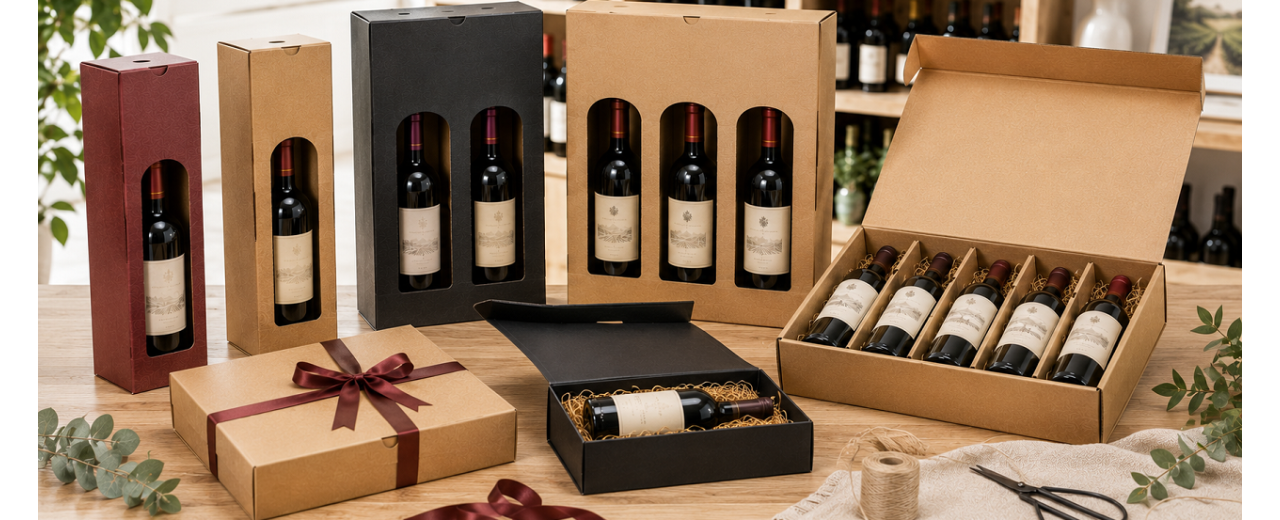
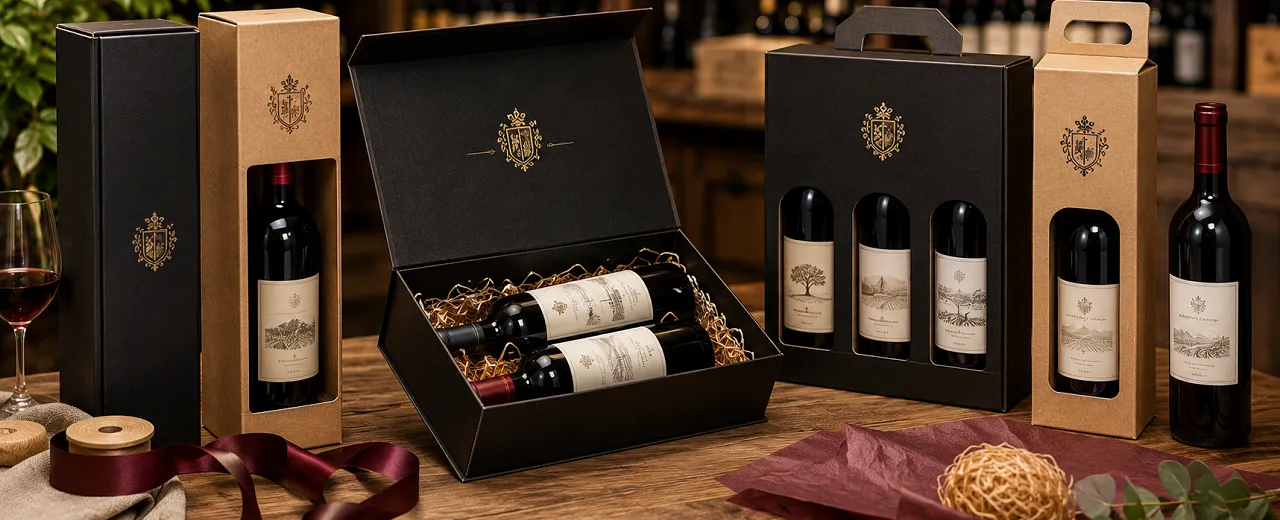
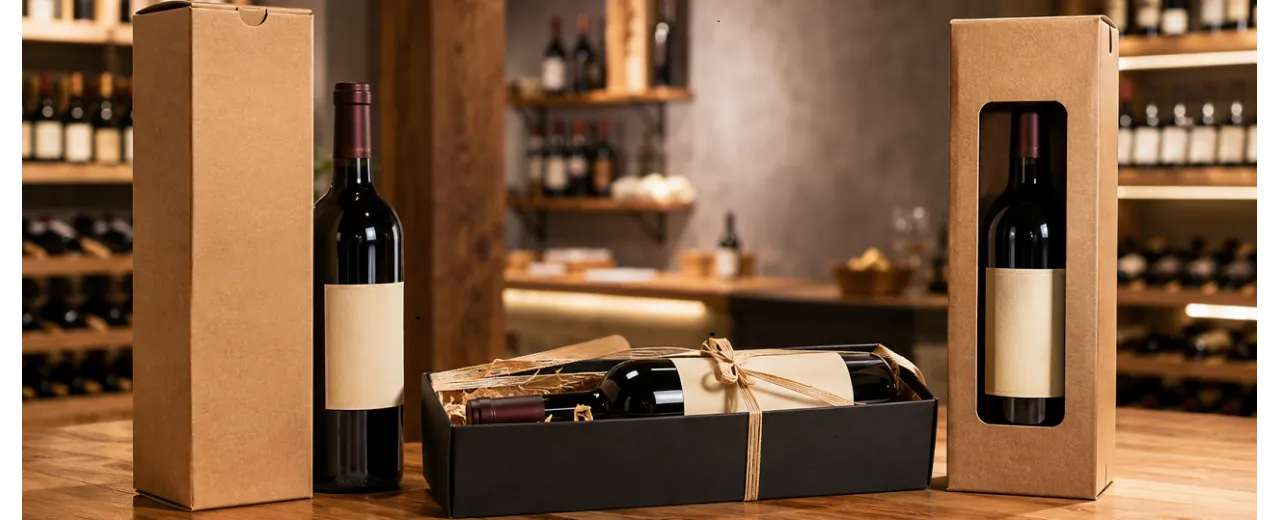
Guide to the Packaging that sells: how to make wine, oil and vinegar feel value even before tasting.

Even before the customer uncorks, pours, smells or tastes, you have already sold (or lost) an important part of the...

Read more
The Store Reset After the Sales: 12 Practical Strategies to Rebuild Margins, Windows and Receipt medio

When you reset the store in the period after winter sales, everything revolves around the post-sales and retail...

Read more
Special Ceremonies, palettes for weddings, communions, and graduations. Materials and techniques.

When you enter the world of ceremonies, you immediately realize that packaging is not an accessory. It is a part of...

Read more
Micro-seasons, macro-effect. 12 colour ideas to launch mini-collections throughout the year

Micro-seasons are not a fad, nor are they a creative exercise for their own sake. They are a concrete, measurable and...

Read more
One pack, three uses: beautiful in the store, safe in shipping, perfect for giving as a gift

In a market where the customer can discover a product in the window, order it from the smartphone and receive it at...

Read more

One pack, three uses: beautiful in the store, safe in shipping, perfect for giving as a gift


One pack, three uses: beautiful in the store, safe in shipping, perfect for giving as a gift

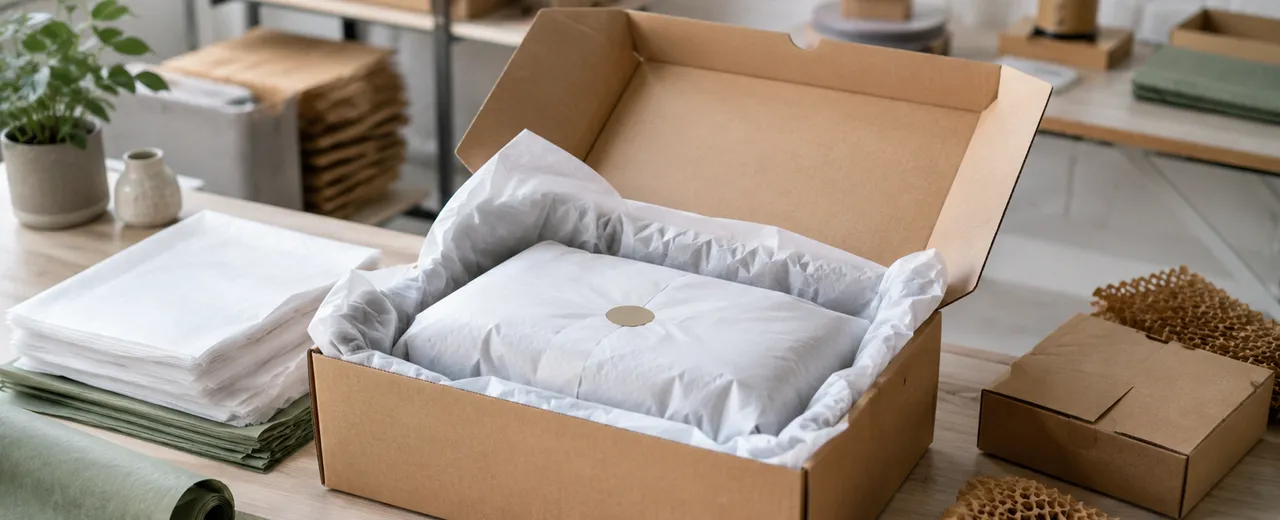
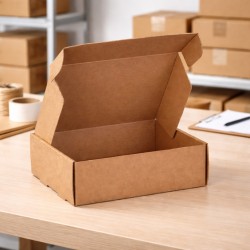
In a market where the customer can discover a product in the window, order it from the smartphone and receive it at home the next day, the packaging is no longer a simple wrapper. It is the first physical contact with the brand, it is the concrete proof of a promise and, often, it is the last impression that remains when the product has already been used. The reality is that today a package must be able to do much more than in the past: it must work well at the point of sale, withstand the steps of logistics without hesitation and arrive ready to be given as a gift, with a level of care that makes additions, superstructures and last-minute "rescues" superfluous. It is an ambitious request, but it is also the most rational and contemporary direction for those who want to combine aesthetics, efficiency and perceived quality.

The point is not to create a "just beautiful" box, nor to build an armored packaging that sacrifices elegance. The theme is to design a single solution capable of holding together three objectives that are often addressed separately, with inconsistent results and invisible costs that accumulate over time. Think about how many times a shelf package, perfect for communicating in the store, must then be placed inside a second anonymous packaging in order to travel safely. Or on the contrary, how many shipments arrive in sturdy boxes but without any identity, forcing the recipient to rebuild the gift experience from scratch with paper, ribbons and accessories that do not always really enhance the contents. In both cases, a fracture is generated: between image and function, between promises and reality, between brand and customer experience. And that fracture costs, in operational time, in additional materials, in returns, in damage, but above all in the perception of value.

Talking about "one package, three uses" means approaching packaging as a system, not as an object. It means considering together the visual and tactile impact, the structural logic, the protection of the product, the ease of closing, the speed of preparation, the compatibility with shipping and the quality of the opening. It means, in essence, designing a package that is beautiful not because it is decorated, but because it is thought out; safe not because it is oversized, but because it uses structure and materials in an intelligent way; Perfect to give as a gift not because it adds complexity, but because it integrates details and finishes capable of transforming a purchase into a gesture.

Then there is a decisive aspect that is often underestimated: the packaging is one of the few components of the product that crosses all departments. He speaks to the sale because he has to expose and convince. It speaks to the warehouse because it must be quick to manage, stackable, standardizable. It speaks to logistics because it must withstand shocks, compressions, vibrations and changes of environment without losing shape and integrity. It speaks to marketing because it is a touchpoint that brings with it identity, style and recognizability. It speaks to the customer because, in the moment of unboxing, it becomes experience and memory. When these needs do not communicate with each other, packaging multiplies, becomes complicated, becomes more expensive and less consistent. When, on the other hand, they are harmonized, the package stops being a "necessary" cost and becomes a lever that improves processes and strengthens the brand.

This is precisely where the difference between a package designed for a single scenario and a package designed for omnichannel is played. At the point of sale, the packaging must attract and reassure, communicate quality, protect against scratches and manipulation, maintain clean lines even after days of exposure. On expedition it has to endure real, not theoretical, passages: belts, roller conveyors, storage, overlapping loads, accidental falls. In gifting, it must arrive with a complete, coherent and well-finished aesthetic, without asking for extra time or additional materials, and it must offer an opening that lives up to expectations, because a gift is not "delivered": it presents itself.

This approach brings with it a very concrete change of mentality. Instead of choosing aesthetics first and then "fixing" the protection, or vice versa, you start from the overall experience and build a unique solution that stands on three pillars: design, performance and usability. Design is not just a matter of color or finish, but of proportions, details, tactility and consistency with the brand identity. Performance is the ability of the package to protect, contain and travel while reducing risks and inefficiencies. Usability is what allows staff to prepare it quickly, the warehouse to manage it smoothly, and the customer to open it with ease, immediately feeling that everything is in place.

When a package really manages to look good in the store, safe to ship and perfect for gifting, it's not just "doing three things". It is creating continuity between worlds that often remain separate. It's turning consistency into measurable value. It is reducing waste and unnecessary steps. It is improving perceived quality without increasing complexity. In a period in which speed has become a habit and the customer's attention is increasingly selective, quality can also be recognized by these choices: from what is not immediately seen, but can be felt at the first touch, at the first opening gesture, at the first look inside the box. And it is here that a "3-in-1" package stops being a technical solution and becomes a distinctive sign, capable of supporting the product, protecting the reputation and amplifying the experience, from display to delivery, up to the moment of gifting.

Why "3-in-1" is not a compromise: the new standard of omnichannel packaging

For many years we have thought about packaging as a "pairs" choice: either the packaging was designed to be beautiful in the store, therefore well-kept, desirable, consistent with the brand identity, or it was designed for shipping, therefore robust, protective, often more technical than aesthetic. In the middle, as a third variable, there was the world of gifts, almost always managed as a later addition: paper, ribbons, accessories, a finishing work that was done later, when the product had already been sold. Today this way of proceeding no longer holds, because the purchase path has changed and the places where the perception of value is played out have changed. The customer can see the product in the store and have it shipped, he can buy it online and pick it up in the store, he can buy it in one context and give it away in another, he can expect a "premium" experience even from a quick purchase. In this reality, a package that only works in one scenario is not a solution – it is a weak point.

The "3-in-1" logic was born right here and, above all, has nothing to do with the downward compromise. It's the opposite. It is a change of standard that focuses on omnichannel and forces you to design in an integrated way, without separating aesthetics, protection and gifting as if they were three independent worlds. When a package is beautiful in the store, safe in shipping and perfect to give as a gift, it is not performing three functions in a superficial way: it is building continuity between different moments of the relationship with the customer. He's saying, with hard facts, that the quality promised by the brand doesn't depend on the channel, the courier, or the time someone had to add a ribbon. It is a designed, repeatable and recognizable quality.

There is a very practical reason why this setting is becoming a reference for those who sell well: because it reduces friction. Any friction in the packaging is a hidden cost. It's the extra time at the counter to "save" a package that isn't ready to be delivered. It is the double packaging necessary to travel a box designed only for the shelf. It is the management of more formats and more materials in the warehouse, with more space occupied, more errors, more reorders, more complexity. It is the loss of consistency between the shopping experience and delivery, which translates into less trust and a lower willingness to pay a premium price. "3-in-1" packaging reduces these frictions because it eliminates unnecessary steps and returns a more linear process, from the point of sale to the warehouse, from shipping to unboxing.

In parallel, there is an equally important reason that concerns perception. A package is not evaluated by the customer only for how it looks; it is evaluated for how it behaves. A box that arrives dented, even if the product is intact inside, immediately communicates an idea of neglect. An aesthetically splendid but fragile package, which requires a second anonymous packaging, breaks the experience and makes you lose identity just when the customer expects consistency. And when the purchase is a gift, this expectation is amplified: the package becomes part of the gift, not just a container. The "gift readiness", i.e. the ability of the packaging to be presented without additional intervention, is not a whim. It is a sign of attention, it is an accelerator of perceived value, it is an element that distinguishes those who design the experience from those who simply package a product.

It's helpful to be clear about one thing: not all packages can be "3-in-1" by definition, but many can become so if they're designed with the right criteria. The problem, often, is not the lack of materials or finishes, but the absence of a system vision. When you design starting only from the visual impact, you realize late that reinforcements are needed, that the closure does not hold, that the edges are marked, that friction during transport ruins the surface. When designing with protection alone, there is a tendency to oversize, to fill with air, to use solutions that increase volumes and shipping costs and, above all, to give up that level of care that makes the package memorable. "3-in-1" design, on the other hand, starts with the right question: what should the complete experience look like, from display to delivery, to the moment someone hands it as a gift? From there, structure, materials, closures and finishes are decided, making aesthetics and performance dialogue instead of putting them in competition.

In this context, an extremely concrete rationalization issue also emerges, especially for those who manage multiple channels and multiple seasons. Unique, well-designed packaging reduces the proliferation of SKUs and ancillary components. It means fewer variants to manage, less risk of errors, less immobilization in the warehouse, more speed in work peaks, more consistency in the final yield. But it also means better control over overall costs, because packaging costs are never just the price of the box. They are operational time, additional material, waste, space, returns, damage, customer care, reputation. When these elements are reduced to a single and robust solution, packaging becomes a lever of efficiency, not an "inevitable" chapter to be suffered.

The "3-in-1", therefore, is not an aesthetic trend and is not a naïve simplification. It is the most rational response to a market that demands consistency and speed without sacrificing quality. It is a way of designing that brings together three real needs and transforms them into a single object capable of supporting the sale, protecting the shipment and enhancing the gesture of the gift. And it is here that packaging changes role: from cost to value, from necessity to language, from container to experience. When a package succeeds in this, it is not doing "everything a little", it is doing the most important thing: making the brand promise tangible, in every channel, in every delivery, in every hand that opens it.

Beautiful in the store: designing the visual impact and desirability on the shelf

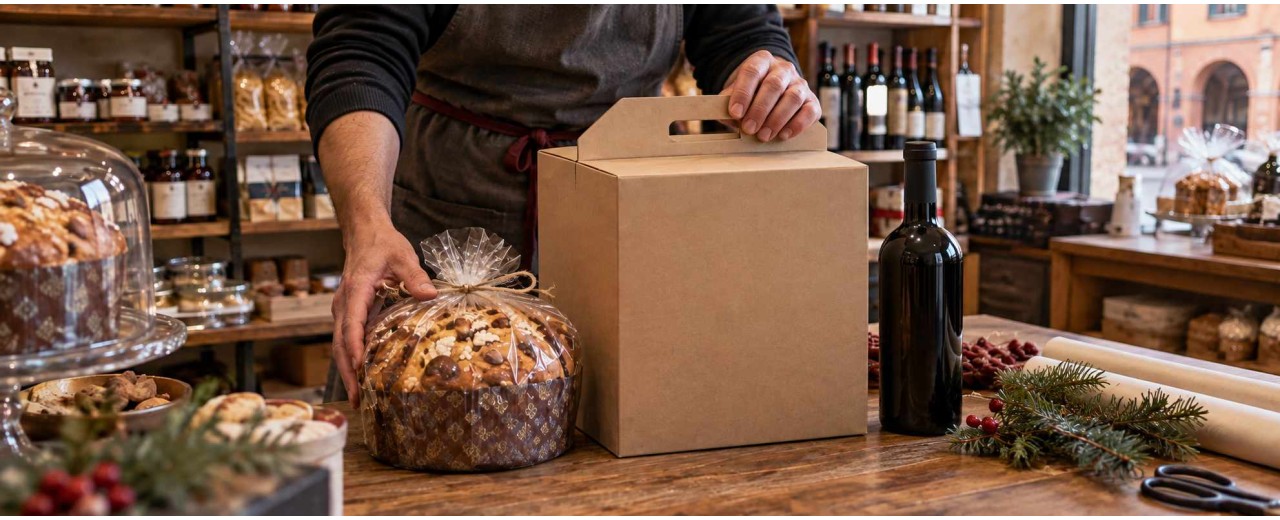
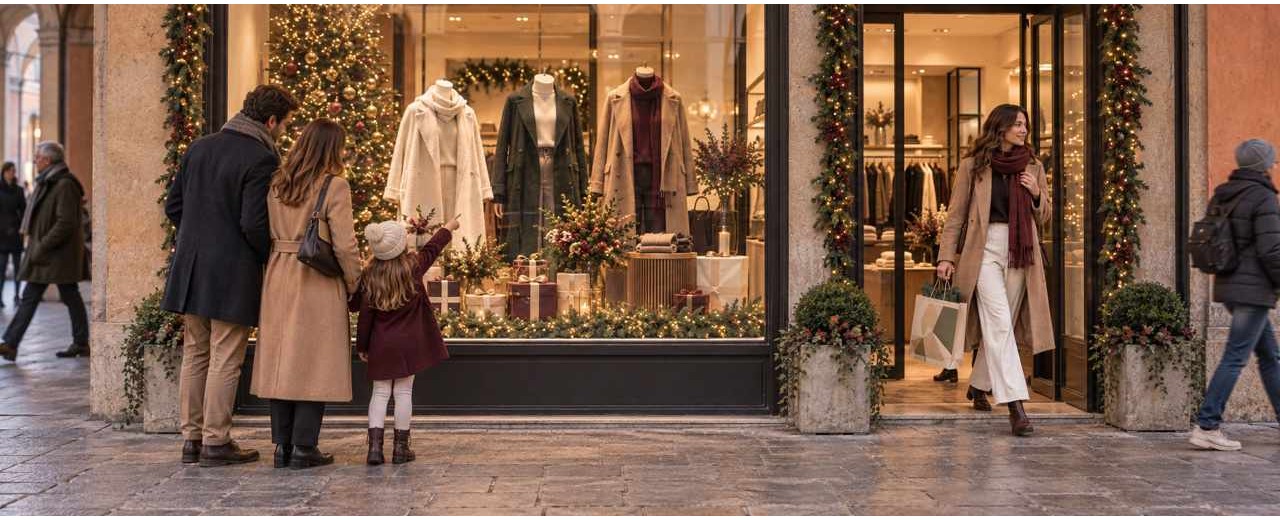
In the store, the packaging does not only "contain" the product: it presents it, interprets it and makes it desirable even before the customer touches it. In a few seconds, often from a distance, the box or box must be able to communicate a clear message: what we are selling, what level of quality we can expect, what universe of style we belong to. This first reading is instinctive, but not accidental. It is guided by very precise visual and material signals, which a well-designed packaging governs with intentionality. When we talk about "beautiful" packaging in the store, therefore, we are not talking about ornament for its own sake. We are talking about a functional beauty, which works for sales and positioning, and which must stand the test of time and daily use in the store.

Desirability on the shelf comes first and foremost from consistency. Colors, finishes, proportions, typography, and materials must speak the same language as the brand and, at the same time, stand out from the visual noise of the commercial environment. In a crowded context, the winner is not the one who adds the most, but the one who chooses best. The most effective color palettes are those that do not chase the momentary "wow" effect, but build recognizability and continuity; the most convincing finishes are those that enhance the material and light without transforming the packaging into a fragile or excessively delicate object; The most authoritative typography is not the most complex, but the most readable, balanced, capable of giving hierarchy to information. Beautiful packaging is a package in which every element is in the right place and works for one goal: to make people perceive quality, order and care.

Then there is a structural theme that directly affects perception: form. Proportions and geometry tell of solidity or precariousness, elegance or banality, premium or standard, even before the customer reads a text. A well-designed box, with sharp corners, clean latches and a stable trim, immediately communicates control and value. On the contrary, a package that tends to deform, that does not maintain its line, that appears "soft" or irregular, weakens the perception of the entire product. It's a simple mechanism: if the wrapper isn't up to par, the content is unconsciously pulled towards the basso. For this reason, in-store aesthetics are not built only with graphics and colors, but with a structural design that guarantees presence, stability and impeccable display performance.

The retail environment, in fact, is not a photographic set. It is a place where the package is moved, stacked, touched, cleaned, exposed to strong lights, dust, micro-shocks, repeated handling. What works in an image can fail in real life if you don't consider the surface's resistance to fingerprints, the propensity to scratch, the ability to maintain a "new" look even after days or weeks. A really beautiful package in the store is one that remains beautiful over time. This implies precise choices on papers and coatings, on the quality of the workmanship, on the strength of the edges, on the protection of the most exposed areas. It also implies a reflection on shelf management: stackability, balance, ease of gripping, stability when repositioned. These are operational details that, if neglected, become visible defects: crooked boxes, ruined edges, crushed corners, marked surfaces. And in the store, every defect is a message.

Alongside the structure and the material, there is the theme of details, which in packaging are what the stitching is in a tailored garment: it is not immediately noticeable, but when it is there you can feel it. A well-designed closure system, for example, communicates precision and care, as well as protecting the contents during exposure. A reasoned opening, which allows the product to be shown without damaging the packaging, can become an ally of assisted selling. A carefully chosen texture, a discreet embossing, a sharp print, an elegant colour combination, a logo positioned with breath and measure: these are elements that do not scream, but build authority. And above all, they build trust, because the customer reads the consistency of details as proof of an overall quality control.

In-store packaging also doesn't just communicate value: it also communicates clarity. Too often beauty is confused with the accumulation of information, as if adding text could reassure. In reality, in the exhibition the customer selects, does not deepen. We need a clear information hierarchy, which immediately highlights what matters and leaves the rest to secondary levels. The packaging that works is the one that guides the eye, not the one that tires it. Here, too, beauty coincides with function: a neat, legible, coherent packaging looks "higher" and more reliable, because it reduces noise and increases the feeling of control.

Finally, there is an aspect that is often underestimated, but decisive for the success of the "3-in-1" project: the retail aesthetic must be compatible with subsequent needs, without requiring corrective interventions. If the packaging looks great in the store but requires extra protection as soon as you think about shipping, it means it wasn't designed to live all the way through. Beauty must coexist with robustness, not be its enemy. This is the point at which design really matures: when it manages to be iconic and at the same time pragmatic, when it chooses finishes and materials that enhance the experience without becoming vulnerable, when it thinks of the surface not only as an "image" but as a "skin" that must resist.

Designing a beautiful package in the store, therefore, means building an object that sells even when no one is selling it. It means making the box work on its own, on the shelves and on the display tables, telling quality and identity naturally. It means creating desirability without forcing, with a language made up of proportions, matter, light and details. And it means, above all, laying the foundations for everything that comes after: because a package that is born well in the store, with the correct structure and material choices, is not only beautiful. It is also ready to become safe on expedition and perfect to give as a gift, without having to give up what makes it special.

Safe on the road: protection engineering and measurable technical criteria

When a package leaves the store or warehouse and is entrusted to logistics, it enters a world where aesthetics are not enough. Shipping is a harsh operating environment, made up of rapid passages, repeated movements and conditions that rarely resemble the "ideal" ones imagined in the design phase. And this is precisely where a package proves whether it really lives up to an omnichannel approach: not when it is photographed perfect, but when it arrives perfect. Talking about safety in shipping therefore means talking about engineering, materials and structure, but above all about measurable criteria. It's not enough to say that a box is sturdy: you have to design it to be, repeatably, and to continue to be so even when it's mass-produced, stacked, stored, and transported.

The first step is to understand what really happens to a package during its journey. Between conveyor belts, roller conveyors, cages, vans, sorting and delivery centers, the package is exposed to shocks, accidental falls, compressions from overlapping loads and continuous vibrations. In addition, there are variations in temperature and humidity, which can affect the rigidity of the cardboard and the performance of the surfaces. In a "3-in-1" project, we cannot afford to have the protection entrusted to a second anonymous packaging that "solves" the shipment: the packaging itself must be designed to go through these stresses without losing shape, without marking itself in an evident way and, above all, without putting the product at risk.

This is where the difference between perceived protection and real protection comes into play. It's easy to confuse the "feeling" of solidity with the actual ability to absorb energy and distribute loads. A heavy or very rigid box can give a reassuring impression, but if the structure does not guide shocks away from the sensitive areas of the product, if the edges are not reinforced, if the closures give way or if there is no immobilization system inside, robustness becomes an illusion. True safety comes from the project: from the choice of the wave and the weight of the cardboard, from the geometry of the strengths, from the quality of the gluing, from the assembly tolerances, from the presence of safety distances that avoid direct contact between the product and the walls in the event of an impact.

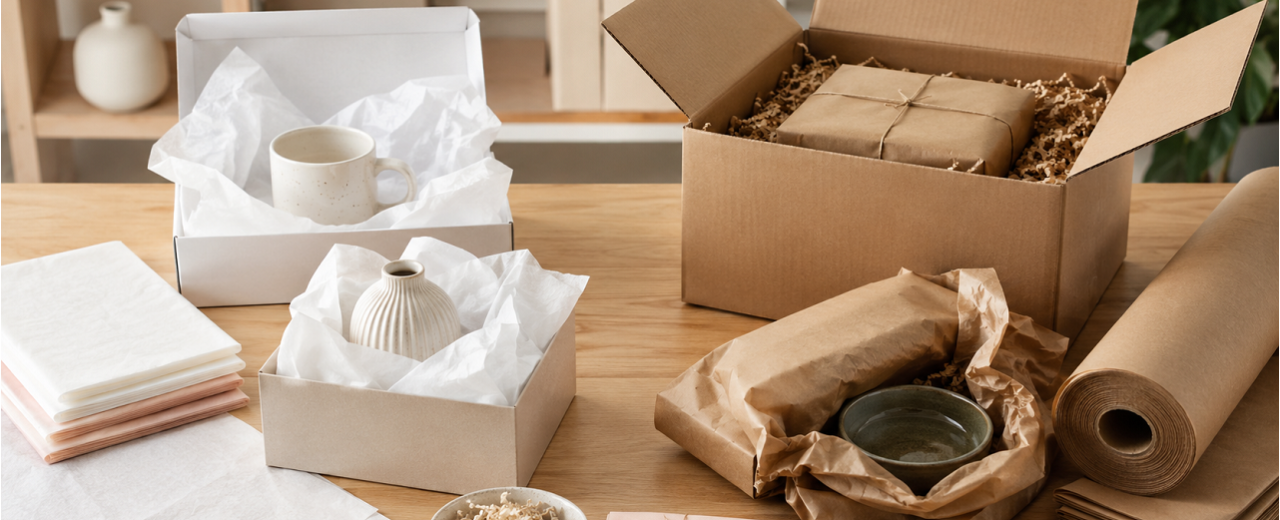
Another crucial point, often overlooked, concerns the concept of "empty space". A lot of transport damage does not result from the fragility of the material, but from internal movement. If the product has even minimal play, the energy of the impacts is amplified: the object accelerates, impacts against the wall and transfers the stress to the most delicate parts. The best protection is therefore not just a matter of external resistance, but of internal control. A truly secure package integrates solutions that stabilize the contents and keep them in place, reducing vibrations and micro-shocks, without turning the interior into a complex labyrinth. The balance is here: lock and protect, while maintaining aesthetic cleanliness and operational practicality.

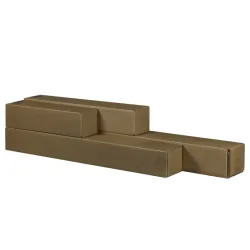
Shipping then introduces a variable that directly affects costs: dimensional efficiency. In logistics, volume matters as much as weight, and often more. An oversized package, built "to be safe", generates air, increases volumetric weight, requires additional fillings and reduces the number of packages that can be managed for the same space. The result is a alto transportation cost and a slower process. The advanced design thinks the other way around: it reduces air to the minimum necessary, uses the structure to protect without inflating the dimensions, optimizes the shape for stackability and stability. A "right" box is not the largest possible, but the one that creates the best ratio between protection and volume, maintaining the aesthetic consistency that makes it presentable even as a gift box.

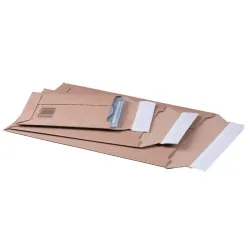
Furthermore, safety in shipping is not only about impact resistance: it is also about the tightness of the closure and the quality of the seal. A package that opens during transport is not only a risk of damage; it is a risk of loss, tampering, dispute. Closures must be designed to remain stable even under traction and vibration, and they must do so without becoming difficult to manage during preparation. In a real context, where operating times are an economic parameter, the "perfect" closure is the one that holds a lot and requires little: a few gestures, no ambiguity, a result that is always the same. It is also here that the "3-in-1" packaging shows maturity, because it avoids solutions that force excess tape, improvised reinforcements, stratifications that dirty the aesthetics and complicate management.

If we talk about measurable criteria, then, we must be very concrete: the quality of the shipment cannot depend on luck. It must be verifiable. In a serious project, you work with prototypes and tests that simulate real stresses. There is no need to turn every company into a laboratory, but it is necessary to adopt a method: test falls, evaluate the resistance to compression, observe how edges and surfaces react, understand if the interior keeps the product stable, check the tightness of the closures after handling cycles. Measurability is not a technical quirk: it is a guarantee for the brand and for the customer, because it reduces variability and prevents the packaging from "working" only in certain conditions or only with some hands.

Finally, there is a strategic aspect: safe packaging on shipment also protects reputation. Any damage is not just a replacement cost or a refund; It's a negative experience, it's time for customer care, it's a potentially critical review, it's a customer who may not come back. In this sense, protection engineering is a form of silent marketing: you don't see it, but you hear it when everything comes as it should. And when the package arrives intact, clean, stable, with its perfect edges and its still beautiful surface, an important thing happens: the brand promise is not interrupted in the riskiest step. Continue to delivery, and turn shipping into a consistent extension of the shopping experience.

The real ambition of the "3-in-1", after all, is this: to ensure that logistics is not a breaking point, but a point of confirmation. A safe packaging in shipping is not only the one that avoids damage; it is the one that keeps the form, aesthetics and perception of value intact. It's the one that travels well because it was designed to travel, not because someone added layers of protection at the last moment. And it is precisely on this design solidity that the next step is built: a package that arrives intact and authoritative is already, of course, a package ready to become a gift.

Perfect for gifting: opening experience and gift-ready details

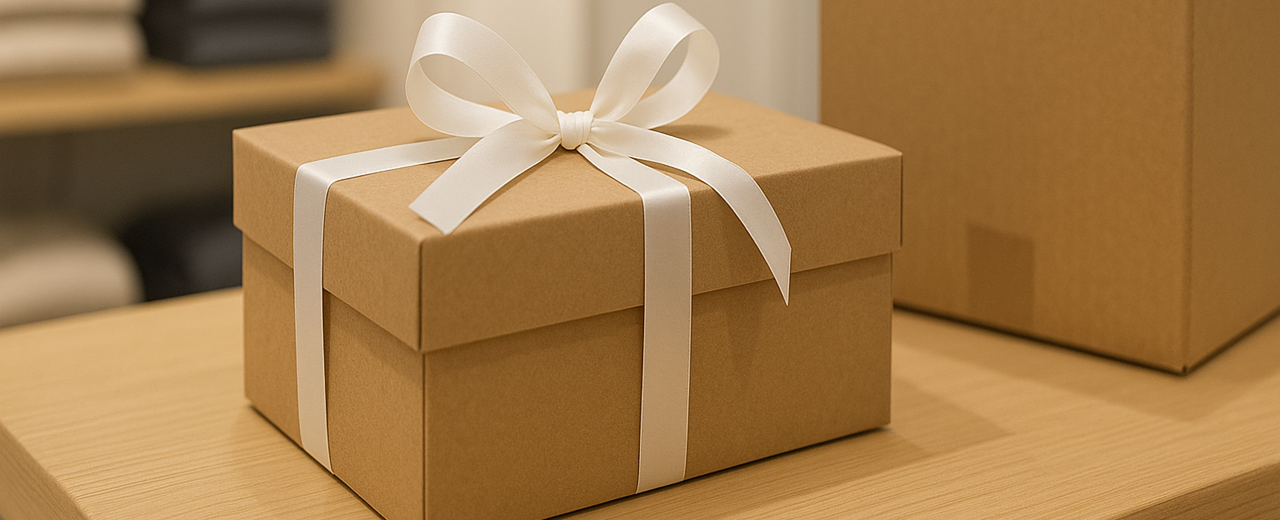
The moment of the gift is a ritual, even when it is simple. It is not only about what is given, but the way in which it is presented, the wait before opening it, the feeling of care that precedes the discovery of the content. In this step, the packaging definitively stops being a technical element and becomes an integral part of the value. This is where a "3-in-1" solution must prove to be truly complete: it is not enough to arrive intact and it is not enough to be beautiful on the shelf, it is necessary to be ready for the gesture of giving without requiring further intervention. When a package is truly gift-ready, it makes a very clear promise: the recipient will have an orderly, pleasant experience, consistent with the brand identity and the intention of the giver.

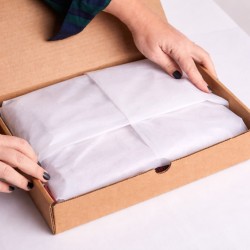
The difference between a simply "decoratable" package and a perfect package to give as a gift lies in the design of the opening. Unboxing is not a social detail; It is a sequence of micro-moments that the brain registers as quality signals. The initial resistance of the closure, the cleanliness of the gesture, the way in which the lid lifts, the absence of tears or "poor" noises, the clarity with which the interior appears: everything contributes to building a perception. A confused opening, which forces you to force, to look for a flap, to break a seal in a disjointed way, generates friction and lowers the tone of the experience. A guided opening, on the other hand, is a form of value education: it accompanies the person, creates anticipation, makes the content more important even before seeing it.

Designing a perfect package to give as a gift therefore means designing a choreography. We are not talking about theatricality for its own sake, but about order. Order is what distinguishes a well-kept object from an improvised object. When the interior is organized, when the product is centered, when each element has a logic and a position, the message is immediate: here nothing has been left to chance. And this is precisely what those who receive a gift are looking for, even unconsciously. They want to feel that someone has chosen well and that the brand is up to the choice. In this sense, the interior is almost more important than the exterior: because that's where the surprise is played, but also the confirmation of quality.

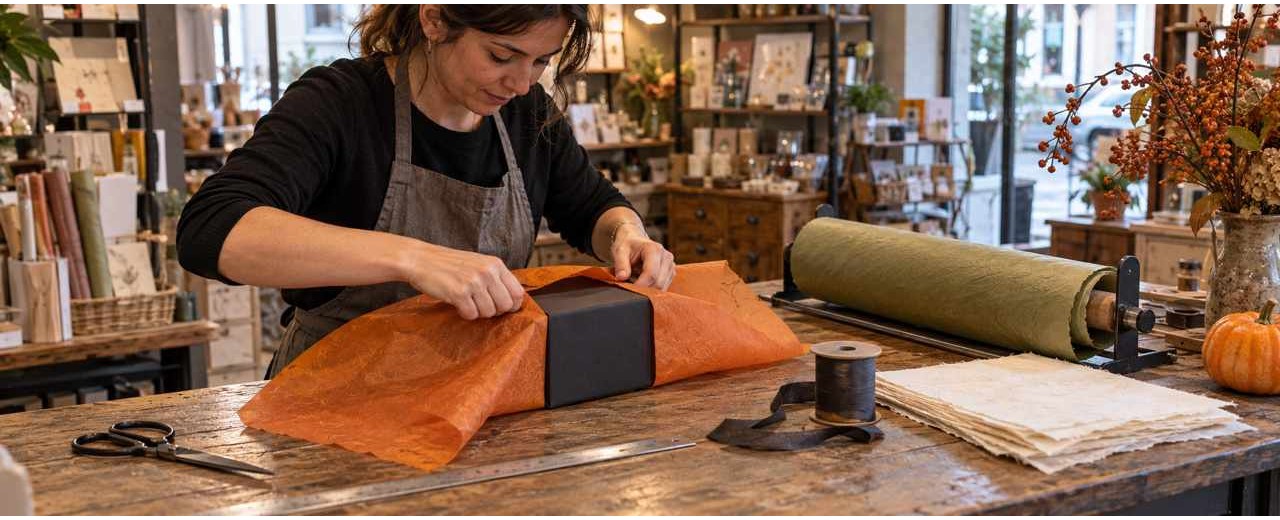
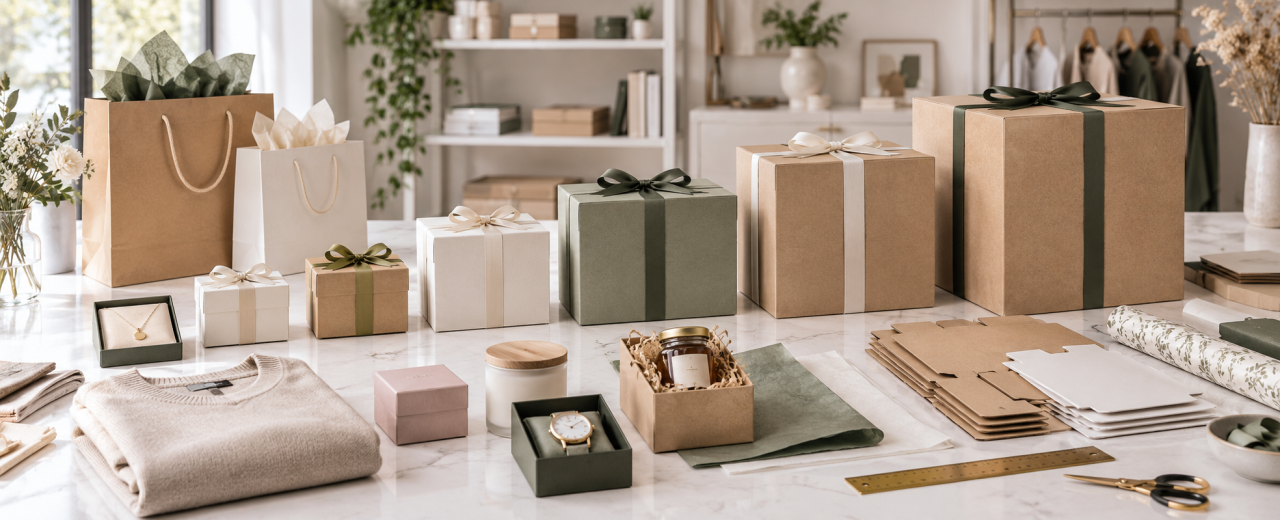
The concept of gift-ready, moreover, does not coincide with the addition of accessories. The perfect package to give as a gift is the one that integrates, not the one that accumulates. It's an essential principle for an omnichannel project, because anything that requires extra components increases time, cost, and variability. The goal is to incorporate the feeling of gift through structural solutions and finishing choices that do not complicate operation. A clean closure, an intuitive opening system, an interior that embraces the product, an external surface that supports the eye and touch, a graphic rendering capable of communicating care without becoming fragile: these are the elements that make a package "ready-made". When the design is correct, there is no need to "save" the package with paper or ribbons. If you want to add them, they become a plus, not a necessity.

Then there is a fundamental aspect: the gift box must be credible in the hand. In the point of sale, the box can be seen; In gifting, the box is handled, carried, placed on a table, delivered at a moment that has its own importance. This is why perceived solidity becomes decisive. A package that flexes, that opens easily, that suggests fragility, puts those who give and diminishes the final effect in difficulty. On the contrary, a pack with good rigidity, with defined edges, with a closure that "holds" and with surfaces that do not mark at first contact, immediately communicates quality and makes the gesture safer. The gift, after all, is also a social message, and the packaging is the frame.

But perfection isn't just in the premium feel: it's in the consistency. Effective gift wrapping must be aligned with the brand's language, product type, target audience, and context of use. Sobriety can be more luxurious than opulence, if it is consistent. A subtle detail can have more impact than an excessive decoration, if it is placed intelligently. Value does not come from what is "seen", but from what is "felt" as a whole. This is where finishes and tactility come into play: the paper or coating must invite touch, the print must be full and clean, any processing must be precise and durable. The perfect packaging to give as a gift is not the one that shines the most, but the one that looks best and remains impeccable throughout its life, from delivery to opening.

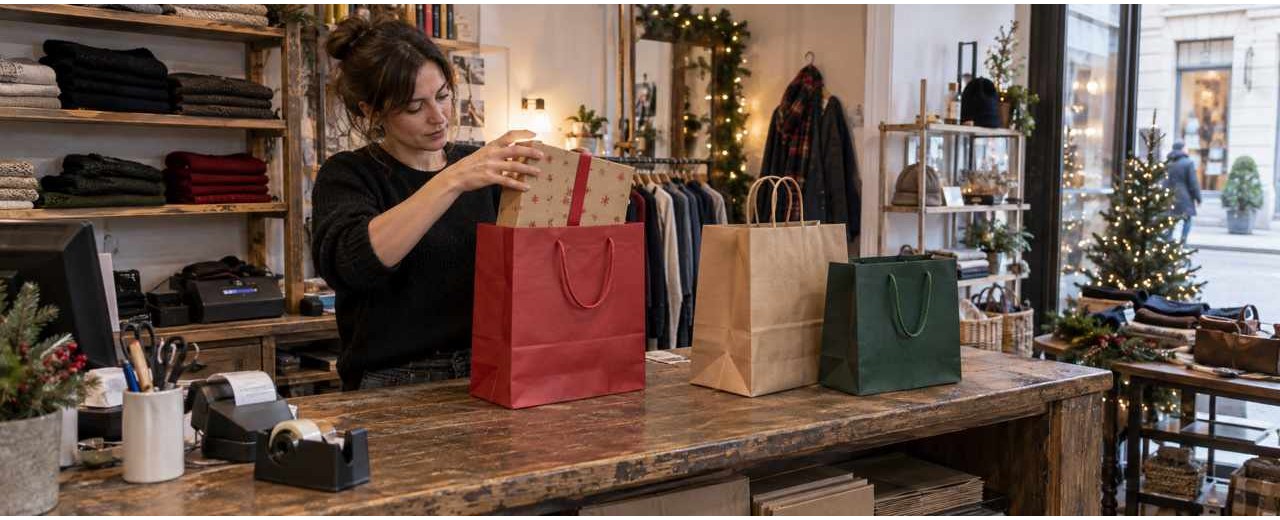
An often ignored, but decisive issue also concerns time. In gifting, time is a real factor, especially during peak periods such as Christmas, ceremonies, anniversaries and promotional campaigns. Gift-ready packaging reduces the work of the store and the end customer because it eliminates the extra steps. This is where design quality also becomes operational efficiency: less time to finish, fewer accessory materials to manage, fewer errors, fewer differences between one package and another. The result is a more consistent rendering and a more consistent experience for the recipient. In a brand context, uniformity is a value: it means that the experience does not depend on who packs that day, but on the goodness of the system.

Finally, a perfect package to give as a gift must be able to coexist with shipping, because often the gift is not delivered by hand: it is sent. This creates a non-negotiable requirement: the aesthetics of the gift must survive the journey. A box that arrives beautiful and intact transforms the delivery into an emotional moment; A box that arrives marked turns the same delivery into a problem to manage. Here we see the maturity of the "3-in-1": a gift-ready pack cannot be fragile, because the gift does not allow for "adjustments" upon arrival. It must be beautiful and resistant at the same time, and it must be so without artifice.

When this alchemy succeeds, the packaging becomes a true extension of the brand. It is no longer just a container, but an experience. It is what makes the recipient feel important, and the giver satisfied with their choice. And this is what allows a company to offer a constant level of quality, without chasing urgencies, without multiplying components, without creating discontinuity between channels. In a single word, perfect to give as a gift means designed to excite with order, quality and consistency, and to always do so, in a replicable way, in every season and in every context.

Materials and sustainability: when elegance coincides with responsibility

For years, sustainability in packaging has been described as a renunciation: fewer finishes, less color, less protection, less "beauty". Today this narrative is outdated, not because environmental impact has become a secondary issue, but because design has matured and the market is more aware. The real evolution lies in considering sustainability and elegance as two sides of the same design choice: a well-made package is often also a more responsible package, because it lasts longer, wastes less, travels better and does not force you to double materials and steps. In a "3-in-1" project, this link is even more evident, because the goal itself is to eliminate redundancy and build a unique system that works in store, shipping, and gifting. When a package can do everything without the need for "additions", sustainability is not a label: it is a natural consequence.

Responsibility, in packaging, always starts with the materials, but does not end with the choice of the "right material". It's a balance between provenance, performance and end-of-life. Certified paper and cardboard, recycled content, traceable supply chains and processes compatible with recycling are fundamental elements, but they only become truly effective when they are included in a coherent project. A package made with a virtuous material, if it then requires a second package to ship or a series of accessories to be given as a gift, risks losing much of its advantage. In contrast, packaging that integrates aesthetics and protection reduces the need for additional components, simplifies disposal, and improves overall efficiency. Here the difference between declared sustainability and designed sustainability is measured.

A central theme is that of the "cleanliness" of the system, understood as the ability to avoid unnecessarily complex combinations. In many traditional solutions, the packaging becomes a mosaic of different materials: coatings, plastics, mixed inserts, non-separable tapes, glues and finishes that complicate recycling. In a contemporary approach, on the other hand, quality is built by focusing on more essential and intelligent choices. It does not mean impoverishing the experience, it means making it more consistent and more easily manageable. Monomateriality, where possible, is a powerful path because it simplifies separation and makes the end-of-life path clearer; When this is not possible, design should still favor easily separable components and solutions that do not transform the package into an "undifferentiated" object by definition.

Sustainability, however, is not just about what happens after use. It is also about what happens during use. A package that is easily damaged generates waste. Packaging that does not support logistics generates returns and replacements. A package that requires long times and extra materials generates consumption. In this sense, durability becomes an environmental parameter, as well as an economic one. When packaging is designed to resist, to maintain shape and surface, to really protect, it reduces the likelihood of damage and therefore reduces waste. It's a simple but often ignored concept: the "most sustainable" packaging is not always the lightest or most minimal, it's the one that avoids duplicating processes and unnecessary replacements. A box that arrives intact and remains beautiful, that can be preserved and reused, is often a more responsible choice than a fragile packaging that forces new materials to "repair" what has not held up.

This is where another key issue comes into play: reuse. Packaging that is beautiful, solid, and well-finished tends not to be thrown away. It is preserved, it becomes a container, it enters daily life. This shift, from "disposable" to "use and preserve", is one of the most interesting results of quality packaging, and directly affects the perception of value. Reuse is not only a virtuous practice: it is a sign of desirability. If a person decides to keep a box, it means that they perceive it as useful and pleasant, not as an inevitable rejection. It is an extension of the brand inside the customer's home, a silent reminder that strengthens the relationship and creates opportunities for repurchase. In a "3-in-1" approach, reuse is almost natural, because the packaging is born with a structure and aesthetics that make it an object and not a simple wrapper.

Logistical efficiency is also sustainability, and it is often the least talked about. Reducing unnecessary volumes, optimising stackability, designing dimensions consistent with package management, reducing the air transported: all this has a concrete impact on consumption and handling. A more compact package, with the same protection, contributes to more efficient transport. It also reduces the need for fillers and accessories, which are not only extra materials, but are also extra operating time. Responsible packaging is often the one that "saves gestures", because every gesture less is also one less process, one less consumption, one less chance of error or waste.

Then there is the delicate but inevitable issue of sustainability communication. Today the customer is more attentive, but he is also more skeptical. Generic statements do not work and risk becoming counterproductive. The packaging must speak clearly, concretely, credibly. This means providing useful information on disposal, adopting wording consistent with what the material and structure really allow, avoiding vague or absolute promises that are not demonstrable. Credibility, in packaging, does not come from slogans: it comes from the alignment between design, materials, experience and end of life. When this alignment is there, a few words and clean graphics are enough to communicate responsibility without weighing down the aesthetics.

Elegance, in turn, plays on an interesting paradox: the most convincing sustainability is often the one that is not seen as a "theme", but which is perceived as quality. A well-chosen paper, precise printing, a consistent finish, a surface that holds, a tidy interior, a solid structure: these are choices that improve the experience and at the same time reduce waste and redundancies. Elegance is not necessarily an excess of workmanship; it can be, indeed, the ability to obtain a premium result with an essential, well-calibrated and technically solid project. In this perspective, responsibility does not limit design: it forces it to be smarter.

When a single package manages to be beautiful in the store, safe in shipping and perfect to give as a gift, sustainability stops being a separate chapter and becomes part of the DNA of the project. Accessory materials are reduced, passages are reduced, waste is reduced, complexity is reduced. And while you reduce everything that is useless, what matters increases: the perceived quality, the duration, the consistency of the experience. This, today, is the meeting point between aesthetics and responsibility: not choosing between one and the other, but designing in such a way that they support each other. In other words, transforming the package into an object that does not ask to be "compensated" by a second package, an additional layer or another gesture, because it is already complete, already efficient, already credible.

Operational efficiency: times, costs and processes from the bench to the warehouse

Each pack has two lives. The first is the one that sees the customer, made up of aesthetics, sensations, perceived quality. The second is the one that lives inside the processes, often invisible but decisive: procurement, storage, handling, preparation, closing, labeling, shipping, exception management. It is in this second life that many of the true performance of packaging are decided, because a package that requires more gestures, more materials, more space and more time quickly becomes a structural cost. The point, in a "3-in-1" project, is to turn the package into an efficiency accelerator without depleting the experience. It's not a "warehouse" goal separate from marketing: it's a system goal, because operational efficiency, when it's designed well, also improves brand consistency and customer satisfaction.

The first great illusion to overcome is that of the "box cost" as the only variable. The unit price of packaging is only the surface of the problem. The real cost, the one that weighs at the end of the month, is the total cost of ownership, which includes preparation time, the need for accessory materials, stock-outs, picking errors, rejects, disputes, returns from damage and customer care time. An apparently cheap package can become very expensive if it requires double packaging, if it requires filling, if it requires excess tape or if it is slow to assemble. Conversely, packaging designed to be beautiful, safe and giftable often reduces components and steps, and is more cost-effective overall. Operational efficiency, therefore, is not a matter of pennies on the material: it is a matter of minutes per order and process variability.

In the store, time is an even more precious commodity because it is time for relationships. Every minute spent looking for accessories, reinforcing a closure, "fixing" a package that is not born ready is a minute taken away from sales and service. A well-designed 3-in-1 package reduces the steps required for packaging and makes the result more uniform. Uniformity is an operational value, but it is also a brand value: it means that experience does not depend on the skill of the individual employee or the time of day. The packaging must allow a natural, intuitive, repeatable preparation sequence that reduces fatigue and errors. When packaging is designed to be "manageable", not just to be beautiful, the counter becomes faster and the perceived quality increases, because care is not sacrificed to haste.

In the warehouse, on the other hand, the issue is standardization. The more variants there are, the more complexity increases. The more complexity increases, the greater the risk of error and the longer the management time. A 3-in-1 solution, if well sized and well structured, can reduce the proliferation of formats and components, simplifying inventory and making planning more stable. This is often overlooked: streamlining packaging SKUs frees up physical space, reduces lock-ins, improves availability, and makes managing seasonal peaks smoother. In a real-world environment, where orders change speed and volume, the ability to respond without chaos is a competitive advantage.

Another decisive operational factor is storage. Efficient packaging does not take up space unnecessarily before use and does not create problems after use. When it comes to boxes to be assembled, the flat yield and ease of picking directly affect internal logistics. In the case of rigid packages, stackability and stability become essential criteria to avoid deformation and damage already in the warehouse. The 3-in-1 package, precisely because it must remain beautiful, must also be designed to "resist" storage, not just transport. This means designing edges and surfaces that do not mark, corners that do not collapse under load, structures that maintain the attitude. Any damage in the warehouse is a cost and a delay, and often results in replacements, scraps or falling back on improvised solutions.

Shipping adds additional operational variables, starting with labeling and document management. A package that accepts the label well, offers suitable surfaces without compromising aesthetics, allows for quick and secure closure, reduces friction and increases flow quality. Volumetric weight also comes into play: unoptimized dimensions generate higher transport costs and worsen productivity. In a 3-in-1 project, the goal is not to "make a smaller box", but to make a smarter box: to protect without air, to be presentable without fragility, to ensure a stable closure without layering. Every detail that reduces a step, or eliminates an accessory material, has a direct impact on the cost per order and the ability to grow without proportionally expanding the team or processing time.

Then there are the exceptions, which are the real enemy of efficiency. A process is efficient as long as everything goes well; You really measure when something goes wrong. Returns, disputes, damaged deliveries, packaging errors, open packaging: each exception costs much more than average, because it interrupts the flow and requires manual management. 3-in-1 packaging reduces exceptions precisely because it is designed to be consistent and robust all the way. If the packaging protects better, damage is reduced. If the package closes better, opening and tampering are reduced. If the packaging is more standardized, errors are reduced. If the packaging is already gift-ready, extra work is reduced and variations are reduced. This effect is amplified over time and becomes a structural advantage.

In addition, operational efficiency is also a training and transferability issue. In the store and in the warehouse, the staff changes, the shifts rotate, the peak periods require reinforcements. A "complex" package requires competence and constant attention; Well-designed packaging makes quality easier to achieve, because it drives behavior and reduces reliance on individual experience. This is a key point for those who want to grow: when packaging is intuitive, quality scales. When packaging requires operational craftsmanship, quality becomes fragile and discontinuous.

In the end, talking about operational efficiency in packaging means talking about control. Time control, because gestures are reduced and repeatable. Cost control, because accessory materials are reduced and volumes are optimized. Process control, because standardization reduces errors and increases predictability. Experience control, because the final result is consistent with the brand identity and does not depend on improvised solutions. A 3-in-1 package, when it is really well designed, becomes a bridge between aesthetics and operation: it makes care easier, quality more stable and growth more sustainable. In other words, it is not just a "well-made" object, it is a work tool that improves the way we sell, ship and bring our brand to life, every day.

ChartaRè method: checklist, application examples and design guide

A package capable of being beautiful in the store, safe in shipping and perfect to give as a gift is not born by intuition, nor by the simple sum of finishes and reinforcements. It comes from a method. When we talk about the "ChartaRè Method" we mean a design approach that focuses on the overall experience and translates it into concrete, verifiable and replicable choices. The goal is not to create a "pleasant" box, but to build a packaging system that supports the real path of the product, from the counter to the shelf, from the warehouse to the courier, up to the moment of opening. It is a work of synthesis: combining aesthetics and performance, without making them compete, and making sure that quality does not depend on additional interventions, but on the goodness of the project.

The starting point is always the product, not in a generic sense, but in an operational sense. Weight, fragility, shape, finish, sensitivity to impact and compression, risk of scratches or crushing, perceived value and real value: each element affects the ideal packaging. A delicate object requires safety distances and internal immobilization, an object with fine surfaces requires anti-friction protections and materials that do not "mold" on the surface, a heavy object requires structures that do not give way and closures that remain stable. In parallel, you need to understand which channels that product will go through and how often. A package that must live mainly in the store, but ship occasionally, has different needs than a package that travels every day. And a package that is often given as a gift requires a more "narrative" level of care and openness, because it becomes part of the gift. In a 3-in-1 project, these variables are not addressed separately: they are combined into a single decision-making framework.

The second step concerns identity. It sounds like a "marketing" theme, but in reality it is a structural theme, because identity influences materials, proportions, finishes, graphic language and even the perception of robustness. An essential and contemporary brand does not communicate quality with excessive decoration, but with the precision of the lines and the care of the material. A more classic brand may choose a more evident sense of richness, but it must do so without compromising resistance and cleanliness. In both cases, the principle does not change: the packaging must be consistent with the brand and with the price it asks the market. Consistency is what makes the promise credible. And credibility is what allows packaging to really work as a lever of value, instead of just a "container".

At this point we enter the technical heart of the method, which is the choice of the structure. The structure is the first form of design, because it determines the trim, stability, perceived quality and protection capacity. Here the guiding question is always the same: how can we ensure that the box protects and remains beautiful without forcing a second package? The answer is built on intelligent geometries, reinforcements where they are really needed, edges designed not to collapse, clean and reliable closures, interiors that block the product without complicating preparation. The structure must also be "friendly" to the processes, because a perfect package that takes a long time to be prepared is not sustainable on a daily basis. The balance between performance and usability is a design signature: if it is missing, the solution does not scale.

The method continues with the selection of materials and finishes, intended not as ornament, but as part of the performance. Surfaces must withstand handling, light, micro-shocks and logistics without being easily marked. The papers and coatings must be consistent with the feeling we want to convey and with the behavior we want to ensure. A finish can be beautiful on display, but if it's too delicate, it can become a weak point in shipping or handling. Conversely, a material that is too "technical" can be impeccable in transport, but not very suitable for the gift. The correct choice is not the indistinct middle ground, it is the solution that achieves a premium tone with materials and workmanship compatible with real use. This is where sustainability and elegance meet: when every element is essential, durable and designed to avoid redundancies.

Then there is the phase that distinguishes a serious project from an idea: prototyping and verification. In the ChartaRè Method, the test is not an accessory step, because a 3-in-1 package must always work, not only in ideal conditions. The prototype is used to see and touch what remains theoretical on paper: the tightness of the closure, the solidity of the edges, the ease of assembly, the stability in stacking, the internal protection, the aesthetic result under real light, the sensitivity to marks and fingerprints. It also serves to identify critical issues that emerge only when packaging is handled quickly, as it really happens in the store and warehouse. It is in this phase that the "replicable" quality is obtained: variability is reduced, ambiguities are eliminated, the result is standardized.

Once the solution has been validated, the method is completed with the definition of the rules of use. This step is often underestimated, but it is decisive for maintaining consistency and performance over time. The 3-in-1 package must be accompanied by clear instructions on how to prepare it, how to close it, how to label it without ruining the aesthetics, how to store it to avoid deformation, how to manage any product variants. It is not a question of complicating the work, but of protecting it. When packaging has a "right way" of being used and that way is simple and shared, quality does not depend on the individual, but on the system. And a stable system is what allows a brand to grow while delivering on its promise.

Finally, the ChartaRè Method provides for a continuous evaluation of the impact on the results. A 3-in-1 package is a strategic choice and, like all strategic choices, it must be measured in its effects: reduction of preparation times, decrease in damage and returns, greater uniformity of the experience, increase in the perception of value, improvement in reviews and post-purchase satisfaction. When these effects are observed and integrated into the decision-making process, packaging stops being an "unavoidable cost" and becomes a consciously managed lever, capable of influencing margins, reputation and loyalty.

This, ultimately, is the meaning of the ChartaRè Method: to design a single package that is not a compromise between different needs, but an intelligent meeting point between sales, logistics and gifting. A package that lives well in the store because it is desirable and consistent, that travels well because it is structurally solid and sized with criteria, that gives itself well because it offers an orderly opening and a complete aesthetic. When all this happens, packaging becomes a gesture of quality that is repeated every day, in a stable way, in every channel. And in a market where the difference is increasingly played out in the details and continuity of the experience, this stability is a real, measurable and lasting competitive advantage.


Arriving at a single package capable of being beautiful in the store, safe in shipping and perfect to give as a gift is not an exercise in style, nor a "clever" simplification designed to reduce costs at the expense of quality. It is, on the contrary, a choice of design maturity. It means acknowledging that the purchase path is no longer linear, that the channels are intertwined and that the perception of value is built through continuity, consistency and care. In this scenario, packaging cannot afford to work "halfway", nor can it rely on last-minute corrective solutions. It must be, from the beginning, a complete system.

When a package manages to combine aesthetics, protection and gifting, it creates a concrete advantage on several levels. In terms of experience, it transforms every contact into a confirmation of the brand promise: the customer sees quality in the store, finds it identical when he receives the package and fully experiences it when it is opened. On an operational level, it reduces the complexity that often lies behind packaging: fewer accessory components, fewer steps, fewer variations, fewer errors, fewer returns, less time taken away from sales and management. In terms of sustainability, it eliminates redundancies and waste with a smart approach, in which responsibility comes from the project and not from the declaration. And in terms of positioning, it brings out a detail that makes the difference today: quality is not an abstract concept, it is a repeatable, recognizable experience that does not change as the channel changes.

The crucial point, however, is that a "3-in-1" package doesn't just improve what the customer sees: it improves what the company controls. Because in packaging, marketing, sales, logistics, customer care and reputation intersect. If the packaging does not hold, the entire system pays the price of inefficiency and discontinuity. If, on the other hand, the package is designed to withstand each phase, it becomes a lever that stabilizes the process, protects the product and amplifies the perceived value. And this stability, in a fast and competitive market, is a capital: it makes it easier to grow, easier to maintain a alto standard, more sustainable to face seasonal peaks and changes in demand.

After all, a complete package is a form of respect. Respect for the product, which deserves to be protected without being hidden. Respect for the customer, who deserves a consistent and curated experience. Respect for internal work, which deserves fluid, scalable, measurable processes. And this is precisely what distinguishes packaging designed as an "expense" from packaging designed as an investment: the ability to generate value at every stage, reducing friction and increasing quality, without asking for compromises.

From here on out, the question is no longer whether a pack can do three things at once. The question is how much it costs, today, to continue to separate them. How much it costs in time, in materials, in errors, in returns, in loss of identity, in the perception of quality not maintained. 3-in-1 packaging is the contemporary answer to this question: an answer that combines design and engineering, aesthetics and process, responsibility and performance. One pack, three uses, one consistent experience. And when this consistency becomes part of everyday life, it's not just the packaging that improves: it's the way the brand is remembered.

 
Rossi Carta
4 star star star star star_border
Based on 144 reviews
x