Blog navigation

Latest posts

Guida al Packaging che vende: come far percepire pregio a vino, olio e aceto prima ancora dell’assaggio.

Prima ancora che il cliente stappi, versi, annusi o assaggi, tu hai già venduto (o perso) una parte importante del...

Read more
The Store Reset After the Sales: 12 Practical Strategies to Rebuild Margins, Windows and Receipt medio

When you reset the store in the period after winter sales, everything revolves around the post-sales and retail...

Read more
Special Ceremonies, palettes for weddings, communions, and graduations. Materials and techniques.

When you enter the world of ceremonies, you immediately realize that packaging is not an accessory. It is a part of...

Read more
Micro-seasons, macro-effect. 12 colour ideas to launch mini-collections throughout the year

Micro-seasons are not a fad, nor are they a creative exercise for their own sake. They are a concrete, measurable and...

Read more
One pack, three uses: beautiful in the store, safe in shipping, perfect for giving as a gift

In a market where the customer can discover a product in the window, order it from the smartphone and receive it at...

Read more

Do you know what tissue paper is?


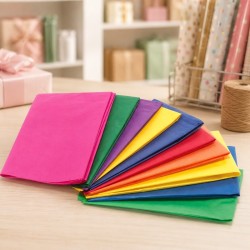
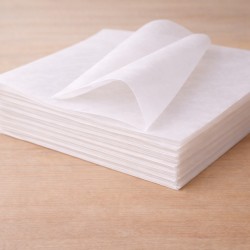
Tissue paper is an extremely thin and lightweight type of paper, characterized by a smooth surface and variable transparency. This material, prized for its versatility and refined appearance, is commonly used in multiple industries, such as packaging, crafts, fashion, and even the food industry.
Thanks to its lightness and softness, tissue paper manages to give a touch of elegance and protection without adding weight or bulk.

Origin of the name "Velina"

The term "velina" derives from the Italian adjective "velato", which recalls the main characteristic of this paper: its transparency, similar to a thin veil.
The use of the term has spread over time to indicate light and translucent materials. In other languages, tissue paper is known as "tissue paper" (English) or "papier de soie" (French), highlighting its silk-like delicacy.

A brief historical note

The origins of tissue paper date back centuries, when the need for a lightweight, protective material made its way into craft and commercial markets.

  • In the Eastern world, materials similar to tissue paper were used to protect works of art, such as paintings and calligraphy, due to their ability to prevent damage without compromising visibility.

  • In Europe, tissue paper began to be produced on a large scale in the nineteenth century, especially in France and Italy, where it was used for luxury packaging and delicate products.

Today, tissue paper is an industrialized and widely available material, while maintaining its perception of quality and elegance.

Distinctive Features of Tissue Paper

Tissue paper is unique because of the following properties:

  1. Transparency: The translucency of tissue paper makes it ideal for wrapping objects without completely hiding them.

  2. Softness: This aspect makes it safe for use with delicate materials, such as jewelry, textiles, or food.

  3. Lightweight: With a very basso specific gravity (usually between 17 and 30 g/m²), it is easy to handle and does not add weight to packages.

  4. Flexibility: Adapts to uneven surfaces, allowing for even coverage and no noticeable creases.

  5. Eco-friendliness: Many modern tissue papers are recyclable or made from recycled materials, responding to the growing demand for sustainability.

Why Is Tissue Paper So Widespread?

Tissue paper is valued for its ability to combine functionality and aesthetics. It is used not only to protect products, but also to enhance their perceived value.
Here are some reasons for its popularity:

  • Visual impact: Tissue paper is often associated with luxury products, thanks to its sleek and minimalist appearance.

  • Versatility: It can be used in numerous contexts, from birthday gifts to haute couture packaging.

  • Low cost: Despite its refined appearance, it is affordable to afford, making it a popular choice for businesses of all sizes.

A Material for Every Industry

Tissue paper is ubiquitous in everyday life and business, but mainly it can be noticed more easily:

  • In the tobacco industry, it is used to make cigarettes of all kinds.

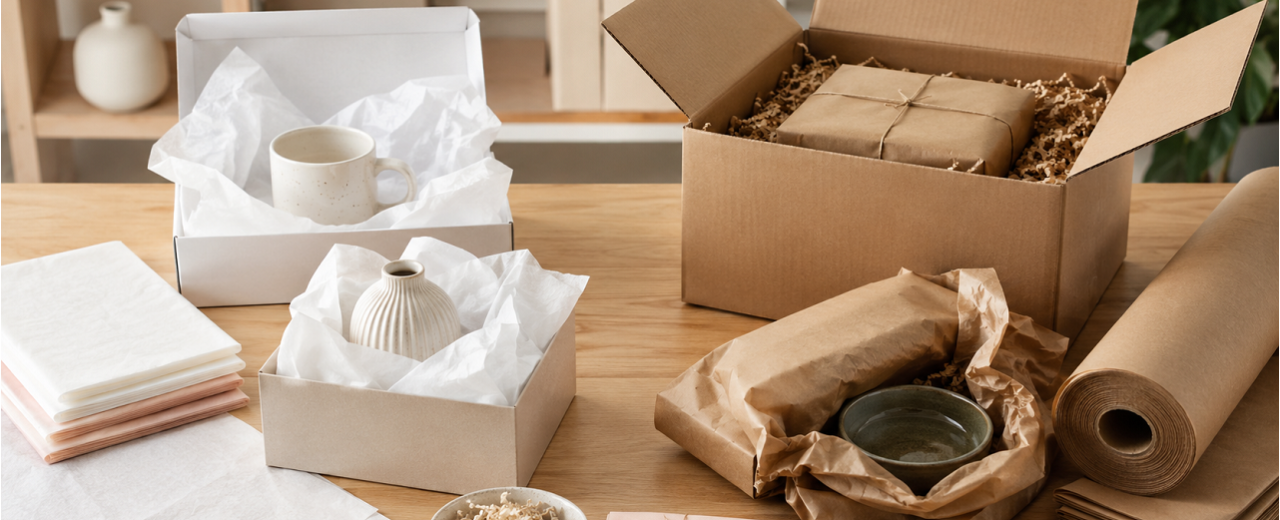
  • In fashion boutiques, it wraps clothes and accessories to protect them and present itself as part of sophisticated packaging.

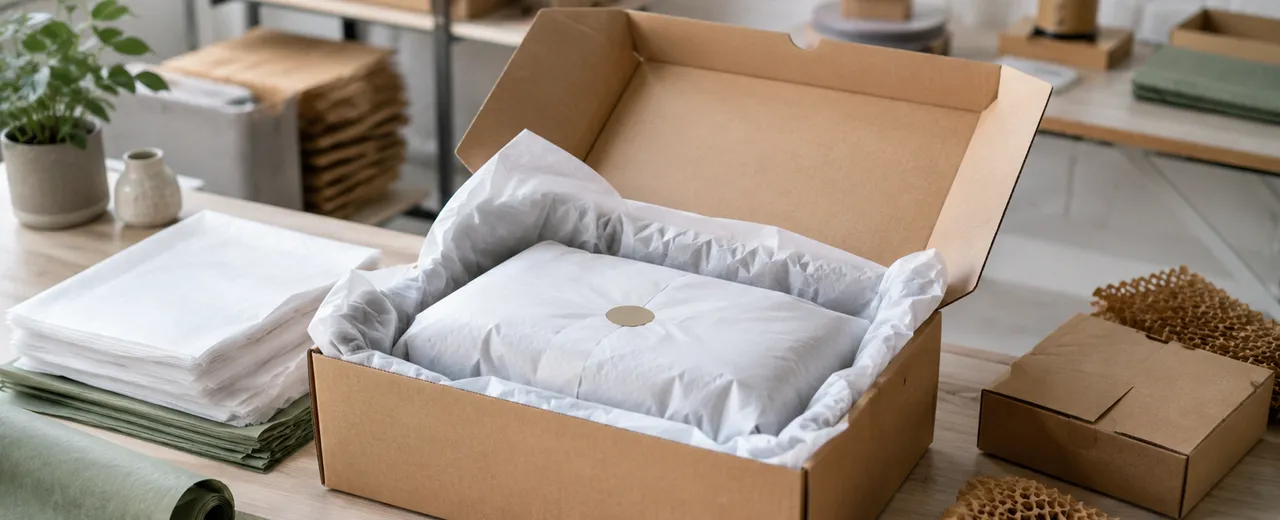
  • In online commerce, it gives a touch of personalization protection and care to the packages shipped to customers.

Composition and Technical Characteristics

Materials Used in the Production of Tissue Paper

Tissue paper is mainly composed of cellulose fibers, mainly derived from wood from trees such as pines, eucalyptus or birches. The fibers are processed to obtain a light and thin structure.
Here are the main materials used:

  • Virgin cellulose: ideal for obtaining a more resistant and high-quality paper.

  • Recycled fibers: increasingly used to meet the demand for ecological products.

  • Chemical additives: in small quantities, to give specific properties to the paper, such as softness or resistance to humidity.

Some variants of tissue paper may also include synthetic or biodegradable materials for specific uses.

Cellulose Refining Process

To obtain the characteristic lightness of tissue paper, the cellulose fibers are subjected to a specific manufacturing process:

  1. Bleaching: To obtain a pure white paper, chemical processes such as chlorine dioxide or oxygen treatment are used, avoiding pure chlorine to reduce the environmental impact.

  2. Fiber dilution: the pulp is made very fluid to allow the formation of very thin sheets.

Industrial Production of Tissue Paper

The industrial production of tissue paper follows a complex and highly technological process that involves several phases, each carried out with specialized machinery to obtain a product with characteristics of lightness, transparency and resistance. Below is a description of the main phases and the machines used.

Charter formation

The formation of tissue paper begins with the preparation of cellulose pulp, composed of wood fibers (virgin or recycled) mixed with water in high percentages (about 99% water and 1% fiber). This pulp is then distributed on a continuous moving canvas, part of the paper machine.

  • Paper machine:
    One of the main pieces of equipment, originally developed by Louis-Nicolas Robert, consists of a wire cloth on which the pulp is distributed. The moving canvas allows excess water to drain away, leaving a thin layer of fibers.

  • Stages of training:

    • Dripping: water is eliminated by gravity through the canvas.

    • Light pressing: pressing rollers remove additional water without damaging the thin layer of fibers.

    • Preformation: the fibers bond together, creating a uniform and stable structure.

Sizing

Sizing is an essential step in giving tissue paper strength and specific properties such as lightness or the ability to resist moisture.

  • Glue in the pulp: A natural or synthetic glue is added to the pulp to improve the strength of the sheet.

  • Surface sizing – in some productions, the surface of the sheet can be treated with bonding agents to increase its ability to resist warping or excessive absorption of inks during printing.

Drying

After forming, the tissue paper passes through a heated drum drying system, designed to remove residual moisture without altering the structure of the material.

  • Heated drums: metal cylinders heated internally by steam that dry the sheet of paper evenly and gently.

  • Humidity control: Sensors constantly monitor the moisture of the sheet to prevent it from drying out excessively, while maintaining the desired flexibility.

Smoothing

Smoothing is a crucial step in improving the surface of tissue paper, making it more uniform and pleasant to the touch. This step is essential especially for decorative or luxury packaging applications.

  • Calender: a series of compressive metal rollers crossed by the sheet.

    • The rollers compress the material, eliminating irregularities and giving the paper a smooth and uniform finish.

    • Some calenders can be heated to obtain satin or glossy surfaces.

Winding

After smoothing, the tissue paper is wound into large reels up to two meters in diameter and six meters in length ready to be cut or transformed into finished products.

  • Winding machine: Rolls paper onto cardboard or metal cores, creating compact and uniform rolls.

  • Tension control: automatic systems adjust the tension during winding to prevent tearing or deformation.

  • Reel formats: variable according to the end use, they can be cut into smaller rolls or even sheets.

6. Finishes and Cutting

The tissue paper is then processed to obtain the desired format.

  • Cutting machines: Cut the coils into standard or customized sheet sizes.

  • Personalization (if required): the card can be decorated or printed at this stage with specific logos, patterns or colors.

Main Machinery Used

  1. Paper machine: for sheet forming and initial water elimination.

  2. Heated drums: for even drying.

  3. Calender machine: to smooth and improve the surface finish.

  4. Winding machine: to create rolls.

  5. Cutting and die-cutting machine: for Personalized formats.

The industrial production process of tissue paper is a balance between precision and delicacy, involving a well-defined sequence of technological steps to obtain a product with unique characteristics. Each step, from forming to winding, is designed to ensure the quality and functionality of the material, making it ideal for multiple applications. The production of tissue paper, even if explained here in a simple way, is a very complicated process and each paper mill has, and maintains, its secrets by producing the same paper as its colleagues but with different characteristics based on commercial-production choices. A bit like a typical dessert, even if it is the same dessert, each one is different.

Weight and Thickness of Tissue Paper

The grammage of tissue paper is one of the most distinctive and technically relevant aspects. Generally, the grammage varies between 17 g/m² and 30 g/m², making it one of the lightest papers available on the market.

  • Standard weight: around 20 g/m², ideal for light packaging.

  • Higher weights: used for applications that require greater strength

  • Lower weights: more transparent and delicate, used in luxury sectors.

The thickness is closely related to the grammage, with values ranging from 20 to 50 microns, ensuring high flexibility and transparency.

Types of Tissue Paper: Gloss and Smooth

Tissue paper, despite being a delicate and thin material, can be produced with different surface finishes to meet specific needs. Among the most common, we find single-gloss tissue paper and smooth tissue paper, both appreciated for their aesthetic and functional properties.

Glossy tissue paper

Gloss tissue paper is characterized by a glossy finish on one side and a matte surface on the other. This type of paper is produced through a process that involves passing the sheet over a highly polished heated cylinder (Gloss calender calender), which gives the gloss on one side only.

Key features:

  • Glossy finish on one side: ideal for reflecting light and creating an elegant look.

  • Matte finish on the other side: useful for applications that require a less slippery surface.

  • Little transparency: it maintains the typical delicacy of tissue paper.

Applications:

  • Luxury packaging: used to wrap high-end products such as jewelry, accessories or cosmetics.

  • Decorative printing: The glossy surface enhances printed patterns and colors, making it ideal for Personalized designs.

  • Protection of delicate objects: thanks to the smooth surface, it protects fine fabrics or fragile items without leaving marks.

Advantages:

  • Sophisticated aesthetics.

  • Smooth surface that facilitates the application of printing or decorations.

  • Ideal for enhancing the content.

Smooth tissue paper

Smoothed tissue paper has a uniform and soft finish on both sides, achieved through a calendering process that compresses the sheet between smooth metal rollers. This treatment eliminates surface irregularities, improving the look and feel of the paper.

Key features:

  • Smooth surface on both sides: pleasant to the touch and visually very uniform.

  • High uniformity: Ensures optimal consistency for printing or decoration applications.

  • Matte or satin finish: depends on the intensity of the calendering.

Applications:

  • General packaging: it is a premium paper, there are few better than this.

  • Technical use: used mainly by the luxury sector to package products.

Advantages:

  • Aesthetic and functional uniformity.

  • Surface suitable for simple or complex prints.

  • Greater resistance to repeated handling than the Glosse-Gloss version.

  • Sometimes extreme transparency, metallic sound, visually of the highest quality.


Comparison of Gloss and Smooth Paper

Characteristic

Yankee

Smoothed

Finish

Glossy on one side, matte on the other

Smooth on both sides

Aspect

Elegant

Very Elegant, Uniform, Premium

Applications

Luxury packaging, protection

Luxury packaging, protection

Resistance

Sufficient but not extreme

Increased strength

Press

Suitable for prints that are not very opaque

Uniform, suitable for technical printing


How to Choose Between Yankee and Smooth

  • Choose Gloss Tissue Paper if you want a sober look, if you don't care about transparency.

  • Choose smooth tissue paper where an even surface on both sides and increased strength is required. With the Smooth Tissue Paper you aim for the TOP of the range.

Both types offer specific advantages and are essential to meet different aesthetic and functional needs.

But that's not all, among the light papers, very often considered tissue papers because they are less than 30 gr. per square meter of weight, there is also another paper.

Bible Paper: An Ultra-Thin and Resistant Paper

Bible paper, also known as India paper or ultra-thin paper, is a type of premium paper that is designed to combine lightness and durability. This material is commonly used for printing volumes with a large number of pages, such as Bibles, encyclopedias, dictionaries, and legal texts, where it is essential to reduce weight and volume.

Key Features of the Bible Card

Ultra thin thickness

  • Bible paper is extremely thin, with grammages typically ranging between 25 g/m² and 50 g/m².

  • This makes it up to five times thinner than standard printing paper (80 gsm).

High opacity

Despite its thinness, Bible paper is treated to ensure good opacity, reducing the "transpirence" of the printed text on the opposite page.

  • Opacity is achieved by adding mineral fillers, such as kaolin, which increase the density of the paper without compromising its lightness.

Resistance to Deformation

  • Bible paper is designed to withstand frequent bending and handling, an essential feature for everyday or continuous use books.

  • It is treated to be tear-resistant, despite basso thickness.

Feel

  • It has a smooth and silky texture, which makes it easy to leaf and provides a comfortable reading experience.

2. Bible Paper Production Process

The production of Bible paper requires a highly technical approach to achieve its distinctive features.

Raw materials

  • High-quality cellulose fibers: Long fibers from softwoods (such as pine and fir) or cotton are used, which give strength and flexibility.

  • Adding fillers: Mineral materials such as kaolin or calcium carbonate increase opacity and improve print quality.

Sheet Formation

  • Pulp is processed in paper machines to obtain thin sheets with a uniform thickness.

  • During training, controlling the weight and distribution of the fibers is essential to ensure strength and opacity.

Surface Treatments

  • The paper is treated with adhesives to improve resistance to moisture and time.

  • Calendering (passing between compression rollers) is applied to achieve a smooth and uniform surface.

Finish

  • Bible paper can be made resistant to aging with treatments that reduce acidity, making it ideal for books that are meant to last.

Types of Bible Paper

Traditional Bible Paper

  • Light weight (25-30 g/m²).

  • Mainly used for Bibles and dictionaries.

Matte Bible Paper

  • It offers greater opacity thanks to a more intense treatment with mineral fillers.

  • Suitable for high-density double-sided printing volumes.

Cotton-Based Bible Paper

  • Made with a significant percentage of cotton fibers, which improve strength and softness to the touch.

  • Used for fine editions and historical books.

Applications of the Bible Card

Bibles and Religious Texts

  • It is the main use of paper, thanks to the need to combine lightness and durability in bulky books.

Dictionaries and Encyclopedias

  • Bible paper allows you to reduce the weight and size of large volumes, without sacrificing readability.

Fine Texts and Historical Editions

  • Used in luxury publications or in reprints of ancient works.

Legal Documents & Manuals

  • Ideal for legal or technical texts, where you need to include many pages in a compact format.

Extremely luxury packaging.

·          If this paper is used to print figurative sacred texts, if it is not used for the packaging of luxury products!

Benefits of the Bible Card

  • Weight Reduction: Allows you to create books that are lighter and more manageable.

  • Space Saving: Reduces the thickness of volumes, making them easier to transport and store.

  • Durability: Specific treatments guarantee a long life.

  • Reading Experience: The lightness of the pages and their silky texture provide a comfortable reading experience.

Bible paper is a masterpiece of paper engineering that combines lightness, strength and opacity to meet specific needs in the publishing field. Thanks to its ability to make bulky books more compact and manageable, it remains an irreplaceable choice for religious texts, dictionaries, encyclopedias and valuable works. Despite its limitations, its unique characteristics make it a material of alto technical and cultural value.

Physical Properties of Tissue Paper

Tissue paper is distinguished by some key technical properties:

  1. Transparency

  • It varies depending on the weight and composition.

  • A thinner paper is almost transparent, giving it an elegant and refined look.

Softness
  • The smooth, soft surface is ideal for protecting delicate materials without causing scratches or abrasions.

Elasticity
  • Tissue paper is highly flexible, adapting to uneven surfaces and objects with complex shapes.

Resistance
  • Despite its light weight, it is surprisingly resistant to traction and tearing when not subjected to extreme stress.

Compatibility with machining
  • It lends itself well to cutting, folding, and printing, making it versatile in many applications.

Advanced Technical Features

Some tissue papers may include additional technical features:

  • Water resistance: obtained through surface treatments, useful for flower or food packaging.

  • Antistatic: essential for wrapping electronic or dust-sensitive products.

  • Acid resistance: an important property for the preservation of documents and works of art.

Quality Tests on Tissue Paper

To ensure product quality, tissue paper undergoes various tests:

  • Tensile strength test: checks the tightness of the paper under pressure.

  • Transparency test: Measured with optical equipment to ensure a uniform level.

  • Ink absorption test: to verify its compatibility with printing processes.

The Technological Evolution of Tissue Paper

Thanks to advances in paper production, tissue paper has reached new standards of quality and versatility:

  • Sustainability: the use of recycled fibers and vegetable inks reduces its environmental impact.

  • Innovations in fiber treatment: they allow you to obtain even lighter papers without sacrificing strength.

Sustainability of Tissue Paper

At a time when sustainability has become a global priority, tissue paper stands out for its ecological potential, especially when produced and used consciously. This chapter explores the environmental impact of tissue paper, strategies to reduce it, and how the material can contribute to a more sustainable economy.

1. The Environmental Impact of Traditional Production

The production of tissue paper, like that of any paper product, has an impact on the environment mainly related to the use of natural resources and the production process.
Main sources of impact:

  • Timber consumption: The production of tissue paper requires the use of cellulose fibers, often from trees. If not sustainably managed, the demand for timber can contribute to deforestation.

  • Water consumption: The pulp processing and paper production processes require large amounts of water.

  • Use of chemicals: Fiber treatment, such as bleaching, can result in pollutant emissions if not properly controlled.

  • CO₂ emissions: related to the energy needed to power machinery and transport raw materials.

Solutions to Reduce Environmental Impact

To minimize the environmental impact of tissue paper, producers and consumers can adopt sustainable strategies that include more environmentally friendly materials, processes, and behaviors.

Use of Recycled Fibers

The use of recycled fibers is one of the most effective solutions to reduce environmental impact.

  • Key benefits:

    • It reduces the demand for virgin timber.

    • Waste destined for landfills decreases.

    • It requires less energy and water than processing virgin fibers.

  • Examples of applications:

    • Production of recycled tissue paper for ecological packaging.

    • Use of post-consumer materials to ensure a closed cycle.

Environmental Certifications

The purchase and use of certified tissue paper ensures that the product is sustainably sourced and has been produced with a reduced environmental impact.

  • Common certifications:

    • FSC (Forest Stewardship Council): ensures that the wood used comes from responsibly managed forests.

    • PEFC (Programme for the Endorsement of Forest Certification): certifies sustainable forest management.

    • European Ecolabel: guarantees a basso environmental impact throughout the entire life cycle of the product.

  • Advantages:

    • It promotes the sustainable management of forest resources.

    • It offers consumers a guarantee of sustainability.

basso Impact Manufacturing

Manufacturers can adopt advanced technologies and practices to reduce the environmental impact of tissue paper production.

  • Chlorine-free bleaching processes:

    • The use of environmentally friendly bleaching agents, such as hydrogen peroxide, reduces water pollution.

  • Energy efficiency:

    • The adoption of renewable energy, such as solar or wind, to power factories.

  • Water Recycling:

    • Closed systems that reduce water consumption.

2.4. Waste Reduction

Adopting a circular economy philosophy can minimize waste during the production and use of tissue paper.

  • Optimization of production processes:

    • Reduction of waste generated during cutting and finishing.

  • Creative reuse:

    • Consumers can reuse tissue paper in DIY projects, decorations, or as a packaging material.

3. Tissue Paper and Circular Economy

Tissue paper lends itself well to being part of the circular economy model, in which materials are continuously reused and enhanced.

  • Reuse:

    • Tissue paper used for gift wrapping can be reused in creative projects or as a filler material.

  • Recycling:

    • Tissue paper is easily recyclable, as long as it is not contaminated with substances such as glitter or plastic.

  • Compostability:

    • If not treated with chemicals, tissue paper is biodegradable and can be composted.

4. Benefits of Using Sustainable Tissue Paper

  • Reduced environmental impact:

    • Eco-friendly packaging helps to reduce CO₂ emissions and resource consumption.

  • Added value for consumers:

    • Sustainability is an increasingly important value for customers, who appreciate environmentally conscious companies.

  • Corporate reputation support:

    • Companies that use sustainable tissue paper reinforce their image of social responsibility.

Tissue paper, if produced and used sustainably, is a versatile and environmentally friendly solution. Companies can benefit from adopting sustainable practices, while consumers can contribute to reducing their environmental impact through informed choices. The combination of technological innovation, certifications and awareness represents the future of an ecological and elegant material.

How to Print Tissue Paper

Tissue paper printing is a delicate and technical process, which requires the use of specific technologies to respect the characteristics of the material, such as transparency, lightness and fragility. This chapter explores printing techniques, process challenges, and innovative solutions to achieving high-quality results in detail.

Introduction to Tissue Paper Printing

Tissue paper is often printed for decorative, branding, or functional purposes. It can be customized with logos, decorative motifs, messages or complex designs.
Main requirements in tissue printing:

  • Preserve the physical integrity of the material.

  • Ensure good ink adhesion without smudging.

  • Maintain the lightness and transparency of the material.

Flexo Printing

Flexography is an inexpensive technique, often used to print repetitive patterns on large surfaces of tissue paper.
Features:

  • It uses flexible rubber rollers to transfer ink to the substrate.

  • Suitable for large print volumes.
    Advantages:

  • Efficiency in large-scale production.

  • Ideal for repetitive decorative patterns.


Challenges in Tissue Paper Printing

Printing on tissue paper presents some difficulties related to the intrinsic characteristics of the material.

Material brittleness

Tissue paper is very thin and delicate, making it susceptible to tearing during the printing process.
Solutions:

  • Use machinery with delicate feeding systems.

  • Reduce the print speed to minimize the risk of damage.

Ink Absorption

High ink absorption may cause smearing or uneven results.
Solutions:

  • Use low-viscosity inks, specific for lightweight materials.

  • Carefully check the amount of ink applied.

Material Transparency

The transparency of the tissue paper can affect the final result, as the back of the sheet may interfere with the printed design.
Solutions:

  • Test colors on swatches to ensure readability.

  • Use opaque inks or layers of white as a base to increase contrast.

Types of Inks Used

Inks play a crucial role in tissue paper printing.
Main types:

  • Water-based inks:

    • Environmentally friendly and ideal for printing on recycled tissue paper.

    • They reduce environmental impact without compromising quality.

  • UV Inks:

    • They offer quick drying and bright colors.

    • Perfect for complex or multi-color designs.

  • Special inks:

    • Metallic, glitter or fluorescent for decorative or luxury applications.

Personalization of the Tissue Paper

Personalized printing allows you to create unique and distinctive tissue paper.
Customization options:

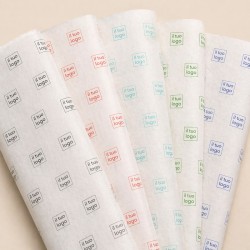
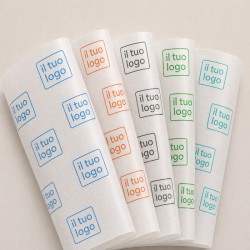
  • Company logos:

    • They strengthen branding for gift packaging or commercial packaging.

  • Personalized Messages :

    • Used to add a special touch to gift wrapping or corporate events.

Innovations in Tissue Paper Printing

Modern technologies are revolutionizing the way tissue paper is printed, but we're not there yet.
Key innovations will be:

  • High Definition Digital Printing:

    • It allows you to achieve razor-sharp details even on thin materials.

  • Advanced eco-friendly inks:

    • Developed to further reduce environmental impact.

  • Smart Printing:

    • Integration of elements such as QR codes or microchips for interactive applications.

Printing on tissue paper is an art that requires technical expertise and attention to detail, but offers endless possibilities for personalization and decoration. With the right techniques and materials, excellent results can be achieved while maintaining the integrity of the material and meeting aesthetic and functional needs.

On the tissue paper on the market you could write a book if you want to learn more visit the site www.redspaper.com or call them, you tyrant everything they have learned in the last 50 years !

 
Rossi Carta
4 star star star star star_border
Based on 144 reviews
x