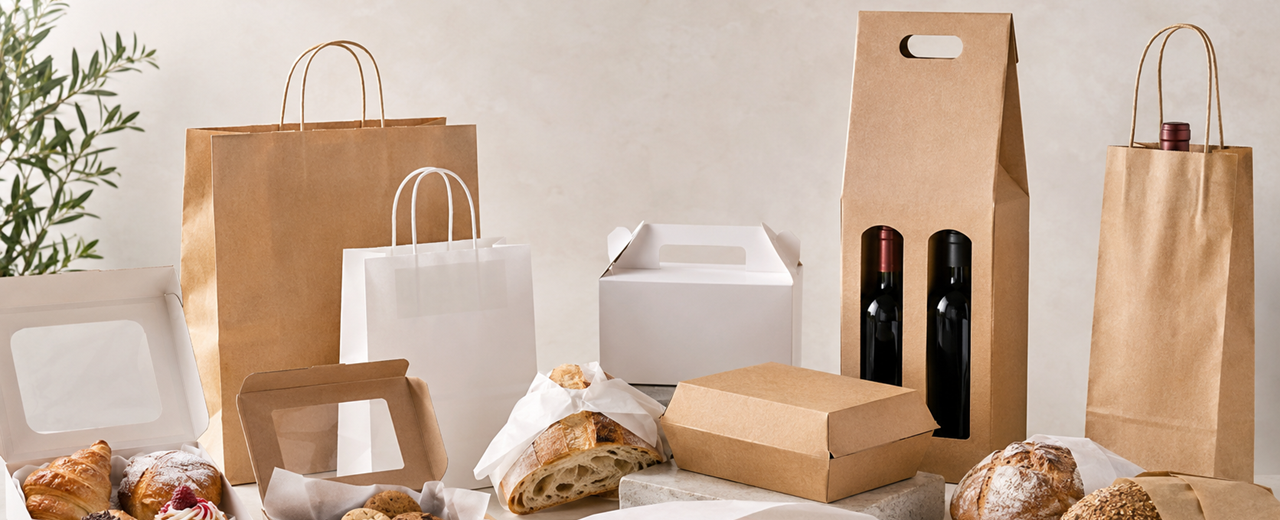
The presentation of desserts is a fundamental aspect in the pastry and gastronomy sector. The care with which a dessert is packaged not only affects the visual impact, but helps define the entire customer experience, from the first glance to the moment of tasting. Precisely for this reason, the choice of a suitable box cannot be left to chance: it is necessary to identify solutions that guarantee a perfect balance between aesthetics and functionality.
To expand your choice beyond the single box and coordinate materials, formats and service, consult the guide to food packaging for pastry shops and delicatessens.
When we talk about desserts, in fact, we are not only referring to products that must be tasty, but also to creations that often have a strong symbolic and emotional value. Think, for example, of a birthday cake, homemade biscuits to give as gifts, or an elegant assortment of high-end chocolates. In each of these cases, the packaging, and in particular the box, is the first element with which the customer comes into contact. A well-designed box can increase the perception of the quality of the dessert, transforming a simple purchase into an engaging experience.
In addition, the box performs a crucial protective function: sweets, by their nature, are delicate and sensitive to shocks, temperature changes or humidity. Choosing a container made of quality materials and with an appropriate design ensures the integrity of the product during transport and storage, preventing it from being damaged or losing its shape. This not only guarantees the satisfaction of the end customer, but also protects the reputation of the pastry chef or the brand.
Finally, we must not forget that the box is a communication tool: it is the vehicle with which the manufacturer can convey its style, values and identity. Colors, logos, special finishes, printed or handwritten messages: every detail contributes to building a story that enriches the perceived value of the dessert. In a market that is increasingly attentive to image and customer care, the box is not just a wrapper, but a distinctive element that can make the difference, distinguishing an anonymous product from a special creation.
Key features of a cake box
When choosing a box for your desserts, it is important to consider a number of factors that determine its quality, functionality, and appearance. These aspects are fundamental both for the satisfaction of the end customer and for maintaining the integrity of the products. Below, the key features that every cake box should possess.
2.1 Strength and protection
The first function of a cake box is to protect the contents from shocks, external pressures and atmospheric agents (humidity, light, heat). Desserts, in fact, are often very delicate: the slightest shock or inaccurate transport is enough to compromise their shape or decoration.
- Material quality
A box made of multi-layered cardboard or rigid and well-assembled materials guarantees greater strength. If the cake is particularly heavy (such as a multi-tiered cake) or rich in decorations, the box must be equipped with a reinforced base to prevent sagging. - Internal structure
Inserting internal supports or dividers can prove essential for pastries, cupcakes or cookies that could move and be damaged during transport. The presence of personalizzati inserts or compartments dedicated to individual pieces helps to maintain order and integrity. - Protection against temperature changes
Some desserts need to remain at a certain temperature to maintain flavors and textures (for example, cakes with butter or mascarpone cream). In these cases, there are thermal packaging solutions or those that allow the insertion of cooling elements for safer transport.
2.2 Food Safety and Suitable Materials
The box, in addition to physically protecting the cake, must also safeguard it from a hygienic and food point of view. Choosing suitable and certified materials is essential to avoid contamination and ensure safe consumption.
- Certifications and regulations
Materials in contact with food must comply with precise European and national regulations. It is a good idea to check that the supplier has certifications of conformity (e.g., MOCA – Materials and Objects in Contact with Food compliance). - Food-grade materials
Specially treated paper and cardboard, non-toxic films and laminates are just a few examples of safe solutions. In particular, for haute patisserie products, it is advisable to use boxes with internal linings that prevent the passage of moisture or odors and maintain the organoleptic characteristics of the dessert unaltered. - Respect for the environment
The use of eco-friendly and recyclable materials, in addition to being a fast-growing trend, is an important step towards sustainability. More and more customers, in fact, appreciate companies and pastry shops that choose environmentally friendly solutions.
Ease of use: opening, closing and handling
A good cake box must be intuitive and practical to use, both by the pastry chef and by the end customer. Handling affects the speed of packing, the convenience of transport, and the overall presentation.
- Locking systems
Interlocking or tab closures are ideal for speeding up packaging operations, especially in pastry shops with high sales volumes. Some boxes also have integrated handles or cords that facilitate transport, avoiding the need for additional bags. - Quick opening
A box that opens easily, without tearing the cardboard or damaging the contents, provides a more pleasant and professional experience. The use of pre-engraved lines, tabs and specially designed mechanisms greatly simplifies this step. - Storage and assembly
Boxes should also be designed to take up as little space as possible before use. They are often supplied flat, ready to be folded and closed when needed. It is important that assembly is quick and intuitive, so as to optimize working times.
In summary, the main characteristics of a cake box go far beyond the simple aesthetic aspect: they must guarantee robustness, practicality and above all protection of the product. Food safety and ease of use are essential elements to offer the customer an intact, fresh and impeccably presented dessert, thus contributing to a alto shopping experience.
Materials and types of boxes
When choosing the perfect box for your desserts, a fundamental role is played by the material with which it is made. Each material has characteristics that affect conservation, aesthetic impact, sustainability and, of course, cost. Below, we will review the main materials used for pastry boxes, highlighting their strengths and possible limitations.
Food Carton
Food carton is probably the most common and widespread choice in the pastry and bakery industry. It offers a good balance of functionality, versatility and low cost.
· Key features:
· Suitability for contact with food: the food carton is treated to avoid contamination or release of substances.
· Resistance: it can be composed of several layers (for example, cardboard coupled with microwave) to ensure the strength necessary to support even sweets of a certain weight.
· Easy to customise: the surface of the carton is ideal for printing graphics, logos and colours, allowing for aesthetically pleasing packaging.
· Ease of use: most cardboard boxes are supplied flat, taking up little space; It is quickly assembled with folds and joints.
· Advantages:
-
- Economical, recyclable and lightweight.
- Wide range of formats, sizes and finishes (matt, glossy, plasticized, etc.).
- Good degree of thermal insulation, although not suitable for long refrigerated transports without further precautions.
· Disadvantages:
· Sensitive to moisture: if not properly treated or protected, cardboard can weaken in humid environments or in contact with very wet sweets.
· It can deform if subjected to excessive loads or poorly distributed.
Traditional plastic
Plastic – in particular PET (polyethylene terephthalate), PP (polypropylene) or PS (polystyrene) – is a material often used for transparent or semi-transparent containers, such as trays or single-portion cake boxes.
· Key features:
-
- Transparency: it allows the product to be shown inside, enhancing its aesthetic appearance and facilitating the customer's choice.
- Waterproofing: it does not absorb moisture and protects the cake from any liquid leakage.
- Resistance: compared to cardboard, plastic is more resistant to shocks and crushing, especially if it is of good thickness.
· Advantages:
-
- Excellent protection against moisture and external contamination.
- Available in various shapes and sizes, suitable for single portions, cupcakes or pastries.
- Possibility of airtight closures to increase conservation.
· Disadvantages:
-
- High environmental impact, if it is not recycled or recyclable plastic.
- Higher cost than basic cardboard, especially for more elaborate solutions.
- Less suitable for those looking for an "artisanal" or eco-friendly image.
Compostable materials and eco-friendly solutions
As the focus on sustainability increases, several companies offer boxes made from compostable or biodegradable materials. The goal is to reduce the environmental impact and respond to a growing demand for ecosystem-friendly products.
· Available options:
-
- Recycled and FSC-certified cardboard: ensures that the paper comes from responsibly managed forests. It is often combined with glues and inks with basso environmental impact.
- Bioplastics (PLA, CPLA): derived from plant sources (e.g. corn starch), they offer the properties of traditional plastic but with better biodegradability.
- Sugarcane or bagasse fiber: it is a by-product of sugar processing, very resistant and ideal for containers of various shapes.
· Advantages:
-
- Reduced environmental impact: compostable materials decompose faster and with less release of harmful substances.
- "Green" image of the product: customers increasingly appreciate solutions that demonstrate attention to sustainability.
- Often customizable with natural colors or minimal finishes, for a modern and eco-friendly aesthetic.
· Disadvantages:
· Higher cost than traditional solutions, especially for more complex formats.
· Some compostable materials may be less resistant to moisture and prolonged heat.
· Not always easily available in large quantities, depending on the supplier.
Advantages and disadvantages of the main materials
| Material
| Benefits
| Cons
|
| Food Carton | - Cost-effective and customizable
- Easy to assemble
- Recyclable | - Moisture sensitive
- Requires special treatments to resist wet food |
| Traditional plastic (PET, PP, PS) | - Excellent protection
- Often transparent
- Resistant to impact and crushing | - High environmental impact
- Higher cost in some variants |
| Compostable materials (PLA, bagasse, etc.) | - Eco-friendly and biodegradable
- Great for green image
- Various shapes available | - Often higher cost
- Less resistance to prolonged heat or humidity |
Latest market news and innovative solutions
The dessert packaging sector is constantly evolving, looking for solutions that combine aesthetics, functionality and sustainability. Some emerging trends include:
1. Smart packaging
- Built-in labels or sensors that signal changes in temperature or humidity, helping to control the freshness of the product.
- Especially useful for long-distance shipments or for particularly delicate desserts.
2. Multipurpose and convertible packs
- Boxes that, once opened, can become display trays or even decorative elements.
- They offer a unique and original unboxing experience.
3. Innovative locking systems
- Airtight closures also suitable for desserts with creams or particularly liquid fillings.
- Integrated hook-and-loop or zip tabs to ensure quick and easy access to the contents.
· Highly recyclable materials
-
- Plastic-free, single-material cartons for easy disposal and recycling.
- Development of bioplastics that are increasingly high-performance and similar to traditional plastic, but with a reduced environmental impact.
4. On-demand personalization
- Digital printing technologies that allow boxes to be customized in real time with names, dedications or unique graphics, enhancing the customer experience.
In conclusion, the choice of material and type of box for sweets is not a simple detail, but a strategic aspect that affects product preservation, brand image and customer experience. From traditional food-grade cardboard to transparent plastic and the latest compostable solutions, every option brings with it advantages and disadvantages. The important thing is to carefully evaluate the specific needs of your product and your market, orienting yourself towards materials that guarantee maximum protection of the cake, adequate presentation and, when possible, a lower environmental impact.
Design and customization
The design of the cake box is not just an aesthetic factor: it represents a fundamental communication tool to convey the brand identity, the quality of the product and attention to detail. In addition, a personalized and elegant packaging can transform a simple dessert into a real object of desire, able to amaze the customer from the first glance. In this chapter, we will delve into the aspects related to graphics, colors, finishes and printing techniques that make a cake box unique.
The importance of colors and graphics
1. Consistency with brand identity
The colors and graphics chosen for the packaging should recall the style and values of the brand or pastry shop. If, for example, your business stands out for its use of organic ingredients and a "green" approach, you could favor natural shades (green, brown, cream), perhaps combined with graphic elements that recall the nature or simplicity of the products.
2. Psychology of colors
Color affects the emotions and perceptions of the viewer. In the confectionery sector, warm and enveloping nuances (such as powder pink, beige, chocolate brown) communicate softness, gluttony and comfort. The brighter colors, on the other hand, can convey joy and liveliness, ideal for products designed for parties or youth events.
3. Balance between simplicity and originality
In packaging design, the main goal is to make the dessert stand out, without overpowering it. Excessive use of graphics or colors that are too strong can distract attention from the product. On the other hand, packaging that is too minimalist might seem trivial. The challenge lies in finding a balance between simplicity and originality, creating immediate recognition.
Logos and personalizzati messages
1. Brand enhancement
The logo is the symbol that represents the identity of your business. It must be clearly visible, possibly placed in a central position or in an area that maximizes its readability. An elegant and well-placed logo helps to make the packaging more professional and sophisticated.
2. Textual elements
In addition to the logo, you can insert short phrases, slogans or striking messages that complete the communication. For example, a phrase that tells the philosophy of craftsmanship or family history can arouse empathy and curiosity in the customer. It is important, however, not to weigh down the box with too much text, choosing clear fonts that are easy to read.
3. Personalization of the experience
More and more pastry shops are offering customers the possibility of printing names, dedications or special images directly on the packaging, making the dessert a unique and personalized gift. This solution is particularly popular at birthdays, weddings or corporate events, because it adds a touch of exclusivity.
Finishes and details
1. Glossy or matte finish
The choice between glossy or matte lamination has a significant impact on the final appearance of the box. A glossy finish brings vibrancy to the colours and reflects the light, attracting attention; A matte finish, on the other hand, communicates a more discreet and modern elegance.
2. Special effects
· Hot stamping: allows you to apply metallic details (gold, silver or copper) that make the box more refined.
· Screen printing or UV varnishes: they can create raised areas or glossy areas on a matte background, emphasizing certain graphic elements.
· Embossing and embossing: they add texture and depth, transforming the packaging into a small tactile masterpiece.
3. Transparent windows
Many candy boxes include a plastic or transparent compostable "porthole," which allows you to see what's inside without opening the package. This solution is ideal for visually appealing products (decorated cupcakes, cakes with colored frosting, assorted chocolates), as it entices you to buy and emphasizes the quality of the dessert.
Printing and finishing techniques
1. Offset printing
It is the most widely used technique for large runs, which guarantees high definition and competitive unit costs in the case of large orders. Offset offers a wide range of colours and the possibility of fine finishes, but requires higher start-up times and fixed costs.
2. Digital printing
Perfect for short runs or for on-demand customizations, as it does not require traditional printing systems. It allows you to print even a few pieces with different graphics, while still maintaining excellent quality. It usually has a higher alto unit cost than offset, but is very flexible.
3. Screen printing
Ideal for creating areas full of ink or embossed special effects, and for applying specific inks (such as UV or thermal inks). It is often used in combination with other techniques to create visually striking details.
4. Lamination and laser cutting
- Lamination or lamination: applied after printing, it protects the colors from scratches and humidity, improving the resistance of the packaging.
- Laser cutting: allows you to create particular shapes, carved or perforated details, which add an element of surprise and originality.
Current trends in confectionery packaging design
1. Elegant minimalism
Less is more: neutral-colored boxes, essential graphics and delicate logos convey a sense of purity and refinement, putting the dessert at the center.
2. Pastel colors and natural palettes
Particularly appreciated for artisan pastry, they evoke softness and delicacy, in line with products with a romantic or vintage style.
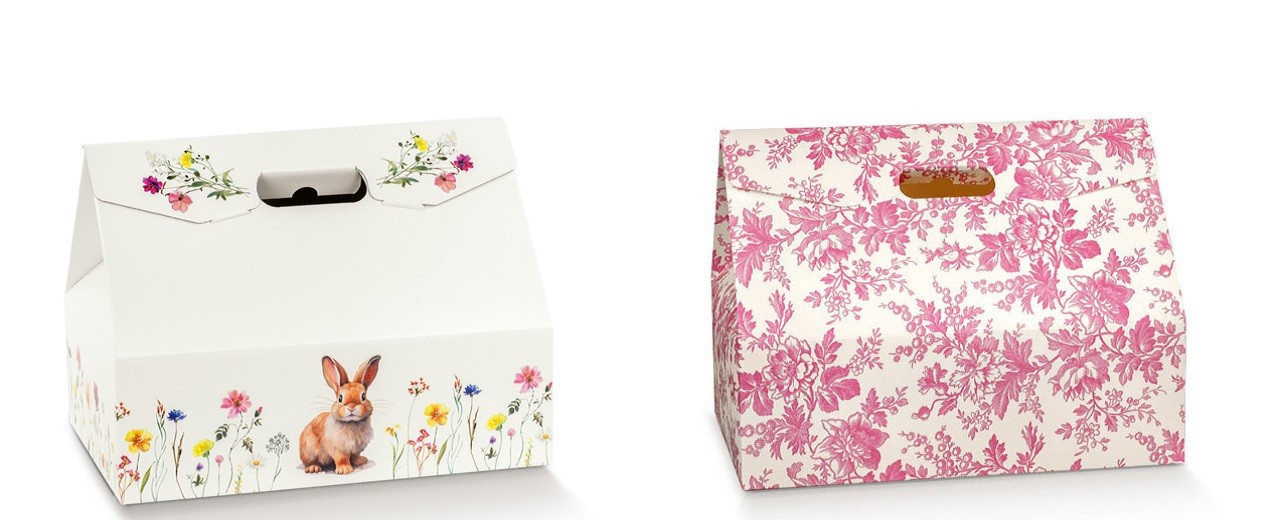
3. Geometric or floral patterns
Geometric textures or floral motifs (even abstract) give a touch of originality without being chaotic, as long as chromatic harmony is maintained.
4. Eco-chic approach
Materials and graphics that emphasize respect for the environment are growing rapidly. Neutral tones, recycled papers and "green" logos communicate environmental awareness and craftsmanship.
5. Just-in-time personalization
The evolution of printing technologies makes it possible to create small batches of boxes with names, dedications or personal messages, offering the customer a unique and highly personalized experience.
In summary, the packaging design and customization phase is crucial to distinguish your sweets from the competition and create an emotional bond with the consumer. Colors, graphics, logos and finishes must be chosen carefully, always in line with the brand identity and the expectations of the target audience. Investing in well-designed packaging not only makes products more attractive, but helps to convey values of quality, attention to detail and professionalism, transforming the purchase of a dessert into a memorable experience.
Functionality and aesthetics: finding the right balance
When designing a cake box, functionality and aesthetics are two fundamental aspects that must coexist in harmony. On the one hand, the packaging must guarantee the protection and preservation of the product; on the other hand, it must be captivating to the eye and consistent with the brand image. In this chapter, we will analyze how to find the right meeting point between practical needs and communication needs.
Functionality: Beyond just protection
1. Protect the cake from shocks and temperature changes
- A cake can be easily damaged by sudden movements or external pressure, especially if decorated. For this, it is essential that the box has adequate structural strength, with sufficiently thick walls or reinforcements on the edges.
- If the product contains delicate creams or needs to stay fresh, the inclusion of insulating materials or the possibility of housing cooling elements should be considered. The packaging must therefore facilitate the maintenance of the desired temperature, especially in the case of prolonged transport.
2. Easy to assemble and use
- From the point of view of the person who packages the sweets (pastry chef or sales assistant), a well-designed box stands out for its quick assembly. Interlocking or pre-cut flap closing systems allow you to reduce time and avoid material waste.
- For the customer, on the other hand, it is important that the package is practical to open and close, without the risk of ruining the cake or having to force the structure.
3. Adaptability to different types of desserts
- Each product requires specific precautions: a multi-tiered cake needs a very resistant base and any internal supports; Cupcakes, on the other hand, need shaped inserts that keep them stable.
- A versatile box can be equipped with movable separators or multiple closure options, thus adapting to a wide range of preparations.
4. Footprint and storage
- Pastry shops with a alto production volume must consider the space available. Compact boxes, supplied in flat form and easy to stack, help to optimize the storage area and efficiently manage stocks.
Aesthetics: enhancing the product and the brand
1. Customized shape and size
- A box that is too large compared to the dessert risks making it seem small and unimportant; Too small can damage the product or make it difficult to extract. It is therefore essential that the proportions are carefully studied, both for functional and aesthetic reasons.
- Original shapes (hexagonal, heart-shaped, with rounded corners) can make packaging more intriguing, as long as they do not compromise stability and ease of use.
2. Graphics and details with attention to detail
- Colours, finishes and print style are essential to attract attention and to communicate a certain market positioning. A company that focuses on luxury and elegance will opt for neutral shades, embossed metals or hot stamping; A young and dynamic pastry shop, on the other hand, could choose colorful and lively patterns.
- Even the small details make a difference: ribbons, adhesive seals personalizzati or integrated handles make the shopping experience more pleasant and memorable.
3. Convey the brand's history and values
· Packaging is an effective means of storytelling: through images, short texts or graphic symbols, it is possible to narrate the artisan tradition, the choice of organic raw materials or the attention to sustainability.
· Inserting narrative elements helps to create an emotional bond with the consumer, who no longer perceives the package as a simple wrapper, but as an integral part of the shopping experience.
4. Elegance and recognizability
- Finding a distinctive look is key to standing out in a highly competitive market. A consistent, consistent, and visually striking design facilitates "on-the-shelf recognition" and improves brand awareness.
- The box thus becomes a real business card: if cared for down to the smallest detail, it can be reused by customers as a container or decorative object, prolonging the brand's exposure over time.
Balancing functionality and aesthetics
1. Integrated design
- The design work should involve both those involved in design (graphic designer, art director) and those who test its practical functionality (pastry chef, logistics manager). Only continuous comparison can ensure that the technical requirements do not come at the expense of the visual appearance, and vice versa.
2. Cost and feasibility assessment
- A particularly aesthetically elaborate design can result in high production costs. It is therefore important to analyze the cost-benefit ratio, establishing clear objectives: favor a valuable solution, perhaps reserved for premium lines, or opt for an essential but still pleasant design.
- The degree of customization and complexity must also be defined according to the sales target and the positioning of the product.
3. Testing and prototyping
- Before ordering large quantities, it is advisable to make some prototypes to test the box in real conditions: check its robustness during transport, assembly time, ease of opening by customers.
- Market tests, such as surveys or pilot samples, can provide valuable feedback on customer reactions regarding functionality, aesthetics, and visual impact.
Theperfect box for desserts is not the result of a compromise between form and substance, but of a continuous dialogue between practical needs and creative aspirations. Packaging that protects the product, emphasizes its qualities and reflects brand values becomes a powerful marketing and customer loyalty tool. Investing in the right combination of functionality and aesthetics means guaranteeing an intact product, presented with care, and giving a shopping experience that remains imprinted, even beyond the simple moment of consumption.
Product protection and storage
The cake box is not just an aesthetic wrapper: its main task is to protect the fragrance, shape and taste of confectionery products. In this chapter, we will analyze the fundamental elements that affect the preservation of the dessert, such as the types of closures, insulating materials and the use of inserts or separators. Ensuring that a dessert arrives intact and fresh to the end consumer is a primary goal for every pastry chef and producer of confectionery specialties.
Factors affecting the storage of sweets
1. Humidity
- Baked goods can dry out quickly if not properly protected from the air. At the same time, excess moisture can compromise the texture of some preparations, causing soaking or taste changes.
- The box must therefore act as a barrier against changes in external humidity, especially in hot or humid environments.
2. Temperature
- Some desserts, such as cream or mascarpone cakes, need controlled temperatures to prevent the creams from spoiling.
- Packaging with insulating materials or thermal solutions (e.g. ice inserts, gels or reflective materials) can help preserve the freshness of the product during transport.
3. Light and oxidation
- Prolonged exposure to light, especially if sunny or intense, can alter the colors and flavors of certain desserts (think of chocolate or sugar paste decorations).
- An opaque box, or in any case equipped with shielding walls, limits the passage of light, reducing the risk of discoloration and oxidation.
4. Shock and vibration
- Richly decorated sweets (e.g. with icing, whipped cream or sugar details) are extremely sensitive to shocks and vibrations during transport.
- Sturdy packaging, with any internal supports, prevents the product from moving and suffering cosmetic damage.
Types of closures and their impact on freshness
1. Interlocking closure
- The tab or interlocking closure is the most common for cardboard boxes. Easy to whip, it adapts well to desserts that are not too delicate.
- However, if you want near-airtight insulation, it may not be enough, as it often lets small amounts of air through.
2. Transparent window closure
- Many boxes have a "porthole" made of plastic or transparent PLA. This allows the customer to see the contents, facilitating the choice and enhancing the aesthetics of the dessert.
- Beware, however, of the "greenhouse" effect: if the box is exposed to the sun, the window may retain heat inside. It is important to evaluate the conditions of transport and storage.
3. Airtight or semi-hermetic closure
· Some solutions adopt gaskets and locking systems similar to food containers, ensuring almost total protection from air and humidity.
· More expensive and used in specific niches (e.g. for shelf-stable products or for long-distance shipments), they can be decisive in keeping the dessert fresh for longer.
4. Closure with tape or seal
- In confectionery, it can be elegant to close the box with a personalized tape or adhesive seal.
- This solution, while excellent on an aesthetic level, does not always guarantee complete airtightness. It therefore remains more suitable for desserts that require relative protection, such as dry biscuits or non-perishable pastries.
Use of inserts and separators
1. Internal supports
- Tiered cakes or cakes with elaborate decorations may require additional bases or internal pillars that distribute the weight evenly, avoiding collapse or deformation.
- Cupcakes, on the other hand, can be housed in shaped inserts that hold them in place, avoiding contact between the various frosting domes.
2. Assorted cake separators
- In cases where a single box contains several types of sweets (e.g., a mix of pastries or cookies), separators help maintain variety and prevent flavor contamination or breakage.
- The separators can be made of food-grade cardboard, food-grade plastic or compostable materials, depending on budget and sustainability needs.
3. Removable trays
- A removable tray facilitates the serving and presentation of the cake once the box is opened, reducing the risk of damaging the surface.
- This solution is ideal for single-portion products or mini-desserts, because it allows you to extract the desired portion without touching the other pieces.
Solutions for long-distance transport and shipping
1. Refrigerant packaging
- For desserts that require low temperatures, boxes with special spaces can be used to insert cooling gels or dry ice. These solutions are particularly suitable for domestic and international shipments, but require special attention to the weight and durability of the refrigerants.
- Some packages have layers of insulating foam or an internal thermal coating that keeps the temperature constant for longer.
2. Shipments with specialized couriers
- Sometimes, instead of focusing on "do-it-yourself" packaging, it is preferable to rely on couriers who offer services dedicated to the transport of perishable products. In these cases, the box must still comply with minimum safety and protection specifications, but can be assisted by professional refrigeration and temperature monitoring systems.
3. Impact resistance
- For long-distance expeditions, it's crucial to consider the possibility of impacts or drops. A double packaging (inner box for the cake + sturdier outer box) or the use of shock-absorbing materials (polystyrene chips, bubble wrap sheets, additional corrugated cardboard) increases the chances that the product will arrive intact at its destination.
Practical tips for better storage
- Plan packaging according to the type of dessert: creamy cakes, dry biscuits, chocolates and pastries have different needs in terms of humidity, temperature and protection.
- Check food regulations: Some regions or countries require specific standards for storing and transporting perishable products. It is important to inquire about the applicable laws if you are shipping outside of your territory.
- Test the resistance of the boxes: carry out transport tests, shake the box slightly and check its tightness. Better to invest time in some testing before choosing the definitive supplier.
- Create clear instructions for the customer: If the sweets are to be stored in the fridge or consumed within a certain period, indicate this visibly on the box or on an information card inside. This increases customer satisfaction and reduces the risks of improper consumption.
Ultimately, product protection and preservation are essential aspects in the design of a cake box. From the isolam