Blog navigation

Latest posts

Guida al Packaging che vende: come far percepire pregio a vino, olio e aceto prima ancora dell’assaggio.

Prima ancora che il cliente stappi, versi, annusi o assaggi, tu hai già venduto (o perso) una parte importante del...

Read more
The Store Reset After the Sales: 12 Practical Strategies to Rebuild Margins, Windows and Receipt medio

When you reset the store in the period after winter sales, everything revolves around the post-sales and retail...

Read more
Special Ceremonies, palettes for weddings, communions, and graduations. Materials and techniques.

When you enter the world of ceremonies, you immediately realize that packaging is not an accessory. It is a part of...

Read more
Micro-seasons, macro-effect. 12 colour ideas to launch mini-collections throughout the year

Micro-seasons are not a fad, nor are they a creative exercise for their own sake. They are a concrete, measurable and...

Read more
One pack, three uses: beautiful in the store, safe in shipping, perfect for giving as a gift

In a market where the customer can discover a product in the window, order it from the smartphone and receive it at...

Read more

From the grass the paper ? Find out what the Grass Card is.


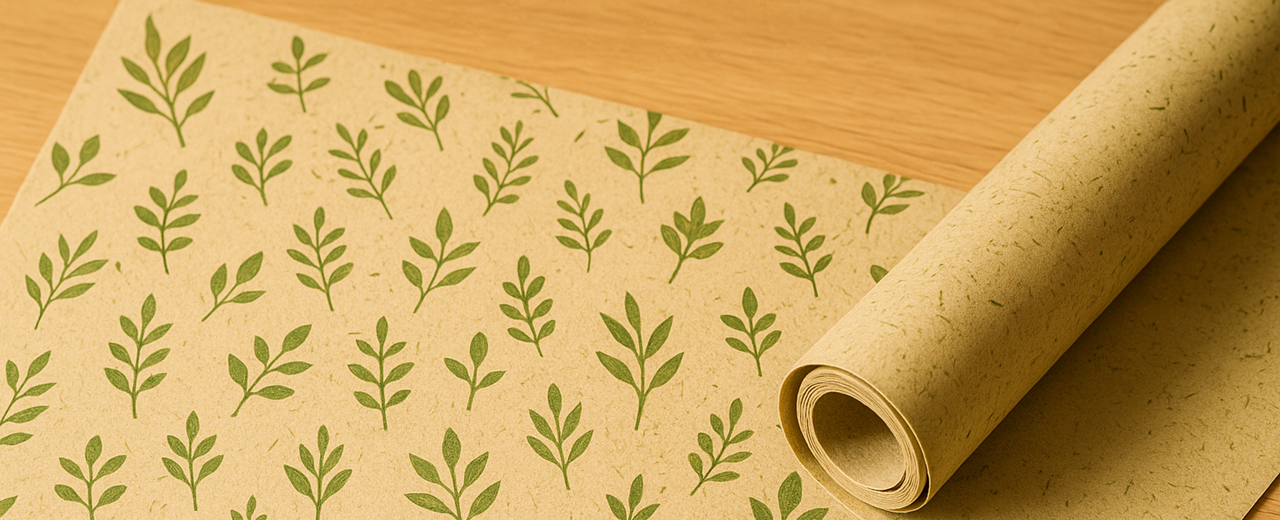
Grass paper (or grass paper in English) is a type of environmentally friendly paper made partly from fibers derived from dried grass. It usually contains a mixture of fibers: up to 40-50% grass fiber and the remainder composed of traditional pulp (virgin wood fibers or from recycled paper). This is chemically unbleached paper with a natural appearance: the color varies from light beige to soft green depending on the percentage of grass and the time of harvest, often presenting small plant particles visible on the surface. It is precisely these clearly visible hay fibers that give the material a slightly rough texture and a "warm," organic appearance.

In addition to its distinctive appearance, grass paper offers a special sensory experience. It has a unique texture to the touch, almost reminiscent of nature under the fingers, and can give off a slight hay scent due to plant residues, evoking pleasant summer feelings. Despite its less than perfectly smooth surface and less than perfectly white tone, grass paper maintains good printing and strength properties comparable to ordinary papers. In summary, grass paper is an innovative cellulosic-based product in which a significant proportion of the woody fibers are replaced by herbaceous plant fibers, without substantial compromise in terms of use.

The industrial production process

Industrial production of grass paper is done with a process aimed at harnessing grass as a new raw material, minimizing the use of chemicals. It all starts with grass harvesting (typically fast-growing grass clippings from wild meadows or ecological compensation areas). Preference is given to grass not intended for fodder-for example, the second cut of unfertilized lawns-so that it does not compete with animal feed. After harvesting, the grass is left to dry in the sun to dry hay. Next, this hay undergoes a series of mechanical processing: it is cleaned, chopped and ground to fibers of uniform length, then compacted into grass pellets for easy transport and storage.The dry hay is cut to fiber length, then ground and finally pressed into pellets before going to the paper mill and becoming paper." These pellets form the raw material that will be mixed with water in the paper plants.

Arriving at the paper mill, the grass fiber pellets are fed into the pulper (cleaner/ pulper) along with conventional pulp (virgin or pulp from pulp mill) according to specific recipes based on the desired end product. The percentage of grass fiber can vary: for strong packaging boards, up to 50 percent of the pulp can be replaced with grass fibers without appreciable loss of quality, while for finer printing papers the percentage of grass is usually lower (e.g., 20-30 percent). Once the aqueous fibrous pulp is prepared, the rest of the process follows the classical steps of papermaking: the fiber suspension is spread on the paper machine frame, pressed and dried to form ready-made paper reels. No major modifications to existing equipment or additional machinery are required-an important industrial advantage, since papermakers can employ existing lines without extra investment.

Importantly,fiber extraction from grass is done entirely by mechanical treatments, with no need for aggressive chemical processes. Unlike wood, grass contains very little lignin (the natural "glue" that in woody plants must be removed by chemical cooking). This means that neither chemical baths nor high amounts of water are needed to obtain the fibrous pulp from grass. The process completely eliminates the need for chemical additives and uses minimal amounts of water, since there is no need to dissolve the lignin as is the case with wood. The result is a grass fiber pulp ready to be made into paper in a similar way to traditional pulp.

Yieldand resources: Grass fiber production is extremely efficient in terms of yield and resource consumption. It is estimated that 1.2 tons of dried hay produces about 1 ton of usable fiber, while it takes on average about 2.3-2.5 tons of wood to obtain 1 ton of traditional pulp. In addition, mechanical processing of grass has a fiber yield in excess of 99 percent (almost zero waste) according to technical tests, precisely because mass loss due to lignin extraction is avoided. At the current industrial level, commercial grass paper is at least 30% grass fiber, with typical products around 40-50% grass and the rest cellulose fibers. The stated research goal is to further increase the grass share-potentially up to 70% grass fibers-as processes and machines are optimized to handle larger volumes of this alternative material.

Practical applications of grass paper

Due to its natural characteristics and good processability, grass paper is used in a wide range of practical applications in packaging, graphics and disposables. In packaging, the main use is in the manufacture of environmentally friendly packaging for products that benefit from a "green" image. Numerous companies are experimenting with grass cardboard boxes, cases and packaging to replace conventional plastics or cartons. Food packaging is a key area: grass paper, being non-toxic, compostable and allergen-free, is suitable for packaging food products both as primary packaging (in direct contact with non-fat dry foods) and as secondary packaging. Fresh fruits and vegetables, for example, can be packaged in trays or baskets made of breathable grass cardboard; eggs in grass fiber egg cups; dry products such as cereals, pasta, and baked goods can use boxes lined with grass paper. Even in the cosmetics and pharmaceutical industries, we see cases for creams, solid toothpastes, soaps or supplements made from grass-containing cardboard, ideal for organic or natural brands. Eco-friendly luxury products (such as perfumes or organic cosmetics) often enhance grass paper packaging to emphasize environmental care and naturalness.

Examples of folding cartons and boxes produced made from printed grass cardboard. The material gives the packaging a natural appearance, with visible inclusions of plant fiber, while providing good printability and strength.

In addition to boxes, grass paper is used for shoppers and bags: grass paper shopping bags (also laminated for added strength) enable stores to offer customers fully biodegradable and basso impact bags. Adhesive labels made of grass paper find use on organic food products and natural cosmetics, adding ecological value to packaging. In the field of printed communication, grass paper is popular for printing eco-friendly-looking brochures, catalogs, postcards, greeting cards and calendars. For example, post-it notes and notepads personalizzati are available in grass paper for sustainable corporate gadgets. Online printing companies also offer options for printing business cards on grass board (typically ~275 gsm), which gives the cards a natural character and tells of the user's green commitment.

In the field of events and promotions, grass paper is chosen to print invitations, folders and information materials related to environmental issues or green initiatives, as it immediately communicates a message of sustainability.

One promising area is compostable disposable products. Grass paper can be made into eco-friendly disposable items such as plates and bowls, paper cups, and even straws or disposable paddles, offering a plastic-free alternative with plant origin.

In general, almost all products made from traditional paper today could theoretically incorporate a share of grass fiber. Industry studies indicate that about 90 percent of paper products (from bags to egg cartons) could be made from blended grass paper while maintaining adequate performance. Already, grass paper can be processed with the most common printing techniques (offset, digital, flexo) without any particular problems, except that its beige hue and matte surface require graphics to be adapted to enhance the natural look. Advanced solutions also exist: for example, for wet or greasy food applications, grass boards with barrier treatments that make them resistant to grease and liquids are already available. This further expands possible applications to include take-out food containers and refrigerated packaging. After use, grass paper products can be disposed of in regular paper collection for recycling, or sent for industrial composting (when certified), contributing to the circular materials economy.

Environmental and energy benefits

The main driver of interest in grass-based paper lies in its environmental benefits throughout its life cycle, especially in the production phase. Comparison with traditional pulp-based paper shows impressive savings in natural resources. Some key differences between the production of 1 ton of grass fiber and 1 ton of wood pulp are summarized in the table:

Parameter

Grass fiber (per 1 t)

Wood pulp (per 1 t)

Energy consumption

~112kWh (mechanical process)

~4,000 kWh (chemical process)

Water consumption

~6liters

9.000-30,000 liters

Chemical additives

None

Heavy use of chemicals (e.g., sulfates)

Raw material needed

1.2 t grass → 1 t fiber

~2.4 t wood → 1 t pulp

CO₂ emissions

Up to 95% less than wood

Standard reference (baseline)

Indicative comparison between grass fiber and wood pulp production.

As noted, grass paper wins ecologically in multiple aspects. In terms of water resources, fiber production requires only a few liters of water per ton, as there is no need to cook and wash the fibers to extract the lignin. Traditional paper, on the other hand, consumes thousands of liters of water per ton produced. Energy requirements are also enormously lower: it takes only about 0.2 MWhe to produce one ton of grass pulp (equivalent to 200 kWh, in line with the 112 kWh/ton figure given above), compared with several thousand kWh needed in the chemical pulp process. The elimination of prolonged firing and water evaporation steps results in a cut in CO₂ emissions: about 300 kg of CO₂ is saved for every ton of grass paper produced compared to conventional paper, corresponding to a 75-95% reduction in the process's climate-altering emissions depending on the boundaries considered.

Another significant advantage is theabsence of chemicals in the grass production cycle. Wood-cellulose pulp typically requires strong chemicals (sodium hydroxide, sodium sulfide, etc. in kraft processes) to separate lignin and bleach the fibers, resulting in wastewater problems to treat. In the case of grass, these substances are not needed at all, which results in less chemical pollution and also facilitates the treatment of process wastes (which are mainly biodegradable and non-toxic). In addition, the absence of chlorines or bleaching agents makes unbleached paper naturally compostable and safe for food contact.

Sourcing the raw material grass has ecological and social benefits. Grass grows quickly and abundantly on uncultivated meadows, with as many cuts per year as possible, unlike trees that take decades to mature. It is estimated that, in Bavaria alone, more than 1 million tons of grass are available annually from non-intensively used permanent meadows. Making use of this hitherto underutilized biomass means preserving forests: according to projections, if only 25 percent of Germany's paper needs were covered with grass fiber instead of wood, the felling of about 1 million trees each year could be avoided. This would contribute significantly to protecting forest biodiversity and stabilizing the climate. Overall, introducing grass fiber as a third raw material in the paper industry (alongside wood pulp and recycled paper) offers a sustainable alternative that relieves pressure on forests and enhances local renewable resources.

An additional aspect is the reduction in transportation distances: wood fibers often travel thousands of kilometers (importing pulp from other regions of the world), while grass can be harvested locally near paper mills, reducing logistics-related emissions. The use of marginal grasslands and uncultivated green areas ("permanent grasslands") to produce paper also generates co-benefits: on the one hand, the renaturalization of these areas is encouraged and they are prevented from becoming intensive monocultures, and on the other hand, income supplementation is offered for farmers who can sell surplus hay. Thus we talk about a win-win scheme in which grass paper contributes to the circular economy and sustainable rural development.

Finally, from an end-of-life perspective, grass paper is biodegradable and compostable (it can obtain "OK Compost" certifications as a material if produced with suitable additives). Although compostability per se is not the most exploited aspect (since it is preferable to recycle the paper, feeding the fibers back into the production cycle), the fact that it is compostable ensures that any leakage into the environment has minimal impact. More relevant is its recyclability: grass paper can be placed in the separate paper collection and is recycled with other papers. Grass fibers, being plant-based like cellulose fibers, behave similarly in the recycling process and can be reused to make new paper (also new grass paper), closing the loop. Manufacturers such as Mosaic have already obtained recyclability certifications for their grass papers according to the Aticelca method (Italy), proving that these materials meet recycling standards and do not create problems in pulping. In essence, grass paper offers a significantly lower ecological footprint than conventional paper in almost all impact categories (from climate-changing emissions to water consumption, from land use to toxicity), standing as a candidate as a material of choice in a low-emission circular economy.

Technological innovations, patents and future developments

The grass paper industry is rapidly evolving, supported by technological innovations and awards that confirm its potential. CreaPaper's patented production process--based on mechanical treatment of grass without chemistry--was awarded the 2017 German Climate and Environmental Innovation Award (IKU) by the Federal Ministry of the Environment (BMU), a testament to the technology's alto environmental value. Since then, the company and its partners have continued to refine the supply chain: the installation of a first industrial grass fiber production plant was followed in 2023 by the development of a smaller mobile production plant that can be moved close to hay harvesting areas. This decentralized solution further lowers the impact of raw material transportation and reduces logistics costs, making grass paper production even more efficient and ubiquitous. In parallel, research is working to increase the percentage of grass that can be used in paper recipes (as mentioned, aiming to exceed 50 percent and approach 70 percent grass fibers), which requires some optimizations in machinery to handle a higher content of nonwood fibers. Paper mills are studying modifications to paper machine wet sections and refining systems to accommodate grass fibers, which have different physical characteristics than cellulose fibers (e.g., different lengths and diameters).

A field of innovation is also that of specialized grass-based technical papers. As seen with the example of Mosaic "Kazan," manufacturers are developing grass paper variants with functional treatments (grease barriers, moisture barriers, etc.) to expand their uses in food packaging. This involves research on environmentally friendly coatings (e.g., bio-based layers, natural waxes, compostable bioplastics) to be applied to grass board, but keeping the final product single-material and recyclable. Testing new plant-based raw materials is another strand: although meadow grass is currently the main source, some companies are testing fibers from other fast-growing plants or agricultural residues. For example, in Germany OutNature is using the Silphium plant (traditionally grown for biogas plants) to produce paper similar to grass paper, and others (such as PaperWise in the Netherlands) are offering papers made from fibers from mixed agricultural residues. This points to a future in which the portfolio of alternative fibers expands to include marsh grasses, hemp, straw, etc., all with the aim of reducing dependence on wood.

Economically, the increasing scale of production is expected to make grass paper increasingly competitive in cost. Already, raw grass fiber is potentially up to 70 percent cheaper than wood pulp due to the lower energy and chemical inputs required. In practice, at the moment, grass paper products are still slightly more expensive than standard papers (mainly because the supply chain is new and volumes are small), but as demand increases and processes are optimized, prices are likely to fall. Industry experts believe that, in the long run, grass fiber-because of its unbeatably basso energy and resource consumption-will become a cost-effective alternative to conventional paper raw materials. In other words, grass paper will not only be a choice dictated by ecology but also a cost-effective option for the industry as economies of scale mature.

An important aspect of innovation concerns certifications and safety. In recent years, grass-based paper has successfully passed tests and approvals: in addition to FSC certification for the virgin fiber portion, there are organic certifications (in Germany, for example, it has obtained DE-ÖKO-007 certification for organic paper). Above all, grass-based products had to prove that they were allergen-free: since these are materials derived from field plants, it was essential to ensure that they did not cause allergies (e.g., from pollen). Manufacturers worked on this-for example, cleaning the grass in compressed air to remove dust and allergens-and today grass paper packaging has passed the paper industry's allergen approval standards, proving safe even for food and cosmetic packaging. This is an "invisible" innovation but crucial to the material's acceptance on a large scale.

Looking ahead, various patents and patent applications are emerging related to the production of paper with alternative fibers. CreaPaper holds patents on its grass fiber production process and probably on pellet formulation. Other companies may patent herb preprocessing methods, optimal fiber blends, or specific applications (e.g., patents for containers with grass fiber composition). As the industry grows, diversification of the technologies and players involved is expected.

In conclusion, innovation in the field of grass paper is turning a simple intuition-using grass instead of wood-into a concrete industrial reality. The material has already demonstrated disruptive potential in environmental terms, and with ongoing technological developments (new plants, process refinements, product variants) it looks set to carve out an increasingly important space for itself in the global paper market in the coming years.

Limitations and challenges in dissemination

Despite its many merits, turf paper also faces some challenges and limitations that have so far contained its diffusion, and which require attention from producers and users.

  • Technical performance vs. traditional materials: Although grass paper is functional in many applications, it has some differences from pure virgin fiber paper. Grass fibers are inherently shorter and less uniform than long cellulose (e.g., conifer) fibers; as a result, some highgrass boards may be slightly less stiff or tear-resistant than pure virgin cellulose boards of similar grammage. In practice, for packaging that requires extreme mechanical performance (such as heavy-duty boxes or prolonged use) grass paper may need to be backed or blended with stronger fibers. However, it must be said that many tests indicate comparable strength to recycled paper, sufficient for most ordinary uses.

  • Appearance, color and printability: Grass paper is not pure white in color-unlike traditional bleached paper-but tends to straw or light greenish shades. While this characteristic is a sign of naturalness, it can be a limitation for uses where an off-white base is required to make print colors stand out (e.g., in high-quality publishing or certain luxury packaging). In addition, the rough, fibrous surface causes printing inks, especially light colors, to appear slightly different than they would on white coated paper. Graphic designers must take this effect into account and adjust graphics accordingly. In general, prints on grass paper may not have the same brilliance and definition as on a coated paper, especially if the percentage of grass (and therefore graininess) is very high. However, as mentioned, conventional printing techniques are compatible and indeed the "natural" aesthetic rendering can be considered a plus for many brands. The challenge is more of a cultural/creative one: we need to rethink design habits (e.g., accepting the ivory dotted background) or use prepress tricks to achieve the desired results.

  • Availability and standardization of raw material: A possible initial limitation was the variability of grass fiber. Being a natural material harvested in various places and seasons, hay can have slightly different compositions (different mixed grasses, varying moisture content, etc.). This can lead to fluctuations in the quality of the paper produced, such as small differences in shade or homogeneity between batches. Producers are remedying this with careful controls and blending batches to equalize characteristics. In addition, organizing the collection chain on a large scale is a logistical challenge: to ensure consistent supplies to paper mills, hay collection (which is seasonal) and pellet storage must be structured. CreaPaper has addressed this by developing long-storage grass pellets and implementing mobile production solutions, but it remains critical to expand the network of certified grass suppliers. As demand grows, more farmers and mowing areas will need to be involved-a process that takes time but is ongoing (e.g., with incentives and agreements in the agricultural sector).

  • Current cost vs. economies of scale: As mentioned, one of the restraints to date has been the slightly higher cost of grass paper compared to traditional alternatives. Since it is an innovative product, it has not yet benefited from full economies of scale: volumes are limited and processes still being optimized. Some components (such as initial pellet setup) add cost. A ream of A4 sheets of retail grass paper today is more expensive than a ream of ordinary recycled paper, for example. However, this cost difference is likely to narrow; it should also be considered that grass fiber itself is cheap, and the energy and water saved is a potential economic benefit. As production grows (and as new competitors enter the market, creating competition), the price of grass paper is expected to become increasingly competitive, especially when considering environmental avoided costs (carbon tax, ETS systems, etc. may in the future reward low-emission materials). Already, some estimates claim that grass fiber costs much less than wood pulp, but this benefit has not yet fully transferred to the final price for consumers.

  • Special storage and processability: Grass paper is generally stable, but because it is not chemically treated it can be more hygroscopic (absorb more ambient moisture) than a coated paper. This means that in very humid environments it may warp slightly more easily. The hay scent, while pleasant and delicate, may also not be desired in some very specific applications (e.g., archival paper for old documents, where total neutrality is desired). So far no serious problems have been encountered in this regard, but it is something to be monitored for niches of use.

  • Initial skepticism and need for validation: Every innovation encounters cultural barriers. In the case of grass paper, some experts were initially skeptical and speculated about possible critical issues: there was doubt that grass paper might also contain undesirable substances to be removed (e.g., silica or other impurities) and that grass paper might have problems in recycling. These doubts are being dispelled as the material is studied and certified. As seen, official recyclability tests (Aticelca) have confirmed that it can be recycled along with other papers. As for the presence of substances, chemical analyses have not revealed problematic elements in quantities that would prevent recycling or require special treatments (grass has no significant resins or lignin; it may contain epicuticular wax or traces of silicon, but these are manageable in the process). However, it is important to continue long-term studies, such as evaluating whether a high percentage of grass fiber recycled many times maintains the same performance (a non-critical issue for now, since most grass fiber enters the cycle for the first time).

In summary, the limitations of turf paper are those typical of any innovative material in the adoption phase: some necessary technical adjustments, the need to dispel preconceptions, and a slightly higher initial cost period. None of these appear to be insurmountable obstacles. Technical challenges are being met with research and engineering (as evidenced by the improved variants already on the market), while economies of scale will reduce costs as demand grows. Environmentally, any sticking points (e.g., compatibility with recycling) are under control and, indeed, grass paper tends to integrate into the existing infrastructure without problems. Many observers agree that there are no showstoppers: paper grass has all the cards (pun unavoidable!) to become more and more widespread, provided it continues to communicate its benefits and ensure consistent quality standards.

Grass paper represents a practical and sustainable development in the landscape of cellulosic-based materials. Its value lies not only in the reduction of environmental impact during production, but also in its ability to integrate effectively into the paper industry's existing processes. With an increasingly optimized supply chain, ever-expanding applications, and growing market interest, this material offers a tangible answer to the needs of circular economy, energy conservation, and protection of natural resources. Although some technical and cultural challenges remain to be addressed, grass paper demonstrates that it is possible to combine innovation, functionality and environmental friendliness. Investing in this solution means choosing today a concrete path to a greener tomorrow.

 
Rossi Carta
4 star star star star star_border
Based on 144 reviews
x