<p><strong>1. Introduction: The Christmas Tree as a central element of Christmas design</strong></p>
<p>The Christmas tree, the symbol par excellence of the holidays, often becomes the heart of home decoration at this time of year. However, no matter how much the focal point may be, the tree must never be out of context with respect to the environment that surrounds it. Integrating it harmoniously into the design of the room is a real art that requires not only creativity but also a certain knowledge of the basic principles of interior design. The placement, choice of decorations, lighting and colours should be considered in relation to the existing décor, in order to create a cohesive and inviting environment.</p>
<p>Many opt for artificial trees, which offer a wide range of styles and sizes, with the added benefit of being able to be reused year after year. Modern artificial trees often include pre-lit branches, simplifying the set-up process and ensuring that they always look flawless. However, the location of the tree is vitally important. It must be positioned strategically, away from areas with alto passage or in spaces that would limit its visibility. The tree should be clearly visible, ideally near a window to take advantage of natural light, or in a corner where it can become the center of attention. It's also important to consider the height of the ceiling and the amount of space available to choose a tree that fits perfectly without overly dominating the room.</p>
<p><strong>2. Analysis of the style of the environment: Modern, classic, rustic or minimalist?</strong></p>
<p>A fundamental aspect in decorating a Christmas tree is the analysis of the style of the surrounding environment. Contemporary interior design is characterized by a multiplicity of distinct styles ranging from minimalist modern, characterized by clean lines and simple geometries, to rustic, which celebrates natural materials and a cozy atmosphere. Each room has its own stylistic identity that can be enhanced or compromised by the choice of Christmas decorations.</p>
<p><strong>In a modern, </strong> style home, decorations should be essential, with a reduced color palette. Decorations can be metallic, preferably in silver or chrome tones, and complemented by monochromatic spheres, with perhaps the addition of LED lights with smartphone control for a touch of cutting-edge technology. Modern-style trees often play on sharp contrasts: thin, light branches decorated with geometric and minimalist ornaments that evoke the contemporary aesthetics of their surroundings.</p>
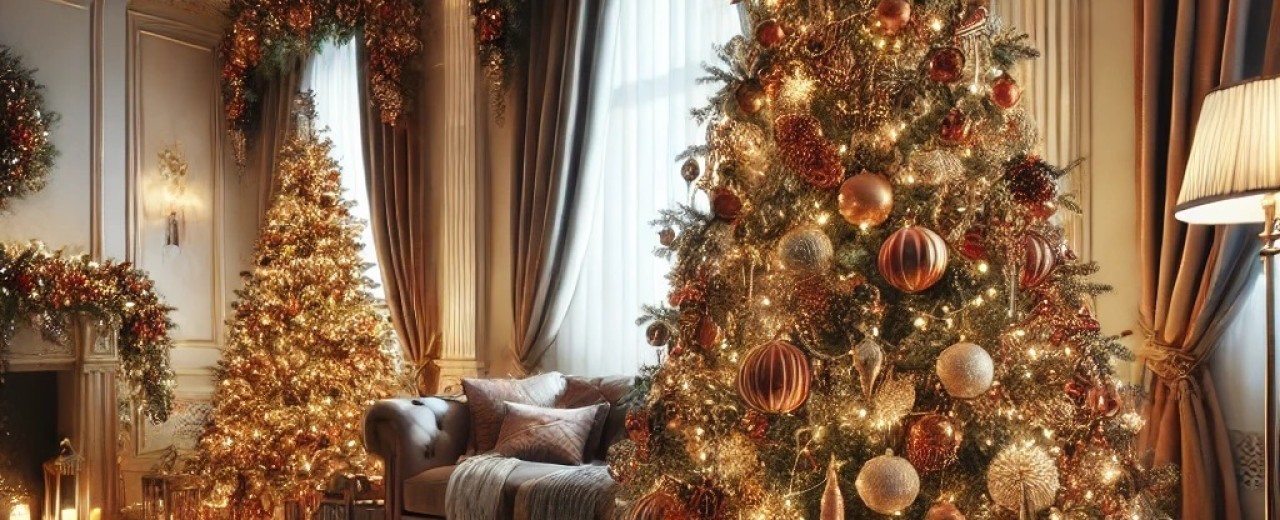
<p><strong>In a classic</strong> environment, on the other hand, you can be inspired by a traditional atmosphere. Ornaments can include elaborate decorations such as red silk bows, golden bells, and twinkling stars. The dominant shades are red, green and gold, and the materials are usually blown glass, metal and silk. In a classic space, the tree can be placed in the center of the room or in front of a fireplace, where the symmetry and harmony of the space enhance the refinement of the decorations.</p>
<p><strong>For a rustic</strong> environment, decorations should recall natural elements, such as pine cones, fir branches and wooden ornaments. The favorite colors are the warm tones of the wood, the green of the leaves and the red of the berries, which create an intimate and cozy atmosphere. The lighting in this case should be warm and subdued, with LED lights simulating candlelight. The positioning of the tree in a rustic style is also essential: it should be placed in a corner of the room where natural light can enhance its colors and materials.</p>
<p>A minimalist style, on the other hand, requires an essential and non-invasive decoration. Decorations should be kept to a minimum, focusing on materials such as metal or clear glass. In this case, you can opt for a small tree or even an innovative alternative such as stylized metal trees or wall decorations, so as not to clutter the space. Lighting should be gentle and unobtrusive, with cool, spaced lights that don't visually overwhelm the room.</p>
<p><strong>3. Colors and palettes: Match the tones of the tree to the décor</strong></p>
<p>When it comes to interior decoration, colors play a key role. The choice of colors for Christmas tree decorations should be based on the color palette already present in the room to create a visual harmony that enriches the environment without being forced.</p>
<p>To do this, it can be helpful to understand the principle of color complementarity, a design theory that is based on the idea that certain colors, placed next to each other, enhance each other. In particular, complementary colors are the opposite ones on the color wheel, such as red and green, blue and orange, or purple and yellow. Using complementary colors can create a strong visual contrast, attracting attention and making the tree a real protagonist of the room. However, it's important to balance these contrasts with neutral or metallic colors, such as silver or gold, to prevent the whole from becoming too full.</p>
<p>For example, if the room is dominated by cool colors such as blue or gray, decorations in warm tones such as gold, bronze, and red can create a visual contrast that warms the room. Conversely, in rooms decorated with warm colors such as beige or brown, silver, white and blue decorations can add freshness and create a more refined winter effect.</p>
<p>Another key concept is the use of tone-on-tone nuances. In this case, instead of using opposite colors, different shades of the same color are worked for a more delicate effect. For example, a tree decorated entirely in shades of blue, from light blue to navy blue, can be extremely elegant and modern, especially in rooms with neutral tones.</p>
<p><strong>4. Materials of the decorations: Glass, metals, fabrics and their consistency with the environment</strong></p>
<p>The materials of the tree decorations are just as important as the colors, as they influence the tactile and visual feel of the environment. Choosing materials that are consistent with those already present in the room helps to create a harmonious and refined atmosphere.</p>
<p>Glass decorations are a timeless classic. Blown glass balls, transparent or colored, create a shine effect that catches the light from the tree's bulbs, diffusing a soft glow and making the tree a magical object in the center of the room. However, glass is a fragile material, so it is important to use it in environments where there are no small children or pets.</p>
<p>Metal is another widely used material, especially in modern decorations. Bronze, silver, and gold are perfect for adding a touch of elegance and luxury to the tree. Metal decorations can be made in simple geometric shapes, for a more modern effect, or carved into more elaborate patterns, for a classic style.</p>
<p>Fabrics such as velvet, silk, and jute can be used to add warmth and texture to the tree. For example, red or gold velvet bows add a touch of luxury, while jute or cotton ribbons give a more rustic and natural look. These materials are particularly suitable for cosy environments, where tactile details help to create a warm and inviting atmosphere.</p>
<p>Finally, materials such as resin or wood are perfect for more natural and sustainable decorations. Painted pine cones, carved wood ornaments or resin decorations that imitate natural elements, such as leaves and berries, integrate perfectly into rustic environments or homes that prefer an eco-sustainable style.</p>
<p><strong>5. Lighting: Create the right atmosphere with tree lights</strong></p>
<p>Christmas tree lighting is not just a detail, but one of the most important elements to create the festive atmosphere. Tree lights can completely transform the look of the room, adding warmth, brilliance, and depth to decorations.</p>
<p>LED lights are an ideal choice for those who want efficient and long-lasting lighting. They offer multiple benefits: they are safer, consume less energy, and do not overheat, reducing the risk of fire or damage to decorations. In addition, modern LEDs offer a wide range of hues, from warm and yellow lights that evoke candlelight, to cool and white lights that create a more modern and sophisticated winter effect.</p>
<p><strong>Another element to consider is the arrangement of the lights.</strong> Traditionally, the lights are evenly distributed throughout the tree, but to create interesting visual effects, you can play with the intensity and position of the lights. For example, you can concentrate the brightest lights at the bottom of the tree to give a sense of depth, or use lights of increasing intensity towards the top to create an ascending effect. Many modern LED lights offer the ability to adjust the intensity and speed of the light play via remote control or mobile app, allowing you to change the mood with a simple click.</p>
<p><strong>6. Personalized decorations: The importance of unique details</strong></p>
<p>Custom decorations are a wonderful way to make your Christmas tree unique and meaningful. These special details not only add a personal touch to the tree, but can also become part of a family's history, passed down from generation to generation.</p>
<p>A growing trend is the use of 3D printers to create Personalized ornaments. This allows you to design and create unique decorations, such as the name of a family member, a special symbol or an important memory. Thanks to technology, it is possible to customize the design of the tree to the maximum, adding innovative and modern details that we would not find in stores.</p>
<p>For those who prefer a more traditional approach, handmade decorations can include carved wood ornaments, embroidered bows, or small works of art created using artisanal techniques such as decoupage. These elements add a touch of authenticity and warmth to the tree, making it truly unique.</p>
<p><strong>7. Small or large spaces: How to adapt the size of the tree and decorations</strong></p>
<p>When decorating a Christmas tree, it is important to take into account the size of the space around it. In a small room, a tree that is too large or too decorated could give a sense of crowding, making the space less comfortable and functional. To avoid this, you can choose <strong>slim</strong> trees or wall-mounted trees, which take up little space but maintain the desired visual effect. Decorations should also be reduced in quantity and size, to avoid overloading the tree.</p>
<p>In large spaces, on the other hand, it is possible to dare with imposing trees and equally spectacular decorations. However, it is important to maintain stylistic consistency, avoiding over-decorating only part of the tree.<strong> Using multiple trees of different sizes</strong>, strategically arranged in different corners of the room, is an interesting idea to fill the space without making it chaotic.</p>
<p><strong>8. Harmonize the tree with other Christmas decorative elements in the room</strong></p>
<p>To create a cohesive and harmonious festive environment, it is important that the Christmas tree is in tune with the other decorations in the room. This means coordinating the tree with the garlands, centerpieces, candles, and other Christmas decorations present. A winning idea is to choose a unifying theme, such as a snowy winter theme, with decorations that recall silver, white and blue, or a more natural theme with rustic elements such as wood and leaves.</p>
<p>Smart home technologies can facilitate the creation of a homogeneous atmosphere. Using synchronisable LED lights or smart devices, it is possible to coordinate the lighting of all the decorations, obtaining coherent plays of light that enrich the environment in a subtle and refined way.</p>
<p><strong>9. The tree therefore as an extension of home design</strong></p>
<p>In conclusion, the Christmas tree is not only a symbol of the holidays, but becomes a real piece of furniture that must reflect the style and personality of the home. Decorating it with care, following the principles of design, chromatic complementarity and stylistic coherence, allows you to transform the space into a welcoming and festive place. Thanks to the use of appropriate materials, modern technologies and individual decorations, it is possible to create a unique ambience that enchants not only guests, but also those who live in the house day after day. The tree thus becomes not only the protagonist of Christmas, but an integral part of the domestic aesthetic, capable of enriching the atmosphere with a touch of magic and warmth.</p>