1. Cardboard Shipping Boxes
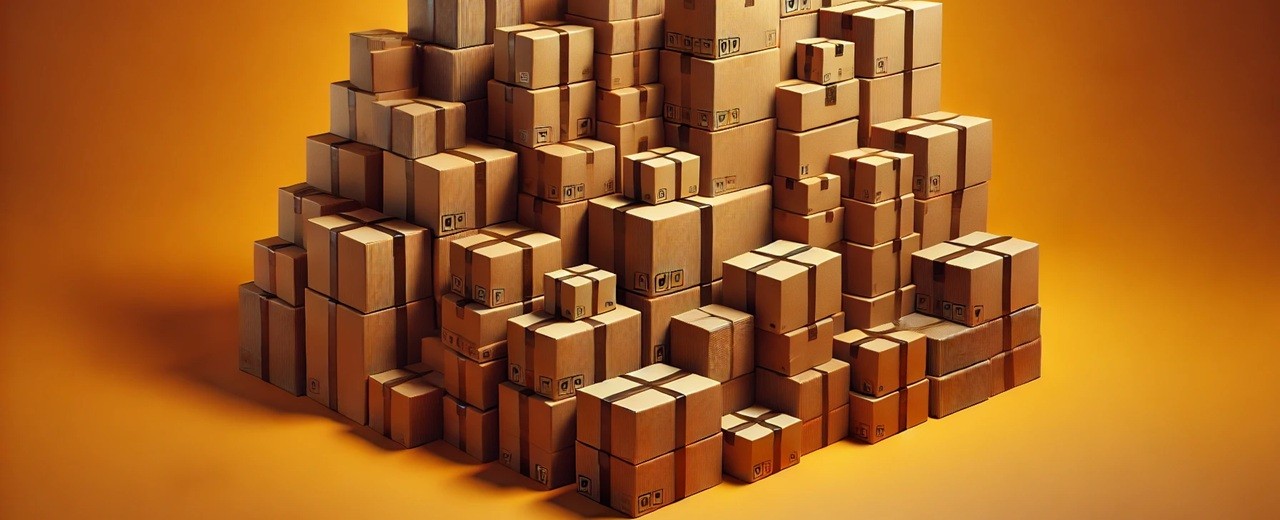
Cardboard boxes are fundamental elements in the logistics chain and in the management of modern shipments. Used to protect and transport goods of all kinds, they represent a practical, cost-effective and sustainable solution, essential for the global economy and for specific sectors such as e-commerce, food, pharmaceuticals and manufacturing.
A Crucial Role in Logistics
The growing demand for shipping services, accelerated by the expansion of e-commerce, has made cardboard boxes a mainstay in freight transport. This packaging must meet several requirements: withstand stress during transport, protect the contents from shocks, compressions and moisture, as well as facilitate storage and handling.
Cardboard boxes are appreciated for their ability to offer adequate protection without adding excessive weight to the load, a feature that helps to reduce shipping costs and the environmental impact of transport.
A Versatile and Sustainable Material
Cardboard is a material derived from paper, composed mainly of cellulose fibers. Its production is often done using recycled materials, which makes it an environmentally responsible choice. The 100% recyclability and biodegradability of cardboard position it as one of the most sustainable packaging solutions available on the market today.
In addition, the versatility of cardboard allows you to create boxes of different shapes, sizes and thicknesses, suitable for all types of products, from small fragile objects to heavy and bulky loads.
Evolution and Innovation
Over the years, cardboard boxes have evolved to meet the changing needs of markets and consumers. Thanks to technological advancements, it is now possible to produce boxes with advanced features, such as moisture resistance, thermal insulation and custom design for corporate branding.
The drive towards sustainability has also encouraged the use of natural adhesives and production processes that reduce the use of energy and water resources, increasing the overall efficiency of the production cycle.
The Role of Cardboard Boxes in Made in Italy
Italy is one of Europe's largest producers of cardboard packaging. Thanks to a long manufacturing tradition and advanced technological know-how, Italian companies are able to combine quality, innovation and sustainability. The boxes produced in Italy not only meet high environmental standards, but often stand out for their attention to detail and the possibility of customization, making them ideal for sectors such as fashion, luxury and the high-end food industry.
A Solution for the Future
With increasing environmental awareness and increasingly stringent regulations on the use of single-use plastics, cardboard boxes are taking on an even more central role. They offer a concrete answer to the challenges of sustainability, without compromising functionality and reliability.
This chapter introduces the topic by highlighting how cardboard boxes are much more than just containers: they are a strategic element that contributes to the sustainability and efficiency of modern logistics. In the following chapters, materials, production processes, types and other technical characteristics that make this product so indispensable will be analyzed in detail.
2. Main Features of Cardboard Boxes
Cardboard boxes are appreciated in many sectors thanks to their unique characteristics, which make them irreplaceable for transporting, protecting and presenting products. This section takes a detailed look at the qualities that define their effectiveness and versatility.
1. Strength and durability
One of the main characteristics of cardboard boxes is their mechanical strength. Corrugated cardboard, in particular, is designed to absorb shocks, pressures and vibrations, thus protecting products during transport and storage.
The robustness of the box depends on factors such as:
- Wave type (single, double, or triple): The higher the number of waves, the higher the resistance.
- Cardboard thickness: thicker cardboard offers superior protection against external compression.
- Material weight: A higher alto value indicates higher strength.
These features make cardboard boxes suitable not only for light products, but also for heavy or fragile loads, such as household appliances, glass or food products.
2. Lightness
Cardboard is a lightweight material, a quality that reduces shipping costs and facilitates product handling. However, the lightness does not compromise strength, ensuring an optimal balance between protection and practicality.
3. Versatility in Shapes and Sizes
Cardboard boxes can be made in a wide range of sizes and configurations to suit the needs of each product:
- Standard boxes for the transport of common goods.
- Custom boxes for items with irregular shapes.
- Self-assembling or die-cut boxes , which do not require glue or adhesive tape for assembly.
This versatility makes cartonboard an ideal solution for a wide range of industries, from e-commerce to heavy industry.
4. Ease of Assembly and Use
Cardboard boxes are designed to be easily assembled, thanks to precise cuts and folds. Many boxes include tabs, joints, or pre-applied adhesives that make them easier to use, reducing packaging time.
5. Protection from External Factors
Cardboard boxes offer effective protection against dust, dirt and in some cases even moisture, especially when treated with water-repellent coatings. For sensitive products, such as food or electronic items, cardboard can be combined with additional materials for complete protection.
6. Adaptability to Customization
Cardboard is also an extremely versatile material when it comes to customisation. Thanks to digital, screen printing or flexographic printing techniques, it is possible to apply logos, texts and graphics directly to the surface of the box. This allows companies to transform packaging into a vehicle for communicating their brand.
7. Sustainability
Cardboard boxes are recognized for their basso environmental impact. Often made from recycled and fully recyclable materials, they are an ecologically responsible choice. In addition, their life cycle is circular: a used box can be reused or recycled to produce new cardboard.
8. Cost-effectiveness
Compared to other packaging materials, cardboard is cheap to produce and source. Its affordability, combined with the ability to provide excellent protection, makes it the preferred choice for many businesses, especially those that handle high volumes of shipments.
9. Safety and Hygiene
Corrugated cardboard is also hygienic, especially in the versions treated for the food sector. It is free of harmful chemicals and can be used in direct contact with many types of products.
10. Technological Innovations
Thanks to advances in manufacturing, cardboard boxes can now include advanced features, such as:
- Anti-humidity coatings.
- Additional layers for thermal insulation.
- Integration with RFID technologies or QR codes for shipment tracking.
Cardboard boxes are not simple packaging, but essential tools for the protection, transport and enhancement of products. Their unique combination of strength, versatility and sustainability makes them a must-have choice for businesses in every industry. In the following chapters, the materials and production processes that make this variety of applications possible will be explored.
3. Materials Used in the Production of Cardboard Boxes
The quality and performance of cardboard boxes directly depend on the materials used in their production. Corrugated cardboard, the main basis for this packaging, is made up of several layers of paper that work together to ensure lightness, strength and sustainability. In this chapter, we will explore in detail the main materials, their characteristics and how to use them.
1. Structure of Corrugated Cardboard
Corrugated cardboard consists of three basic elements:
- Outer cover (liner): surface layer, visible on the outside of the box. It can be made from kraft paper or other sturdy materials.
- Inner cover (inner liner): inner layer, in contact with the contents of the box, which provides additional protection.
- Corrugated layer (fluting): central part which, thanks to its wave configuration, gives compressive strength and shock absorbing capacity.
The combination of these three layers makes it possible to obtain different types of corrugated cardboard, adaptable to multiple uses.
2. Types of Paper Used
The papers used to produce corrugated cardboard vary in weight, quality and origin. The main ones are:
- Kraft Paper:
- Made from virgin or recycled cellulose fibres.
- High tensile strength and breaking strength.
- Natural appearance (brown color) that evokes robustness and sustainability.
- Ideal for the outer cover of boxes intended for the transport of heavy loads.
- Testliner:
- Made from a blend of virgin and recycled fibers.
- Less durable than kraft but cheaper.
- Often used as an inner liner or for boxes intended for less delicate products.
- Schrenz:
- Paper made entirely from recycled materials.
- Cheap, but with less strength than kraft or testliner.
- Mainly used for corrugated layer.
- Fluting:
- Paper specially designed for corrugated layer.
- It can be made from kraft or recycled materials.
- It guarantees lightness and shock absorption capacity.
3. Material Characteristics
The materials used in the production of corrugated cardboard offer specific properties, including:
- Elasticity: essential to resist compression and shocks during transport.
- Lightweight: reduces shipping costs and facilitates handling.
- Recyclability: Most materials are easily recyclable and can be reused to make new paper.
- Customizability: The surface of the liner allows for easy printing for logos, labels, and instructions.
4. Weights and Thicknesses
Cardboard weight is an indicator of the amount of material used per square meter. The most common grammages for corrugated cardboard range from:
- 90 to 150 g/m² for fluting and internal liners.
- 150 to 300 g/m² for outer liners, especially in boxes intended for heavy loads.
The thickness of the cardboard, on the other hand, varies depending on the number of flutes and their height:
- Single flute: thickness between 2 and 3 mm.
- Double flute: thickness between 5 and 7 mm.
- Triple flute: over 10 mm thick, ideal for international transport and heavy loads.
5. Innovative Materials
In recent years, research has introduced new materials to improve the strength and sustainability of boxes:
- Advanced recycled fibers: combine recycled and virgin materials to achieve a balance between strength and affordability.
- Biodegradable coatings: protect the contents from moisture without compromising the recyclability of the box.
- Eco-friendly barrier layers: replace traditional plastic coatings, providing additional protection for food or electronic products.
6. Provenance of Materials
Much of the paper used for corrugated cardboard comes from FSC or PEFC-certified forests, which ensure sustainable management practices. Recycled fibers are becoming increasingly popular, helping to reduce the overall environmental impact.
Italy, in particular, is a leader in the production of paper for packaging thanks to an excellent recycling infrastructure and a long tradition in the sector.
Conclusions
The materials used to produce cardboard boxes not only determine the performance and efficiency of the packaging, but also represent a crucial choice for environmental sustainability. In the next chapters, we will explore how these materials are combined to create boxes suitable for every need, delving into the production processes and regulations that govern the sector.
4. Types of Corrugated Corrugated Cardboard
Corrugated cardboard boxes owe their strength and versatility to the special wave structure of the middle layer. This design, in addition to giving lightness and shock-absorbing capacity, can be customized according to specific protection and transport needs. There are different types of flutes, each with unique characteristics, which directly affect the performance of the carton.
1. The Structure of the Wave
The corrugated cardboard wave consists of a sheet of paper shaped in a series of curves (fluting) placed between two flat sheets of paper (liner). This sandwich configuration provides:
- Structural rigidity: essential to resist vertical compression.
- Shock absorption: useful for protecting products from vibrations and impacts during transport.
The shape, height, and frequency of the flutes determine the overall performance of corrugated cardboard.
2. Types of Wave
Waves are classified according to their height and the number of waves per linear meter. The main types are:
- Wave A:
- Wave height: 4.5-5 mm.
- Features: excellent shock absorbing capacity and vertical compressive strength.
- Usage: Suitable for boxes that require high protection, such as household appliances or fragile products.
- C-flute:
- Wave height: 3.5-4 mm.
- Features: Good balance between compressive strength and flexibility.
- Use: the most common type, ideal for boxes intended for the transport of various products.
- B-flute:
- Wave height: 2.5-3 mm.
- Features: higher density of waves per meter, offers good cut resistance and higher stability.
- Use: Suitable for thinner boxes or packaging that requires more handling.
- E-flute:
- Wave height: 1.5-2 mm.
- Features: Very thin, ensures a more refined and compact appearance.
- Use: Perfect for luxury packaging or secondary packaging, where visual presentation is important.
- F-flute and microwave:
- Wave height: less than 1.5mm.
- Features: Extremely thin, ideal for compact boxes with high-quality prints.
- Use: often used for the cosmetic, food and pharmaceutical sectors.
3. Wave Combinations
To further improve performance, corrugated cardboard can be made with multiple layers of flutes. Common configurations include:
- Double Wave:
- Composed of two layers of waves with an intermediate liner.
- It combines the characteristics of two wave types (e.g., B-wave and C-wave) to achieve superior resistance.
- Use: Boxes intended for heavy loads or long-distance shipments.
- Triple Wave:
- It includes three layers of waves and four liners.
- It offers maximum compressive and impact resistance.
- Use: packaging for international transport, industrial products or very heavy materials.
4. Factors to Consider When Choosing a Wave
The choice of the type of wave depends on various factors:
- Product weight and fragility: Heavier or more fragile products require higher waves or multiple configurations.
- Transportation conditions: For international shipping or harsh environments, double or triple waves are preferred.
- Aesthetic presentation: For luxury products or promotional packaging, thin waves such as E or F offer a more elegant appearance.
5. Innovations in Waves
Thanks to research and development, the corrugated cardboard sector has introduced new technologies to improve the performance of the flutes:
- Custom waves: Specific configurations for special needs, such as thermal insulation or protection against moisture.
- Hybrid combinations: mix of recycled and virgin materials to improve robustness and sustainability.
- Eco-friendly corrugations: Designed to minimize paper consumption without compromising strength.
6. Advantages of Corrugated Cardboard
The use of corrugated cardboard with different types of flutes offers numerous advantages:
- Reduction of transport costs thanks to the lightness of the material.
- Optimal protection of products during transport and storage.
- Ease of customization to fit specific branding or logistics needs.
- Sustainability, thanks to the use of recycled materials and production processes with basso environmental impact.
The types of corrugated cardboard are at the heart of the performance of corrugated boxes. Each configuration, from microwave to triple flute, responds to specific needs, making this material a highly versatile and indispensable tool in the packaging sector. In the following chapters, production processes and sustainability aspects will be explored, completing an in-depth view of this key element of modern logistics.
5. Corrugated Cardboard Production Process
The corrugated cardboard manufacturing process is a well-structured system that combines advanced technology, high-quality materials, and sustainability practices to create a versatile and durable product. This chapter explores the main production steps, the machinery used and the innovations that improve efficiency and reduce environmental impact.
1. Raw materials
The production of corrugated cardboard begins with the sourcing of raw materials, which include:
- Virgin fibers: derived from sustainably grown trees, usually from FSC or PEFC-certified forests.
- Recycled fibres: obtained from paper recycling, they represent a significant share of the material used.
- Natural adhesives: such as corn or potato starch, used to join the layers.
These raw materials are selected according to the grammage and quality required for the final product.
2. Production Steps
The corrugated cardboard production process is divided into several main phases:
- Preparation of the Charter
- Paper intended to become liner (outer and inner cover) and fluting (corrugated layer) is treated to obtain the necessary strength and flexibility characteristics.
- It is stored in large reels, ready for use in machinery.
Wave Production
- The fluting is formed through a corrugator machine, which uses heat, pressure and corrugated rollers to create the characteristic curves.
- During this process, the paper is heated to improve its malleability and ensure a stable shape.
Carton Assembly
- The corrugated layer is bonded between two layers of liner using natural adhesives.
- Depending on the type of board (single, double or triple flute), additional fluting layers and liners are added.
- Everything is pressed and passed through rollers to ensure uniform adhesion.
Sheet Cutting & Forming
- The cardboard produced is cut into standard or custom size sheets, ready to be turned into boxes.
- The sheets can be treated with additional coatings (such as water-repellent or fireproof layers) to improve performance.
Conversion to Boxes
- The sheets are processed in die-cutting or folder-gluer machines, which cut and fold the cardboard to create the final shapes of the boxes.
- The boxes are then assembled manually or automatically, ready for immediate shipment or use.
3. Machinery Used
The main machines used in the production of corrugated cardboard include:
- Corrugator: corrugating machine for the formation of fluting.
- Laminators: Used to join the layers of liner and fluting.
- Die-cutting machines: machines that cut and shape cardboard according to the required design.
- Flexiographic or digital printers: to customize the boxes with logos, texts or graphics.
These machines operate with the highest levels of precision, ensuring a uniform and high-quality final product.
4. Quality Control
During the production process, strict quality checks are carried out to ensure that the cardboard meets the required standards. Among the main tests we find:
- Vertical Compressive Strength (ECT): To evaluate the ability of the carton to withstand loads.
- Puncture resistance: to check the robustness against any impacts.
- Layer adhesion: To ensure that the liner and fluting are well bonded.
- Dimensional uniformity: to ensure that the boxes assemble correctly.
5. Sustainability in Production
A key element of modern production is sustainability, which is achieved through:
- Use of recycled materials: An increasing proportion of cardboard is made from recycled fibres.
- Energy efficiency: the machinery uses technologies with basso energy consumption.
- Reduced waste: production residues are reused or recycled to minimize waste.
- Eco-friendly adhesives: they replace synthetic ones, reducing the environmental impact.
Many companies adopt closed-loop processes, in which recycled materials are continuously reintroduced into the production chain.
6. Technological innovations
In recent years, the industry has witnessed major technological innovations, including:
- On-demand production: thanks to the use of highly automated machinery, it is possible to produce customized boxes quickly.
- Digitization of control: sensors and software monitor each production phase in real time, improving efficiency and reducing errors.
- Eco-friendly technologies: such as the recovery of the heat produced during processing to power other stages of production.
7. Timing and Production Capacity
The production cycle of corrugated cardboard is extremely fast thanks to automation. Modern plants can produce thousands of square meters of cardboard every hour, adapting to high volumes and customized requests.
The production process of corrugated cardboard is the result of a balance between tradition and innovation. Each step is designed to maximize product quality, ensuring robustness, versatility and sustainability. In the following chapters, the regulations and environmental advantages related to this material will be explored, completing the picture of an essential product for the logistics and commercial sector.
6. Standard Box Sizes and Sizes
Corrugated boxes are available in a wide range of formats and sizes to meet the protection, transport and presentation needs of a wide range of products. The standardization of formats allows for more efficient production and cost optimization, but there is also the possibility of customizations to meet specific needs.
1. Standard Carton Sizes
Cardboard boxes are produced following standard formats that facilitate their production and use. Among the most common formats we find:
- Regular Slotted Containers (RSC):
- The most used type, characterized by four upper and lower flaps.
- Suitable for multiple uses, from e-commerce transport to industrial storage.
- Available in various standard sizes, such as 30x20x20 cm, 40x30x20 cm, and 60x40x40 cm.
- Auto Bottom Boxes:
- Easy to assemble thanks to a pre-glued bottom that closes automatically.
- Ideal for speeding up packaging operations.
- Box boxes:
- Composed of a base and a separate lid.
- Used for high-end products or gift packaging.
- Die-cut boxes:
- Made with die-cutting machines, they allow the creation of particular and shaped shapes.
- Perfect for irregularly sized products or branding needs.
- Telescopic boxes:
- Composed of two overlapping parts that can be adjusted in height.
- Used to transport objects of varying lengths, such as posters or musical instruments.
2. Dimensions on the market
The dimensions of cardboard boxes vary according to market standards and customer needs. The most common measurements are:
- Small: 20x15x10 cm, 30x20x15 cm (for small items, electronics or cosmetics).
- Medium: 40x30x20 cm, 50x40x30 cm (for clothing, books or fragile objects).
- Large: 60x40x40 cm, 80x60x60 cm (for household appliances, furniture or bulky items).
Companies that use standard boxes benefit from better compatibility with storage and transport systems, while those who need custom-made boxes can achieve customized sizes based on the volume of the product.
3. Custom boxes
Many companies choose custom boxes to improve the customer experience or respond to specific needs. Personalization can concern:
- Size: Custom-made to reduce empty space inside the box.
- Shape: Designed for irregular objects or aesthetic needs.
- Graphics: Logos, images, or Personalized messages to reinforce branding.
Personalization is especially common in the e-commerce industry and luxury packaging.
4. Volume Calculation and Optimization
When designing box sizes, it's essential to consider:
- Internal volume: calculated based on the dimensions of the products to be packaged and any filling material.
- Storage space: Boxes should be easily stackable to maximize warehouse efficiency.
- Compatibility with conveyor systems: the dimensions must be adapted to standard pallets (e.g. 80x120 cm or 100x120 cm) to optimize the load.
5. Technical Specifications
Technical specifications for box size and strength include:
- Thickness of the cardboard: varies according to the type of flute (single, double or triple) and the weight of the material.
- Load capacity: measured according to the maximum weight that the box can support without deforming.
- Compatibility with accessories: such as internal dividers, trays or lids.
6. Adapting to Industry Needs
Cardboard boxes are designed to meet the needs of specific industries:
- E-commerce: light but resistant boxes, with closures that are easy to open and reclose.
- Food industry: boxes that are hygienically compliant and often treated to resist moisture.
- Industrial transport: robust boxes, often with double or triple wave configurations, suitable for heavy loads.
7. Benefits of Standardization
The use of standard formats has several advantages:
- Cost reduction: mass production that allows economies of scale.
- Ease of supply: Standard boxes are easily available on the market.
- Logistics optimization: standard sizes are designed to fit international transportation systems.
8. Innovations in Sizes and Formats
Companies are developing new solutions to meet emerging needs:
- Modular boxes: designed to be combined with each other and adapt to different product sizes.
- Frustration-free packaging: easy-to-open boxes, without the need for additional tools or accessories.
- Folding solutions: Boxes that can be folded after use, reducing storage volume.
The formats and dimensions of cardboard boxes are a fundamental element to ensure protection, logistical efficiency and sustainability. The ability to choose between standard and Personalized formats gives companies the flexibility they need to respond to an ever-changing market. In the following chapters, we will delve into the sustainability of boxes and the regulations that govern the sector.
7. Available Colors and Finishes for Cardboard Boxes
In addition to their protective and logistical function, cardboard boxes play an important role in visual communication and brand identity. The colours and finishes of cardboard can influence both the customer experience and the perception of the product contained, especially in the e-commerce and luxury packaging sector. This chapter explores the colour options, available finishes and technological innovations in this area.
1. Colors of Cardboard Boxes
Cardboard boxes are available in a variety of colors that meet functional and aesthetic needs. The main colors are:
- Havana Cartoon:
- The natural color of the cardboard, typically light brown.
- It is the most common color and recalls robustness, eco-sustainability and simplicity.
- Ideal for packaging intended for transport or for products that focus on a natural and sustainable image.
- White Carton:
- Obtained with the use of bleached liners.
- It offers a cleaner and more refined look, often used for high-end product packaging or industries such as cosmetics and food.
- Facilitates the printing of high-definition graphics and logos.
- Colored cardboard:
- Made with colored liners or by printing on brown or white cardboard.
- It is used for promotional packaging or to draw attention to the point of sale.
- Available in a wide range of colors, often customizable on request.
- Black or Dark Finish Board:
- It gives a sleek and modern look.
- Perfect for packaging luxury products, such as wines, perfumes or designer items.
2. Types of Finishes
Finishes are a fundamental element for packaging, improving the aesthetic appearance and sometimes the functional properties of the boxes. Key options include:
- Smooth finish:
- Uniform surface without reliefs.
- Suitable for detailed prints and complex graphics.
- Embossed finish:
- It has an embossed texture, which can reproduce geometric patterns, logos, or other decorations.
- It adds a tactile effect that improves the perception of the product.
- Glossy Finish:
- Applied by painting or lamination.
- It gives brilliance and a premium look to the packaging.
- Matte Finish:
- It gives an elegant and discreet look.
- Often used in conjunction with minimalist printing techniques for high-end packaging.
- Metallic Finish:
- Includes gold, silver, or iridescent elements.
- Particularly popular in the gift or luxury sector.
- Protective Finishes:
- Anti-moisture, flame retardant or oil-resistant coatings to provide additional protection in specific environments, such as the food industry.
3. Customization Techniques
Cardboard boxes can be customized via a variety of techniques, including:
- Flexographic printing:
- Ideal for high volume production.
- It allows prints on porous surfaces, such as brown cardboard.
- Suitable for logos, text, and simple graphics.
- Offset Printing:
- Used to achieve fine details and vibrant colors.
- Perfect for white boxes or cardboard with a smooth surface.
- Digital Printing:
- Optimal for short runs and Personalized projects.
- It offers flexibility in graphics and reduced production time.
- Screen printing:
- It allows for thick and vibrant prints, suitable for large logos and decorations.
- Lamination and Painting:
- Glossy or matte lamination protects the print and enhances its appearance.
- Special coatings, such as spot UV, can be used to emphasize specific parts of the graphics.
4. Colors and Branding
The colors and finishes of cardboard boxes play a crucial role in branding:
- Brand identity: Corporate colors can be integrated into packaging to strengthen recognition.
- Differentiation: Unique finishes or eye-catching colors can help products stand out on the shelves.
- Customer experience: well-kept and visually appealing packaging improves the perception of the product and the shopping experience.
5. Sustainability of Finishes
Modern technologies make it possible to combine aesthetics and sustainability:
- Water-based inks: reduce the environmental impact compared to traditional inks.
- Biodegradable laminations: replace plastic coatings, making the boxes completely recyclable.
- Use of recycled liners: allows you to achieve quality finishes without sacrificing sustainability.
6. Technological innovations
The cardboard box industry is introducing innovative solutions to improve the aesthetic and functional appearance of packaging:
- 3D printing on cardboard: create unique textures and Personalized reliefs.
- Anti-counterfeiting finishes: integrated into the packaging to protect valuable products.
- Thermochromic inks: change color according to temperature, used to signal the correct storage of the product.
The colours and finishes of cardboard boxes are much more than just aesthetic details: they represent a strategic component that combines functionality, sustainability and visual communication. With a wide range of options and innovative technologies, the boxes can be designed to meet any need, making packaging an essential element of the product experience. In the following chapters, regulatory aspects and issues related to sustainability will be explored, completing the overview of the importance of this material.
8. Mandatory Printing Regulations for Cardboard Boxes
Cardboard boxes intended for transport and packaging must comply with precise regulations regarding the information to be printed on their surface. These indications are not just a formality, but guarantee the correct logistical management, product safety and compliance with national and international laws.
1. Importance of Mandatory Printouts
Mandatory prints on cardboard boxes serve several purposes, including:
- Facilitate logistics: providing useful information for transport, handling and storage.
- Ensure safety: Identifying any dangerous or fragile content.
- Ensure traceability: allowing the product to be tracked throughout the distribution chain.
- Comply with legal regulations: comply with packaging and transportation laws.
2. Mandatory Information for Transport Boxes
Depending on the intended use, cardboard boxes must contain a series of information, including:
- Handling and Storage Symbols:
- Fragile: Indicates that the contents should be handled with care.
- This side towards the alto: to ensure correct positioning during transport.
- Protect against moisture: For packaging that is sensitive to water or moisture.
- Content Information:
- Product description.
- Net and gross weight, for easy handling.
- Barcode or QR code for traceability.
- Transportation Instructions:
- Country of origin (required in some international markets).
- CE marking, when applicable, to certify compliance with European regulations.
3. Industry-Specific Regulations
Each sector may require additional information. Among the most common:
- Food sector:
- Obligation to include symbols certifying suitability for food contact, such as the glass and fork symbol.
- Any warnings for temperature-controlled transport.
- Chemical and pharmaceutical sector:
- Hazard symbols, such as those provided for by the CLP (Classification, Labelling and Packaging) regulation for hazardous substances.
- UN (United Nations) number to identify materials classified as hazardous.
- E-commerce:
- Tracking codes and carrier information.
- Instructions for opening without damaging the product.
4. Types of Symbols and Markings
The symbols printed on the boxes follow international standards to ensure universal understanding. Among the most common are:
- ISO 780 Symbols: Establish guidelines for the safe handling of packaging, such as:
- "Don't flip."
- "Stackable up to X boxes."
- Resy and Mobius Loop Code:
- The Resy code guarantees the recyclability of corrugated cardboard, which is particularly in demand in Germany.
- The Mobius Loop symbol indicates that the packaging is recyclable.
- Environmental labels:
- Indications on the composition of materials for correct disposal (e.g. plastic, paper, metal).
- PAP 20 or PAP 22 marking for paper and cardboard packaging.
5. Technical Requirements for Printing
The printing of mandatory information must comply with certain criteria:
- Clarity and readability:
- Texts and symbols must be clearly visible and legible, even from a distance.
- The use of contrasting colors is recommended.
- Positioning:
- The information should be printed on at least one side of the box, preferably the top or front side.
- In some cases, it is required that symbols be present on multiple sides for complete visibility.
- Symbol and text sizes:
- They must comply with standardized proportions to ensure immediate recognition.
6. Information Printing Technologies
Modern technologies make it possible to integrate the mandatory printouts with other useful information, improving the functionality of the box. Among the most common technologies:
- Flexographic printing: ideal for large volumes and for basic prints on brown cardboard.
- Digital Printing: suitable for customizations and short runs, it allows you to integrate QR codes and complex graphics.
- Adhesive labels: used for variable information, such as weights or destinations.
7. Penalties for Non-Compliance
Failure to comply with the regulations relating to mandatory printing may result in economic penalties or the blocking of the goods. In addition, non-compliant boxes can cause:
- Logistical issues, such as shipping delays.
- Damage to corporate reputation.
- Difficulty in recycling and proper disposal of materials.
8. Innovations in Marking
Technological innovations are transforming mandatory printing into useful tools for marketing and logistics:
- Smart QR codes: Provide detailed information about the contents, traceability, and even recycling instructions.
- Eco-friendly inks: developed to reduce the environmental impact of prints.
- Interactive labels: equipped with sensors to monitor conditions such as temperature or humidity during transport.
Mandatory printing regulations are a crucial aspect in the production and use of cardboard boxes. In addition to ensuring legal compliance, this information improves packaging functionality, safety, and sustainability. In the next chapters, aspects such as the sustainability of the boxes and the entire production cycle will be explored, offering a complete view of the importance of this logistical and ecological tool.
8. Mandatory Printing Regulations for Cardboard Boxes
Cardboard boxes, in addition to serving as packaging for the transport and protection of products, are also an essential means of communicating mandatory information according to current regulations. These markings ensure safety, traceability and compliance with national and international laws, while also offering greater logistical efficiency.
1. Importance of Mandatory Printouts
Mandatory printouts are not only a legal requirement, but they play a strategic role in product management. Provide:
- Logistical information: Clear information for transport and storage.
- Safety and compliance: identify products that are dangerous, fragile or have special storage needs.
- Traceability: They help to monitor the path of products along the supply chain.
- Sustainability: indications on the composition and correct disposal of packaging.
2. Mandatory Information by Sector
Each industry has specific requirements for the information to be included on cardboard boxes:
- Logistics and Transport:
- Barcodes or QR codes for traceability.
- Information on net and gross weight.
- Handling symbols (e.g. "Fragile", "This side towards the alto").
- Origin of the product, in particular for export.
- Food Sector:
- Glass and fork symbol to indicate suitability for food contact.
- Any transportation requirements, such as temperature controlled.
- Packaging date and production batch.
- Chemical and Pharmaceutical Sector:
- Hazard symbols according to the CLP (Classification, Labelling and Packaging) regulation.
- UN number for dangerous goods.
- Indications on storage and transport conditions (e.g. protection from light or moisture).
- E-commerce:
- Tracking codes and carrier information.
- Easy opening symbols to enhance customer experience.
3. Standard Symbols and Markings
The regulations provide for the use of international symbols to ensure universal understanding. The main symbols include:
- ISO 780 symbols: for the safe handling and transport of packaging, such as:
- "Handle with care."
- "Don't stack."
- "Protect from moisture."
- Environmental Symbols:
- Mobius Loop: Indicates that the packaging is recyclable.
- PAP 20 or PAP 22: to identify cardboard and paper materials.
- FSC/PEFC symbol: certifies the use of materials from sustainably managed forests.
- Logistic codes:
- Alphanumeric numbers and codes to identify the product and facilitate sorting.
4. Size and Placement of Prints
Mandatory information must be easily readable and strategically placed to be visible during handling and storage. The main rules include:
- Text and symbol sizes: Must adhere to standard aspect ratios to ensure readability.
- Placement: Usually on the top or front of the box. For fragile or special products, the information must be printed on several sides.
- Color contrast: Symbols should be printed with colors that stand out clearly from