The Birth of the Nutcracker Soldier: Ancient Traditions and Practical Functions
The link between the Nutcracker soldiers and the Christmas holidays has its roots in German tradition. These iconic objects originated in the Ore Mountains, a region on the border between Germany and the Czech Republic, during the eighteenth century. Originally, the local population supported themselves from mining. However, with the decline of the mines, the inhabitants were forced to look for new sources of income. Artisans in the region began to produce wooden toys, including nutcrackers, turning them into one of the most characteristic expressions of German craftsmanship.
Practical Function and Symbolism
Initially, nutcrackers were not only decorative, but also practical tools - they were used to crack nut shells. Their anthropomorphic and often militaristic form was not accidental. Carving figures of soldiers with severe expressions had a precise meaning in German popular culture: these figures embodied power and authority, qualities essential for warding off evil spirits and protecting the home. The toy soldier thus became a domestic guardian, a symbolic figure who ensured security and prosperity for the family.
The Nutcracker in Folklore and Popular Culture
Although the Nutcracker toy soldiers were already present as decorative objects in European homes, it was the literary work of E.T.A. Hoffmann that gave them a new meaning. In 1816, Hoffmann published the short story "The Nutcracker and the Mouse King", a dark fairy tale that tells the story of Clara, a young girl who receives a nutcracker in the shape of a soldier as a Christmas present. During the night, the nutcracker comes to life and fights a battle against the evil Mouse King, transporting Clara to a fantasy world.
Hoffmann's story intertwines dream and reality, using the Nutcracker as a symbol of protection and transformation. This character proves to be a real hero, embodying values of courage and sacrifice, characteristics that make him perfectly suited to the Christmas season, when you try to cultivate a sense of magic and family security.
The Ballet and the Global Spread of the Nutcracker Myth
In 1844, Alexandre Dumas Sr. adapted Hoffmann's story, making it less obscure and more accessible to the general public. This adaptation served as the inspiration for one of the most famous theatrical adaptations of all time: the ballet "The Nutcracker" by Pyotr Ilyich Tchaikovsky, premiered in 1892 at the Mariinsky Theater in St. Petersburg. Although the first performance was not an immediate success, the ballet became one of the most beloved operas in the Christmas repertoire.
Thanks to its enchanting music and its message of hope and fantasy, "The Nutcracker" has established itself during the twentieth century as one of the most popular Christmas celebrations, especially in the United States. Every year, ballet companies from all over the world stage this play, helping to make the toy soldier one of the universal symbols of Christmas.
Why then did Tchaikovsky's ballet "The Nutcracker" become one of the most beloved operas in the Christmas repertoire? Certainly for a combination of factors concerning its music, the theme of fantasy and its enchanted atmosphere, perfectly in line with the spirit of Christmas. Here are some of the main reasons:
The Magical and Fairytale Atmosphere
The Nutcracker is set in a world that alternates reality and fantasy, an element that has always fascinated viewers, especially during the Christmas period, which in itself is full of magic and dream. The story of Clara, a young girl who on Christmas Eve is transported to a fantasy world dominated by wonderful characters such as the Nutcracker, the Mouse King, the Fairies and the Kingdom of Sweets, resonates with the fairytale atmosphere typical of the holidays. This theme of transformation and wonder is deeply linked to Christmas imagery, making the ballet perfect for the festive season.
Tchaikovsky's Unmistakable Music
The soundtrack of The Nutcracker is one of the most famous in the world and has contributed enormously to its lasting success. Songs such as the "Dance of the Sugar Plum Fairy", the "Waltz of the Flowers" and the "March of the Children" are immediately recognizable and have a timeless charm. The music is both delicate and powerful, capable of evoking wonder, joy and melancholy, sensations that are well in tune with the spirit of Christmas. Tchaikovsky's melodic beauty and orchestral harmony have made ballet an iconic holiday soundtrack, even outside of the theater, influencing commercials, films, and television shows.
The Christmas and Family Theme
The ballet takes place on Christmas Eve, a time that immediately evokes images of family, sharing, and celebration. The opening scene, which depicts a Christmas party at Clara's house, shows the classic scenario of families gathered around the tree, exchanging gifts, creating an atmosphere of warmth and affection. This theme of family unity is central to Christmas culture and has allowed The Nutcracker to enter the hearts of generations of viewers.
The Elementary Dualism between Good and Evil
Another factor that has made ballet so popular is its clear dualism between good and evil, which is reflected in the battle between the Nutcracker and the Mouse King. This archetypal pattern of fighting and winning good over evil is very common in fairy tales and has a powerful emotional appeal, especially in the context of Christmas, a holiday that celebrates hope and redemption.
Spectacular Choreography and Visual Charm
The choreography of The Nutcracker, starting with those conceived for its first performance at the Mariinsky Theater, has always been full of elegance and visual spectacle. The dance scenes, from waltzes to characteristic dances, are designed to be lively and fascinating, with colorful and bright costumes and sets. The ballet world of The Nutcracker is a symphony of colors and movements, perfectly synchronized with the music, which makes each performance an exciting aesthetic experience.
The American Christmas Tradition
In the United States, in particular, The Nutcracker has taken on a special role at Christmas time. In 1954, choreographer George Balanchine staged a production in New York that became an instant success. This staging helped turn ballet into an annual tradition. American families began to include a visit to ballet during the holidays, helping to entrench The Nutcracker in American holiday popular culture. Today, many ballet companies in the United States and around the world organize seasonal productions, becoming a Christmas ritual for generations of spectators.
The Universal Charm of History
Finally, the story of The Nutcracker has a universal appeal. It tells of dreams and desires, of transformation and discovery, themes that speak to the hearts of children and adults of all ages. Clara's journey into a magical world awakens the sense of wonder that many associate with Christmas, a time when reality seems to suspend and everything becomes possible. This element of dream, hope and magic is perhaps the strongest reason why The Nutcracker continues to be loved and performed every year.
The ballet The Nutcracker has become one of the most beloved in the Christmas repertoire thanks to its timeless music, its magical and enchanted atmosphere, its familiar and universal themes, and its ability to evoke hope and wonder. It is a tradition that connects generations and cultures, capturing the spirit of Christmas in a unique and memorable way.
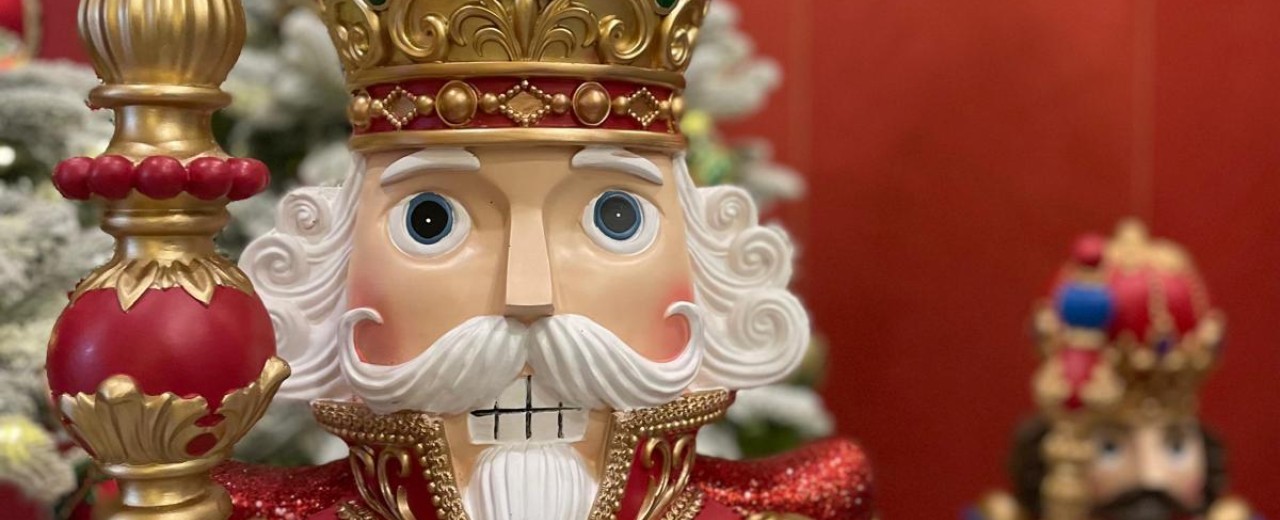
The Nutcracker soldier is much more than just a Christmas ornament. It embodies deep values of protection, unity and home security, elements that resonate particularly during Christmas. His austere and military figure, often painted in bright colors such as red and gold, conveys a sense of alertness and strength. Another interesting detail is its mechanical mouth, which in the past was used to crush nuts, but which today can be seen as a symbol of defense against negative external influences.
In many European cultures, the Nutcracker was believed to have the power to drive away evil spirits and bring good luck to the house. This makes it particularly suitable for the Christmas context, a period in which you want to create a safe and welcoming environment for the family. In addition, its presence in Christmas decorations evokes a strong sense of nostalgia, taking us back to a time when life was simpler and wooden toys were considered precious objects, passed down from generation to generation.
The Aesthetic Evolution of the Toy Soldier in Christmas Decorations
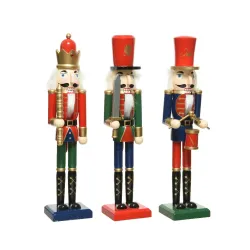
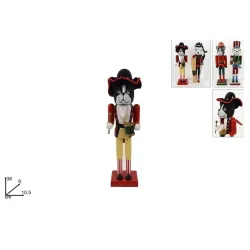
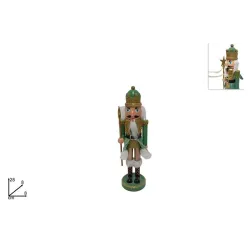
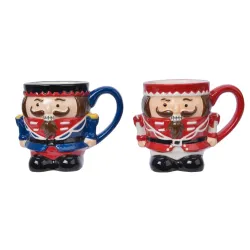
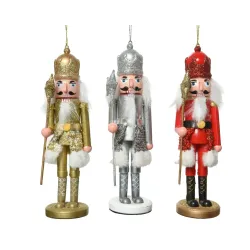
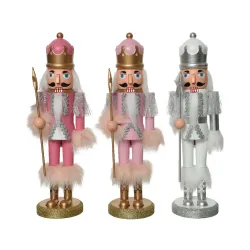
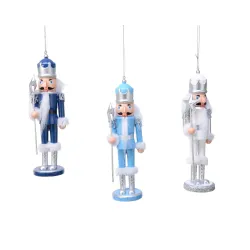
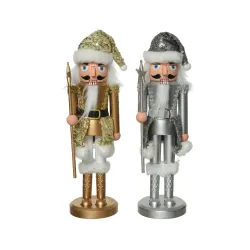
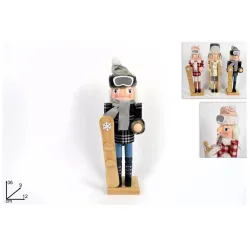
From an aesthetic point of view, the Nutcracker soldiers are characterized by a distinctive and unmistakable style. Originally made of wood and hand-painted, these toy soldiers stand out for their ornate military clothes and their grandeur. The more traditional versions faithfully follow the design of the Prussian soldiers of the eighteenth century, with tall hats and detailed uniforms. However, over time, the figure of the toy soldier has been reinterpreted in multiple variations, moving from minimalist versions to more elaborate and decorative designs.
Thanks to their versatility, the Nutcracker soldiers have integrated perfectly into modern Christmas decorations. They can be used to decorate the Christmas tree, placed next to the fireplace or on shelves, or displayed as the protagonists of shop windows. Their ability to adapt to different furnishing styles, ranging from classic to contemporary, makes them ideal decorative elements for any type of environment.
The Globalization of the Nutcracker Soldier
The Nutcracker soldier has quickly won the hearts of people all over the world. In particular, in the United States, the spread of Tchaikovsky's ballet played a crucial role in making the toy soldier one of the central symbols of Christmas celebrations. In addition to being present in homes as festive decorations, the Nutcracker soldiers are often the protagonists of Christmas windows, public events and private collections. Many enthusiasts collect toy soldiers from various eras and styles, adding new pieces to their collections every year.
The Future of the Nutcracker Soldier in Christmas Decorations
With the advent of new technologies, the design of the Nutcracker toy soldiers continued to evolve. Today, you can find toy soldiers made of a wide range of materials, from plastic to metal, and in different sizes. Some modern models even include built-in LED lights or sound elements, combining tradition and innovation. However, despite numerous reinterpretations, the Nutcracker soldier remains true to its original symbolism, continuing to represent protection, magic and the spirit of the holidays.
The Nutcracker soldiers are not simple Christmas decorations: they represent a perfect fusion of aesthetics, history and symbolic meaning. Every Christmas, these toy soldiers resurface as witnesses to a centuries-old tradition, bringing with them values of protection, magic and nostalgia. Whether placed next to the Christmas tree, or silently keeping vigil in homes, the Nutcracker soldiers continue to evoke the magic of the holidays, connecting generations and cultures around the world.