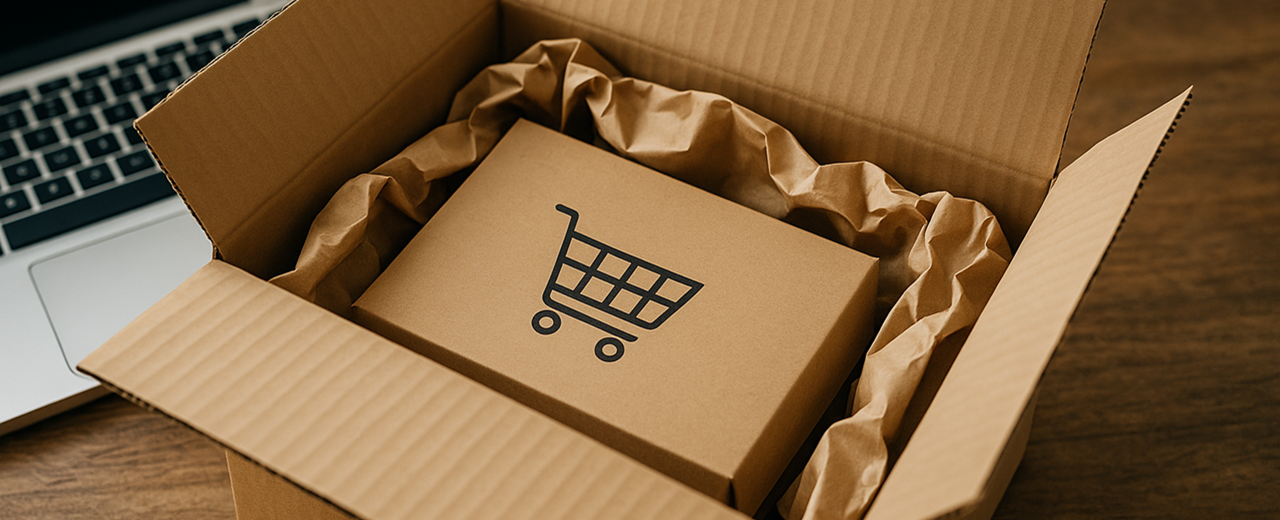
When shopping online, the most awaited moment is when the package arrives at home. That's where the promise made by the seller is fulfilled: the product you saw on the screen takes real shape and becomes yours. But behind that moment there is much more than a simple delivery. There is a path made up of logistics, care and strategic choices, and at the center of everything is packaging.
It is often thought that a box is just a container, a marginal detail compared to the product. In reality, it is precisely from there that the perception of quality and reliability of an eCommerce starts. A package that is too large, neglected or damaged can ruin the shopping experience, while solid, well-kept and intelligently designed packaging conveys professionalism and respect for the customer.
Packaging is not just protection: it is an investment that affects costs, optimizes logistics, tells who you are as a brand and responds to the needs of a market that is increasingly attentive to sustainability. In other words, every box you prepare is much more than a wrapper: it is a business card, an opportunity for loyalty and a fundamental piece for the growth of your online business.
In this article, you will find out why packaging is so important for an eCommerce, what the concrete needs of a digital store are and how a conscious choice can turn into a competitive advantage.
Why Packaging is Crucial in eCommerce
When you run an online store, you know that the most delicate moment in your relationship with the customer is delivery. Up to that point, the experience was intangible: the customer saw your site, navigated through the pages, chose a product and bought it. The wait that follows is made up of trust, because the person on the other side of the screen has not yet touched what he has ordered. And it is precisely the packaging that represents the first physical contact between the customer and your brand.
A well-thought-out package is not only a protection for the item you have sold, but becomes a real communication tool. The moment the customer receives it, even before discovering the contents, he looks at the box, the consistency of the material, the way it has been sealed. If the packaging is neat, resistant and pleasing to the eye, it immediately conveys a message of reliability. If, on the other hand, it is improvised, not very solid or disproportionate to the product, it risks compromising the perception of your professionalism, even if the item inside is perfect.
Packaging also plays a strategic role that goes beyond mere physical protection. On the one hand, it allows you to reduce hidden costs, such as those related to returns and claims for items damaged in transit. On the other hand, it becomes a marketing lever: a customer who receives a well-made package remembers it, appreciates it and tends to share the experience, both by direct word of mouth and through social media, where unboxing is now an established practice.
Then there is an aspect of trust that you cannot overlook. A consumer who receives a careful shipment feels respected, because he perceives the attention you have put into ensuring that his purchase arrives in optimal condition. This sense of care increases the likelihood that they will come back to buy from you, turning into a repeat customer. Packaging therefore becomes a long-term investment, because it helps to build a solid and lasting relationship.
In the competitive context of eCommerce, where margins are often played on details that make the difference, packaging takes on a central role. You cannot consider it a simple container, but rather a strategic element that encompasses security, image and perceived value. It is the first impression you leave and, as often happens, the first impression is the one that lasts the longest.
Product protection and reduced returns
When you ship an order, your main goal is simple but fundamental: to get the product intact into the customer's hands. It may seem obvious, but those who work in eCommerce know how complex it is to guarantee this condition. An item, once it leaves your warehouse, faces a path that you no longer control directly. It is handled by couriers, loaded and unloaded by vans, stored in warehouses, subjected to shocks, vibrations, changes in temperature and humidity. In this chain of steps, any fragility of the packaging can turn into a real risk.
Packaging, in this context, becomes your most precious ally. It is not just a matter of wrapping an object, but of building a barrier against unforeseen events and damage. A strong and proportionate box, a suitable filling material, a secure locking system - these are all choices that make the difference between a satisfied customer and a disappointed customer. When a package arrives intact, the shipment becomes invisible, because the customer focuses only on the joy of receiving what they ordered. On the other hand, when the product suffers damage, the attention immediately shifts to the problem, and the trust you had gained risks cracking.
There is also an economic aspect that you cannot overlook. Each return for a damaged item generates a direct cost, made up of replacements, refunds and new shipments. Added to these are indirect costs, such as the time taken to manage the file or the drop in reputation that can translate into fewer future orders. Investing in proper packaging therefore means drastically reducing the risk of returns and protecting your business margins.
Another important variable is the management of voluntary returns, those that the customer decides to make for personal reasons, independent of defects or damages. In this case, smart packaging can become an advantage. If the box has been designed to be reused, perhaps with a double or resealable closure system, the customer will have the opportunity to return the product in a simple and orderly way. This detail, which may seem secondary to you, is perceived by the consumer as a sign of seriousness and attention, and often contributes to transforming a negative experience into an opportunity to strengthen the relationship of trust.
Ultimately, protecting the product does not only mean safeguarding the physical integrity of what you ship, but defending your image, protecting your profitability and building a relationship of trust with those who choose you. Packaging, if well designed, becomes a silent guarantee that accompanies the customer from the moment they receive the package until it is returned, becoming an indispensable piece of your eCommerce strategy.
Optimization of costs and logistics efficiency
Every shipment you arrange is a balance between cost and service. On the one hand, you want to guarantee the customer an impeccable experience, on the other hand, you have to maintain sustainable margins for your business. Packaging plays a key role at this meeting point, as it directly affects shipping costs, preparation times and the internal logistics organisation.
When you choose packaging that is proportionate to the product, you are not only better protecting the goods, but you are also avoiding unnecessary costs. A box that is too large requires more filling material, takes up more space in warehouses, and drives up the price of shipping due to the volumetric weight calculated by carriers. Conversely, a package that is too small puts the integrity of the product at risk and increases the likelihood of returns. The right size is therefore not an aesthetic detail, but a decision that directly impacts your economic efficiency.
The speed at which packaging can be assembled and sealed also affects your costs. In an eCommerce context, where order volumes can grow rapidly, preparation time becomes a precious resource. Easy-to-assemble packaging allows you to fulfill more orders in less time, reducing errors and increasing your team's productivity. If you multiply this minute saving by tens or hundreds of shipments per day, you realize how much packaging is actually an ally in human resource management and operational flows.
To combine speed of preparation, presentation, and protection, check out the guide to a ready-to-sell and ship-ready packaging system.
No less important is the optimization of space. Standardised boxes, designed to stack and occupy small volumes, allow you to better organise your warehouse, speed up picking and make more efficient use of your means of transport. This means reducing waste of time and fuel, two factors that heavily affect the total cost of each order.
Looking beyond the operational aspect, there is another element that you cannot overlook: scalability. If your eCommerce is growing and volumes are increasing, you will need packaging solutions that allow you to manage seasonal peaks or sudden increases in demand without disrupting logistics. Having studied formats and optimized processes at your disposal gives you the flexibility you need to face the most intense moments continuously and smoothly.
Ultimately, well-designed packaging is not just a container, but a tool that works silently to reduce costs, streamline operations, and make every step of your supply chain smoother. It is an investment that pays for itself not only with direct savings, but above all with the stability and efficiency that it brings to your business model.
Customer experience and brand image
Every time a customer receives a package from you, they experience a moment that can strengthen or weaken the bond with your brand. Packaging is not a secondary detail, but the first tangible contact that the consumer has with your company. Until then, the experience was digital, made up of images on the screen, product descriptions and online interactions. When the courier rings the doorbell and delivers the package, your promise takes physical form.
Well-thought-out packaging becomes a real communication tool. It doesn't just talk about the product it contains, but tells about the care you dedicate to the customer. A sturdy and proportioned box conveys security, while a custom graphic with your logo and colors communicates identity and professionalism. It is not uncommon for consumers to associate the quality of the packaging with the quality of the brand itself: a well-kept package suggests a careful, reliable and trustworthy company.
Then there is the emotional aspect, which today has a huge weight in the dynamics of purchase. Opening the package is not just a functional gesture, but a small ritual full of expectations. It is what is called an unboxing experience, and which in recent years has become a cultural phenomenon, fueled by social networks and the desire to share pleasant moments. If your packaging knows how to surprise, if it manages to convey attention to detail and give an aesthetic as well as practical experience, you increase the likelihood that the customer will not only remember you, but tell others about you.
Packaging also offers you the opportunity to strengthen the relationship through small gestures that go beyond simple delivery. A thank you message printed inside the box, a catalog, a discount coupon for the next purchase: these are tricks that transform a container into a loyalty tool. The customer perceives that he is being followed, valued and pampered, and this perception pushes him to buy again.
Don't forget that the overall customer experience is made up of many small pieces, and packaging is one of the most visible. Even if the product is excellent, if the shipment arrives in a neglected or damaged package, the overall impression is likely to be negative. On the contrary, solid, well-finished and personalized packaging becomes a business card that consistently represents you and strengthens your image on the market.
In a competitive sector such as eCommerce, where the difference between one brand and another is often played on perception and not just on price, packaging is a weapon that you cannot afford to underestimate. It's what allows you to turn a simple shipment into a memorable experience that leaves a mark on the customer's mind and heart.
Sustainability as a competitive value
Today, you can no longer consider sustainability as an ancillary option. Consumers are increasingly attentive to the environmental impact of their choices and expect the brands they interact with to demonstrate the same sensitivity. Packaging is one of the most visible aspects of this attention, because it physically accompanies the product to the customer's home and becomes concrete proof of how much you care about the environment.
If you deliver an order in an excessive package, full of materials that are difficult to dispose of or not recyclable, the customer will notice immediately. At that moment, he is not only evaluating the product he bought, but also the consistency of your values. Packaging that conveys waste or lack of attention to ecology risks compromising their trust and alienating them in the future. On the contrary, when you use recycled, recyclable or compostable materials, you are sending a strong message: you show that you are a forward-looking company, capable of responding to new market needs.
Sustainability, however, is not just a matter of image. Reducing waste, choosing proportionate formats and optimising resource consumption also translates into an economic advantage. Less volume means lower shipping costs, less material equals real savings, and lighter waste management reduces logistical complexities. In other words, the attention to the environment and the sustainability of your packaging do not penalize your business, but make it more efficient and competitive.
Another aspect that you cannot underestimate is reputational value. More and more customers, especially among the younger generation, are choosing where to buy based on the social and environmental responsibility of companies. If your packaging tells about consistency and respect for the planet, you earn points not only as a seller, but as a brand that stands out for responsibility. This positioning helps you differentiate yourself in a crowded market and build a deeper relationship with those who choose you.
Ultimately, investing in sustainable packaging means strengthening your brand, improving your operational efficiency, and addressing a need that customers now consider essential. It's no longer a trend, it's a cultural transformation that's changing the way people buy and judge companies. If you want to stay competitive and grow over time, sustainability must become an integral part of your strategy, and packaging is one of the most obvious places to start.
Security, confidentiality and regulatory compliance
When you ship an order, you are not only delivering a product, but you are taking responsibility for that product to arrive intact, protected and in full compliance with the rules. Security is therefore the first level of guarantee you must ensure. Think of a valuable item such as an electronic device, a piece of jewelry or even a high-end cosmetic: weak or easily alterable packaging becomes an invitation to potential theft or damage. Packaging designed to resist, professionally sealed and designed with tamper-evident systems, conveys to the customer the certainty that what they have purchased has arrived exactly as you prepared it, without risk along the way.
Alongside security, there is the issue of confidentiality, which today takes on increasing importance. Not all the products you sell are the same: some may require discretion, both for their economic value and for the type of goods. Neutral packaging, without obvious logos or indications that reveal the contents, then becomes a strategic choice that protects the customer's privacy and strengthens their trust. Receiving a package in discreet packaging is a detail that the consumer notices and appreciates, because he perceives that he is respected even in such a personal aspect.
No less important is the regulatory aspect. Each sector has its own rules and you cannot afford lightness. If you're shipping food, for example, you need to ensure that the packaging meets hygiene standards and complies with legal certifications. If you deal with chemicals or cosmetics, it is essential that the labeling is clear and complete, with clearly legible symbols, warnings and instructions. Couriers also impose precise transport conditions: inadequate packaging can not only damage the goods, but also cause disputes, delays and additional costs.
All of this shows that security, confidentiality, and compliance are not just formalities, but pillars of your shipping strategy. Packaging that meets these criteria not only protects the product, but also your brand. It protects you from disputes, strengthens the image of your company as a reliable and professional reality, and above all builds a relationship of trust with those who receive your orders. For the customer, opening the package and finding what he has purchased intact, safe and packaged in compliance with the rules is confirmation that he has chosen well. For you, it is proof that a reasoned investment in packaging pays off not only in terms of costs, but above all in terms of credibility.
Flexibility and scalability of solutions
In the world of eCommerce, every shipment is different from the other. You can sell a small, lightweight product like a fashion accessory, or a bulky, fragile item like a decorative vase. You don't always know in advance how many units will make up an order, and at peak times, volumes can suddenly grow to multiply. This is why packaging flexibility becomes a key feature. You cannot afford to have rigid solutions, valid only for one type of article. You need packaging that can adapt, that is modular and that allows you to manage the variety of your catalog without complicating logistics.
The flexibility also translates into the ability to manage multiple returns and shipments with the same effectiveness. If a customer orders several different products, you need to be able to pack them together without risking damage, optimizing space and keeping things tidy. At the same time, if an item needs to be returned, packaging should facilitate this operation, because a simple and practical system increases satisfaction and reduces critical issues. Every time the customer is faced with an intuitive process, without unnecessary obstacles, their perception of your brand improves.
Alongside flexibility there is another crucial need: scalability. An eCommerce does not have a constant rhythm during the year. There are regular sales periods and times when demand grows exponentially, such as Black Friday or Christmas. If your packaging system isn't designed to deal with these spikes, you risk slowdowns, disruptions, and a drop in perceived quality. Well-thought-out packaging, on the other hand, allows you to maintain high standards even when volumes double or triple, because it integrates easily with internal processes and allows your team to work smoothly.
Flexibility and scalability, together, therefore become a competitive advantage. They allow you to respond to the needs of the market without having to reinvent your logistics every time. They give you peace of mind knowing that no matter what type of order or volume you need to handle, you have a reliable solution to help you grow. In this way, packaging stops being a simple operational tool and becomes a real strategic partner, ready to adapt to your needs and accompany the evolution of your business over time.
Traceability and transparency in delivery
When a customer completes a purchase on your eCommerce, their main expectation is to know for sure when they will receive the product. It is no longer enough to confirm the order by email: today consumers want to follow every step of the way, from the warehouse to home delivery. Traceability has become an integral part of the shopping experience, and packaging goes a long way in ensuring that this process runs smoothly and transparently.
Each package must be able to accommodate readable labels, barcodes or QR codes that allow courier systems to identify it immediately. If the surface is not suitable, if the labels become detached or illegible during transport, you risk delays, loss or delivery to the wrong recipient. Well-designed packaging eliminates these problems, offering logistics support and ensuring that the parcel is registered and tracked smoothly throughout the supply chain.
For the customer, the ability to track their order in real time is a guarantee of reliability. Every shipment status update reduces the anxiety of waiting and builds trust in your brand. When the package arrives on time, the credit is not only due to the courier, but also to the choices you made in the preparation phase. Having packaging that lends itself to a precise and secure tracking system means offering the consumer not only a product, but also a reassuring and professional experience.
Transparency is equally important. It's not just about being able to track your shipment, but also about how clearly you communicate delivery times. Reliable packaging, which reduces errors and complications, makes it easier for you to fulfill the promises made when ordering. When you indicate an estimated date and manage to stick to it, you are strengthening your credibility and building a solid relationship with those who chose you.
In a market where customers are used to receiving notifications, real-time tracking, and faster deliveries, you can't afford to overlook this. Traceability and transparency are no longer an added value, but a required standard. With proper packaging, you can support this process continuously, transforming the delivery phase from a simple logistical act to an integral part of the customer experience.
Packaging as a strategic investment
At this point, it is clear that packaging cannot be considered a simple container. Every box you use, every protective material you choose, every detail of the packaging helps define the image that the customer will have of your brand. It is not just a matter of getting an intact product to its destination, but of building an experience that combines efficiency, safety and perceived value.
When you invest in quality packaging, you're protecting your merchandise and reducing the risks of costly returns, but you're also communicating care and professionalism. Each package becomes a message that tells who you are and how much you care about the relationship with those who have chosen you. It is no coincidence that many customers associate packaging care with the overall level of service: if what they receive is well packaged, trust in your eCommerce grows and with it the likelihood of a new purchase increases.
There is also a broader aspect, linked to competitiveness. In a crowded market, where prices are often not enough to differentiate one brand from another, the quality of the packaging becomes a concrete advantage. It is what allows you to stand out, to offer a memorable experience and to retain customers who are not just looking for a product, but a stable and reliable relationship with the company they are targeting.
Looking ahead, packaging is confirmed as a strategic tool capable of supporting the growth of your eCommerce. It helps you better manage logistics, save costs, comply with regulations, reduce environmental impact and enhance your image. It is an investment that works on several levels, immediately perceptible to the customer and at the same time invisible in its operational benefits, but always decisive for success.
Whenever you prepare a shipment, remember that you are not simply sending an item – you are delivering a piece of your identity. Packaging is the first impression you leave, and it's also the one that remains. Taking care of it means taking care of your business, because that's where much of the difference between an order that runs out of itself and a relationship that grows over time is played.