Tissue paper and wrapping paper for shipping have different functions and should not be confused. The tissue protects...
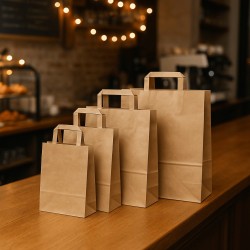
Recycled Havana paper shopper with flat handle, 8 sizes€77.67
 ChartaRè, RossiCarta's Online Packaging Store


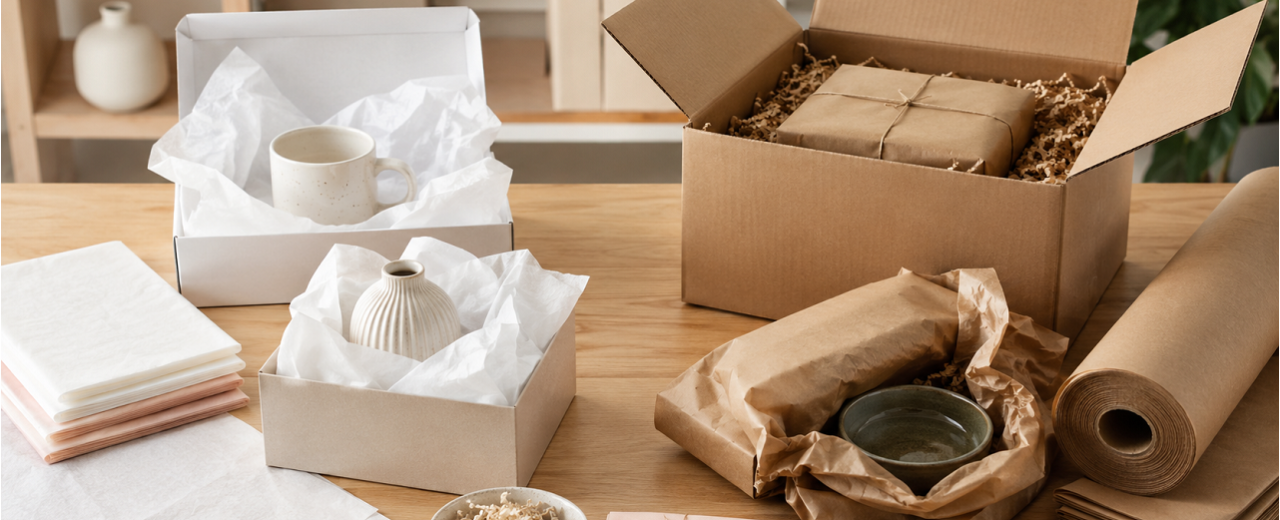
Tissue paper and wrapping paper for shipping have different functions and should not be confused. The tissue protects...
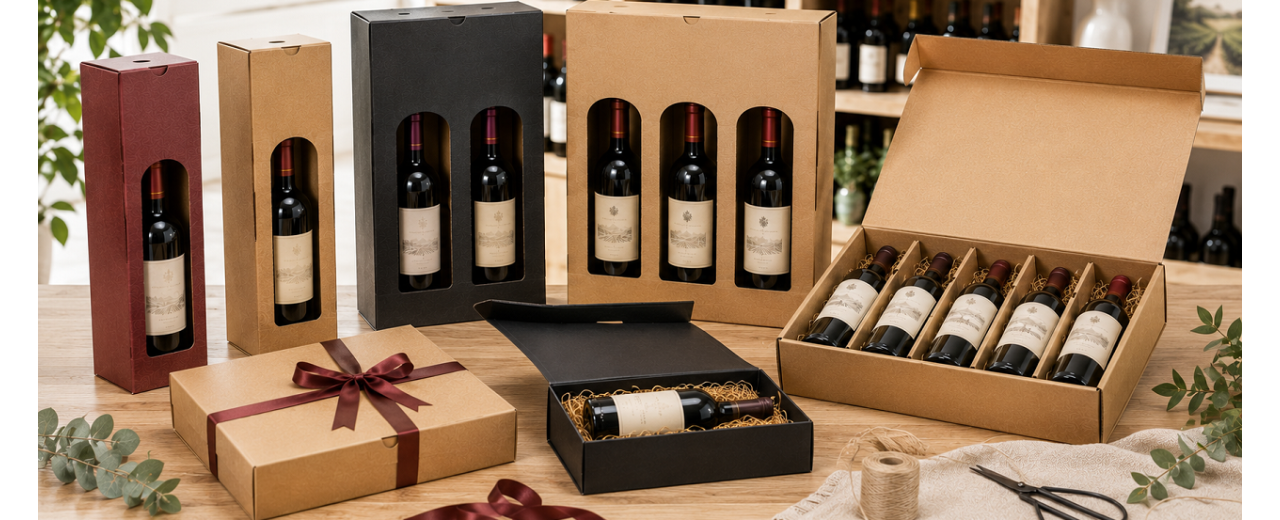
Wine boxes of 1, 2, 3 or 6 bottles help wine shops and wineries manage sales, gifts and delivery. Each format...
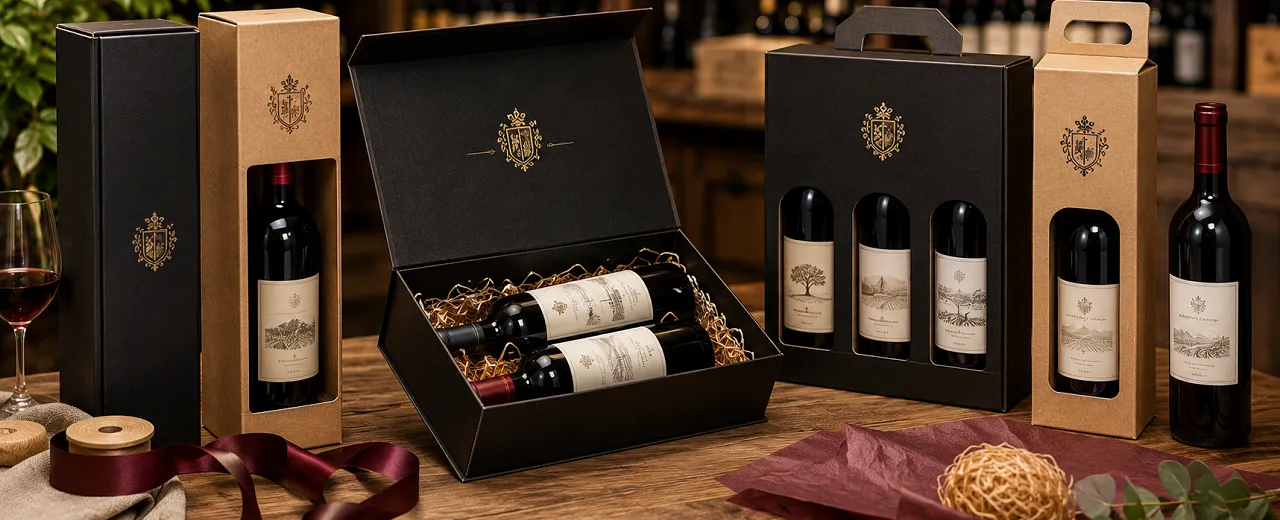
Personalised wine boxes enhance bottles, gift selections and corporate gifts. Logo, format and quantity must be...
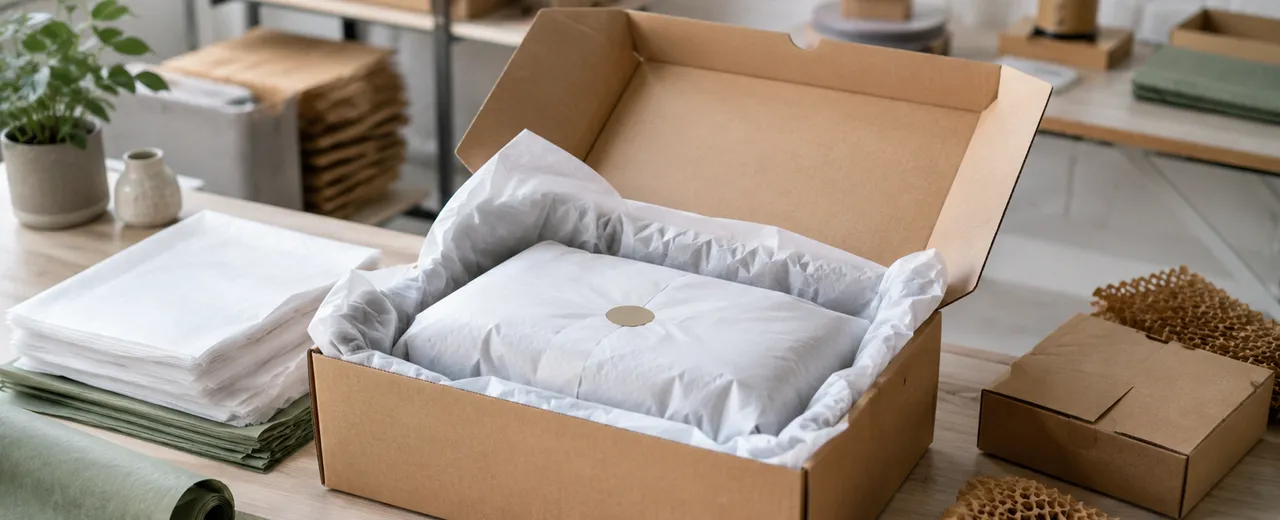
Tissue paper helps e-commerce businesses to superficially protect products and better present them inside the...
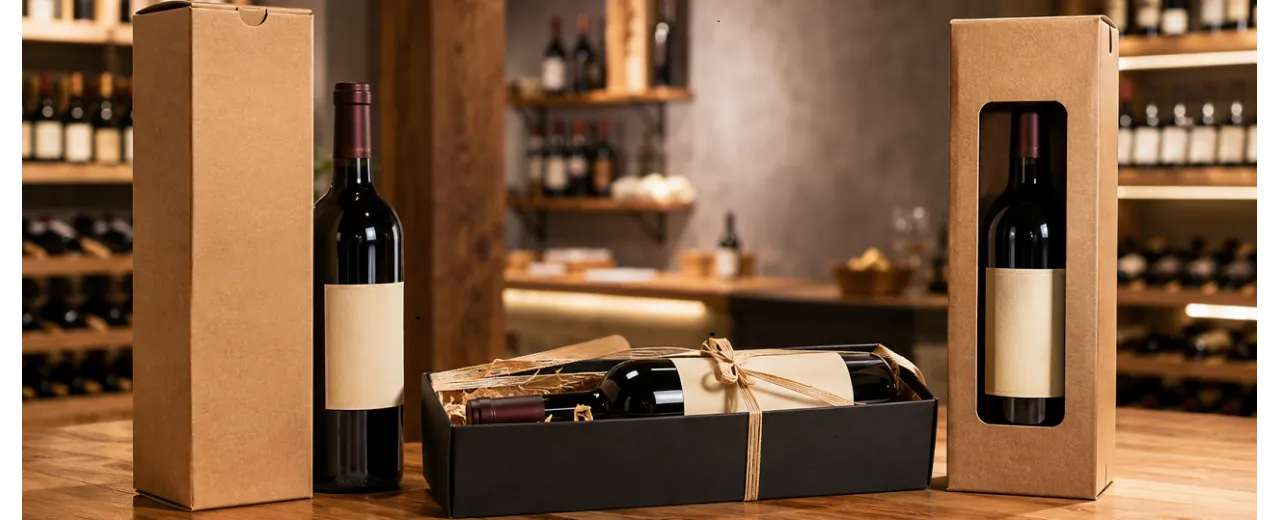
Wine boxes help wine shops and wineries to enhance bottles, gift selections and company packaging.Choosing between...
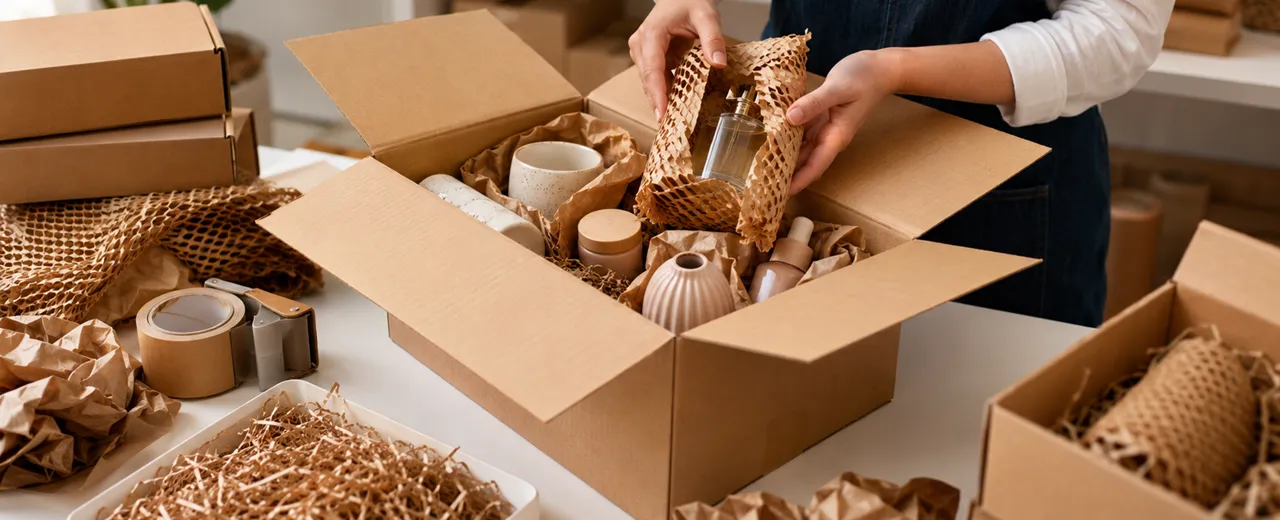
Fragile products require packaging designed according to weight, shape, material and mode of transport.Glass,...
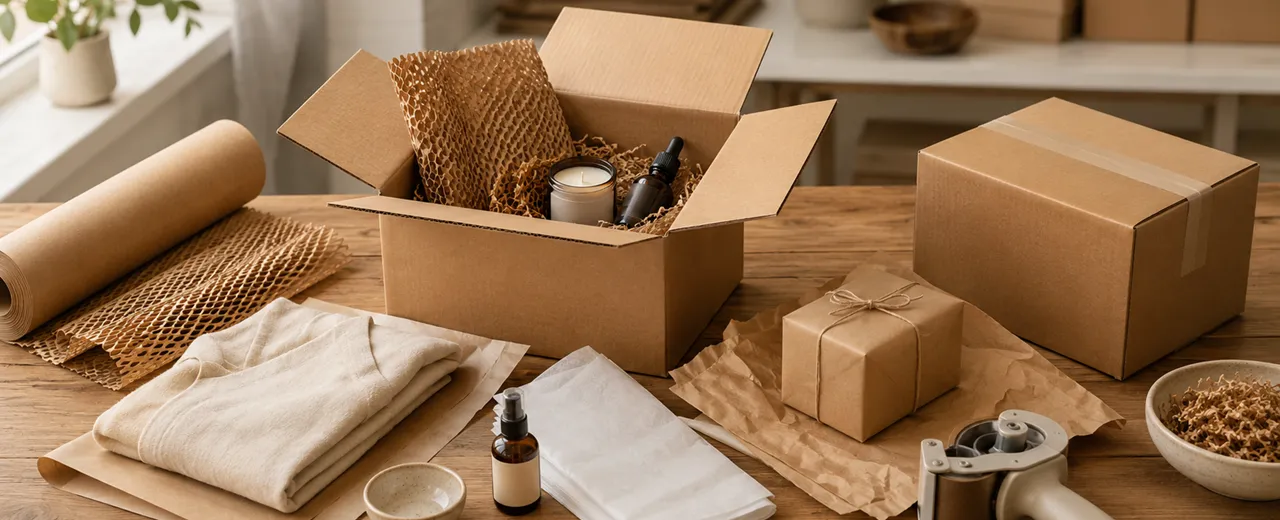
Preparing a package well means protecting the product and delivering an orderly and professional order to the...
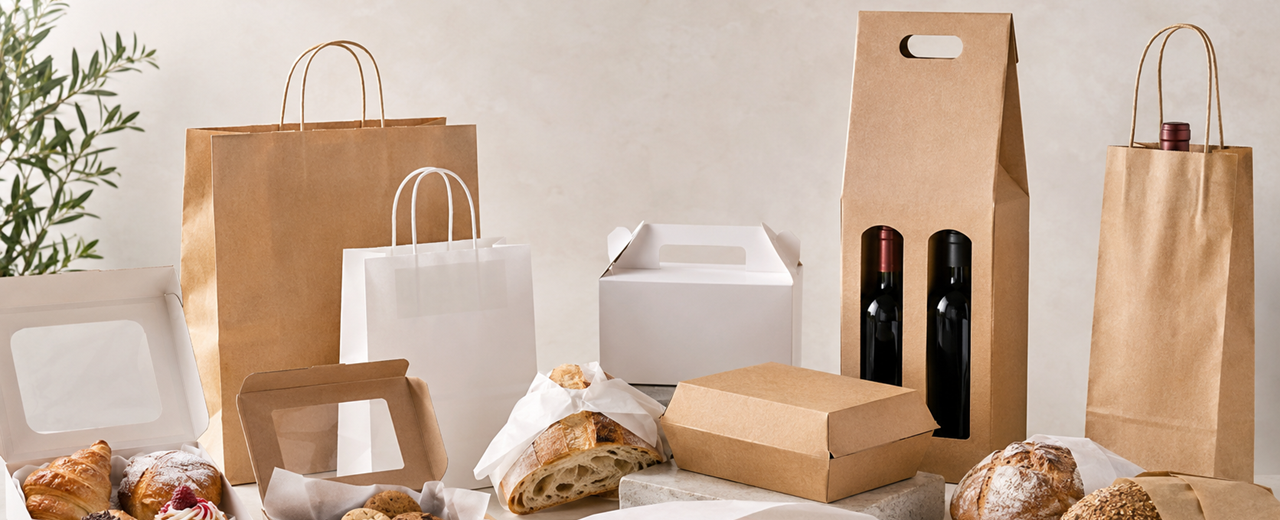
Food packaging must protect the product, speed up service and enhance every sale.Pastry shops, delicatessens and wine...
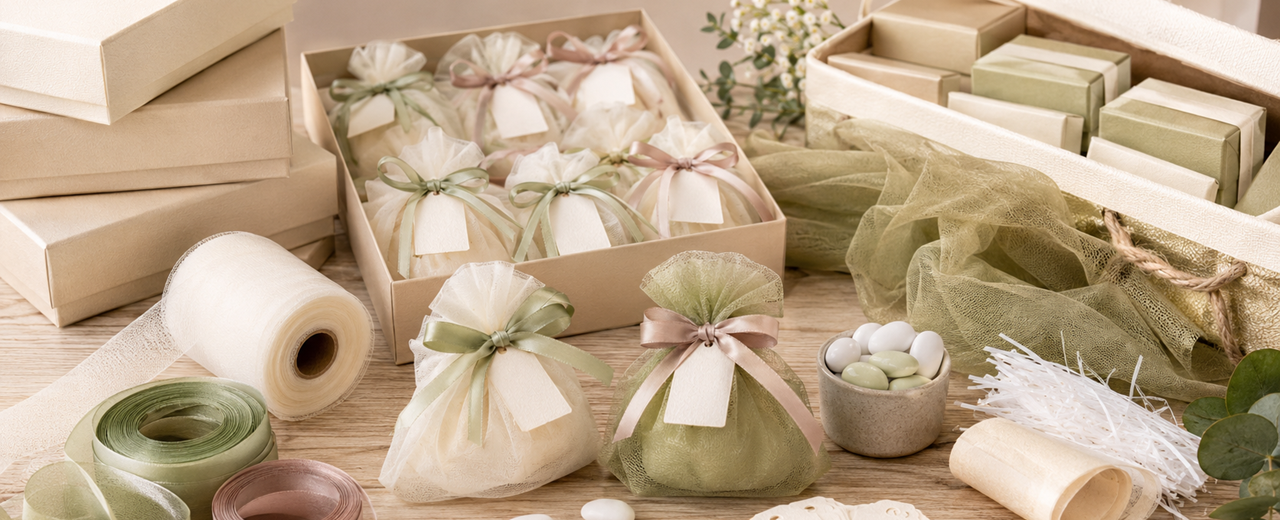
Packaging for wedding favors requires proportionate containers, coordinated materials and procedures that are easy to...
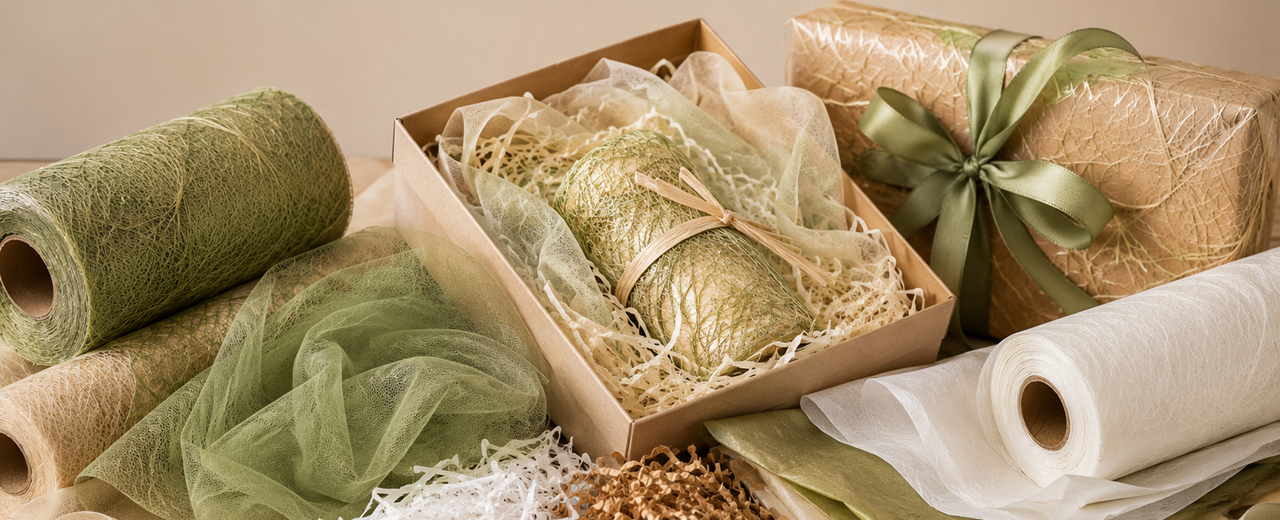
Grass paper, tulle, shavings and tissue paper perform different functions in professional packaging.The correct...

Every shopper who leaves a store continues to represent it even after the sale.
Accompany the customer on the street, in the office, on public transport and all the way home.
In all these moments he makes the brand visible in real and everyday contexts.
For this reason, it should not be considered just a cost or a simple container.
A well-chosen shopping bag protects the product, facilitates transport and completes the shopping experience.
It communicates order, professionalism and attention even after the checkout.
The quality of the paper, the solidity of the background, the type of handle and the proportions of the format affect the perception of the service.
A fragile or uncomfortable shopper can weaken the value attributed to the purchase.
A durable and consistent solution, on the other hand, strengthens the image of the store.
The type of grip is also part of the operating criteria: this guide helps you choose between a flat handle and a lanyard based on weight, use and image.
Personalization adds an extra layer of effectiveness.
Logo, graphics and essential information transform the shopper into a recognizable support.
The customer brings with him a concrete sign of the experience lived in the store.
However, there is no one-size-fits-all shopper for every business.
The choice depends on the weight of the products, their size, frequency of use and commercial positioning.
High-volume businesses can prioritize convenience and speed of use.
Boutiques and premium stores can choose more substantial structures and more refined finishes.
Sustainability must also be assessed in a concrete way.
A correct format avoids waste, while a resistant shopping bag can be reused several times.
In this article, you will find out how to transform the shopper into a tool capable of generating recognition, trust and commercial value.
The shopping experience does not end with the issuance of the receipt. It ends when the product is delivered and the customer can take it with them comfortably, safely and consistently with the level of service received.
A fragile, disproportionate or uncomfortable shopper can weaken the perception built through the shop window, assortment, reception and advice. A shopper adapted to the contents, on the other hand, confirms the attention of the store and makes delivery tidier and more professional.
In the Shoppers, Bags and Bags category it is possible to compare different solutions in terms of material, format, type of handle and intended use.
The choice should not depend only on aesthetics or unit price. You need to consider what the store sells, the medio weight of purchases, the size of the products, how the customer transports them, and the image that the business wants to communicate.
The customer may not know the weight of the paper or the system with which a shopping bag is built, but he immediately perceives if the bag is stable, comfortable and proportionate to the contents.
A professional shopper should:
These aspects are not just technical details. They are part of the service and affect the overall memory of the purchase.
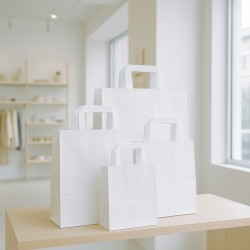
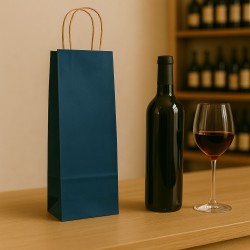
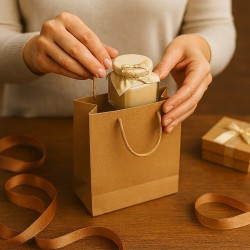
Traditional advertising buys space and tries to attract the attention of an audience. The shopper follows a different path: he is entrusted to a customer who has actually purchased and who brings with him a visible sign of his choice.
Those who meet that shopper do not see only a logo. It sees the concrete testimony of a commercial relationship that has already taken place.
The shopper thus enters everyday life without interrupting anyone. It walks on the street, travels on public transport, is placed on a desk, enters other shops and arrives in homes. If it is durable and attractive, it can be preserved and reused, increasing the occasions on which the brand is seen.
Its communicative value depends above all on three elements: recognizability, quality and durability.
To be effective, a shopper doesn't have to be flashy. It must be immediately recognizable.
A legible logo, clean graphics, and a proper print-to-surface ratio can be more effective than a crowded composition. Entering too much information risks reducing the clarity of the message.
The store name, logo, and possibly the site must follow a precise visual hierarchy. The brand must also be able to be recognized through a quick glance and from a certain distance.
Simplicity does not mean graphic poverty. It means choosing what needs to be remembered and eliminating anything that distracts you.
The perceived quality of the shopper tends to be reflected in what it contains. If the paper is weak, the background warps, or the handle feels awkward, the whole experience loses value.
If, on the other hand, the shopper is solid, balanced and pleasant to use, it reinforces the feeling of having purchased from a business that pays attention to detail.
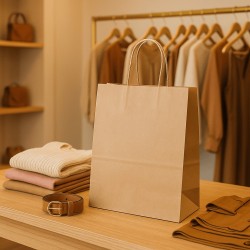
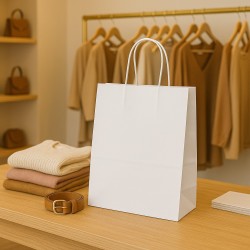
Paper shopping bags are a versatile solution for boutiques, clothing stores, bookstores, perfumeries, pharmacies, herbalist's shops, wine shops, food businesses and many other businesses.
The choice must consider:
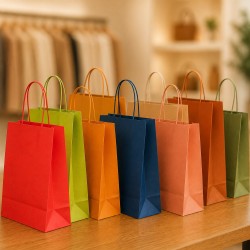
Color is important, but it cannot compensate for an unsuitable structure for the product.
A shopping bag is reused when it is durable, comfortable and pleasant enough to deserve to be stored.
At that moment it exceeds its initial function. It is no longer just used to transport the purchase, but continues to circulate and show the brand in different situations.
Reuse cannot be achieved by simply writing "reuse me" on the surface. It must be favored by the concrete quality of the object. An uncomfortable shopper is quickly eliminated; A useful shopper can enter the customer's habits.
Durability, therefore, is not just a technical feature. It is also an element that increases the commercial value of packaging.
Personalization transforms a standard shopper into an element coordinated with the identity of the store.
It doesn't just mean printing a logo. It means designing a support capable of dialoguing with the sign, the window, the furnishings, the website, the packaging and other communication materials.
In the Shopper and Customized Boxes section, it is possible to evaluate solutions for businesses that want to bring their brand directly on the packaging.
Personalization can be useful for:
Before choosing colors, sizes and position of the logo, it is necessary to define which image the store wants to convey.
The shopper can communicate essentiality, convenience, craftsmanship, elegance, creativity, contemporaneity, reliability or attention to service.
The graphics must be consistent with the real positioning of the activity. An extremely sophisticated shopper can be disproportionate to an everyday purchase. A solution that is too simple can instead impoverish the presentation of a high-end product.
The most effective project is not always the most elaborate. It is what makes the store recognizable without creating a distance between the packaging and what is actually sold.


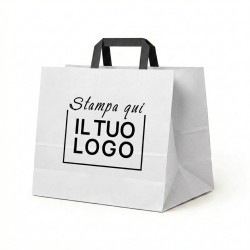
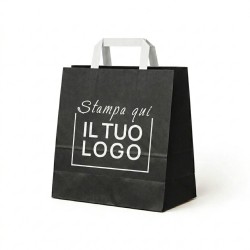
Personalization is useful when your business has a defined visual identity, uses enough shoppers, and knows exactly what you need.
Before proceeding, it is advisable to analyze:
Effective personalization must be able to be used continuously, without generating waste and without complicating daily operations.
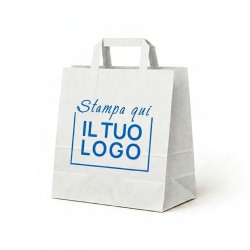
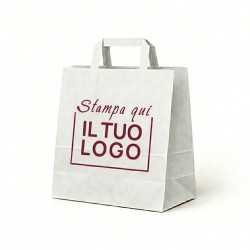
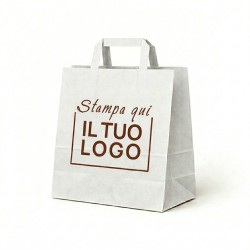
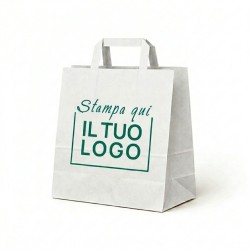
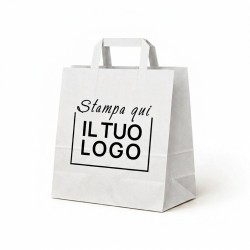
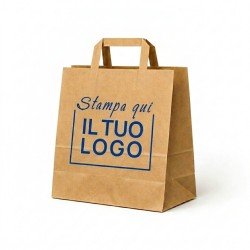
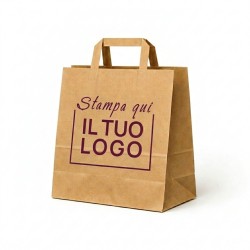
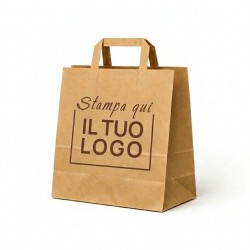
There is no absolute best shopping bag. There is the one that best suits the product, the customer and the commercial positioning of the business.
When fast checkout, easy storage and cost control are priorities, you need to focus on models that are practical, easy to open and available in the most frequently used formats.
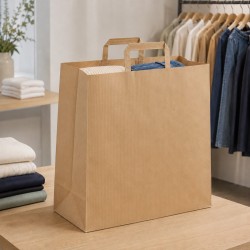
In these cases, paper shopping bags with a flat handle can offer a good balance between functionality, presentation and operational management.
The format must be chosen carefully. A shopping bag that is too large increases material consumption, leaves the product free to move and can make delivery less orderly. On the other hand, one that is too small risks deforming or not closing properly.
When the product is selected, intended for a gift or placed in a higher price range, the shopper becomes an integral part of the proposal.
Larger paper, neat handles, reinforced bottoms and precise finishes help to support the perceived value of the purchase.
Luxury shopping bags are particularly suitable when the container must accompany fashion products, cosmetics, jewelry, accessories, selected food and wine or premium gift items.
Also in this case, functionality remains fundamental. The aesthetic value must not compromise the convenience of transport or the strength of the packaging.
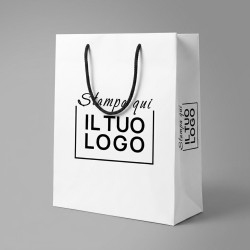
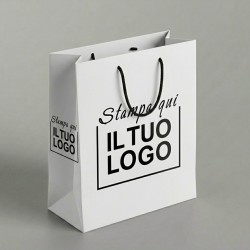
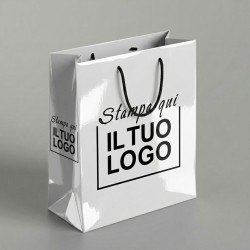
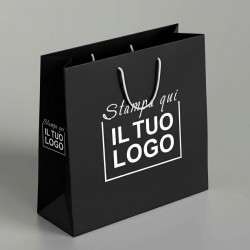
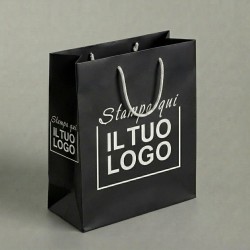
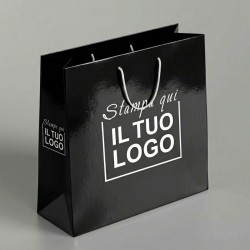
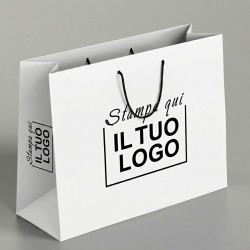
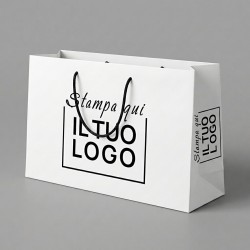
When the contents have significant weight or dimensions, the bottom, bellows and handles must be evaluated on the real characteristics of the product.
The shopper must contain it without excessive empty space and without forcing the customer to carry it in an uncomfortable way.
A shopper that is aesthetically pleasing but unsuitable for the content does not produce a good experience. The first form of quality always remains functionality.
It is not correct to attribute a universal number of views to the shopper. Its exposure changes according to the area, the customer journey, the frequency of reuse and the recognizability of the graphics.
However, an activity can assess its effectiveness throughobservable elements:
The return is not only constituted by the visibility of the logo. It also includes improving the experience, reducing inconvenience, increasing recognition, and overall brand consistency.
In packaging, sustainability should not be reduced to generic formulas.
For a commercial activity, it means first of all choosing formats proportionate to the product, avoiding superfluous materials, ordering quantities consistent with consumption and favoring solutions that perform their function correctly.
A durable shopping bag can be reused several times. A suitable format avoids waste. Proper construction reduces the risk of breakage and the need to use two bags for the same purchase.
Environmental communication must also be transparent and proportionate to the actual characteristics of the product. The customer must be given understandable directions, without generic promises or statements that are difficult to prove.
The most credible choice combines functionality, durability, correct sizing and responsible use of resources.
The shopper is one of the few tools capable of performing a practical, commercial and communicative function at the same time.
It contains the product, makes it easier to transport, completes the sale, and takes the brand over the threshold of the store.
It doesn't automatically replace an advertising strategy, but it can make every purchase more visible and memorable. When it is chosen well, the customer likes to use it. When it is customized with criteria, it makes the store recognizable. When it is resistant, it continues to circulate and tell the story of the brand.
Investing in the shopper therefore means investing in the way the purchase is delivered, transported, remembered and shown.
ChartaRè offers standard, paper, customized and luxury shopping bags to help shops, companies and professionals identify the most suitable solution for products, quantities, positioning and operational needs.
Because a good shopper doesn't just have to leave the store. He must continue to represent him well, wherever he goes.
 Practical Guide: The Art of Window Dressing
 Artificial intelligence (AI) in the Physical Store.
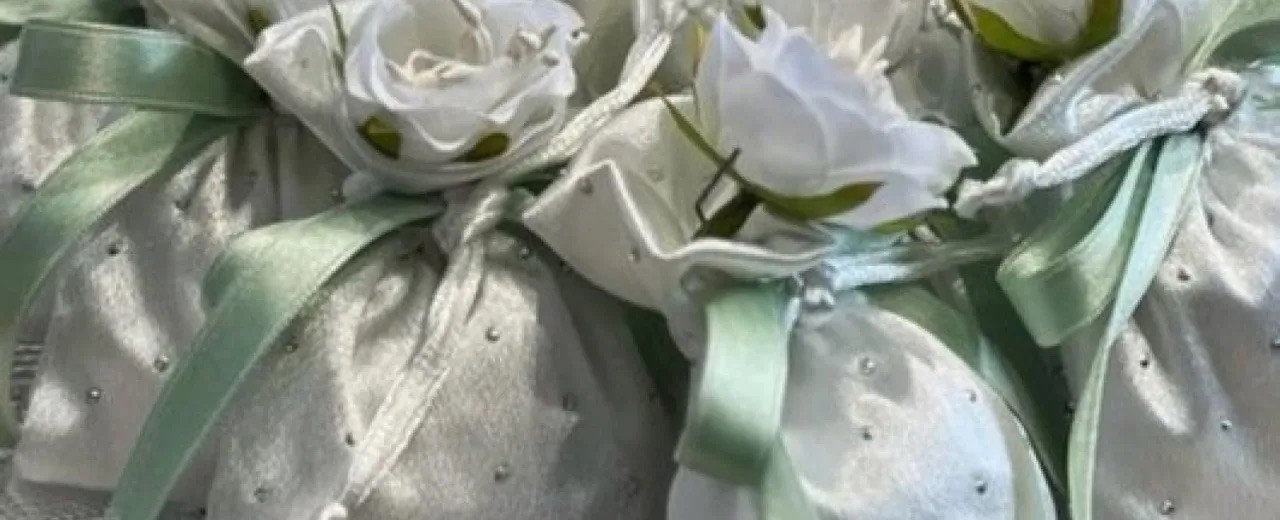 The DIY Wedding Favor, the Perfect One.
 Packaging with Sustainability: The Future of Environmental Impact
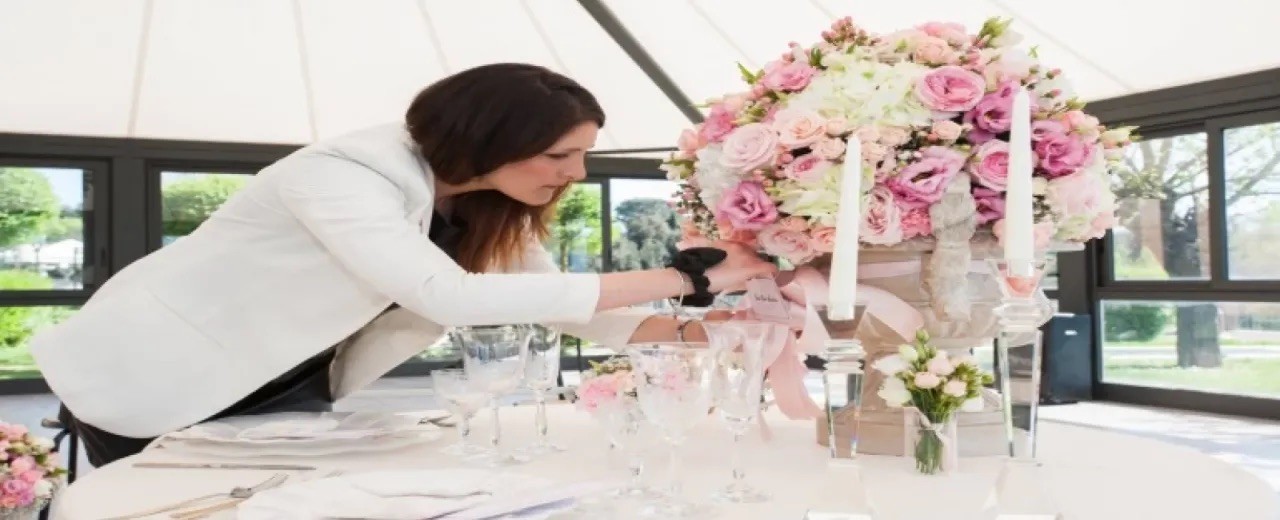 Practical Guide to Customizing Wedding Favors: Tune in to the Theme of the Event and Personal Tastes
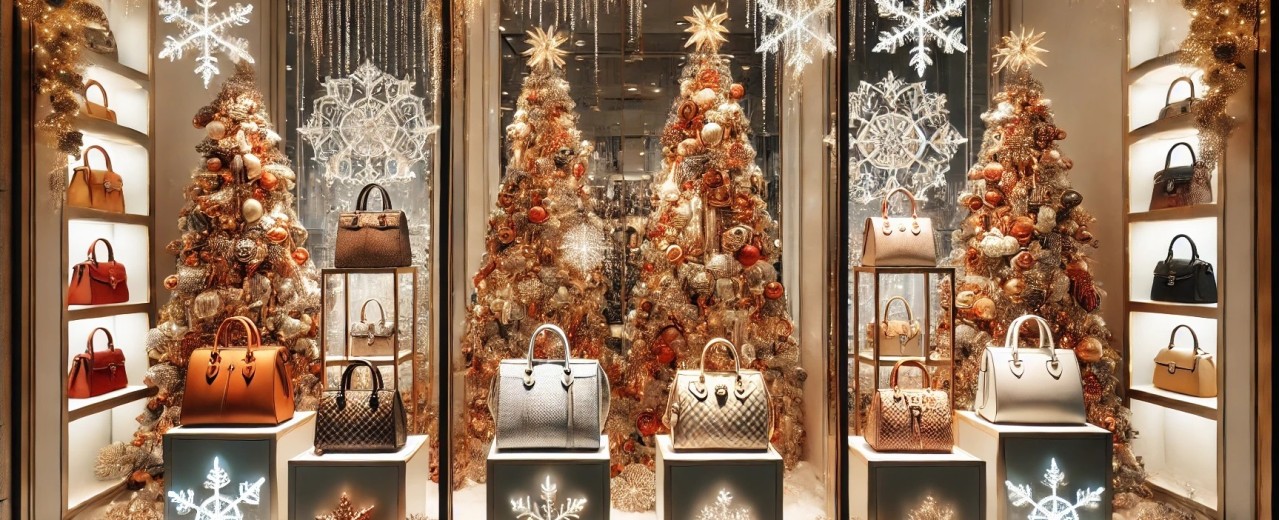 Preparing for Christmas Magic: When and How to Present Your Window Displays to Maximize Sales