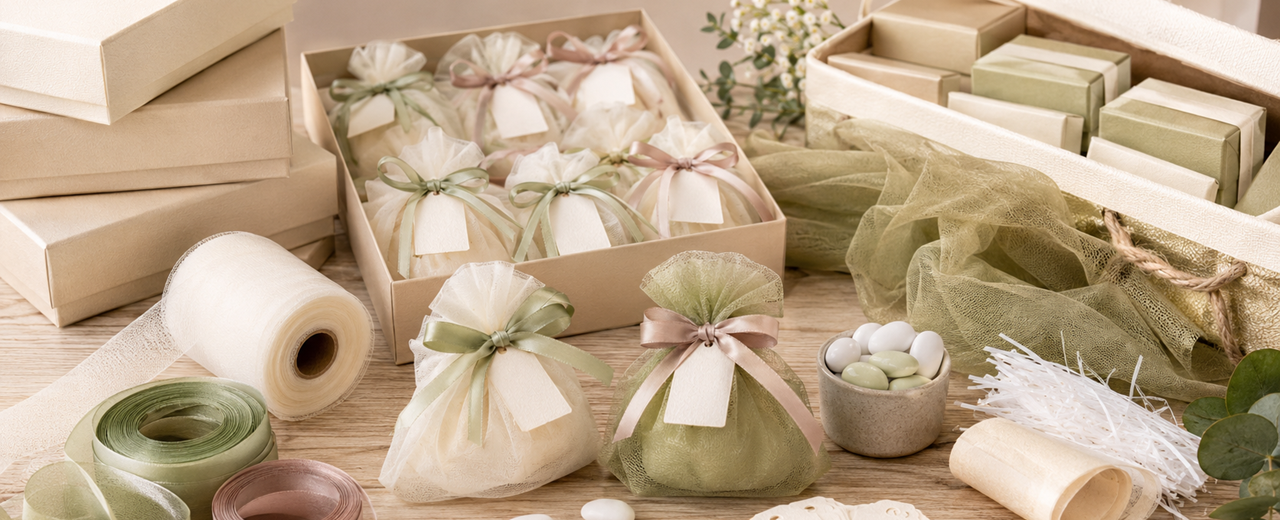
During the Christmas period, packaging becomes a marketing lever in its own right: it is not just an accessory, but an integral part of the shopping experience you offer your customers. The shopper you deliver at the counter is the first and last physical contact with your brand: it accompanies the customer on the street, enters homes, moves between offices and families. For this reason, even if it is not personalized with your logo, it is never "neutral".
If you run a store, a retail chain or a company that makes Christmas gifts, you know how complex packaging planning can become: graphic approval times, minimum quantities, stock management, budgets to be overseen. Ready-to-use shopping bags with Christmas graphics are designed to simplify this scenario: they allow you to quickly align the image of your store with the festive atmosphere, without additional design steps.
In this article, you'll explore how non-personalized holiday shopping bags can support your positioning, optimize costs and logistics, and help you build a consistent and recognizable packaging system. The goal is to give you clear operational criteria to choose the most suitable solutions for your reality, so as to face Christmas with a "worry-free" packaging, but perfectly under control.
Christmas is approaching: why you can't neglect the shopper
When preparing for the Christmas season, you focus most of your energy on the assortment, prices, promotions, shop windows and calendar of initiatives. It's natural: these are elements that you perceive as decisive for the economic result of the campaign. However, it is precisely in this period that the shopper takes on a strategic role that is often underestimated. It is not a simple container, but a real communication support, which physically accompanies the customer outside the store and prolongs the shopping experience in time and space.
If you look at the customer journey, you realize that the shopper is present in the final phase of what, to all intents and purposes, is a small Christmas "customer journey". The customer enters, identifies the goods, asks for the gift box, goes to the checkout, pays and receives the bag. What takes away is not only the product, but a set of signals: the care of the wrapping, the robustness of the support, the visual consistency with the window and with the festive atmosphere. In this context, the Christmas shopper becomes the trait d'union between what the customer has seen in the window and what he will take home to be unwrapped under the tree.
From an image point of view, the shopper works as an extension of the shop window. The window represents your declaration of identity during the Christmas period: it tells who you are, what price range you preside, what kind of atmosphere you want to evoke. When the customer leaves the store, the window stops being in front of his eyes, but the shopper continues to communicate. It walks in the street, gets into the car, arrives at the office, is placed in the living room or under the tree. If you've worked carefully on the store layout and seasonal setup, but you're delivering the product in a neutral envelope, you're introducing a discontinuity in the message. If, on the other hand, you use a shopper with Christmas graphics consistent with your style, you keep the same narrative line and strengthen the perception of a structured and reliable brand.
The permanence of the shopper in the customer's private spaces is another aspect that you cannot overlook. At Christmas, the bag is almost never discarded immediately after purchase. It is often kept until the moment of delivery of the gift, placed in view together with the other packages, photographed, moved from one room to another. In many cases it is then reused to transport other objects or to contain documents, accessories, small company gifts. This means that the Christmas design you choose remains visible well beyond the time you leave the store. Even if your logo doesn't appear on the shopping bag, the customer will continue to connect that image to the experience in your store, especially if the packaging was perceived as neat, pleasant and in line with expectations.
In terms of perceived quality, the shopper directly affects the way the product is evaluated, particularly when it is a gift. In the Christmas context, the customer does not just buy an object: he buys something that will have to be presented to someone else, often in a context of a significant relationship. If the shopper has a well-kept Christmas graphic, a good seal, an adequate paper proportionate to the content, the product it contains immediately acquires a higher value. It is perceived as more "gift" and less "simple article". This effect is particularly useful when the products are not highly distinctive in themselves: appropriate packaging can partially bridge this neutrality and better justify price positioning.
It's not just about aesthetics, it's about operational functionality. During the Christmas period, volumes increase, product mixes change, and the frequency of checkout visits grows. The shopping bag must be designed to support this load: suitable formats, paper with an appropriate weight, resistant handles, structure that allows products to be inserted quickly and delivered without difficulty. A shopping bag with Christmas graphics that combines visual value and technical performance helps to make the work of staff more fluid and improve the customer's perception of efficiency. If the bag becomes deformed, broken, or uncomfortable to carry, the overall experience is weakened, even in the face of a good assortment or friendly service.
Then there is the issue of overall consistency of the season. The Christmas shopper is one of the most immediate indicators of your level of preparation. When the customer enters a store and finds a themed set-up, a structured display and, at the time of payment, receives a bag with Christmas graphics in line with the context, he perceives that the campaign has been planned and managed professionally. On the contrary, an improvised wrapping or a totally neutral shopper, in the middle of the holiday season, can give the impression of an activity that has limited itself to adapting to the season without a real strategy. In a competitive market, where you often sell products that are similar to those of other players, this difference in perception can affect customer loyalty and the likelihood that they will choose to return to you the following year.
Finally, the Christmas shopper performs a synthesis function between communication and operation. On the one hand, it allows you to express a visual language that is appropriate to the expectations of those who enter the store in the most "sensitive" period of the year; on the other hand, it must respond to concrete constraints of budget, warehouse space, stock management and reordering times. If you read the shopper from this dual perspective, it stops being an accessory cost and becomes a work tool, which affects both sales and internal organization.
For these reasons, when planning your Christmas you cannot relegate the choice of shopping bags to a marginal or late decision. You must consider it as an integral part of the seasonal packaging project, on a par with wrapping, ribbons and coordinates. In the following chapters you will see how shopping bags with non-personalized Christmas graphics allow you to oversee all these aspects – image, perception of value, functionality and seasonal consistency – even when you do not have the possibility or interest to invest in a logo customization.
Christmas shopping bags without logos: when branding is in the visual language
When you think of branding, you instinctively connect the concept to your logo, sign name, institutional graphics. It is a natural reaction, because traditional communication has accustomed you to consider the printed brand as a necessary condition for "signing" what comes out of your store. In reality, especially during the Christmas period, the way you work on visual language can convey your positioning even in the absence of direct customization.
The shopping bag with Christmas graphics, in fact, is a system of signs that the customer reads almost automatically: colors, style of illustrations, proportions between full and empty, type of paper, finishes, relationship between inside and outside of the bag. All these elements activate a set of expectations and associations, often faster and more effective than the presence of the logo itself. If you choose a shopper with minimal graphics, in neutral or dusty tones, you communicate a more sophisticated image, linked to an idea of sober elegance, careful selection, attention to design. If you opt for a shopper with illustrated drawings, playful subjects, bright colors, you convey a more familiar, warm, family- and child-oriented atmosphere. In both cases, the customer builds a representation of your store from the visual code, not the brand.
In this perspective, the Christmas shopper without a logo becomes a component of your "visual tone of voice". Just as you define a consistent way of speaking across channels, you can also define a visual Christmas grammar that fits your brand. If you work in a premium or fashion context, you will tend to favor limited palettes, controlled contrasts, essential graphics, perhaps with a discreet metallic accent. If you are targeting a more transversal audience, you may prefer richer patterns, more evident textures, decorative elements that refer to the classic iconography of the holidays. The central point is that, beyond the logo, the customer recognizes a continuity between what he sees in the window, the internal layout, the way you display the products and the shopper he receives at the time of purchase.
From a positioning perspective, this approach allows you to use ready-made shopping bags as if they were "building blocks" of a brand system. You do not intervene on the individual bag with a customization, but on the selection of the entire Christmas packaging line. Decide which colors to control, which graphic motifs to accept and which to exclude, what level of visual saturation is compatible with the identity of your store. In practice, you transform a range of standard shopping bags into a coherent set of communication tools, choosing what aligns with your identity and discarding what might generate dissonance.
The material of the shopper also contributes to the construction of your brand, even without the logo. A natural kraft paper, with an essential Christmas graphic, suggests attention to sustainability, closeness to craftsmanship, and the "authentic" dimension of the gift. A smooth, glossy paper, with more defined images and full colors, refers to a more urban, more fashionable world, more linked to the idea of a boutique or concept store. The choice of the type of handle, the weight, the overall rigidity of the bag is part of the same logic: the customer does not make a technical analysis, but perceives a level of care and investment that he immediately associates with the value he attributes to your brand.
Then there is the issue of recognizability over time. Even without a printed logo, if you maintain a consistency of style over the years in the Christmas shopping bags you choose, you get your customer used to a certain type of waiting. He knows that when he comes to you in November or December he will find a Christmas that "sounds" in a certain way: more sober or more decorated, more traditional or more contemporary, more oriented towards materials or graphics. This pattern of expectations is one of the elements that build loyalty. The shopper thus becomes a sign of continuity: the customer who opens the bag closet or pantry and finds the shopping bags of previous years recognizes not only a period, but also a style, a hand, a way of working that he associates with your store.
In summary, when you use Christmas shopping bags without a logo you are not giving up branding, but you are moving it from the level of direct marking to the level of visual language. Instead of wondering how to print your brand, you ask yourself what Christmas image you want to preside: what aesthetic codes you want to use, what visual story you want to tell, what atmosphere you want the customer to take with them when they leave the store. In the following chapters you will see how this approach, in addition to having an identity value, also translates into operational, budget and management advantages, allowing you to work on packaging as a real design tool, even when you choose non-customized solutions.
Ready-to-use, ready-to-sell: operational and budget advantages
When evaluating Christmas packaging, you often find yourself at a crossroads: invest in a customized line with your logo or choose ready-made solutions, not customized, but immediately available. From an image point of view, you have seen how the visual language can make up for the absence of the brand. From an operational and economic point of view, shopping bags with ready-made Christmas graphics offer you a series of very concrete advantages, which affect the daily management of the store and the way you use your budget.
The first element is time. A custom shopping bag project requires graphic development, file exchanges, system checks, approvals, color proofs and, often, planning well in advance of the season. If you underestimate these timelines, you risk arriving at the crucial period with the goods on the shelves and the packaging not yet delivered. Shoppers with ready-to-use Christmas graphics allow you to reduce this variable: you can decide closer to the season, adapt to an early start to Christmas, react to an unexpected peak in sales without blocking operations. In other words, you shift the center of gravity from design to immediate availability.
To define quantities and purchase priorities in advance, see what to order before the peak for Christmas packaging.
In parallel, there is the issue of minimum quantities. Personalisation almost always involves the obligation to reach minimum runs by format, colour or graphic variant, with the risk of finding yourself with excess stock at the end of the season. Non-personalized Christmas shopping bags, on the other hand, are produced on a large scale and allow you to buy in a more modular way, with more manageable order sizes and, above all, with the possibility of diversifying more. This means that you can divide your budget between different formats and graphics without tying up capital in a single customized reference that you will have to dispose of.
Warehouse management is another point where ready-to-use makes the difference. If you commit to customized production, you have to calculate precisely how many shoppers you will need, because what is left over is difficult to reuse the following year, especially if the logo, payoff or graphic direction change in the meantime. With non-personalized Christmas shopping bags you reduce this risk: a classic subject, with undated graphics, can be safely restocked or kept in stock for the following season, without creating problems of consistency. You move with more freedom, knowing that any inventories do not lose their use value.
On an economic level, the absence of installation and printing start-up costs is essential. Every time you customize, a significant portion of your budget is taken up by these fixed costs, independent of the number of pieces you'll actually use. With ready-made shopping bags, the price you pay is almost entirely linked to the finished product, with no additional technical costs. This allows you to optimize the ratio between investment and yield: you allocate a greater share of the budget to the quality of the substrate (paper, handles, finishes) and the variety of formats, instead of spending it on systems that the end customer does not perceive as added value.
Flexibility also translates into cash flow control. If you opt for ready-made solutions, you can stagger purchases based on the real trend of the season, rather than concentrating the entire investment months in advance. For example, you can start with an initial batch to cover the Christmas launch, then quickly evaluate consumption and decide on any targeted reorders. This approach helps you preserve liquidity and reduce the risk of overestimating or underestimating your needs. If the season is particularly lively, you can increase purchases; If, on the other hand, the flow is slower than expected, you are not constrained by an overorder that is already committed.
Finally, there is an often overlooked advantage: the possibility of testing. With non-personalized Christmas shopping bags you can experiment with different lines in the same year, differentiate packaging between departments or price ranges, check the response of customers to a more minimal or more decorative style. This allows you to gather useful information for the following seasons, without the obligation to focus everything on a single graphic choice. In fact, you use the shopper department as a small branding laboratory, concretely measuring which visual language generates the most appreciation and which one integrates best with your assortment.
If you put these elements together, you see how the ready-to-use Christmas shopper positions itself not only as a fallback solution, but as a management tool. Reduce organizational complexity, better control costs, limit print run constraints, keep inventory leaner, and retain the ability to adapt as you go. In a context like Christmas, where the margins of error are reduced and the variables at play are many, being able to count on a "ready to sell" packaging allows you to focus energy and attention on your true core: the relationship with the customer and the enhancement of the products you offer.
How to choose the right shopping bag: formats, materials and graphic style
When evaluating a shopping bag with Christmas graphics, the risk is to focus only on the immediate aesthetic impact. In reality, if you want packaging to really work in favor of your store, you have to consider it as a technical object, which must meet precise requirements of format, material and visual language. The right shopper is not simply "beautiful", it is appropriate for the products you sell, sustainable with respect to the workflows of the point of sale and consistent with the perception of quality you want to convey to your customer.
The first level of choice concerns the format. You have to start from what you really sell and how your items are composed on the receipt. If you work in clothing, you will need larger rectangular formats, suitable for holding folded garments, shoe boxes, bulky accessories. If you work in beauty or cosmetics, you will need more compact formats proportionate to bottles, boxes and small gift sets, which must remain firmly inside. In quality food, or in Christmas food and wine, you will have to consider different weights, bottles, preserves, panettone, mixed baskets: in this case the format must dialogue with the structure of the goods and with the possible presence of secondary packaging. The question to ask yourself is not "which format do I like best?", but "which formats efficiently cover most of the purchase combinations in my store?". In this way, you reduce waste, avoid using shopping bags that are too big or too small and simplify the work of those who work at the checkout.
The second level concerns the material. The choice of paper is not neutral, neither from a technical nor from a perceptual point of view. A natural kraft paper, with an appropriate weight, offers you a good balance between resistance and a "warm" and authentic image, particularly suitable for shops that work on an artisanal, green or gourmet identity. A smooth coated paper, perhaps combined with glossy or matte finishes, gives a more sophisticated feeling, in line with fashion, design, mid-range or high-end beauty contexts. The weight must be calibrated to the content: too light, and the shopper risks deforming or breaking; too heavy, and the unit cost increases without a real functional benefit, especially if the products are light. Even the type of handle is part of the same logic: paper plate, cord, die-cut make you perceive different levels of care and must be chosen according to the weight to be supported and the image you want to convey.
In addition to the technical requirements, the material conveys a precise message. If you know that your customer is sensitive to sustainability issues, a recycled or certified paper shopping bag, with consistent Christmas graphics, reinforces the consistency of your positioning, especially if this message is also aligned with the rest of your packaging. If, on the other hand, you preside over a segment where the expectation is that of a more "luxurious" experience, the tactile perception of a more full-bodied and refined paper becomes an integral part of the perceived value of the store.
The third axis of choice is the graphic style. Here you have to work with the same attention that you devote to the interior layout and the showcase. Christmas graphics should not crush your identity, but interpret it in a seasonal way. If your store has a minimal visual tone, oriented towards formal cleanliness, it makes sense to choose shopping bags with essential subjects, reduced palettes, geometric patterns or discreet hints of Christmas. If, on the other hand, your language is warmer and more narrative, you can work with illustrations, rich patterns, more evident decorative elements. The point is not "how Christmassy the shopper is", but how much that type of Christmas is consistent with your brand.
Color also requires a specific evaluation. The classic red, green, and gold work well in terms of instant recognition, but they need to blend in with the dominant colors of your store. If your furniture, your logo (even if it doesn't appear on the shopping bag) and your communication material work on cold or neutral tones, you could get a more credible result by choosing shopping bags in more sober palettes, perhaps with small metallic accents. Conversely, if your environment is already characterized by warm and engaging colors, a shopper that incorporates these codes consolidates the perception of continuity between the inside and outside of the store.
A further criterion concerns repeatability over time. Graphics that are too tied to a specific trend risk aging quickly; If you don't want to change your style radically every year, it is preferable to build a line of Christmas shoppers with more "transversal" subjects, which can be reused or repurposed in the following seasons. In this way, if you decide to maintain a certain consistency of style from one year to the next, you effectively transform the non-personalized shopper into a recognizable element of your way of doing Christmas. On the contrary, if it is strategic for you to create a different "collection" every year, you can use ready-made shopping bags as a basis for testing different languages, selecting from time to time the ones that best reflect the evolution of your brand.
Finally, you must not forget the connection with the rest of the packaging system. The shopper does not live in isolation: she dialogues with gift wrap, ribbons, labels, boxes, greeting cards. When choosing a certain graphic style for shoppers, ask yourself how it will integrate with the other elements you use. A highly decorated shopper may require more neutral cards to avoid visual overload, while a more basic shopper leaves you the possibility to play with more distinctive ribbons and wrappers. Thinking in terms of the system helps you avoid messy overlaps and instead build a consistent experience from counter to gift delivery.
In summary, choosing the right shopper means cross-referencing data and sensitivity: the analysis of your product flows, the most frequent formats, average weights, the behavior of your customers, with a clear vision of the image you want to convey. Format, material and graphic style are not independent variables, but parts of a single Christmas packaging project. If you consider them in an integrated way, even a shopper with standard, non-personalized graphics, becomes a precise tool, calibrated to your reality, capable of supporting your operations and reinforcing, day after day, the perception of quality of your store.
Create a coordinated system: shoppers, cards, ribbons and accessories
When you choose a shopping bag with Christmas graphics, you are actually making a decision that affects the entire packaging system, not just the bag. The shopper is the first visible element, but everything that happens around it – paper, ribbons, labels, boxes, greeting cards – helps define the perceived quality of your Christmas packaging. If you work in a coordinated way, you transform a number of different materials into a coherent project; If you choose them randomly, you risk giving a fragmented image, even using good quality products.
The starting point is the shopper as a guiding element. Once you have identified the most suitable Christmas graphic for your store, you can use it as a chromatic and stylistic reference for all the other components. This doesn't mean looking for a perfect copy of the design on wrapping paper or ribbons, but defining a clear visual hierarchy: usually it's the shopper who carries the main message, while paper and accessories work to support it. If the shopper is very decorated and rich, for example with dense patterns or obvious illustrated subjects, it is more effective to combine more sober papers and ribbons, which reflect one or two dominant colors without adding further complexity. If, on the other hand, the shopper is more minimal, with essential graphics, you can afford more characterized printed papers or ribbons with more evident textures and finishes, while still maintaining an overall balance.
Color is the first level of coordination you need to work on. A red and gold shopper, for example, can dialogue with solid color papers in similar shades, with discreet micro-patterns or with small metallic details taken up in the ribbons. A kraft shopper with graphics in black and white goes well with natural materials, jute or cotton cords, simple cardboard labels with an essential print. The operating rule is to avoid the "collage" effect: too many colors unrelated to each other, materials that do not speak the same language, too sharp visual gaps between shopping bags and content. If you limit the palette to a few consistent tones, the client perceives a "thoughtful" work, even when you're using standard items, not personalizzati.
The second level is that of finishes and textures. A shopper with glossy print, perhaps with hot inserts or with special varnishing, creates an expectation of more refined packaging; To be credible, it must dialogue with paper and ribbons that are up to par, for example with adequate weights, smooth or slightly embossed surfaces, fabric ribbons instead of too basic materials. On the contrary, a shopping bag in natural kraft paper, with "softer" and less shiny graphics, works better if integrated into a system that favors material, tactile materials, perhaps with small "living" defects that reinforce the idea of craftsmanship. Tactile consistency is just as important as visual consistency: when the customer picks up the package, the perception of the contact confirms or disproves the idea they have of your brand.
From an operational point of view, a coordinated system also helps you to simplify your work at the checkout. If you define a few "typical" combinations between shopping bags, paper and ribbons upstream, the staff already knows which solution to adopt based on the product, the occasion, the price range. This reduces decision times, limits errors and makes the packaging process smoother, especially at busy times. For example, you can stipulate that certain items are always packaged with a certain shopper and ribbon, while others have a dedicated variant. Even without logo customization, the result for the customer is that of a recognizable ritual: the wrappers do not seem improvised, but are part of a "grammar" that he learns to recognize and appreciate.
You must not forget that the coordination between shopping bags and accessories also has a direct impact on the final effect of the gift. A coherent package, in which the shopper recalls the paper, the ribbon does not clash and the label closes everything discreetly, appears more polished, more "complete". This increases the perceived value of the content, regardless of the true cost of the product. On the contrary, a gift packaged with unrelated materials, perhaps all of good quality but chosen without a common logic, seems less professional. The end customer will hardly analyze the individual elements, but will record the overall result, which translates into an implicit judgment on the store that made the wrapping.
A further advantage of working by systems is the ability to modulate the level of "scene" according to the context. In some situations you will need more sober packaging, for example for everyday purchases or for customers who want inconspicuous solutions; In others, such as corporate gifts or important gifts, you may want to raise the level of decoration, using richer combinations and more impactful materials. If you have built a coherent system of shoppers, cards, ribbons and accessories, you can switch from one configuration to another without losing identity: the customer perceives that it is always the same "visual world", declined with different intensity.
Finally, a coordinated system allows you to better manage digital communication as well. More and more often, customers take pictures of packages, share the opening of gifts, show bags on social media and chats. A recognizable shopper, inserted in a consistent packaging, generates neater and more pleasant images, which spontaneously amplify your presence, even if your logo does not appear. If you maintain this consistency over time, the combination of this content helps to build a precise visual memory of your way of "making Christmas".
Essentially, when you choose shopping bags with ready-to-use Christmas graphics, you're not just buying bags – you're defining the architecture of a system. The more you can think in terms of the whole – shoppers, cards, ribbons, labels, boxes – the more you transform standard elements into a proprietary, recognizable and functional language. It is this design approach that allows you to obtain a packaging that is "worry-free" from an operational point of view, but extremely aware and controlled from an image point of view.
From boutiques to pop-ups: in which contexts shopping bags with Christmas graphics make the most
Shopping bags with non-personalized Christmas graphics give their best in all those contexts where you need packaging that is immediately recognizable as a "gift", but you cannot – or it does not make sense – to face the complexity of a tailor-made production. If you look at the different types of businesses, you realize that for many companies the ready-to-use solution is not a fallback, but the most logical choice from an operational and commercial point of view.
In boutiques and independent stores in the medio-high range, the ready-to-use Christmas shopper allows you to maintain an image consistent with the style of the store, without tying up budgets on personalized runs that risk not being fully exploited. In these contexts, customers are very sensitive to perceived quality: they expect well-finished packaging, proportionate to the product and perfectly in line with the atmosphere of the store. If you select shopping bags with Christmas graphics that are compatible with your visual language – elegant, measured, perhaps with color references similar to the furniture or the garments on display – you get a result that lives up to the positioning, while working with a standard item. Purchasing flexibility allows you to better calibrate volumes, reducing waste at the end of the season.
In retail chains or multiple stores, the logic is different, but the non-personalized Christmas shopper can be just as strategic. If you manage multiple stores, often in different geographies, you need to maintain consistency of impact, but also to simplify logistics. Using a line of ready-to-use Christmas shopping bags for all stores allows you to centralize purchases, optimize transport, and avoid too marked differences between one location and another. At the same time, you can keep any brand personalization on other more stable supports, such as internal signage or display material, leaving the shopper the task of interpreting the brand identity in a seasonal key. In this way, the complexity of management decreases, but the perception of an "organized" Christmas remains high.
Pop-up stores, temporary corners and Christmas markets are probably the field of choice for shoppers with non-personalized Christmas graphics. If your presence is limited in time, you do not have the possibility of amortizing a tailor-made production: you need packaging that immediately communicates the atmosphere of the holidays, that is consistent with the context, but that does not tie you to large quantities. The ready-to-use shopper meets exactly this need. You can choose younger, contemporary graphics, perhaps in line with the concept of the pop-up, buy small lots and restock only if the flow requires it. In addition, in markets or events, the Christmas bag becomes a strong element of visibility: it moves between the stands, circulates in the common areas, makes the origin of the purchase recognizable even if the sign of your space is not very evident.
Another context in which non-personalized Christmas shopping bags are particularly effective is corporate gifts. Many companies, especially small and medium-sized ones, prepare gifts for customers, suppliers or collaborators every year, but they do not have volumes that justify a line of branded shopping bags dedicated only to the Christmas period. In these cases, the shopper with ready-made Christmas graphics allows you to package gifts in an orderly and professional way, possibly maintaining your identity on other elements, for example a personalized card or a label with the logo. The result is a package that clearly communicates the festive context, without burdening the organization with graphic projects and technical times that are often not compatible with the company's internal rhythms.
Even for those who work with e-commerce or hybrid formulas, such as click and collect, the ready-to-use Christmas shopper can become a distinctive element. If you offer in-store pickup, delivering the order in a shopper with Christmas graphics consistent with the rest of the experience makes the moment of collection more rewarding and strengthens the link between the online channel and the physical store. If you plan to ship to your home and place the folded shopper inside the package, you allow the customer to easily recreate a gift effect once they receive the package. In both cases, you use a standard product to improve the perception of service, increasing the likelihood that the customer will remember the experience as complete and "curated".
Then there are all those mixed or seasonal contexts, such as hotels, spas, pharmacies with beauty departments, gastronomic concept stores, which at Christmas activate product lines dedicated to the holidays or temporary gift kits. Here the non-personalized Christmas shopper is a solution that allows you to quickly get "in season" without rethinking the entire packaging system. You can combine it with the neutral shopping bags you use during the rest of the year, reserving it for gift wrapping and specific initiatives related to Christmas. In this way, the customer perceives a leap in quality limited to the holiday period, while you maintain control over costs, stocks and handling times.
In all these situations, the common thread is the same: the shopper with ready-to-use Christmas graphics offers you a balance between visual impact, management flexibility and economic sustainability. It does not ask you to invest in complex customizations, but allows you to credibly oversee a fundamental aspect of the shopping experience in the most sensitive period of the year. If you select it carefully, in line with your positioning and the packaging system you have built, it becomes a tool that works for you in boutiques, corners, markets, in companies and online, adapting to different contexts without losing effectiveness.
In conclusion. When you look at Christmas from the point of view of your store or company, the shopper is one of those elements that risks taking a back seat, but which actually directly affects the perception of your brand. Along this path you have seen how a shopper with Christmas graphics, even without a logo, is not a simple "bag", but a support that prolongs the shopping experience, dialogues with the shop window, enters your customers' homes and participates in the moments when the gift is delivered and unwrapped.
The absence of personalization does not mean giving up branding: it means moving it from the level of the printed brand to that of the visual language. Through colors, materials, graphic style and format choices you can build a Christmas image consistent with your positioning, readable by the customer and repeatable over time. In this way, you use standard shopping bags as the building blocks of an identity project, selecting only what is in line with your way of communicating.
From an operational and economic point of view, ready-to-use Christmas shopping bags allow you to work with more agility: reduce procurement times and complexity, avoid rigid print run constraints, better control the warehouse, you can stagger purchases and test different solutions without locking in budgets on a single choice. At the same time, if you insert them into a coordinated system with papers, ribbons, labels and accessories, you transform a sum of standard items into a structured, recognizable packaging experience that is functional to your daily work.
Whether you manage a boutique, a retail chain, a seasonal pop-up, an e-commerce with in-store pickup or a corporate gift project, shopping bags with non-personalized Christmas graphics are a concrete tool to raise the perceived quality of your service without weighing down the organization. The real strategic choice is not between "with logo" or "without logo", but between packaging left to chance and designed packaging. By working wisely on formats, materials, style and coordination, you can face the Christmas period with "worry-free" shoppers from a management point of view, but perfectly in line with the image you want to convey to your customers.