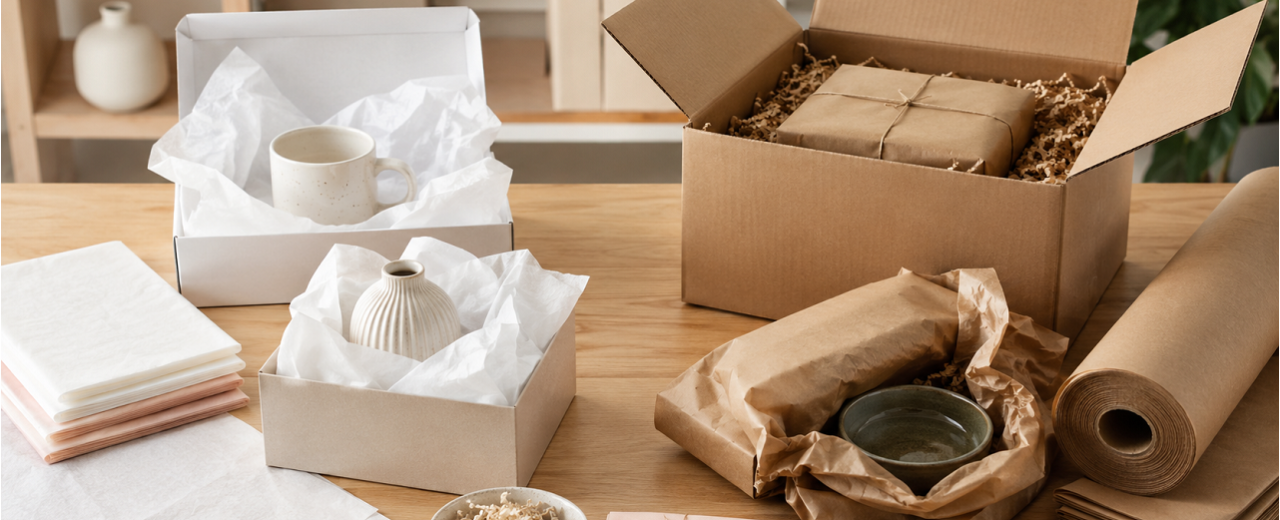
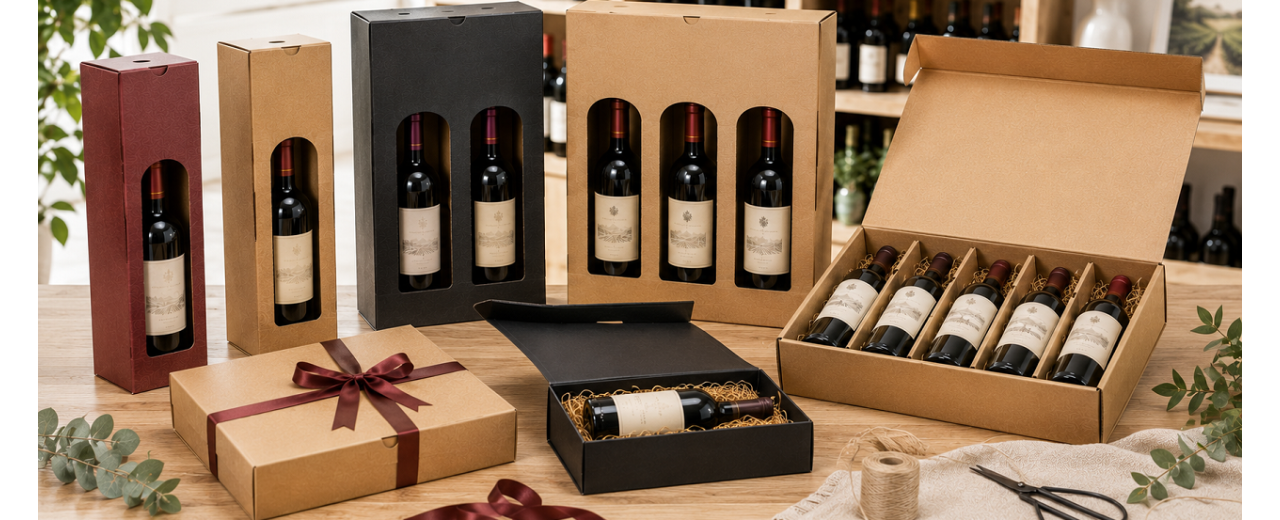
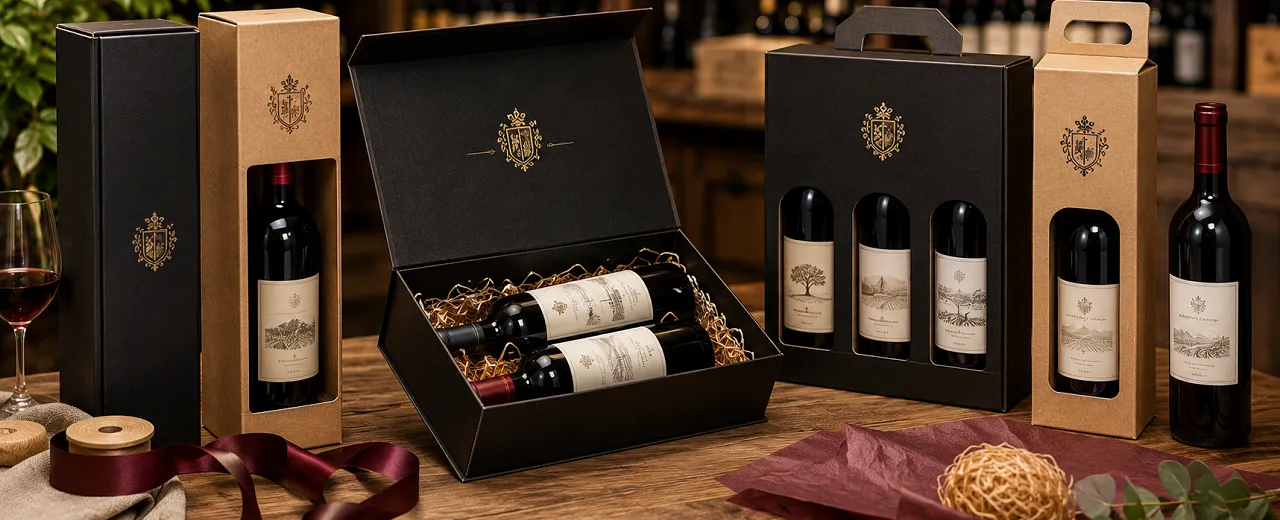
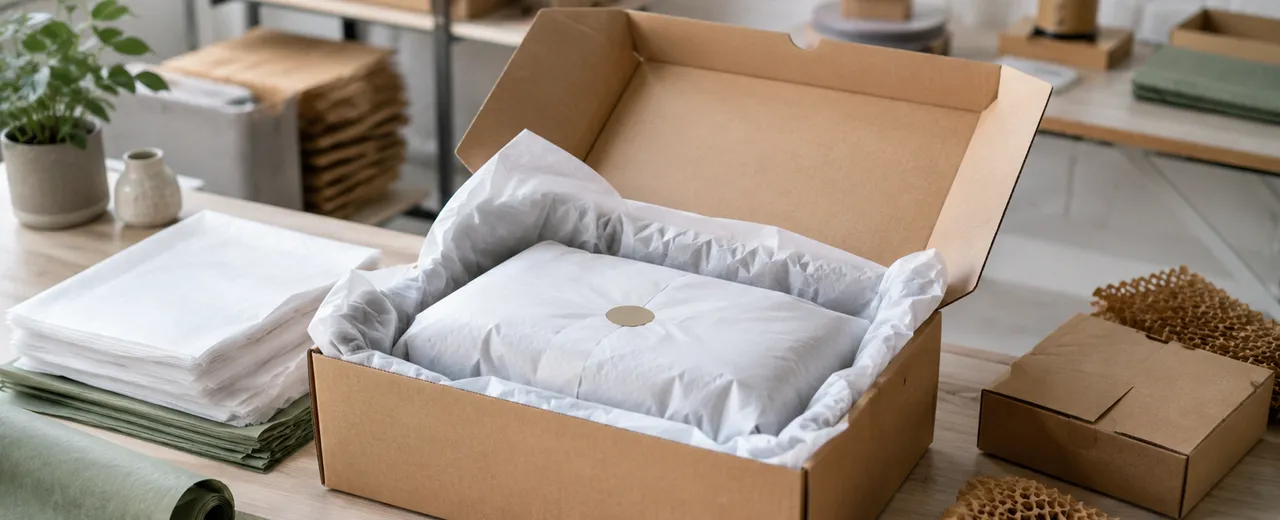
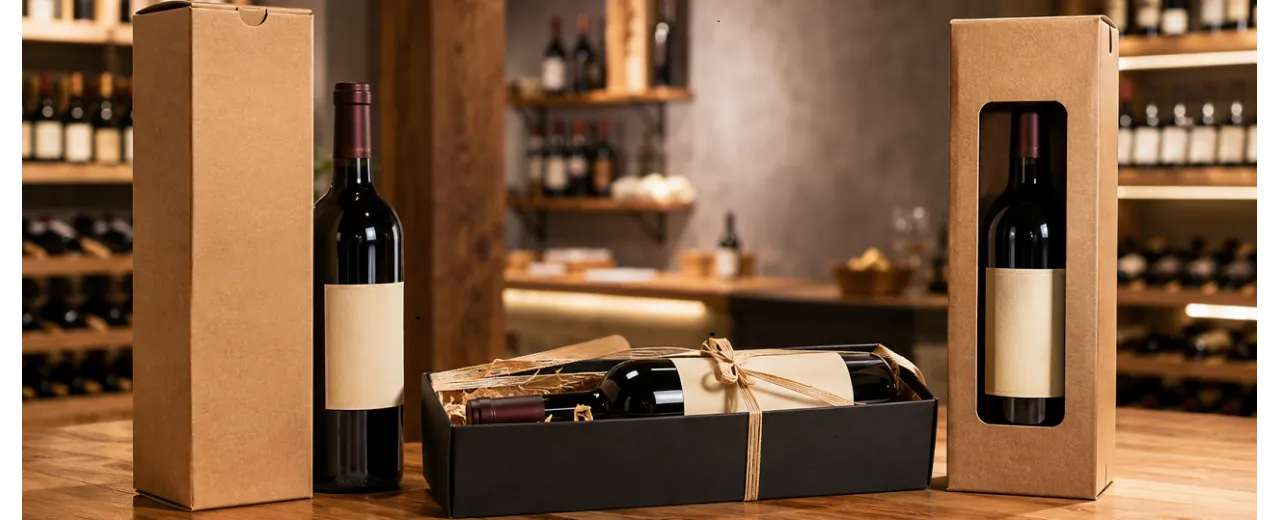
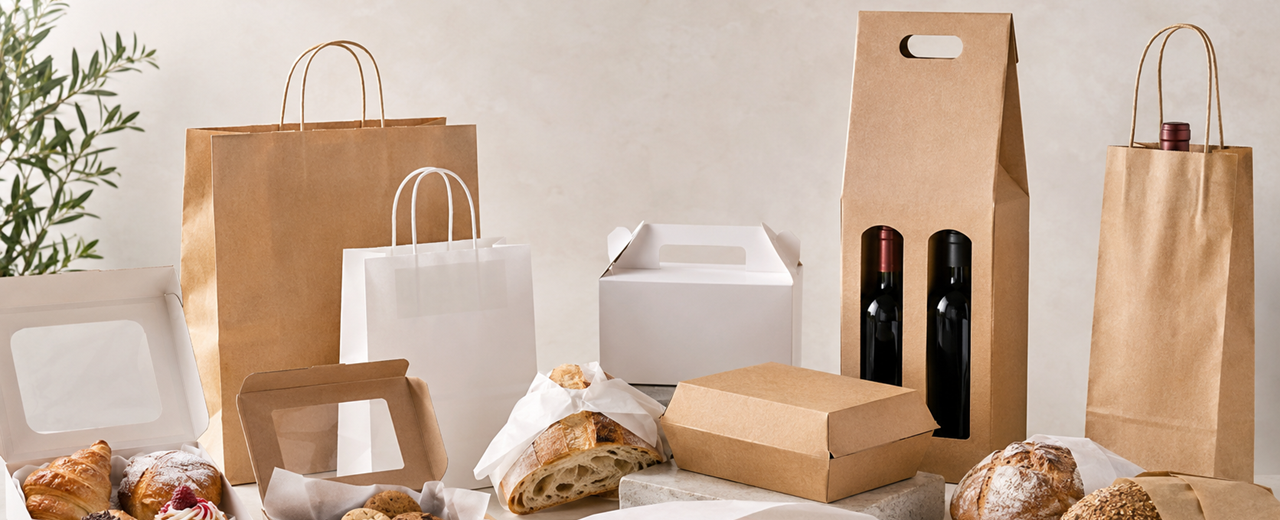
Choosing how to present a gift is an integral part of the experience you offer your customers. With cardboard baskets you enhance food and wine products and Christmas gifts with a coherent, orderly and contemporary visual language. You get a solid and light package, capable of protecting the contents and, at the same time, highlighting the brands, colors and textures that tell the story of your assortment.
By opting for cardboard, you communicate attention to the environment without sacrificing elegance. The packaging arrives flat, assembles quickly, adapts to different sizes and combinations and allows you to organize your work even in seasonal peaks. The aesthetic result is clean, the perception of quality is immediate and the message of sustainability is clear: a responsible choice, designed to be easily reused and recycled.
In this article you will find practical criteria for selecting materials and formats, indications for composing balanced and safe baskets, tips for customizing the packaging and integrating store and e-commerce logistics. The goal is to accompany you towards a solution that combines operational efficiency, product protection and a visual impact capable of transforming every gift into a memorable experience.
Why choose cardboard baskets
By choosing cartonboard, you get a packaging solution that combines aesthetic value and functional rigor. The surface is clean, legible and consistent with different visual identities: from the natural of kraft to the most elegant embossed finishes, up to seasonal colors. This allows you to present heterogeneous food and wine references with a unified language, maintaining order in the window and clarity on the counter.
On an operational level, the advantage is immediate. The baskets arrive flat, take up little space in the warehouse and can be assembled in a few steps. Reduce preparation time and costs, manage seasonal peaks without stress and you can plan the set-up in a modular way, composing the sets according to real demand. The lightness of the material also has a positive impact on transport and shipping: less weight, lower costs and better handling for personnel.
The structural yield is reliable. The flat or microwave-coupled cardboard guarantees stability to the sides and holds adequate capacities for bottles, jars and leavened products, as long as they are correctly blocked with fillers and dividers. The die-cut edge and handles offer a secure grip during delivery and positioning, preserving the integrity of the contents and the order of the composition.
From a brand point of view, cardboard is an extraordinarily receptive support to personalization. You can work with single or multi-color prints, apply dedicated labels or sleeves, insert cartouches with greeting messages and QR codes towards thematic landing pages. The visual impact is immediate and the perception of quality grows, because the container dialogues with the content and amplifies the story of origin, territory and production method.
The choice is sustainable and communicable. A cardboard basket is mono-material, easy to separate and recycle into paper; If you use certified papers, you can make explicit your commitment to responsible forest management. At the end of use, the customer can reuse it as a domestic container, extending its life cycle, or dispose of it correctly in the separate collection. This reinforces your store's positioning as environmentally conscious without sacrificing elegance.
Compliance with good food packaging practices is also easy. The cardboard is suitable for indirect contact with packaged food and, with the use of dividers and protections for oils and glass, guarantees order and safety in the window and in shipping. In short, with cardboard baskets you combine management efficiency, cost control, premium image and environmental responsibility: a choice consistent with the expectations of the contemporary customer and with the needs of a modern store.
To coordinate baskets, boxes, papers, and fillers by product, check out the Deli, Wine Shop, and Gift Packaging Guide.
Materials and structures: what's inside a "good" basket
When selecting a cardboard basket, the quality of the raw material and the structural design determine the aesthetic performance and safety of the contents. Flat cardboard is suitable when you want a thin profile and a very clean look; With medio-high grammages you get stable walls, sharp creases and a perfect surface for printing. If, on the other hand, you have to support heavy loads or manage bulky formats, the microwave laminate offers you a concrete mechanical advantage: with E flute you get a low thickness and a good flow rate for mixed assortments; with B flute you favor the strength and rigidity of the sides, useful for panettone, bottles and heavy jars. In both cases, the flatness of the sheet and the correct fiber direction help you prevent warping and deformation in the showcase.
The surface finish orients the visual language and has operational repercussions. Havana kraft communicates naturalness and craftsmanship, absorbs inks well and highlights any embossing. The "fabric effect" embossed papers add depth and ennoble the product, while maintaining a high resistance to scratches during handling. If you need full colors and very defined logotypes, coated papers for offset or digital printing guarantee opacity and sharpness; You can protect the print with water-based varnishes or transparent dispersions to limit rubbing marks. Avoid unnecessary lamination: a protective varnish or a structural embossed allows you to preserve recyclability and consistency with the message of sustainability.
The structure affects the working speed and tightness. A self-erecting bottom allows you to open quickly without glue, while the well-sized side joints block the perimeter and avoid "openings" under load. The die-cut handles, with a large radius and reinforcements in the traction zones, guarantee a comfortable grip and reduce the risk of tearing during delivery. The top edge can be tucked in or creased to stiffen the side and maintain a smooth profile. If you plan glass bottles or jars, the internal dividers and cardboard spacers distribute the weight and prevent contact between the products; Combined with a paper filler bed, they create stable and orderly alveoli.
Environmental aspects are also part of the project. The use of certified papers and water-based inks makes the basket fully recyclable in paper collection. If you need transparent windows for display, prefer materials that are easily separable or consider cards with carvings and "views" that allow a glimpse of the product without adding plastic films. A small message printed inside or on the title block with the delivery instructions facilitates the correct end of life at the customer's premises.
Finally, consider the terms of use. If the basket has to withstand residual moisture or temperature changes during transport, a non-plasticizing surface barrier or paper with more glue reduces absorption and preserves the integrity of the folds. For prolonged exposure in the store, the lightfastness of the colors and the scratch resistance of the finish help you maintain the flawless appearance of the composition over time. A "good" basket is born from the balance between material, design and function: by consciously choosing these elements, you get a reliable, elegant packaging that is consistent with the expectations of your audience.
Correct formats, courses and choices for wine, jars and specialties
The choice of format starts from the analysis of the content. Measure the actual footprint of the products, consider the label thicknesses, and add breathing room for the filler. The inner base of the basket should be 10–15% higher than the sum of the item widths, while the height of the sides should be commensurate with the most alto point in the set: for low assortments, a profile of 8–10 cm is sufficient; With panettone, standing bottles or 720 ml jars, it is preferable to go up to 12–16 cm to contain and protect without compressing.
For wine or oil bottles, consider lying down as the standard for transport and prolonged exposure. A 0.75 l Bordeaux bottle requires an average of 30–32 cm in usable length and 9–10 cm in width; With two bottles side by side, provide dividers or paper nests that prevent contact between the glasses and maintain the reading of the labels. If you want to display them standing, favor baskets with a deeper base and insert a ring or a cavity that stabilizes the bottom of the bottle. For special formats (magnums, pot-bellied sparkling wines) check the size of the belly: you may need a wider basket or a diagonal arrangement.
Jars and preserves introduce stability constraints. Alternate the diameters to avoid unstable "chimneys" and place the heaviest pieces in the center, lowering the center of gravity of the basket. An even bed of paper filler (2–3 cm) absorbs micro-shocks and allows for a flat footing; Insert spacers or folded strips of cardboard between the jars to block lateral movements. If you include oily products, insulate the surfaces with a tissue paper or a cardboard containment tray, in order to preserve the aesthetics even in the event of drawings.
The load capacity depends on the material and structure. With E microwave-bonded cardboard, you can safely handle assortments from 3–5 kg; with microwave B you can reach 6–8 kg, as long as you distribute the weights correctly and do not create leverage points on the sides. Flat cardboard is suitable for light and compact compositions. In any case, when the basket travels by courier, consider the basket a spectacular primary to be placed in an external carton with perimeter filling: in this way the blow is absorbed by the shipping box and the presentation package remains intact.
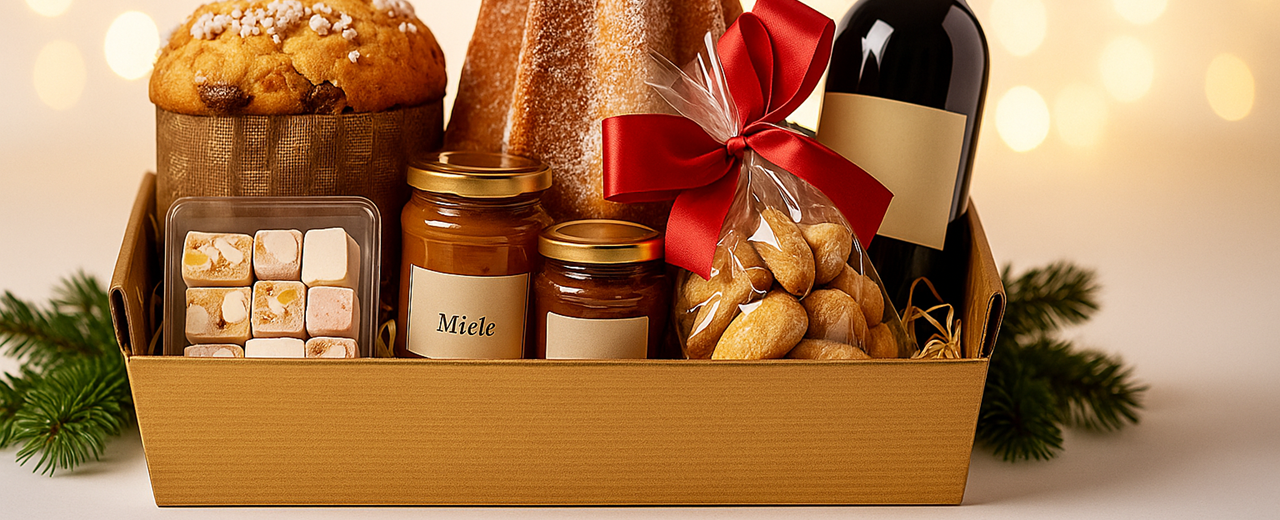
For formats, move by size families with clear goals. A small basket (approx. 25–30 × 18–22 × h 8–10 cm) enhances herbal teas, biscuits and 110–212 ml jars without visual dispersion. The medio (32–38 × 24–28 × h 10–12 cm) is the most versatile: it accommodates a reclining bottle and four or five specialties, maintaining a balance between full and empty. The large (40–48 × 30–34 × h 12–16 cm) allows for richer combinations, such as two bottles + sweet-savory. Beyond these measures, the scenography comes into play: it organizes in levels, creates a focal point (panettone or leavened product) and fits complementary references around it, avoiding visual fracture lines.
Die-cut handles require caution: check the distance to the edge and the width of the radius in relation to the estimated weight. A tucked-in edge stiffens the side and improves grip when delivered. If you plan to have long window displays, opt for scratch-resistant finishes and consider an acetate lid or shrink wrap to protect the set while maintaining visibility.
Finally, think about the readability of the content. Align the labels towards the front, maintain a progression of heights that guides the eye and use filler not only as protection, but as a design tool to fill in gaps and define planes. A "right" basket is one in which every element has space, the weight is distributed without straining the sides and the visual impact remains clean from the first to the last kilometer of delivery.
Professional set-up: how to compose a basket that sells
Start with the idea, not the objects. Define the message you want to communicate and the context in which the basket will be seen: counter, display case or product page. This allows you to choose a coherent focal point—a bottle, a panettone, a jar with an iconic design—and build a story of heights, colors, and textures around it. The rule is simple: a clearly recognizable protagonist and a contour that supports him without competing, so as to immediately direct the gaze.
Stability is the basis of every composition. Prepare an even bed of paper filler to reduce voids and micro-bumps, then place the heavier masses in the center so that the center of gravity is lowered. Place light sizes around the perimeter and create natural joints with spacers or folds of cardboard, preventing rigid surfaces from touching the glass. If you insert bottles, prefer horizontal laying with the legible label; If you want standing exposure, create a discreet honeycomb that blocks the bottom and prevents wobbling.
The visual balance comes from the rhythm of the heights. He alternates vertical and horizontal elements, building a diagonal that leads the observer from the front to the back of the basket without sudden jumps. Maintain a smooth progression: the highest heights near the focal point, the medium ones to support the story, the lowest to refine. The conscious use of filler allows you to bridge the differences in height, while a small rise below the protagonist reinforces his stage presence without weighing down the whole.
The color must be intentional. Start with the color of the basket and select products and ribbons in harmony or controlled contrast. Natural and kraft tones enhance handcrafted references; Embossed finishes and deep colors communicate celebration and formality. Limit the palette to two main colors and an accent, so the composition is legible and photographable. If you use seasonal decorations, keep them essential: a vegetal note or a textile texture is enough to give atmosphere without covering the labels.
Order communicates quality. Align fronts, orient brands toward the viewer, and allow breathing space around the most important labels. Avoid indistinct accumulations: each reference must have a clear space, with a logic of juxtaposition by family or by moment of consumption. When you enter multiple variants of the same product, differentiate them by format, taste, or function to suggest a path of discovery. A small internal cartouche, elegant and minimal, can guide the reading without stealing the show.
The closure must protect without hiding. If the basket will remain on the bench, a tie with tape and a seal are enough to fix the whole. For self-service display or e-commerce, consider shrink wrap or an acetate lid, taking care to avoid reflections and creases that disturb visibility. In any case, check the grip of the handles and the behavior of the composition to a slight shaking: if nothing moves and the profile remains clean, you have achieved the right balance between aesthetics and safety.
Finally, think about replicability. A professional set-up is one that you can reproduce with the same quality even under pressure. Take a sample photo, note the key steps, indicate the filler quantities and anchor points. This ensures consistency across baskets, brand consistency, and predictable preparation times. A basket that sells is first and foremost a project: clear in intent, solid in structure, legible in form.
Customization and branding
Personalization transforms the cardboard basket into a coherent extension of your visual identity. Start with the brand's color palette and define a legible contrast between background, print and textile or paper accessories. The choice of the tone of the basket orients everything else: on kraft you will have a material and warm rendering, on embossed or patinated you will get a clearer definition of logotypes and patterns. Maintain a clear hierarchy: the brand as a primary element, any claims or greetings as a support, the decorative details to close the story without covering the product labels.
The printing technique follows objectives and volumes. With medio-short runs, you can enhance the basket with digitally printed adhesive labels, cartouches and paper sleeves, reducing quantity and time constraints. On larger series, it is worth considering direct printing in one or more colors: clean lines, color consistency and optimized unit costs. For high-end festive or corporate editions, hot finishing with metal film highlights the brand and micro-details; The selective transparent varnish, even in the matt/glossy version, creates plays of light without altering recyclability when used with partial coverage and with suitable weights.
Every visible surface can contribute to storytelling. The rolled edge accommodates courtesy micro-texts, the inside of the basket houses a greeting, a map of the territory or a brief description of the producers. A discreet QR code, placed on the title block or sleeve, refers to a landing page with greetings, editorial content and traceability; In this way you move part of the story online, lightening the printed graphics and keeping the clean object on display.
Legibility must guide aesthetic choices. Avoid weak contrasts between the background and the logo, take care of alignment with the front of the reading and respect the areas of respect around the brand so as not to generate visual crowding. On embossed or heavily textured papers, prefer full logotypes or thicker lines; On patinated surfaces you can dare with subtle elements and micro-patterns. If you plan to shoot e-commerce, consider the display on the monitor: a color that is too dark or too glossy makes post-production more complex and risks reflections on the film or acetate.
Customization also thrives on modularity. Design a system consisting of a neutral base and variable accessories, so you can differentiate seasonal themes, price ranges and targets with minimal intervention: change a ribbon, replace the sleeve, update the title block and keep the body of the basket constant. This logic facilitates restocking and reduces waste at the end of the season, because the neutral elements remain usable all year round.
Operationally, define files, tests, and times rigorously. Prepare executives with bleeds, consistent color profiles, and simplified versions of branding for smaller sizes. Request a soft proof or white mockup to validate placements and dimensions before going into production. As Christmas approaches, plan the phases in advance: printing of bases and accessories, assembly of cartouches, arrival of ribbons and fillers. A clear roadmap avoids bottlenecks and allows you to maintain consistent standards across the series.
Sustainability remains an integral part of branding. Prefer water-based paints, avoid unnecessary lamination and, if you insert windows, make the parts easily separable or replace them with notches that allow a glimpse of the contents. It soberly communicates responsible choices—certified papers, award instructions, invitation to reuse—to reinforce the perception of care without turning the message into a self-referential exercise.
Finally, measure effectiveness. Observe how the customer interacts with the packaging, analyze conversion rates between the storefront, counter and e-commerce, check brand recognition in user-generated photos. Branding works when the basket is immediately attributable to your sign, enhances the product without obscuring it and resists the time of preparation, handling and delivery with the same order with which it was designed.
Logistics and e-commerce
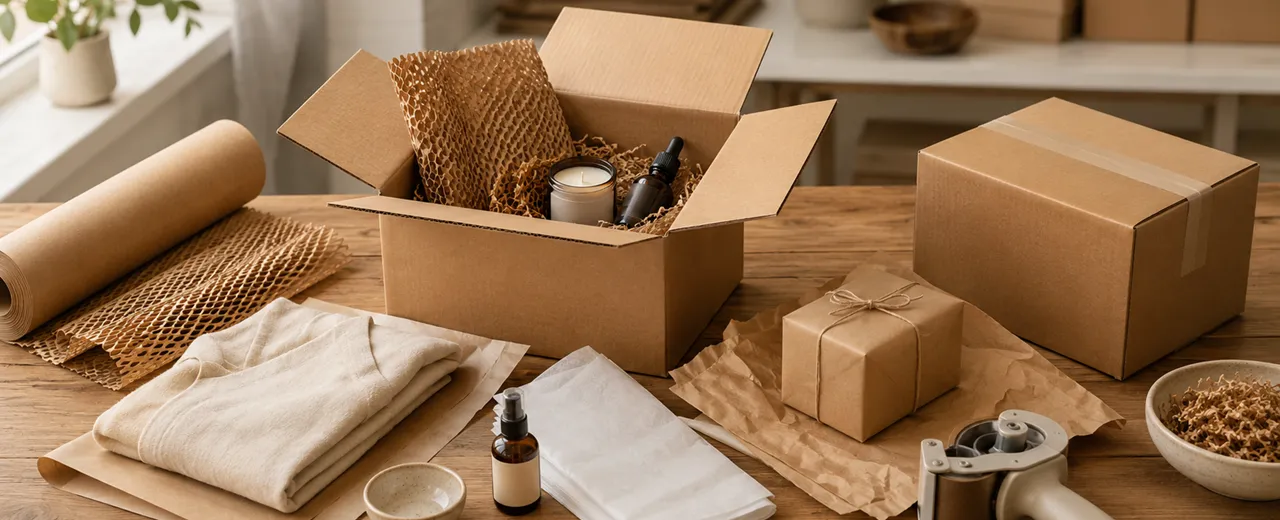
The success of a cardboard basket project depends on your ability to govern the entire operational chain, from warehouse to delivery, passing through online presentation. Start with careful inventory planning: define truly strategic sizes, establish minimum reorder thresholds and consider supplier lead times according to seasonal peaks. The flat format allows you to optimize space, but requires a pre-kitting logic: prepare complete sets in advance with basket, filler, dividers, ribbons and cartouches, so as to reduce set-up times at times of greatest turnout. An area dedicated to assembly, with tools and materials sorted by frequency of use, allows you to standardize the steps and guarantee repeatable quality.
The assembly must follow a verifiable sequence. Arrange an incoming quality control on the batches of cardboard (flatness, cutting, embossing) and define a checklist for the operator who assembles and fills: stability of the base, integrity of the sides, fixing of the products, legibility of the labels. Include a weight check at the end of the composition to intercept any deviations from the expected capacity and document the approved set-up with a reference shot, in order to replicate it consistently throughout the series. For shipping batches, test samples with a vibration and small shock simulation to confirm the tightness of the dividers and filler.
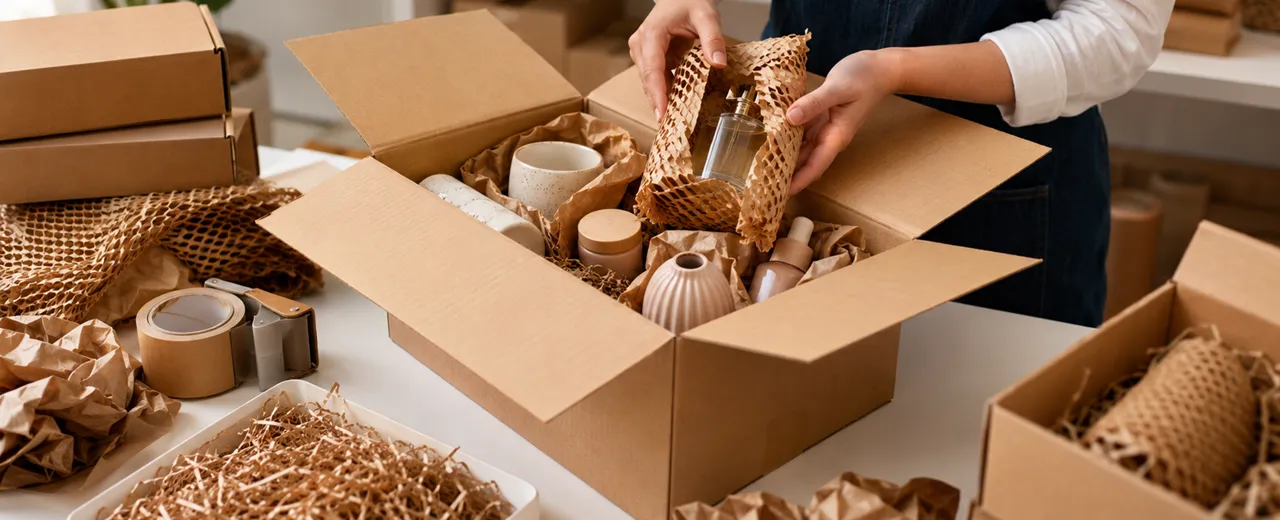
Shipping requires a double-skin approach. Think of the basket as a presentation box and protect it by placing it in a properly sized outer box, with a perimeter filling that absorbs blows without compressing the contents. Seal with an "H" closure and apply a front orientation label to prevent unacceptable tipping on delivery. When inserting glass or liquids, isolate the critical points with spacers and technical tissues and check that the packages are within the weight limits of the chosen courier; It also monitors the volumetric weight, because the efficiency of transport depends on the relationship between size and actual mass. If you plan to split deliveries for corporate customers, arrange pickup windows with the carrier and reserve volumes to prevent congestion in the last week.
Returns management impacts the reputation of your service. Design a neat unpacking experience, with easy opening and delivery instructions, so the customer can immediately assess the integrity of the contents without damaging the basket. Insert an internal title block with QR that refers to reuse and recycling instructions; In the event of a return, provide easily replaceable components—tape, title block, filler—so as to restore the original appearance with minimal intervention and reduced waste.
The e-commerce product page must transfer trust and reduce ambiguity. Present crisp images with overviews and material details, add a alto shot showing the interior layout, and a short editing sequence. It clearly indicates external dimensions and internal useful base, side height, recommended capacity, compatibility with bottles and jars, as well as sustainability notes and disposal instructions. Offer variations by size and theme with consistent nomenclature and allow title block customization directly on the page; It integrates realistic preparation times and differentiated delivery windows for peak periods to align expectations and improve satisfaction rates.
Integration between physical store and online channel requires reliable data. Align codes and designations between ERP and e-commerce platform, assign barcodes to variants, and maintain timely traceability of the components that make up each basket. A separate inventory for neutral bases and customizing accessories allows you to quickly modulate seasonal themes without tying up capital in finished items. On B2B flows, define hourly cut-offs for orders to be fulfilled on the same day and make sure that customer care has response models that explain times, delivery options and return policies with formal clarity.
Logistical communication completes the experience. Include a summary of contents, dimensions and care instructions in the order confirmation; it sends updates on the status of the shipment with tracking links and, upon delivery, recalls the value of reuse with a short institutional message. Each step should reaffirm the balance between aesthetic care and environmental responsibility: the customer understands that he is buying a basket designed to arrive intact, be displayed in an orderly manner and easily re-enter the recycling circuit once its task is completed. With this operational discipline, you transform logistics into a competitive advantage and e-commerce into a channel capable of telling, with the same authority as the point of sale, the quality of your work.
Choosing cardboard baskets means giving consistency and value to the shopping experience you offer. With a single tool, you connect aesthetics and functionality: present references in order, protect the contents during handling and shipping, communicate a clear identity and support an easily understandable message of environmental responsibility. The versatility of materials and structures allows you to calibrate formats and courses, while customization—from the colors to the cartouche, up to the QR—transforms each package into a timely story of your brand and the territory you represent.
From the counter to e-commerce, operational efficiency becomes part of the image you convey. Reduced assembly times, flat storage, replicable fittings and transparent technical information on the product page converge in a reliable service, capable of withstanding seasonal peaks without compromising on quality. The end customer receives a gift that is legible, well-kept, ready for reuse and easy to recycle: a balance between form and substance that increases the perception of value and the probability of repurchase.
Now you can define strategic sizes, select finishes consistent with your positioning and set up a modular accessory system to differentiate themes and price ranges. With this approach, each basket becomes a small brand project: recognizable, solid, sustainable. If you wish, we can translate these principles into an operational proposal with measurements, codes and timelines, so as to move precisely from concept to production.