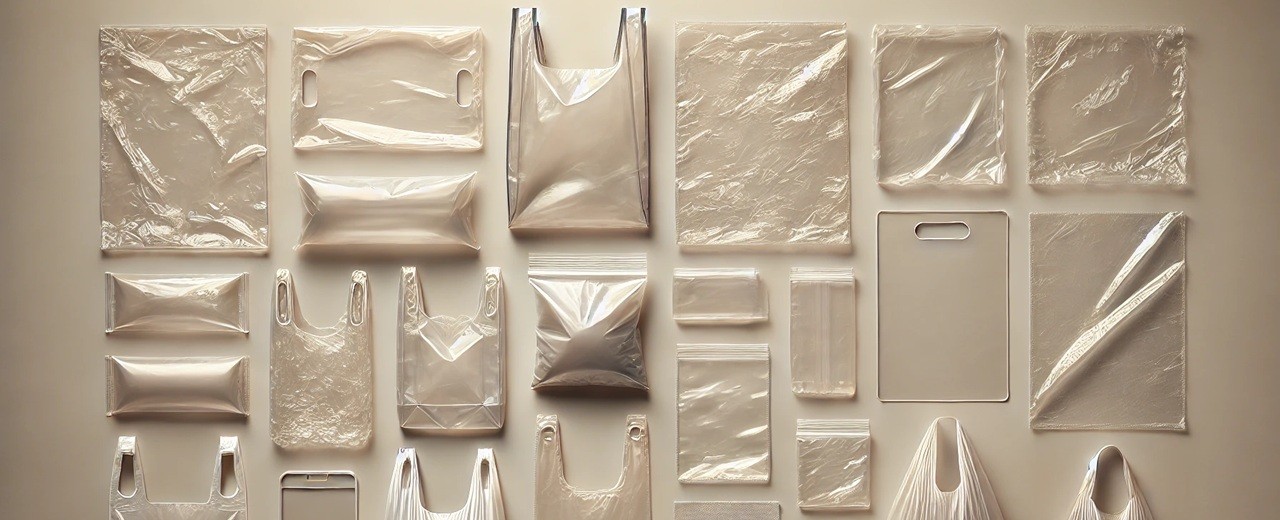
Transparent bags are an essential element in food packaging, particularly in pastry and ice cream laboratories, as they combine the need to protect the product from the external environment with the desire to highlight its shape and colors. The image of a biscuit or chocolate clearly visible inside a shiny bag entices you to buy and immediately conveys an idea of freshness and quality, leveraging the aesthetic factor and the positive perceptions of the customer. This display function is all the more crucial the more you want to enhance the care and dexterity with which confectionery products are made, since a transparent bag allows you to appreciate every detail, from the decorations to the texture.
At the same time, these wrappers play a vital role in ensuring food hygiene and preservation. They prevent food from coming into contact with external agents such as dust or excess moisture and preserve its flavor and fragrance, especially when combined with appropriate closing techniques. In the world of pastry, moreover, the care of the visual aspect is never separated from the need to comply with food safety regulations: choosing suitable and certified materials therefore becomes an obligation, as well as an aspect that contributes to the professional image of the business.
For this reason, there are numerous solutions ranging from polypropylene, capable of offering high resistance and a barrier to humidity, to polyethylene, more flexible and often used for frozen products, up to cellophane and the most modern compostable bioplastics such as PLA, which are increasingly in demand with a view to environmental sustainability. The variety of materials and formats available on the market makes it possible to meet needs ranging from the packaging of pralines or biscuits, delicate and requiring high visibility, to ice creams and semifreddos, which require a casing resistant to low temperatures.
Through an in-depth knowledge of the characteristics of materials and a conscious choice, every professional can combine product protection with attractive aesthetics, creating packages that attract attention and convey a message of quality and craftsmanship.
Reference regulations and food safety
In the food sector, the choice of transparent bags cannot be separated from an in-depth knowledge of current regulations and the food safety practices necessary to ensure that direct contact between the material and food does not compromise the health of the consumer in any way. The legislative framework of reference is constituted first of all by EC Regulation no. 1935/2004, which establishes the general principles for materials and objects intended for contact with food, imposing the fundamental requirement that they must not transfer harmful substances or alter the composition and organoleptic characteristics of food.
This is accompanied by other provisions, such as EC Regulation No. 2023/2006, which governs good manufacturing practices, and national regulations, which complete the European framework with specific requirements. In practice, one of the most important aspects to check is the presence of the "food" marking, often represented by the symbol with a glass and a fork, synonymous with compliance with the basic rules for food contact.
Companies that choose to adopt additional standards, such as HACCP (Hazard Analysis and Critical Control Points), BRC (British Retail Consortium) or IFS (International Featured Standards) certifications , can provide additional safety and quality assurances, thanks to the rigorous controls that these certification schemes provide.
In this context, traceability becomes essential, i.e. the possibility of tracing the production chain of transparent bags in order to verify not only the origin of the raw materials, but also the processing undergone and the related production batches. For a pastry chef or ice cream maker, this means being able to request updated technical data sheets , certificates of food suitability and all the documentation useful for demonstrating the conformity of the packaging from suppliers.
Keeping track of these documents and constantly updating your archive is therefore essential to comply with regulations and prevent problems in the event of audits, while ensuring a high level of security for customers. Every step, from obtaining the raw material to the final packaging, is thus monitored and recorded, so that the quality of the product is never questioned.
The precise and regular fulfillment of all these regulatory obligations, combined with a careful choice of the most suitable material for the type of food, is an indispensable condition for those who want to offer their customers not only a beautiful and inviting product, but also safe in every respect.
Polypropylene (PP) Bags
Polypropylene, commonly referred to by the acronym PP, is one of the most popular materials in food packaging due to its combination of transparency, strength and versatility. Thanks to its molecular structure, it is particularly suitable for protecting products from external agents such as humidity and dust, while maintaining a good shine that highlights the aesthetic appearance of biscuits, pralines, dry cakes and other typical pastry specialties.
To include transparent bags in a more complete and functional assortment, see these practical packaging for pastry shops and delicatessens.
This feature makes it a privileged option for those who want to highlight the freshness and craftsmanship of their creations, without sacrificing food safety. In addition, polypropylene exists in different variants, including cast and bioriented (OPP), which differ in production methods and degree of rigidity, allowing each professional to select the most suitable solution based on the type of product to be packaged.
The possibility of finding bags of various thicknesses should not be overlooked, an aspect that affects the feeling of robustness transmitted to the customer and helps protect the most fragile foods from accidental breakage or impacts. In addition to the aesthetic and protective factor, polypropylene also offers a good quality-price ratio, a feature that makes it particularly interesting in large-scale production, where it is necessary to maintain a balance between costs and packaging yield.
At the same time, it is possible to finish PP bags with special treatments, such as anti-fog or micro-perforation, which help control condensation or promote the transpiration of certain types of products. In any case, the choice of polypropylene as the material for their transparent bags represents a safe investment for those who want to enhance their handcrafted creations, giving them an inviting appearance and at the same time ensuring the optimal preservation of organoleptic qualities.
Polyethylene (PE) bags
Polyethylene, often referred to as PE, is another popular option for making transparent bags for food packaging. It differs from polypropylene for a more flexible structure, which makes it particularly suitable in situations where the material must adapt to variable shapes and volumes.
Its tear resistance and ability to maintain mechanical properties even at low temperatures make it a valuable ally, especially for the ice cream sector, where the use of bags to store and transport frozen or semifreddo products is frequent. It is essential to note, however, that the degree of transparency of PE is generally lower than that of PP, which is why those who need high visibility of the product may opt for polypropylene, reserving polyethylene instead for situations in which the protective function prevails over the aesthetic one.
Within this family there are two large types: low-density polyethylene (LDPE), softer and often used for bags with a generous thickness and a certain elasticity, and high-density polyethylene (HDPE), recognizable by its slightly "rustling" surface and commonly used in shopping bags.
When it comes to food preservation, PE offers good insulation against moisture, although it can be more permeable to gases than other polymers, which should be considered when aiming to extend the shelf-life of certain products. In terms of cost-benefit ratio, it is often an advantageous choice, and its diffusion on the market allows you to easily find different formats and thicknesses according to the specific needs of the laboratory or point of sale.
Thanks to adequate management of sealing or other sealing techniques, polyethylene bags offer good protection against external factors and, if accompanied by proper storage in the cold room or freezer, allow you to keep the organoleptic characteristics of even particularly delicate foods intact.
Cellophane bags
Cellophane, made from regenerated cellulose, is a choice of great tradition in the packaging of food products, in particular those of pastry and chocolate. Its history begins in the early twentieth century, when the technique was developed to transform the vegetable fiber into a transparent and thin film, characterized by a high gloss.
This peculiarity, combined with a certain rigidity that makes it more similar to a glossy film than a plastic bag, gives cellophane an artisanal and elegant charm, sought after especially by those who want refined-looking packaging. Unlike other petrochemical-derived plastic materials, cellophane also offers added value from an aesthetic point of view, as it gives life to bags that convey the idea of a valuable product with traditional roots.
However, it should be noted that its impermeability to water may be lower than that of polymers such as polypropylene or polyethylene, which makes it less suitable for long-lasting packaging or in excessively humid environments. On the other hand, its gas barrier is quite good and helps to safeguard the freshness of the products, especially if they are dry cakes and biscuits that do not release moisture.
From an environmental sustainability point of view, there are cellophane versions that can be considered compostable or recyclable, although it is always advisable to check the manufacturer's technical specifications to make sure that the film complies with disposal regulations. This characteristic has reaffirmed its importance in an era in which attention to eco-sustainability has become a determining factor in the choices of many consumers, sensitive to more natural and lower-impact packaging.
Finally, the sensation to the touch, which many describe as more "crunchy" and less elastic, adds a further element of differentiation compared to plastic bags, transforming cellophane into a packaging solution capable of blending retro aesthetics, satisfactory organoleptic qualities and a perception of craftsmanship that fits perfectly with the offer of high-end confectionery products.
Biodegradable and compostable materials (PLA, Mater-Bi, etc.)
In the panorama of materials used for the packaging of food products, biodegradable and compostable solutions are taking on an increasingly important role, by virtue of the growing attention to environmental issues and sustainability. These transparent bags, often made of PLA (polylactic acid) or other polymers derived from starches of vegetable origin such as Mater-Bi, offer the possibility of reducing the environmental impact compared to classic synthetic plastics, since at the end of their life cycle they can degrade under controlled conditions, reducing the accumulation of plastic waste in the long term.
From an aesthetic point of view, PLA bags have a high gloss and satisfactory transparency , which enhances the presentation of confectionery products such as biscuits, chocolates or pralines, allowing you to appreciate their colors and attention to artisanal details. As for performance characteristics, however, it is important to keep in mind that these materials show lower thermal resistance limits than traditional plastics, which means that PLA bags, for example, could deform or lose some barrier properties if exposed to too high temperatures.
Similarly, effective compostability is often linked to the availability of industrial plants capable of providing the conditions of humidity, temperature and oxygenation necessary for degradation in a reasonable time. On the food preservation front, compostable and biodegradable packaging generally offer good protection from external contamination, as long as they are chosen with thicknesses and treatments suitable for the specific product: some versions have anti-fog treatments or additional barriers which, although not reaching the levels of some petroderivative polymers, can be sufficient to maintain the fragrance of dry sweets or short-lived pastry products.
Furthermore, since consumer sensitivity to environmental issues is constantly growing, being able to offer bags that underline a concrete commitment to reducing waste and respecting the ecosystem is an added value for those who work in pastry or ice cream parlors. Of course, to make a truly informed choice, it is essential to verify the origin and certifications of the material, making sure that it complies with European directives and any national regulations on the marketing and disposal of compostable products.
In this way, professionals in the sector will be able to combine the need to offer safe and attractive packaging with the aim of limiting environmental impact, helping to create a more virtuous supply chain in tune with contemporary sensibilities.
Comparison of different materials
The choice of the most suitable transparent bag depends on a series of variables that go beyond the simple aesthetic question and concern the technical characteristics of each material, the storage needs and the methods of presentation of the product.
Polypropylene, with its excellent transparency and good moisture barrier, lends itself excellently to highlighting biscuits, candies or sugared almonds, maintaining their fragrance and protecting them from external contamination. On the other hand, polyethylene, while offering less brilliance, is extremely resistant and more suitable for forms of packaging where the need for flexibility prevails, such as in the case of frozen or semifreddo products.
Cellophane deserves a separate mention, able to combine a handcrafted and sophisticated look with good protection, especially in terms of gas permeability, although it is less performing in very humid environments. Biodegradable and compostable solutions, such as PLA or other derivatives from vegetable starches, on the other hand, offer an important opportunity on the sustainability front, although they sometimes show limitations in thermal resistance and durability of barrier properties compared to traditional plastics.
In general, it should be borne in mind that each package must be designed to meet the specifications of each food: a bag that enhances the colors and decorations of a dry pastry product may require a higher level of transparency , while for products to be stored at low temperatures , elasticity and moisture resistance are crucial.
In addition, it is necessary to evaluate how the different materials affect the consumer's perception of quality and, last but not least, what the environmental impact of packaging will be with a view to a more conscious and responsible approach. A careful and balanced comparison between technical peculiarities , cost, aesthetic performance and sustainability therefore makes it possible to identify the most suitable solution for each production reality, taking into account both immediate needs and long-term prospects.
Sizes, shapes, thicknesses and closures
The size of transparent bags, together with their shape and type of closure, significantly influence both the practicality of use and the perception of quality transmitted to the customer. Some formats, such as standard ones, simplify logistics and warehouse organization, offering a ready-to-use solution for those who continuously produce desserts or ice cream products, while in other cases the choice of a tailor-made bag is a winner when you want particularly elegant or specific packaging.
Variants with flat or square bottom provide more stability and allow the product to be stored in an upright position, enhancing the presentation of biscuits or pralines that can be neatly layered. Bags with side gussets, thanks to their ability to expand, are ideal for bulky products, such as panettone, doves or large cakes.
On the closure front, the presence of an adhesive flap greatly simplifies the operation of opening and reusing the bag, maintaining good protection from the external environment; The MiniGrip (or zip) system stands out for its ability to offer a more hermetic and secure closure, favoring the storage of pralines or biscuits that fear humidity. The metal wires (known as twist-offs) add a decorative touch and can be embellished with colored ribbons or personalizzati, making the packaging particularly suitable for anniversaries or gift wrapping.
In industrial and alto -volume production, heat sealing is widely used, which guarantees fast, hygienic and resistant sealing, even if it requires specific machinery and a certain familiarity with temperature and pressure settings.
The choice of thickness plays a crucial role, as it affects the robustness of the bag, the feeling of quality perceived by the customer and the protection of the product during transport and storage. A higher thickness communicates solidity but involves slightly higher costs, while lighter solutions favor handling and reduce costs, while offering less resistance.
Finally, any graphic customization and the use of logos or prints on the bags allows you to strengthen the identity of the brand, transforming a simple container into a tool for promoting and telling the story of the artisanal or innovative value of the business.
In the world of transparent bags, the choice of format, thickness and closures is of decisive importance both for the correct preservation of food and for the aesthetic enhancement of the product.
The first assessment to be made concerns the dimensions: on the one hand, it is possible to rely on standard measurements, which are easier to manage in terms of storage and speed of use; on the other hand, you can move towards customized solutions, designed according to the specific needs of biscuits, pralines, single portions or larger formats such as panettone and cakes. A bag with the right proportions facilitates presentation, as it avoids excessive creases or gaps that could compromise the final aesthetic, and helps to optimize logistics, reducing unnecessary clutter in the warehouse.
In addition, the configuration of the floor has a significant impact on stability and capacity. Flat-bottom bags are perfect for arranging pastries in trays or neatly stacking cookies and chocolates, while square-bottom bags offer a wider base that allows you to accommodate bulky or irregularly shaped products, taking advantage of a larger load capacity. Bags with side gussets, on the other hand, are ideal for packaging bulky foods such as donuts, doves or large cakes, facilitating vertical display and providing a more attractive presentation.
Attention to closures is the next step. The adhesive flap is the most practical solution for those who want a quick and simple closure system, particularly useful for products that wear out in several times. Minigrip (zip) bags offer an even more airtight option, ideal for storing biscuits, pralines or even food powders, protecting them from air and moisture and allowing the customer to easily open and reseal the package. The metal wire (twist-off), on the other hand, is perfect for giving a decorative touch to the packaging, with colors or ribbons that match anniversaries or the style of the store, making it ideal for gifts, favors or artisan pastry items.
For those looking for professional solutions suitable for large-scale production, heat sealing is a winning option: it ensures hygiene, resistance and an optimal result, even if it requires dedicated machinery and technical skills for correct use.
Another key factor is the thickness or grammage of the bags, which determines the robustness of the wrapper and the impression of quality. Bags that are too thin risk appearing fragile and unreliable, while a thicker film communicates solidity and greater protection, making it ideal for prolonged transport and storage. However, it is important to balance costs and benefits, considering the weight and fragility of the product, as well as storage conditions, such as refrigeration or deep-freezing.
Personalization is an added value that is increasingly in demand: the application of logos, graphics or texts directly on the bags allows you to communicate the brand identity in an elegant and immediate way. Modern printing techniques allow you to obtain metallic, opaque or transparent window effects that allow a glimpse of the contents. Alternatively, the use of labels or stickers can complete the design without overcovering the product, making the most of transparency, one of the main strengths of this type of packaging.
These choices not only improve the aesthetic performance, but also affect costs, making it important to balance investment and perceived value, especially if you move from a limited production to a more extensive one or introduce a more exclusive line.
Showing concrete examples of packages with different types of bottom, thickness or closure can help you identify the most suitable solution, highlighting the advantages and limitations of each option. The assessment must consider the needs of freshness, hygiene and conservation, without neglecting the impact that the packaging has on market positioning and the coordinated image of the brand.
Conservation, storage and logistics
The correct management of transparent bags, from storage to purchase planning, is essential to optimize both the quality of the packaging and the overall costs of the business. Before use, the bags should be stored in a dry place, away from sources of excessive humidity , to keep the integrity of the material intact, preserve the thickness and ensure constant transparency, avoiding deformation or alteration. Direct sunlight and proximity to heat sources should also be avoided, as they can damage the surface of the bags or progressively degrade their mechanical and barrier properties.
Ideally, they should be stored in closed boxes or packaging, which protect them from dust and other external agents. A label that indicates the material, format , and date of purchase can make it easier to rotate stock, reducing the risk of leaving older batches unused for too long. For transport, whether from the supplier to the laboratory or between stores, it is advisable to arrange the packages neatly, avoiding irregular overlapping of heavy loads that could damage the bags with crushing or folding. If you are using couriers or distribution vehicles, it is useful to specify handling needs to protect packages from excessive shock or pressure.
In contexts with frequent travel, for example between different production sites or stores, accurate logistics planning can help avoid waste, optimize time and reduce the risk of running out of packages precisely at times of greatest demand.
When it comes to inventory and purchasing planning, it is crucial to strike a balance between economies of scale and flexibility. Ordering large volumes can reduce unit costs, but it's important to consider upgrading designs or changing formats quickly to meet production needs. Monitoring the real consumption of bags and taking into account seasonality – for example during the holidays, when sales of pralines, biscuits and typical sweets increase – allows you to plan reorders strategically, avoiding both warehouse overload and shortages in the phases of greatest demand.
An organized and methodical approach to the storage, transport and planning of the quantities of transparent bags is an essential element to ensure that packaging is always of high quality. This approach not only protects food products, but also helps to enhance them, strengthening the brand image and improving the overall customer experience.
Rules for labelling and traceability of packaged products and legislative references
The labelling of food products packaged in transparent bags is crucial to ensure both correct consumer information and product traceability and compliance with current regulations. Each food must contain mandatory information such as:
- The list of ingredients in descending order of weight.
- The allergens present.
- The expiration date or date of minimum durability.
- The batch number and, where necessary, the indication of the place of origin.
This data must be clear and legible, respecting the minimum font size required by law and using a font that facilitates reading. For transparent bags, it is advisable to position the label so as not to overcover the contents, leaving the consumer the opportunity to visually evaluate the product.
The use of adhesives that are resistant to storage conditions – such as humidity or low temperatures – is essential, but it is equally important that they do not leave residue on the bag when removed. This allows you to easily update the information in case of changes in batch or ingredients. To enhance the product, the information sticker can be combined with logos or graphic elements, while always complying with the legal provisions.
Labels can also contain spaces dedicated to marketing messages, for example to emphasize craftsmanship, the use of fresh ingredients or the company philosophy. In products intended for export, it is essential to check the multilingual labeling requirements required by international markets and adapt the layout to local regulations.
Another essential practice is the recording and filing of the technical data sheets of the bags and the labels themselves, to demonstrate compliance during any checks or inspections. This documentation is an additional guarantee of professionalism and compliance with regulations.
Main Italian legislative references for packaging and food materials
Below are the most relevant Italian regulations for the production, use and marketing of packaging and materials intended for contact with food. These provisions, while often referring to European regulations, represent the fundamental references for those who operate in Italy:
- Ministerial Decree of 21 March 1973
It is the main Italian regulatory reference in the field of hygiene for packaging, containers and utensils intended for contact with food. It sets out the essential requirements to ensure consumer safety. - Presidential Decree no. 777 of 23 August 1982
It integrates the regulations on the use of materials and objects in contact with food, updating over time to incorporate European legislative developments. - Legislative Decree no. 108 of 25 January 1992
It implements European directives and specifies controls and marketing methods for materials in contact with food, with particular attention to quality standards. - Legislative Decree no. 29 of 10 February 2017
It regulates the penalties for the violation of Regulations (EC) No. 1935/2004 and No. 2023/2006, clarifying obligations and responsibilities for safety, traceability and compliance with good manufacturing practices. - Environmental legislation and packaging management
Legislative Decree no. 152 of 3 April 2006 (Consolidated Environmental Act) regulates the production, management and disposal of packaging, with an emphasis on sustainability and recycling.
European regulatory framework
The national provisions are part of the broader framework of European regulations, including:
- Regulation (EC) No. 1935/2004: general rules for materials and articles in contact with food.
- Regulation (EC) No 2023/2006: specifies good manufacturing practices to ensure safety.
- Regulation (EU) No 10/2011: Covers plastics intended for contact with food.
These regulations, together with Italian laws, provide a complete framework for verifying the compliance of transparent bags and any other material in contact with food.
Scrupulously following the regulations on labeling, traceability and safety of packaged products not only ensures legal compliance, but also strengthens the brand image, transmitting trust and professionalism to the consumer. Precise management of information and legislative references is the basis for safe, transparent and high-quality food packaging.
Marketing and presentation aspects
The visual impact of transparent bags is a crucial element in the perception of confectionery, ice cream or artisanal products. Well-designed packaging , with brilliant transparency and careful workmanship, highlights the decorations, textures and colours of the products, elements that capture the attention and arouse desire. The first visual impression plays a decisive role in the customer's decision-making process, influencing both the perception of quality and the purchase choice.
In today's competitive market, using distinctive packaging is a real marketing strategy. Graphic customizations, well-kept labels and details that tell the story of tradition or company philosophy make the transparent bag much more than a simple wrapper: it becomes a powerful communication vehicle. For example, a label that integrates the brand logo and a brief description of the craftsmanship and quality of the ingredients can create a strong emotional connection with the customer, conveying trust and encouraging them to share the experience, including on social media.
The use of special materials and finishes, such as vintage-looking cellophane or eco-sustainable bioplastics, also makes it possible to convey the distinctive values of the brand, such as craftsmanship, innovation or environmental responsibility. The transparency of the bag satisfies the customer's need to directly evaluate the quality of the product, creating a bond of trust that goes beyond the simple sale.
In this context, the transparent bag becomes a portable display case, capable of telling the care and passion behind each product. Whether it's a gift box, special occasion packaging, or an online retail solution , packaging needs to consistently communicate your brand's identity and values. This includes elements such as the selection of raw materials, the traditional craftsmanship and the philosophy oriented towards quality and innovation.
Another aspect to consider is the post-purchase experience. A resealable, durable bag suitable for product storage prolongs customer satisfaction, further improving positive brand perception. For example, a bag with a minigrip closure (zip) or an adhesive flap facilitates the preservation of the product in optimal conditions, helping to maintain the freshness and quality of confectionery or ice cream creations.
Finally, the balance between aesthetics and functionality is key to turning clear bags into an effective marketing tool. Not only do they protect and present the confectionery creations, but they immediately communicate the passion and professionalism that distinguish the laboratory or the manufacturing company. Well-designed packaging thus becomes an integral part of the overall customer experience, strengthening loyalty and encouraging positive word-of-mouth.
Focus on sustainability and future trends
The growing sensitivity towards the environment is profoundly transforming the packaging sector, leading to increasingly sustainable and innovative solutions. In the field of transparent bags, this evolution is manifested through the introduction of biodegradable, compostable and recyclable materials, designed to minimize environmental impact without compromising functionality and aesthetics.
Among the most promising materials, PLA (polylactic acid) continues to gain attention, but new bioplastics are emerging with improved characteristics, such as higher thermal resistance or faster decomposition capacity even in domestic environments. At the same time, active and antimicrobial films, capable of interacting with food to extend its shelf-life, represent an interesting technological frontier. These bags not only protect the product, but also help to keep it fresh for longer, preventing mold growth or the growth of bacteria.
European directives, such as those limiting the use of single-use plastics, are accelerating the shift towards green solutions, prompting producers and food industry professionals to review their packaging choices. This change is further stimulated by consumers, who are increasingly attentive to labels, certifications and sustainability of packaging.
Adapting to change
For pastry chefs, ice cream makers and food companies, staying up-to-date on innovations in the field of transparent bags is essential. This means evaluating the characteristics of new materials, such as lead times, costs, and compatibility with existing packaging equipment. Investing in the circular economy does not only mean choosing better materials, but also rethinking disposal and recycling practices.
In particular, professionals in the sector can:
- Educate customers: Inform on how to properly dispose of used bags, helping to reduce waste.
- Promote recycling: Offer fully recyclable packaging collections or launch recovery initiatives in collaboration with local communities.
- Experiment with reuse models: Introduce incentives for customers who bring bags back to the store for new use, such as discounts or special promotions.
Towards the packaging of the future
Emerging trends, combined with advances in research on smart packaging and active materials, envisage a future in which transparent bags will no longer be just eco-friendly, but will become real tools for optimizing resources and enhancing the brand.
A concrete example is the use of smart bioplastics, which not only reduce the environmental impact, but can also integrate innovative functions, such as freshness indicators or properties that improve the preservation of products.
This revolution opens up new opportunities for brands, which will be able to stand out by adopting a responsible and innovative approach, communicating their sustainability values through packaging. Transparent bags will no longer be just a wrapper, but will become an integral part of a strategy that combines aesthetics, functionality and respect for the environment, helping to build an increasingly sustainable development model.
Purchase Checklist
When deciding to proceed with the purchase of transparent bags, it is advisable to ask yourself some key questions that help you precisely define both the technical needs and the communication and branding objectives. First of all, it is necessary to reflect on the fundamental characteristics you need: if the aesthetic appearance and brilliance of the film are priorities, you will tend to select a material such as polypropylene, while for products to be stored at low temperatures and that require a certain elasticity, polyethylene may be preferable. Another crucial issue is that of certifications: in the presence of specific needs related to hygiene and health regulations or international standards, it becomes important to verify that the supplier is able to guarantee compliance with the relevant regulations and to provide the relevant technical data sheets. At the same time, the choice can also be guided by considerations related to the image you want to convey: for example, if you want to emphasize attention to the environment, it may be worth exploring the range of bags made of PLA or other bioplastics, although they can sometimes have different costs and performance limits than traditional polymers.
Once the specific needs have been clarified, it is advisable to devote the right attention to the selection of the supplier, who should prove to be reliable, transparent and willing to provide product samples, so that the quality and resistance of the bags can be tested in advance. A direct visit to the plant, if possible, or a detailed discussion with the manufacturer's technical department help to verify the certifications declared and to understand whether the company has a stable production structure capable of guaranteeing delivery times compatible with its work cycle. Examining references and, if available, reviews from other customers, is an additional tool to assess the reputation of the potential partner and anticipate any critical issues related to after-sales service or assistance.
The last but not least step involves negotiating prices and drafting contracts that clearly protect both parties. In this context, it is useful to collect several quotes, so as to carefully compare not only the costs, but also any clauses on minimum order quantities, shipping times and methods, as well as return policies in case of non-compliance. If you plan to place regular orders or increase requests at certain times of the year (such as during holidays or special occasions), agreeing on discounts or delivery priorities in advance can reduce the risk of running out of supplies when you need it most. The definition of certain delivery times and penalties in the event of significant delays makes it possible to avoid unpleasant surprises, especially when punctuality and continuity of supply directly affect the ability to guarantee service to its customers. Ultimately, adopting a methodical approach that starts from the analysis of needs, steps through quality verification and ends with the definition of clear and advantageous agreements, represents the most effective way to ensure a supply of transparent bags adequate to professional objectives and capable of offering the necessary support to the growth and consolidation strategies of the brand.
Conclusions and useful resources
The entire journey we have taken highlights how essential it is to carefully evaluate every aspect of packaging in transparent bags, ranging from materials and their performance to the reference regulations , without forgetting the importance of aesthetics consistent with the product and brand image. We have emphasized the essential role that materials, such as polypropylene, polyethylene, cellophane or compostable bioplastics, play in the protection and enhancement of food, and how essential it is to comply with the rules governing food safety. The quality of the packaging not only offers direct benefits to the consumer, guaranteeing their health and preserving flavor and fragrance, but also translates into a powerful marketing tool capable of differentiating a business in an increasingly competitive market. Each chapter highlighted the technical specifications of the different materials, the advantages of the various shapes of bottom and closure, the need to comply with adequate thicknesses and weights , the importance of clear labeling that complies with current standards and the growing interest in environmental sustainability. The issue of storage and correct logistical management of bags has proved to be strategic to ensure the continuity of production and the absence of waste, as well as the selection and negotiation with suppliers represent a decisive step in obtaining an excellent quality-price ratio and the security of always having the type of packaging that best suits your needs. Finally, the attention to presentation, from the design of the bag to the customization with logos or graphic inserts, testifies to how packaging can become an integral part of the shopping experience and contribute significantly to customer loyalty.
For those wishing to learn more about these topics or stay constantly updated on industry news, trade associations, specialized online portals and government institutions offer a wide range of resources: it is advisable to regularly consult the official websites of bodies such as the Ministry of Health and the Ministry of Enterprise and Made in Italy (formerly the Ministry of Economic Development), not to mention technical publications and trade fairs that allow you to experience the latest developments in materials, technologies and trends first-hand. Maintaining this constant tension towards innovation and training is the key to ensuring that the packaging of pastry, ice cream or food products in general is never a simple detail, but an essential element of quality, image and success.