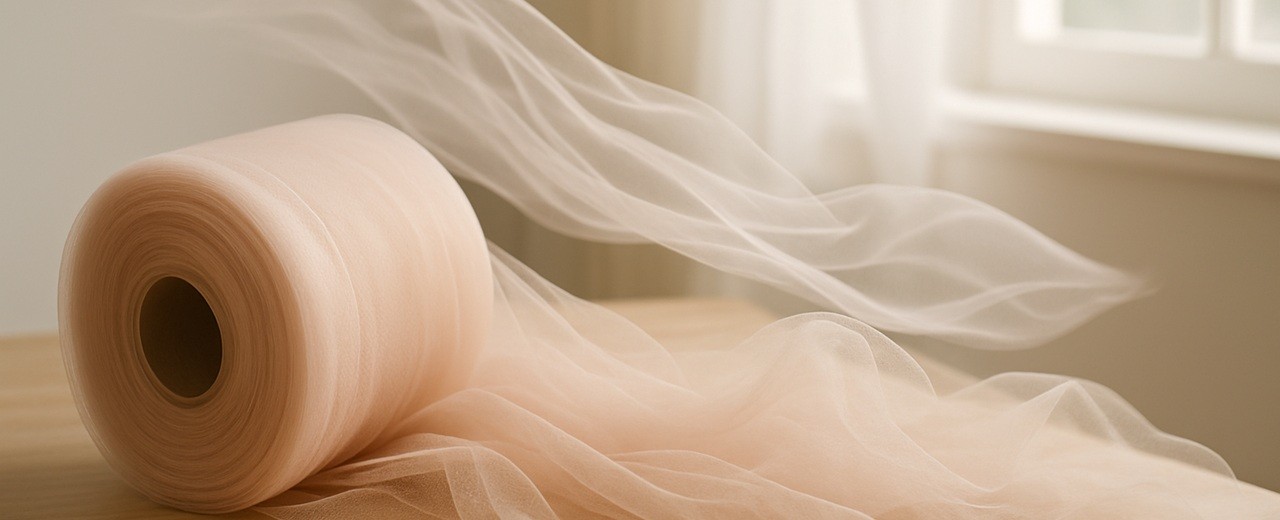
There is a material that seems to be made of air but, if you look closely, it is the result of an extraordinary alchemy between textile engineering and visual poetry: tulle. A few centimeters of this thin mesh are enough to transform a dress, a bouquet or even a gift package into something fairytale. In these lines we want to give it a face — indeed, a thousand — mixing history, catwalk curiosities and some technical data, because magic becomes even more powerful when we know the magician's tricks.
Technically speaking, tulle is a gauze with hexagonal or octagonal meshes, obtained on special looms (today mainly Raschel) that weave very fine yarns in a stable but very light lattice. The result is a "mesh of voids" capable of letting light through, enveloping without weighing and supporting scenographic volumes: it is the same logic as a suspension bridge, but in a couture version.
The term takes its name from the town of Tulle, in south-western France, where the first perforated veils began to be produced at the end of the seventeenth century. However, it was nineteenth-century England that made it popular: in 1806 the inventor John Heathcoat patented the bobbinet machine, which allowed the weave to be replicated by machine with a regularity impossible by hand. From there to the conquest of European wardrobes the step was short: just think that in 1840 Queen Victoria chose a white tulle veil for her wedding with Prince Albert, thus giving rise to the tradition of the white wedding dress still widespread all over the world today.
The nineteenth century consecrated him on the stages of the Paris Opera — the famous tutus immortalized by Degas — but it was contemporaneity that rewrote the rules: on the recent couture catwalks (Chanel, Simone Rocha) and on the red carpet of the Met Gala 2025 the "transparency factor" dominates with dresses that seem sculpted into thin air. The same "balletcore" spirit rages on social media, multiplying tutorials and hacks to wear layers of fashion tulle in a street key.
Why does Tulle continue to make us fall in love?
Featherweight, stage presence. A roll of a few grams is enough to obtain volumes that a full fabric would reach with kilos of fabric.
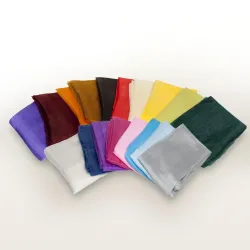
Blank canvas for creativity. Nylon, polyester, silk or recycled yarns: each fiber gives a different hand and drape, ready to be dyed with any Pantone.
Tactile emotion. That barely perceptible rustle and the sensation of "touching a cloud" activate a childish imagery of games, fairy tales, lightness.
With these first breaths we discovered that tulle is much more than a romantic veil: it is a micro-architect of light and movement, capable of crossing centuries and hashtags without losing an ounce of charm. In the next chapter, we'll weave the threads of its history — from Jacquard looms to catwalks — to understand how a "breath of wind in fabric" became a global style icon.
Intertwined history: from Jacquard looms to couture catwalks
"Each thread of tulle is a chapter of history suspended in the air."
If the myth of tulle was born in Tulle, a town in Nouvelle-Aquitaine, it is with the arrival of Jacquard looms (1805) that its net takes on a mechanical shape, allowing the weaving of handmade lace to be replicated with industrial precision. The real leap, however, came a year later: the Englishman John Heathcoat patented the bobbinet machine (1806), the mother of all modern bobbinet tulle —a stable, silky hexagonal weave that was cheaper than bobbin lace.
When Queen Victoria chose a long tulle veil for her 1840 wedding, she decreed two revolutions: the "white" wedding and the worldwide popularity of this cloud-fabric. From an elitist object, tulle became a bourgeois must-have, ready to be produced in meters (and then in rolls) for brides of all extractions.
In fin-de-siècle Paris, ballet tulle conquered the theaters: the tutus immortalized by Edgar Degas needed vaporous but very light volumes, perfect for dancers who "flew" on stage. That thin layer still inspires restorers at the Musée d'Orsay today, confirming the resilience of the material.
On February 12, 1947, Christian Dior debuted with bell skirts supported by crinolines and endless layers of tulle, an opulent response to the hardships of war. The ora-glass silhouette renamed "New Look" made tulle synonymous with couture revival and ushered in the so-called Golden Age of Parisian fashion.
One hundred yards of silk net and Brussels lace: Grace Kelly's wedding dress elevated the idea of princess gown, fixing the combination "structured bodice + tulle skirt" in the 50s imagination. To this day, it is still the go-to photo for bridal designers all over the world.
Between punk and new romantic, Vivienne Westwood uses tulle as a weapon of aesthetic shock, tearing and layering nineteenth-century crinolines on the body of rock stars. At the end of the decade, transparency became understatement: Kate Moss' slip-dress (1993) showed that a few microns of tulle‐chiffon were enough to redefine the minimal sensuality of the 90s.
The new millennium consecrated brands such as Giambattista Valli and Valentino, which built entire collections on maxi-ruffles of tulle couture. In 2024, the ballet-core trend floods TikTok with layered skirts, while on the SS 2025 fashion shows, tulle explodes into oversized architectures. At the 2025 Met Gala, stars like Cynthia Erivo and Bebe Rexha parade in layered clouds that blend tailoring and theatricality, proving that the lightest fabric in the world still knows how to "make weight" culturally.
From nineteenth-century industrial innovation to Valli's nuages , the tulle thread never stops: it regenerates, reinvents itself, but it always remains that "breath of wind in fabric" capable of making history... lightly.
Anatomy of a cloud – fibers, meshes and secrets of tulle production
The following chapter is the technical-emotional heart of our journey: we will discover how that "air network" that we call tulle is made, from which fibers it is born, what is the "mathematics of lightness" that regulates the knit and why ultrasonic cutting makes the difference between a fraying edge and a perfect one.
The DNA of tulle: the choice of fibers
| Fiber
| Typical Denier
| Functional pluses
| Tactile mood
|
| Nylon 6/6 microdenier | 20–40 D | High strength, elasticity, dyeing absorption | Silky softness, light crunch |
| HT Polyester | 30–50 D | Thermal stability, low cost | Dry hand, semi-rigid drapery |
| Silk | 20–30 D | Natural shine, biodegradability | Smooth caress, premium feel |
| Recycled yarns (Econyl® / rPET) | 40 D | CO₂ reduction of up to –80 %, traceability | Identical performance to virgin nylon |
| Bio-based PLA | 40–60 D | Industrial compostability, origin from corn | Slightly crunchy hand, matte finish |
Mesh count: 18 to 40 stitches per centimeter — the denser the mesh, the softer and more slide-proof the technical tulle is. A classic 18 mesh for tutu skirts weighs just 18 g/m².
Weight: the range goes from 8 g/m² for ultra-sheer plies to 60 g/m² for containment power-meshes.
Wire thickness: normally 15–50 μm; micro values (< 20 μm) give ethereal transparencies, macro values generate structured volume.
Warp knitting 101: Raschel, Tricot and Bobbinet
Raschel: 5+ guide bar frame that weaves the wire into stable hexagonal meshes; It is the industry standard of tulle roll.
Tricot: faster production but less open knit; Used for stretch linings and sports layers.
Bobbinet: the "Rolls-Royce" of tulle, born on the loom of John Heathcoat (1808); Perfect diagonal knit, featherweight < 20 g/m², intended for couture and VFX cinema.
The Raschel-vs. Tricot scheme affects toughness, elasticity, and price — valuable information for buyers and designers.
Cut & finishing: when technology seals beauty
Ultrasonic "cut & seal": a blade vibrates at 20 kHz, melting the thermoplastic edges of the tulle; Goodbye fraying, goodbye hemming steps. Ideal for quick flakes in packaging and to reduce waste in industrial packaging.
CO₂ laser: millimetric precision, but risk of "burnishing" light wires; It is mainly used on pigmented polyester.
Functional finishes: antistatic, fireproof EN 13501, silver-based antibacterial — treatments that do not alter the hand and transparency of fashion tulle.
Colour & texture: from dope-dye to digital printing
Tulle can be solution-dyed (dope-dye) to obtain solid colors with a low water footprint, or colored in pieces with acid, dispersed or cationic dyes. Inkjet printing techniques on tulle — today up to 1200 dpi — allow photorealistic patterns while maintaining 96% air permeability. Heat-sealed sequins, fil coupé and iridescent coatings multiply the creative options.
Green corner: towards sustainable tulle
Econyl®: polyamide regenerated from fishing nets that maintains the performance of virgin nylon, already adopted by Prada and Gucci.
rPET: Tulle from post-consumer PET bottles, ideal for ephemeral displays and set-ups.
PLA: certified compostable net, designed for temporary events and single-use packaging.
LCA & microplastics: The new "low-shedding" meshes reduce the release of fibers in the washing machine by 70% compared to standard tulle.
With these details — from the choice of thread to the hum of ultrasounds — tulle stops being just a "romantic cloud" and reveals itself to be a highly engineered material, ready to amaze designers, makers and curious readers. In the next chapter, we will see how this technology turns into a trend on the 2024-25 catwalks.
Transparencies protagonists – tulle in fashion trends 2024-25
The two-year period 2024-25 has put the cloud of tulle back at the center of the wardrobe, transforming it from a bridal detail to an everyday style statement. Here's how (and why) the lightest fabric in the world has carved out a leading role, between couture, red-carpet and street-style catwalks.
Vogue observers have included "tulle wraps" among the twelve macro-trends of spring 2025, describing them as soft veils that "re-interpret the very idea of taking the veil". The same season saw a general wave of "soft power": romantic silhouettes, powder colors and ethereal materials dominate New York, London, Milan and Paris.
The technical sub-text behind the "wisp of wind" effect is strat layering: super-sheer tulle sheets (mesh 30-40) wrap around the body creating a diffuse filter that allows a glimpse of what is underneath without revealing it completely. The look works because:
- it weighs a few grams;
- adds controlled volume;
- it is cut ultrasonically without fraying (see chapter 3).
Emerging designers offer wrap skirts in recycled nylon, to be tied over slip-dresses or joggers for an athleisure contrast.
The term balletcore is now viral: according to Dance Magazine, the reference to the tutu and the rehearsal room paraphernalia is "the defining trend of 2024". The new twist? Mix outdoor bodysuits, leg warmers and rigid tulle miniskirts with chunky sneakers or bomber jackets. The result: a mood that is both nostalgic and urban.
Keyword focus: balletcore, streetstyle tutu skirt
Met Gala 2025 – Cynthia Erivo wears a Givenchy with a tailored jacket and a multilayer black tulle "cloud skirt": over 2,250 hours of work, a perfect balance between rigor and lightness.
Nicole Kidman walks the runway with Balenciaga Couture: 50s silhouette supported by layers of tulle and crinolines, 700 hours of atelier.
Giambattista Valli and Valentino continue to build couture tulle maxi-ruffles that resemble air sculptures.
These apparitions not only feed the dream, but legitimize tulle as a material of cultural "weight".
Magazines such as L'Officiel explain how to layer tulle, mesh and organza to "not feel naked" but stay in the sheer trend. The trick is to play with:
- opaque bases (ribbed tank top, satin briefs) + tulle top;
- mesh skirts over straight pants;
- Smoke-colored tulle shirts paired with dark denim.
For the office, just one layer is enough: a stretch tulle blouse under an oversized blazer.
- Powder-pink is the new romantic neutral, spotted by Alaïa at Chanel SS 25.
- On the bridal catwalks, the colorful tulle veil explodes: Molly Goddard and other designers propose peach, lime and lavender ombré.
- The red-carpet rides the naked dress in nude tulle: Florence Pugh offers the floral variant by Valentino at the Golden Globes 2024.
The result? Tulle is no longer relegated to the tutu or the wedding veil: it is a language that speaks of freedom, powerful femininity and sartorial experimentation. Knowing how to read it (and tell it) means riding one of the longest-running and most transformative trends in contemporary fashion.
Beyond the dress – Décor, floral design and sensory packaging
The beauty of tulle is that it does not stop at the wardrobe: its architectural lightness becomes an extraordinary resource for furnishing, wrapping flowers and building memorable unboxing rituals. In this chapter we explore the three non-fashion universes where the "network cloud" unleashes maximum creativity, with technical advice and emotional cues.
The 2024-25 home décor trends crown the ethereal aesthetic: bright environments, cream-pastel palettes and impalpable materials such as lace, organza and tulle The "coquette wave" identified by design observers goes in the same direction, inviting frou-frou details to be included on curtains, cushions and canopies
Practical ideas
| Idea express
| Why it works
| Technical tip
|
| Drape over fairy-lights for a photo backdrop | Tulle diffuses the point of light and creates a dreamy halo | 30-40 mesh, hot cut to prevent fraying |
| Canopy over the bed | Evoke colonial romantic mosquito nets | Secure the tulle with antistatic nylon rings |
| Tablecloth‐runner on raw wood table | Material contrast between rough and impalpable | Paper weight 12 g/m², width 60 cm |
| Lightweight eye-catcher between two living areas | Let air and light through | Mesh 18, ultrasonic "clean edge" edging |
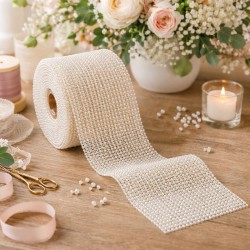
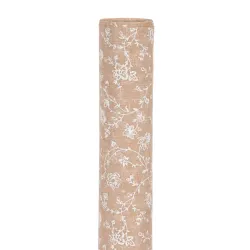
Florists and wedding planners choose bouquet tulle because it combines aesthetics and function: the mesh allows air to circulate, prevents condensation on the petals and weighs very little inside the refrigerated box. Today there are rolls 50 cm × 1.5 m with floral embroidery that transform the simple bouquet into a premium gift object.
Quick professional checklist
- Recommended widths: 40-50 cm for long-stemmed roses, 60 cm for peonies and hydrangeas.
- Light hydrophobic finishes: protect against water droplets without altering the hand.
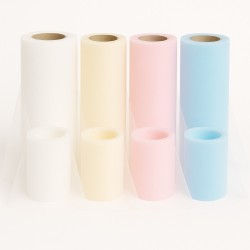
- Smart color: powder tulle for white flowers (enhances the contrast), mint for tropical palettes.
Keyword focus: tulle bouquets, breathable flower wrapping, tulle wedding favors
The art of touch: tulle in luxury packaging
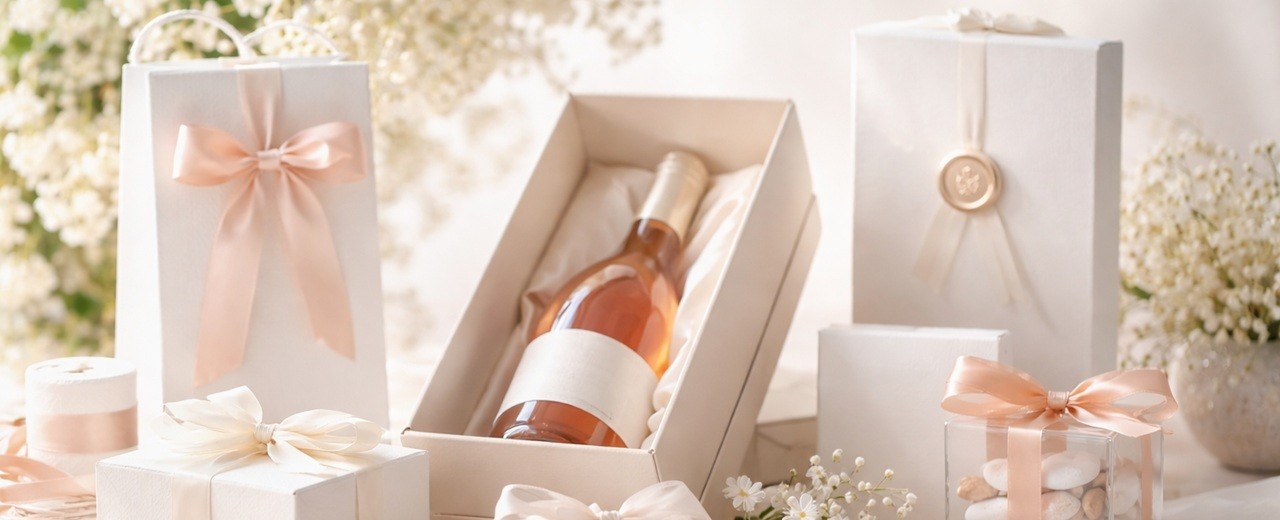
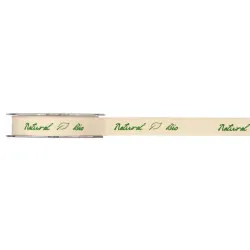
In 2025, the "tactility factor" is the secret weapon of premium packaging: the velvety texture of a tulle ribbon bow anticipates the value of the object inside the box. The act of untying the ribbon becomes a micro-ceremony that increases dopamine and brand memorability.
How to integrate tulle into an unboxing experience
- Sensory layering
- first layer: scented tissue paper;
- second layer: tulle band that allows a glimpse of the product;
- third layer: card with QR storytelling.
Matching paletteMatch the
Colored tulleto Pantone corporate: a 3 cm polyamide tape dyed in dope-dye guarantees color fastness on the entire reel.
Ultrasonic CuttingAvoid loose filaments that could damage lacquered surfaces or soft-touch cosmetics.
Five quick ideas to copy right away
- Satin glass parabebra cover + mini glitter tulle ribbon for artisan chocolatiers.
- Christmas Centerpiece: cylindrical vases wrapped in rigid red tulle and micro-LEDs.
- SPA basket: towels rolled up and held in place with strips of lavender stretch tulle .
- Eco placeholder: leaf pressed into a compostable PLA tulle bag.
- Minimal sugared almonds holder: 9'' organza tulle disc pulled into a bag with sealing wax.
Pro maintenance tips
- Antistatic spray (Quaternary ammonium base) before setting up retail spaces.
- Store the rolls in micro-perforated bags at < 60% RH to avoid mold.
- Readjust scraps: recycled tulle cut into 5 mm filaments becomes filler for baskets and boxes.
From curtains that let moonlight filter through to bows that turn a package into a ritual, tulle proves to be much more than a fabric: it is a means of modulating air, light and tactile sensations. And, with the right technical precautions, its poetic side translates into professional performance—ready to amaze interior designers, florists, and brand managers looking for a light-as-air "wow effect."
Sustainable transparency – from recycled tulle to vegetable dyes
The textile industry has taken the "net-zero" route and tulle is no longer an innocent cloud: today it must demonstrate reduced impact, traceability and zero aesthetic compromises. Let's see how lightness also becomes "light on the planet".
Why we need new (ecological) jerseys
CO₂ & consumption – producing 1 kg of virgin polyamide requires ~85 MJ of energy and generates over 8 kg of CO₂e; chemical recycling lowers the share by up to 80%.
Microplastics – 2023 research shows that open nets (18-40 mesh) can disperse 210 to 72 000 microfibres per gram of fabric per wash, prompting the EU to regulate the release of <5 mm fragments by 2030.
Consumer demand – 68% of Gen-Z say they pay more for a "certified sustainable" product (Textile Exchange study 2024).
Keyword focus: sustainable tulle, environmental impact tulle
From waste to roll: recycled tulle
| Chain
| Source of raw material
| Environmental plus
| Where you already see it
|
| Econyl® | Fishing nets, carpets, industrial scraps | –80 % CO₂ vs virgin nylon | Stella McCartney Kids AW 24 tulle dress |
| rPET | Post-consumer PET bottles | Lower water and energy consumption | Packaging and décor rolls, distributed by large craft retailers |
| GRS-Polyamide | Production waste, defective socks | Chain Enclosure Certification, 50 % min. recycled | B2B vendors (e.g. FabricSight |
SEO tip: always enter "GRS recycled tulle" or "Econyl regenerated tulle" in the H2/H3: Google links them to searches for "sustainable nylon".
Beyond oil: biodegradable PLA tulle
PLA (polylactic acid) derives from corn glucose, is compostable in an industrial plant and is entering tulle for disposable packaging and ephemeral installations. The Packaging Dive 2024 report predicts +18% annual demand until 2027.
Pros: closing the organic circle;
Cons: it requires temperatures >55 °C to degrade, so it does not disappear "in nature".
Colors that respect the earth: vegetable dyes for tulle
Indigo, madder, turmeric and bacterial pigment extracts dye nylon or rPET nets thanks to pH-neutral carriers; the FabricSight blog shows a recycled polyamide tulle + vegetable dye that reduces water consumption by 60% compared to the traditional acid method.
- Vegetable dope-dye ➜ mass coloring, no wastewater.
- Eco-inkjet ➜ digital printing up to 1 200 dpi, minimal chemical waste.
Keyword focus: vegetable dyeing tulle, tulle naturally dyed
Water-based polyurethane resins and vegetable waxes replace the old fluoride repellents. From 2025 many converters offer PFAS-free water-oil-repellent tulle for rain clothes or outdoor décor.
Microfibers under control
Low-shedding sweaters with flat yarn → –70 % fiber release in the washing machine.
Washing sachets + 30 °C < cycles further reduce dispersion.
Oeko-Tex updates STANDARD 100 (April 2025) to include specific particle tests < 50 μm GRS / RCS – they guarantee recycled percentage and traceability, also verifying social parameters
OEKO-TEX® STANDARD 100 – no harmful substances in the supply chain
EU Ecolabel – limits on energy, emissions and dyeing; still not very common in tulle but growing.
Pro tip: always ask for the certificate number; Professional buyers verify it in the public database of the certifying body.
The good news? Today, lightness can go hand in hand with environmental awareness: just choose the right sustainable tulle , certified and designed to last — or to return to the earth without a trace.
We close our journey by looking beyond the horizon. Tulle – which has always been a hinge between poetry and engineering – is about to go through a new mutation made up of hi-tech innovation, profound sustainability and multisensory experiences.
| Emerging trend
| What is it
| Why it will change the game
|
| Smart-tulle with LEDs and sensors | Conductive yarns woven into the knit that power micro-LEDs or detect heartbeat | Turn event dresses into living displays for fashion, sports and entertainment |
| 3D-Printing on tulle | Polymer layers printed directly onto the mesh, creating embossed patterns or lightweight "weaves" | Offers weightless sculptural volumes and one-off customization options |
| Bio-tulle in PLA & mycelium | Nets derived from PLA or mycelium composites, compostable in industrial plants | Perfect for ephemeral décor, events and near-zero impact take-away packaging |
| Recycled low-shedding tulle | Polyamide or rPET optimised to reduce microfibre release by 70 % | Responds to upcoming EU regulations on microplastics and rides the growth of recycling (CAGR 6.9% 2025-30) |
| Alive pigments & bacterial dyes | Colors based on microbial cultures that slightly change tone with pH, light or temperature | They introduce chromatic interactivity and cut 60% of water consumption compared to acid dyeing |
Recycled-Polyester Challenge 2025 – hundreds of fashion brands have committed to using 45% to 100% recycled polyester by this year, prompting tulle roll converters to expand their GRS-certified rPET lines.
PFAS-free finishes – from 2025 the main European manufacturers offer hydro-oil repellents based on vegetable wax that do not interfere with hand and transparency.
Imagine a veil flashing with music or changing color when the temperature exceeds 30 °C: it's not science fiction, it's smart-tulle already in prototype in several wearable tech laboratories. The wide meshes are perfect for housing optical fibers, while the lightness cancels the "armor" effect typical of technological fabrics.
The hunger for sensory unboxing experiences pushes beauty and gourmet brands towards "cloud-wraps": bands of translucent PLA tulle that reveal the product with a breath and are thrown into the home compost. According to Packaging Dive, demand for PLA will grow by double digits through 2027 thanks to new, softer and printable blends.
- Touch – go beyond sight: caress a microdenier tulle ribbon and an Econyl® upcycled one, feel how the same material can speak different languages.
- Layer – layer an old denim garment on a 3D printed tulle remnant; You will discover the magic of material contrast.
- Re-cycle – collect the scraps of your projects and transform them into filler nets or soap nets: infinite lightness, zero waste.
Tulle remains – and will remain – the language of lightness. But lightness, today, is made up of digital codes, regenerated fibers and applied biology. Whether you are a journalist, designer or simply curious, the next step is only one: take that breath of fabric wind and see how far it can fly.
The story does not end here: it is only the start of a new, wider jersey, capable of intertwining aesthetics, ethics and technology. And you, are you ready to thread the needle?